SFR tree id and measurement exam
 Call Kai
 Learn
Learn Practice Test
 Spaced Repetition
 Match
Match Flashcards
 Knowt Play
1/32

There's no tags or description
Looks like no tags are added yet.
Name | Mastery | Learn | Test | Matching | Spaced | Call with Kai | Chat |
|---|
No analytics yet
Send a link to your students to track their progress
33 Terms
Pinus strobus (eastern white pine)
5 needles per fascicle, 3-5" long; 4-8" long cones.

Pinus resinosa (red pine)
2 needles per fascicle, 4-6" long, break when doubled over.

Pinus banksiana (jack pine)
2 needles per fascicle, serotinous persistent incurved cones; fire-adapted pioneer.

Pinus rigida (pitch pine)
3 needles per fascicle; sharp prickles on cone scales; basal crook.

Picea mariana (black spruce)
4-angled short needles, pubescent twigs, persistent semi-serotinous cones; bog species.

Picea rubens (red spruce)
4-sided needles, pubescent twigs, gray-reddish brown cornflaky scaly bark.

Picea glauca (white spruce)
4-sided needles, glabrous twigs, cylindrical cones with entire scale margins.

Tsuga canadensis (eastern hemlock)
Flat 2-ranked needles with 2 white stomatal lines below; very shade tolerant.
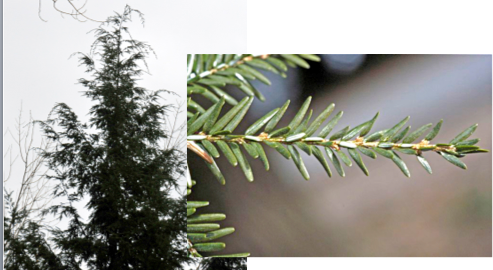
Abies balsamea (balsam fir)
Flat needles with tiny notched tips, erect deciduous cones, pitch-filled bark blisters.

Thuja occidentalis (northern white cedar)
Scalelike leaves on flat twigs; shreddy reddish bark; prefers alkaline/peat soils.

Larix laricina (tamarack)
Deciduous needles turning gold in fall, clusters of 8+ on persistent spurs.

Populus tremuloides (quaking aspen)
Flattened petiole causing leaves to tremble; intolerant pioneer species.

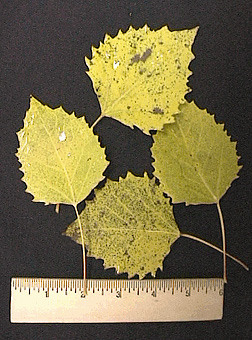
Populus grandidentata (bigtooth aspen)
Strongly toothed leaf margins; upland pioneer reproducing via root suckers.
Betula alleghaniensis (yellow birch)
Golden peeling bark and wintergreen odor on broken twigs.

Betula papyrifera (paper birch)
White peeling bark; seral species requiring mineral soil seedbeds.
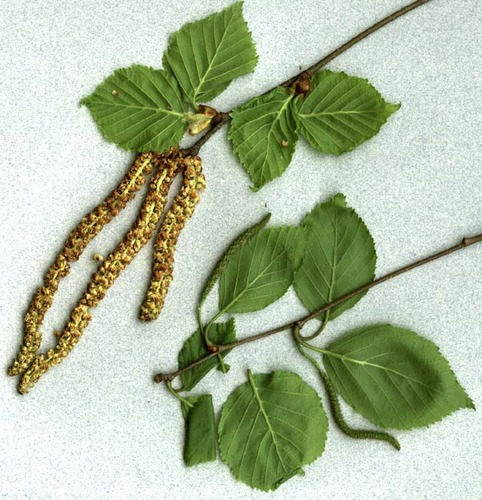
Betula populifolia (gray birch)
Tight sooty-white bark with fine dark twigs; small pioneer tree.

Ostrya virginiana (ironwood)
Very hard wood, shreddy fissured bark, bladder-like fruits enclosing ribbed nutlets.

Fagus grandifolia (American beech)
Tight light gray bark, long sharp buds, strongly toothed leaves.

Quercus alba (white oak)
Light gray ridgy bark, rounded leaf lobes, produces large sweet acorns.

Quercus rubra (northern red oak)
Bristle-tipped (mucronate) leaf lobes, inner bark fissures reddish.

Prunus serotina (black cherry)
Pointed buds, dark flaky bark, white flowers in long 4-5" racemes.

Prunus pensylvanica (pin cherry)
Flowers and fruit on long pin-like stalks; orange lenticels on red-black bark.

Prunus virginiana (chokecherry)
Coarsely serrated leaves wider toward tip; dark purple berries in elongated clusters.

Amelanchier arborea (shadbush)
Finely-toothed obovate leaves, early spring white flowers, gray bark with smooth streaks.

Acer saccharum (sugar maple)
U-shaped leaf sinuses, smooth leaf margins without fine teeth, pointed brown buds.
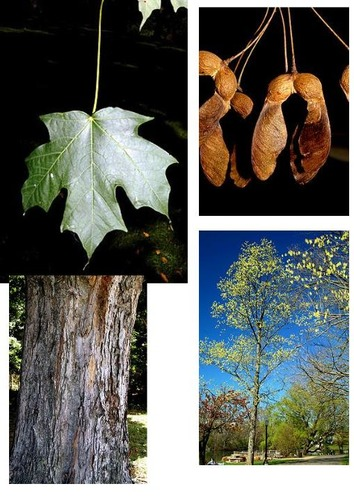
Acer rubrum (red maple)
V-shaped leaf sinuses, finely dentate margins, red twigs and globose red buds.

Acer saccharinum (silver maple)
5 deeply palmate leaf lobes, silvery-white underside, large divergent samaras.

Fraxinus americana (white ash)
Pinnately compound with 5-9 leaflets (hairy below), blunt terminal bud, brick-red shoot interior.

Fraxinus pennsylvanica (green ash)
7-9 leaflets, hairy buds and undersides, cinnamon-colored inner shoot bark.

Fraxinus nigra (black ash)
7-11 leaflets, corky light brown bark, sharp-pointed buds; wet lowland species.

Tilia americana (basswood)
Asymmetrical heart-shaped leaves, fruit attached to leafy leaf-like dispersal bract.

Lonicera spp. (non-native honeysuckles)
Invasive shrubs with hollow twigs, opposite simple leaves, bright red berries.

Rhamnus cathartica (common buckthorn)
Curved parallel leaf veins, small terminal twig thorn, cathartic dark purple berries.
