Chapter 2: The Components of Matter
 Call Kai
 Learn
Learn Practice Test
 Spaced Repetition
 Match
Match Flashcards
 Knowt Play
1/91

Name | Mastery | Learn | Test | Matching | Spaced | Call with Kai | Chat |
|---|
No analytics yet
Send a link to your students to track their progress
92 Terms
Substance
Matter with a fixed composition; includes:
Elements (the simplest type of matter with one type of atom)
Compounds (two or more different elements that are bonded chemically)
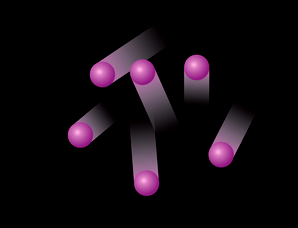
Element
The simplest type of matter with unique physical and chemical properties
Has only one kind of atom
Visible properties are unique due to submicroscopic differences
Some exist as molecules, like oxygen as O2

Molecule
An independent structure of two or more atoms bound together
Atom
The smallest unit of an element that retains its chemical nature
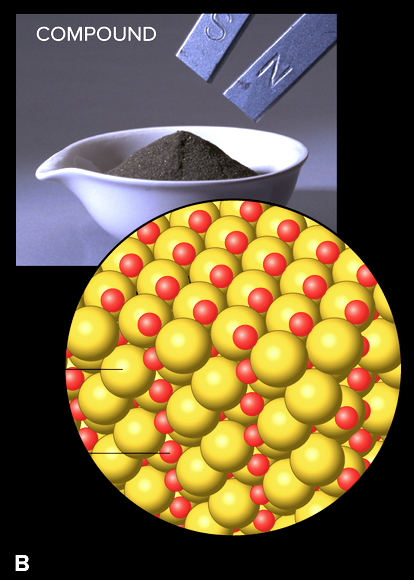
Compound
Two or more different elements that are bonded chemically
Defined by:
A fixed mass ratio of each element per unit
Properties different from that of the individual elements
Changes possible through chemical reactions
Fixed mass ratio
Property of compounds where elements are present in fixed parts by mass
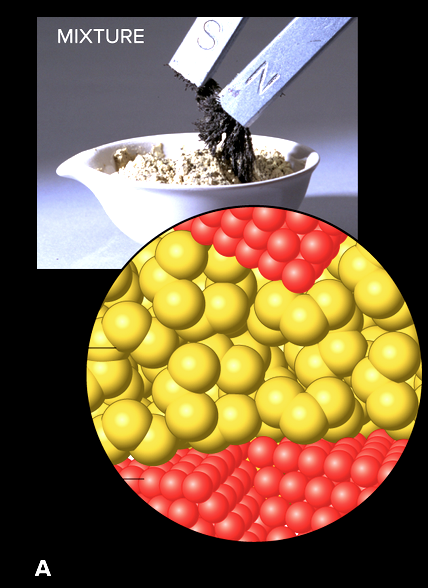
Mixtures
Two or more substances that are physically intermingled, but not chemically combined; some properties include:
Potential variation in mass parts
Component-level retention
The ability to be separated by physical processes

Hetrogenous mixtures
Mixtures with one more visible boundaries among the components
Variation is distributed from one region to another
Boundaries may only be seen with microscopes at times
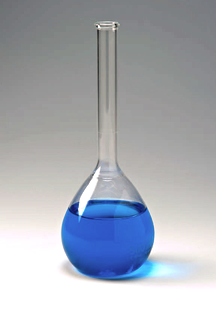
Homogenous mixtures (solutions)
Mixtures with no visible boundaries
Uniform composition and uniformly intermingled (not attached)
Cannot visually tell whether homogenous or an element or compound
Filtration
The separation of a mixture based on particle size, used to separate solids from liquids
Crystallization
Based on solubility; impure solids can be dissolved and then reconstituted through this
Solubility
Of a substance, the amount that dissolves in a fixed volume of solvent at a given temperature
Distillation
Based on volatility, where:
In simple types, more volatile contents are vaporized first and collected
In fractional types, many steps are used to separate components with small differences, like with petroleum
Volatility
The tendency of a substance to become a gas
Chromatography
Also based on solubility; components flow through a solid or viscous liquid called a stationary phase with the lowest soluble elements moving faster
Mass laws
Includes:
The law of mass conservation
The law of definite composition
The law of multiple proportions
Law of mass conservation
States that the total mass of substances does not change during a chemical reaction
The number of substances may change, but the total amount of matter (or energy that results) remains constant overall
Composition calculation
A fixed proportion of elements remain a compound, either via:
Fraction by mass (mass fraction), calculating the part of the compound’s mass that each element contributes
Percent by mass (mass percent), expressing fraction by mass as a percentage
These should equal 1 part (100%) and can be compared to determine substance similarity via the law of definite composition
Law of definite composition
States that no matter what its source, a particular compound is composed of the same elements in the same parts by mass
Mass percents, for example, can be used to find the mass of each substance
Law of multiple proportions
States that if elements A and B react to form two compounds, the different masses of B that combine with a fixed mass of A can be expressed as a ratio of small whole numbers
For example, in:
CO (57.1% oxygen, 42.9% carbon), and
CO2 (72.7% oxygen, 27.3% carbon),
taking ((72.7% / 27.3%) / (57.1% / 42.9%)) = (2.66 / 1.33) = 2,
signifying that there is twice as much oxygen in the second carbon compound, made possible by their composition of whole atoms
The mass ratio of carbon to oxygen in CO2 is 2 times the mass ratio of carbon to oxygen in CO.
John Dalton
Scientist who presented the atomic theory of matter, which stated that all matter consists of indivisible, unchangeable atoms of fixed, unique mass
These help explain the mass laws
Electric charge
While it was known this existed, scientists for many years did not understand their composition, only their effects

Cathode rays
Observed as part of an experiment to investigate current; with a light-sensitive phosphor coated end, a ray could be seen when the electric power source was turned on
When a charged plate or magnetic force was applied, the rays deflected towards positive sides, thus demonstrating their negative charge
Gave way to naming of electrons, as it was recognized that these particles are found in all matter
Coulomb (C)
The SI unit of electrical charge
Charge-mass ratio
Ratio found in 1897 by J. J. Thomson stating that the electron was about 2000 times lighter than hydrogen via a cathode ray tube, giving off -1.76 × 10⁸ coulombs per gram
Went against theorem that atoms could contain smaller particles

Charge
Discovered via Robert Millikan’s oil drop experiment, where charged oil droplets falling in between two variably electrically-charged plates allowed him to measure this based on their rate of fall, giving -1.602 × 10⁻¹⁹ coulombs
This was then used to solve for mass using the charge/mass ratio, giving 9.10 × 10⁻²⁸ grams
Plum-pudding model
Model proposed by J. J. Thomson for a spherical, positively-charged sphere of mater with electrons embedded within it to attain neutrality
Tested by Ernst Rutherford by firing alpha particles at a gold foil, expecting straight-pass through with this model
Actually found that atoms deflected the particles, thus reasoning something small and dense in the atoms was the cause — the nucleus

Nucleus
Discovered by Ernst Rutherford after his gold-foil experiment, concluding that an atom was mostly space occupied by electrons and a tiny nucleus region with all the positive charge of the atom
Also proposed existence of positively-charged protons
Later modified in 1932 by James Chadwick, who discovered the neutral neutron here
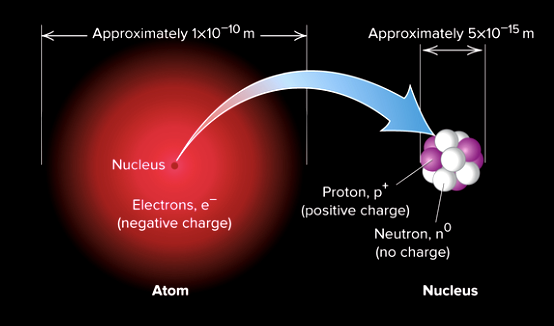
Atom
An electrically neutral, spherical entity composed of a positively charged central nucleus, surrounded by one or more negatively charged electrons
Electron
A rapidly-moving, negatively-charged particle held by the attraction of the nucleus
2000 times smaller in terms of mass than a proton or neutron, but the same in number as protons to maintain neutrality
Nucleus
Protons and neutrons in the center of the atom
Very small; diameter is 20,000 times smaller than the total diameter
Contributes 99.97% of the mass, but only 1 quadrillionth of the volume, creating high density (1014 g/mL)
Proton
A particle within the nucleus with a positive charge
Has the same magnitude of charge of an electron, but with the opposite sign
This always equals the number of electrons
Neutron
A particle in the nucleus with no charge; these are neutral
Mass number (A)
The total number of protons and neutrons in the nucleus of an atom, can be used for simple isotope names
Written as a left superscript, like 12C (carbon-12)
Atomic number (Z)
The number of protons in the nucleus of each of an element’s atoms
Equals the number of electrons
Stays consistent across isotopes
Written as a left subscript: 6C signifies 6 protons (and by extension 6 electrons)
Neutron count (N)
This changes across isotopes
Found by subtracting the constant atomic number (Z) from the mass number (A)
Atomic symbol
A one or two letter abbreviation for the English, Latin, or Greek name of an element
Isotopes
Atoms of an element that have different numbers of neutrons and therefore different mass numbers
These have nearly-identical chemical behavior, even with different masses, due to electrons
Atomic mass unit (amu)
1/12 of the mass of a carbon-12 atom; based on relative mass
Also known as the dalton (Da)
About 1.66054 × 1024 grams
Mass spectrometry
A method for measuring the relative masses and abundances of atomic-scale particles
Electrons collide with an atom’s electron to produce a particle with one positive charge, which are then attracted towards negatively-charged plates and eventually strike a detector to record positions and abundances based on deflection amounts through a magnet
This provides the isotopic mass for each individual isotope, allowing for a later calculation of the atomic mass
Atomic mass
The weighted average of naturally occurring isotopes according to their abundances; these can sometimes change overtime with ranges provided
Dmitri Mendeleev
Russian scientist who, in 1871, arranged elements by increasing atomic mass and chemical properties to form the periodic table of elements

Periodic table of elements
Table based on work by Mendeleev, arranged by atomic number
Arranged in periods (rows) and groups (columns)
Each period has a number from 1 to 7; each group has a number from 1 to 18
Group
A column on the periodic table; elements here usually have the same outer electron configuration and thus similar chemical behavior
Numbered from 1 to 18; includes:
1: alkali metals
2: alkaline earth metals
3 to 12: transition elements
13 to 16: named for first element in group
17: halogens
18: noble gases
Also called a “family” for elements
Main-group elements
This includes groups 1, 2, and 13 through 18, with predictable outer charges
Transition elements (transition metals)
These include groups 3 through 12
Inner transition elements
Includes the lanthanides and actinides between groups 3 and 4
Alkali metals
The name for group 1, except for hydrogen
Classified as reactive metals
Alkaline earth metals
The name for group 2
Classified as reactive metals
Halogens
The name for group 17
Classified as reactive nonmetals
Noble gases
The name for group 18
Classified as relatively unreactive nonmetals due to their full valence shells
Element classifications
Can be grouped into three:
Metals
Nonmetals
Metalloids
Marked by a staircase line from boron to tellurium (but not aluminum)
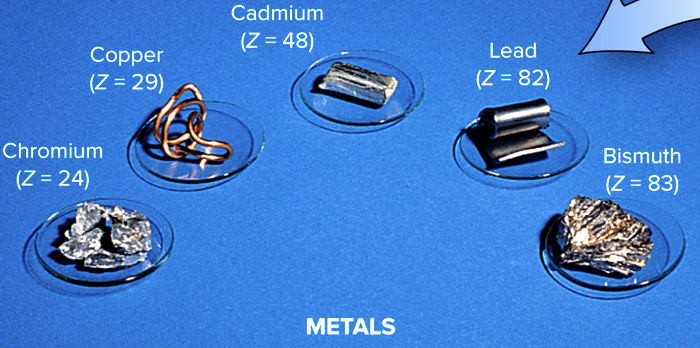
Metals
Group of elements located in the left and middle portions of the periodic table
Includes many main-group elements and all transition elements
Shiny and solid at room temperature
Can conduct heat and electricity
Malleable and ductile

Metalloids (semimetals)
Group of elements located along the staircase line of the periodic table
Includes boron to tellurium, except aluminum
Shiny and solid, but brittle
Semiconductors of heat and electricity
Has properties of both metals and nonmetals
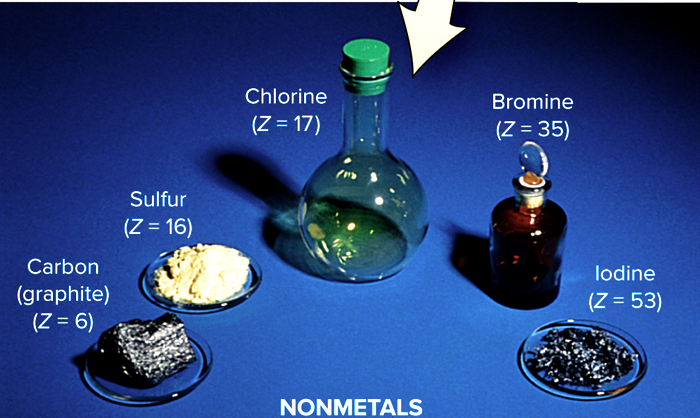
Nonmetals
Group of elements located in the upper-right portion of the periodic table; includes hydrogen as well
Includes some of the main-group elements
Gases or dull, brittle solids at room temperature
Poor conductors
Not malleable or ductile
Natural elements
These typically occur as compounds combined with other elements, with some exceptions:
Noble gases occur as separate atoms
N and O occur as two atoms, and S occurs as 8 atoms
C occurs as nearly pure deposits of coal
Cu, Ag, Au, and Pt are sometimes uncombined
Otherwise, elements combine through electron interactions in ionic (transferring electron) or covalent (sharing electron) bonds

Ionic compound
A compound that forms when electrons are transferred instead of shared between ions, creating a cation and anion who lose and gain electrons respectively and create a neutral overall force
Elements in these tend to form ions with the same number of electrons as in an atom of the nearest noble gas
Binary ionic compound
The simplest type of ionic compound, typically between a metal and nonmetal, resulting in a three-dimensional array
Cation
An atom that loses one or more electrons, becoming positively charged
Written as a positive superscript, like Mg2+
Anion
An atom that gains one or more electrons, becoming negatively charged
Written as a negative superscript, like Cl-

Covalent bond
Bond where elements (typically nonmetals) share electrons
Can be seen in the simple case of hydrogen gas (H2), which share an electron with each other as they are drawn to the other atom’s nucleus at an optimal distance

Polyatomic ion
Two or more atoms bonded covalently with a net positive or negative charge
Seen in many ionic compounds, where the overall unit requires the transfer of electrons to attain a more stable state
Chemical formula
A notation of atomic symbols and numerical subscripts that shows the type and number of each atom in a molecule or formula unit of a substance
Ionic compound names
These give the name of the cation first and anion second
Zinc and cadmium (Zn and Cd)
These form a 2+ charge despite being transition metals
Silver (Ag)
This forms a 1+ charge despite being a transition metal
Add Roman numerals to the name, without spaces.
How do I name transition metals with more than one charge variant, like in CuS?
Polyatomic ions
Groups of atoms that form a charged unit for pairing with other ions
Name the full polyatomic ion, with no -ide suffix.
How do I name polyatomic ions in an ionic compound, like Na2CO3?
Ammonium and hydronium (NH4+ and H3O+)
The most common polyatomic ions that serve as cations
Add a parentheses and subscript to denote the number of polyatomic ion units needed.
How do I write a compound requiring two or more polyatomic ions, like iron(III) sulfate?
Oxoanions
Polyatomic anions composed of a central (usually nonmetal) element bonded to oxygen atoms, named according to the number of oxygens present
Families always have the same charge
Oxoanion naming rules
-ate for more O atoms
-ite for less O atoms
per- and hypo- for halogens with one more and one less, respectively
Hydrates
Ionic compound with a specific number of water molecules, retaining the base name but adding a prefix + “hydrate” at the end
Acids
Hydrogen-containing compounds, formed as anions with an H+ cation
Binary acids
Acids with one nonmetal anion
Oxoacids
Acids with an oxoanion
“Hydro” + root + “ic” acid, for non-oxoanions
How do I name a binary acid like HF? What anions named under this?
Oxoanion root + “-ic” or “-ous” + acid
“-ic” used if ending in “-ate” (more oxidized)
“-ous” used if ending in “-ite” (less oxidized)
How do I name an oxoacid, like HClO4?
Binary covalent compounds
Covalent compounds between two nonmetals
First nonmetal retains the name
Second nonmetal retains root + “ide”
Add prefixes for all but 1 in the first nonmetal
Determine order by examining which has a halogen and oxygen, then lowest group, then highest period
How do I name a binary covalent compound, like N2O?
Straight-chain alkanes
The simplest alkane type with no branches, named for the number of C atoms in the chain and the suffix “-ane”
Follow the general formula CnH2n+2
First four roots:
Methane
Ethane
Propane
Butane
Hydrocarbons
The simplest type of organic compound, alkanes are a simple type of this
Organic compound
A compound that consists of chains, branches, or rings of carbon atoms bonded to hydrogen atoms; hydrocarbons are a simple type of this

Formula unit
The relative numbers of cations and anions in an ionic compound’s array instead an individual molecule
Use the designated prefix for the number of C atoms + “-ane”.
How do I name a straight-chain alkane?
Take the sum of the atomic masses, multiplying those within a polyatomic ion group accordingly.
How do I calculate the molecular or formula mass of a compound, like Ba(NO3)2?
Molecular formula
A formula that denotes the actual number of atoms of each element in a molecule of the compound
Seen with H2O, with two H atoms and one O atom in each molecule
Structural formula
A formula that denotes the relative placements and connections in a molecule
Seen with (H—O—H) or (H:O:H)

Ball-and-stick model
A model that shows atoms as balls and bonds as sticks to convey the measure of angles but exaggerates sizes and distances

Space-filling model
A model that shows the relative sizes, distances, and angles between atoms but may obscure bonds and other atoms
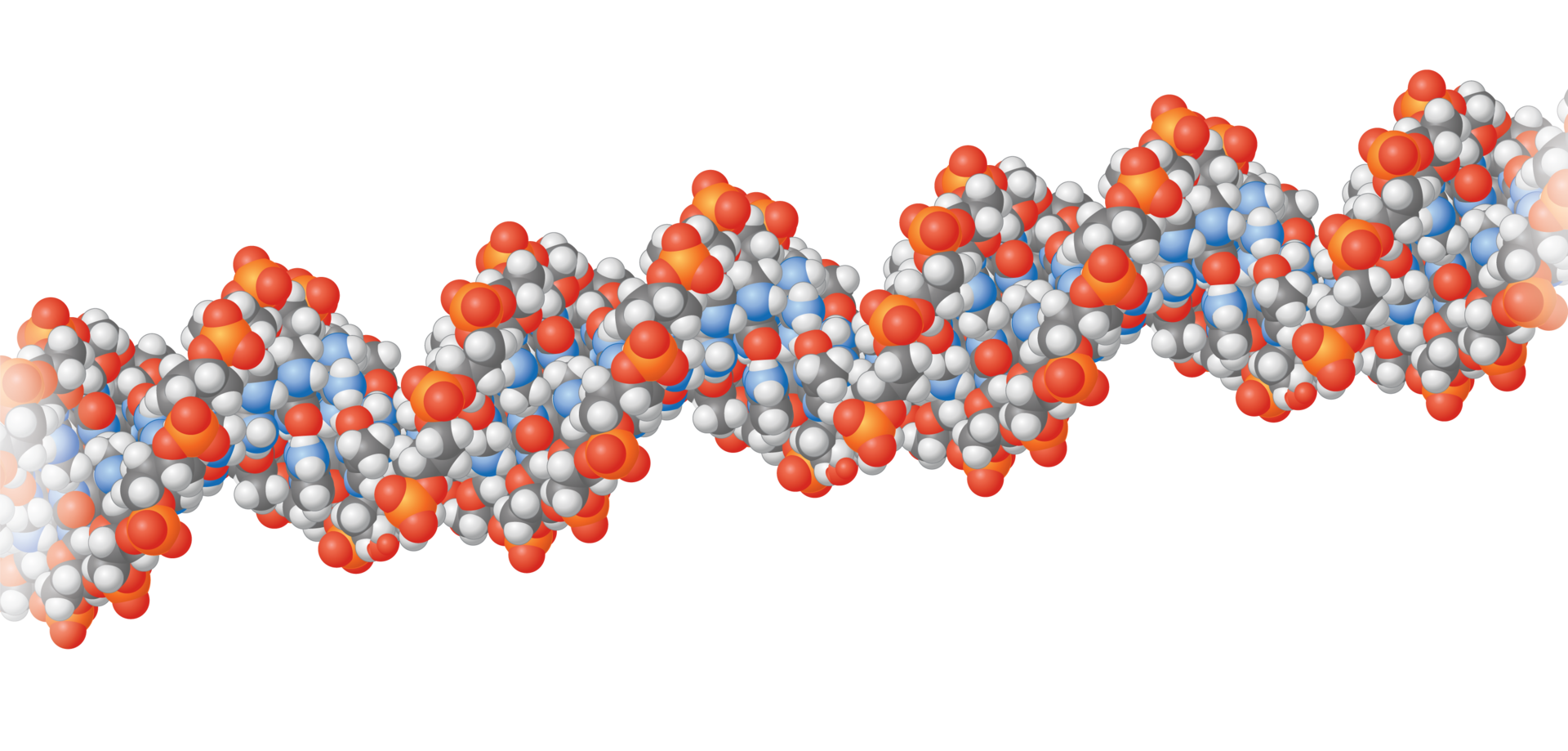
Macromolecule
An extremely large molecule, like DNA