Unit 3 Cellular level (Human Anatomy & Physiology)
 Call Kai
 Learn
Learn Practice Test
 Spaced Repetition
 Match
Match Flashcards
 Knowt Play
1/65

There's no tags or description
Looks like no tags are added yet.
Name | Mastery | Learn | Test | Matching | Spaced | Call with Kai | Chat |
|---|
No analytics yet
Send a link to your students to track their progress
66 Terms
4 principle parts of animal cell
nucleus
cytosol
organells
cell membrane

nucleus
control center of cell
largest structure within cell
dna
controls cell function and structure
nucleolus, DNA, RNA, chromosomes, chromatin, genes
cytosol
semi-fluids portion of cytoplasm
mostly water
function site of chemical reactions
contains cellular organelles, proteins, and carbohydrates
organelles
permanent “little organs” found within cytosol
highly specialized structures that preform different roles
cell membrane
protective barrier that exits on the perimeter of cell to maintain homeostasis
selective permeability
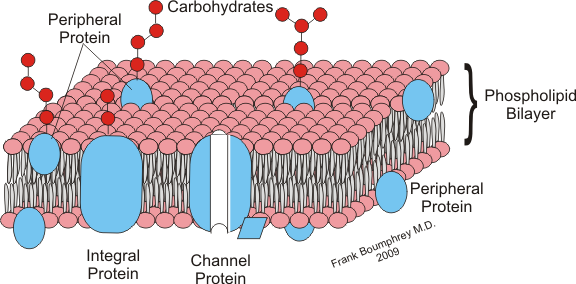
structure of cell membrane
a flexible outer shell of cell that regulates the concentration of substances inside the cell
phospholipid bilayer
cell membrane is composed of a phospholipid bilayer or two layers of phospholipids
fatty acids with a phosphate group attached to them
molecule has heads that face outward while tails face inward (creates a polar hydrophilic head and non-polar hydrophobic tail.

integral protein
extend into and sometimes completely through the membrane and act as channels, gates, or carrier proteins.
3 categories
marker protiens
transport protiens
receptor protiens

peripheral protiens
loosely bound on inside or outside
acts as structural proteins and cell identity markers

cholestorol
lipid produced by liver
gives membrane strength
helps prevent fatty acids tails from sticking to each other which would collapse the membrane

carbohydrates
chains extend from the surface of the cell membranes and help in cell identification. (glycolipids (sugar attached to lipids) and glycoprotein(sugary protein) )
selectivly permeable
ability of cell membrane to allow certain substances to enter or exit the cell while not permitting others to do the same, it is required to maintain cells homeostasis
2 structures in cell membrane that allows it to be selectively permeable
carbohydrates
integral protein
factors that influence permeability
molecule size
solubility in lipids
charge on ions
presence of carrier proteins
intracellular fluid (ICF)
location
found in living cells
composition
contains large amounts of potassium, phosphate, 2/3 of body’s total water

extracellular fluid (ECF)
location
found between the cells, plasma, lymph, cerebrospinal fluid, synovial fluid, serous fluid, aqueous humor and endolymoh
composition
1/3 of body’s total water

cilia
tiny, hairlike structures in cell membrane that are coupled with the cytoskeleton. Their main purpose is to help move cell (synchronized swimmer)
flagellum
slender, threadlike, structure that is coupled with the cytoskeleton that helps the sperm cell swim. Sperm cell in only cell that contains a flagellum because its the only cell that requires propulsion (speed swimmer)
passive transport process
no energy
high to low concentration
diffusion
movement of molecules from high to low concentration until molecules are evenly distributed, may occur through water or air.
ex; spraying perfume and eventually everyone in room can smell it

osmosis
movment of water molecules through a semipermeable membrane down a concentration gradient of high to low concentration
-occurs when imbalance sulutes outside of cell vs inside
the passing of water through a semipermeable membrane creates a pressure called osmotic pressure

facilitated diffusion
movement of molecules from high to low concentration using proteins in a cell membrane as carriers of molecules to transport them through the cell membrane
filtration
process of removing particles from a solution by allowing the liquid to pass through a membrane. It is controlled and influenced by gravity or hydrostatic pressure.
dialysis
the separation of smaller molecules from larger molecules during diffusion through a semipermeable membrane. The separation occurs because of the different diffusion rates of the smaller molecules vs larger,

active transport process
requires energy
low to high concentration
may utalize 40% of cells ATP supply
endocytosis
molecules are too big to enter a cell by diffusion or active transport, they met be transported within a vehicle formed by the cell membrane
phagocytosis
cell eating occurs when a portion of the cell membrane pinches off around solid material forming a sac-like structure called a vehicle, the vesicle moves into interior of cell, the membrane breakes it down, and the solid particle is now inside the cell. This is how many white blood cells work to fight infection.
exocytosis
any remaining particles from phagocytosis may be expelled from the cell when a vesicle joins with the cell membrane and the contents are moved out of the cell.
sodium potassium pump
cell transports potassium into the cell while transporting sodium out of the cell in an effort to maintain the ion concentration needed for action potentials or nerve impulse transmissions to occur. Happens in the refractory period during the action potential
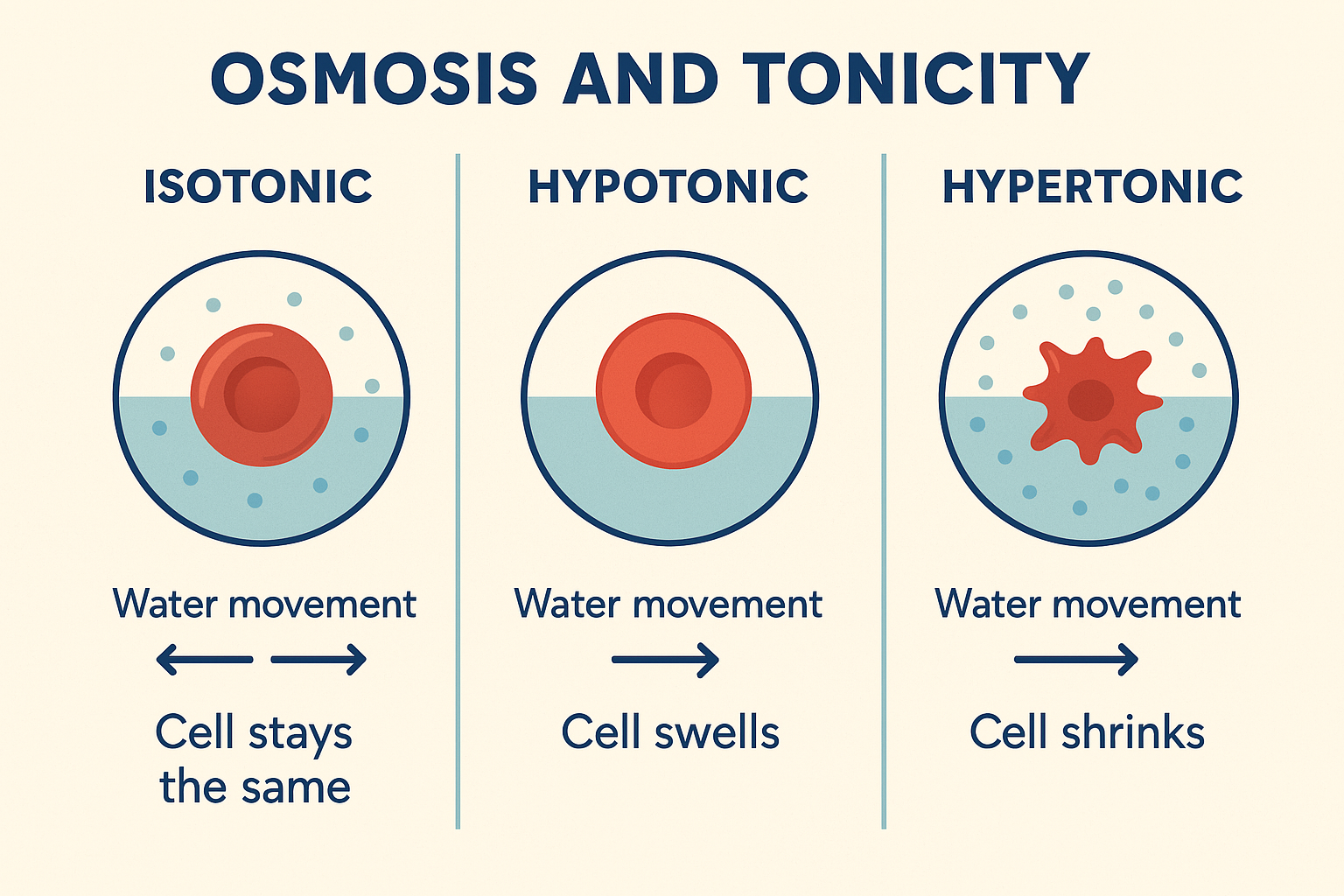
isotonic solution
solution containing same concentration of dissolved substances and water as the living cell placed in it.
since concentration of water is the same on both sides of the cell membrane, equal amounts of water enter the cell as exit the cell.
ex; blood cells will stay the same size when placed in an isotonic solution
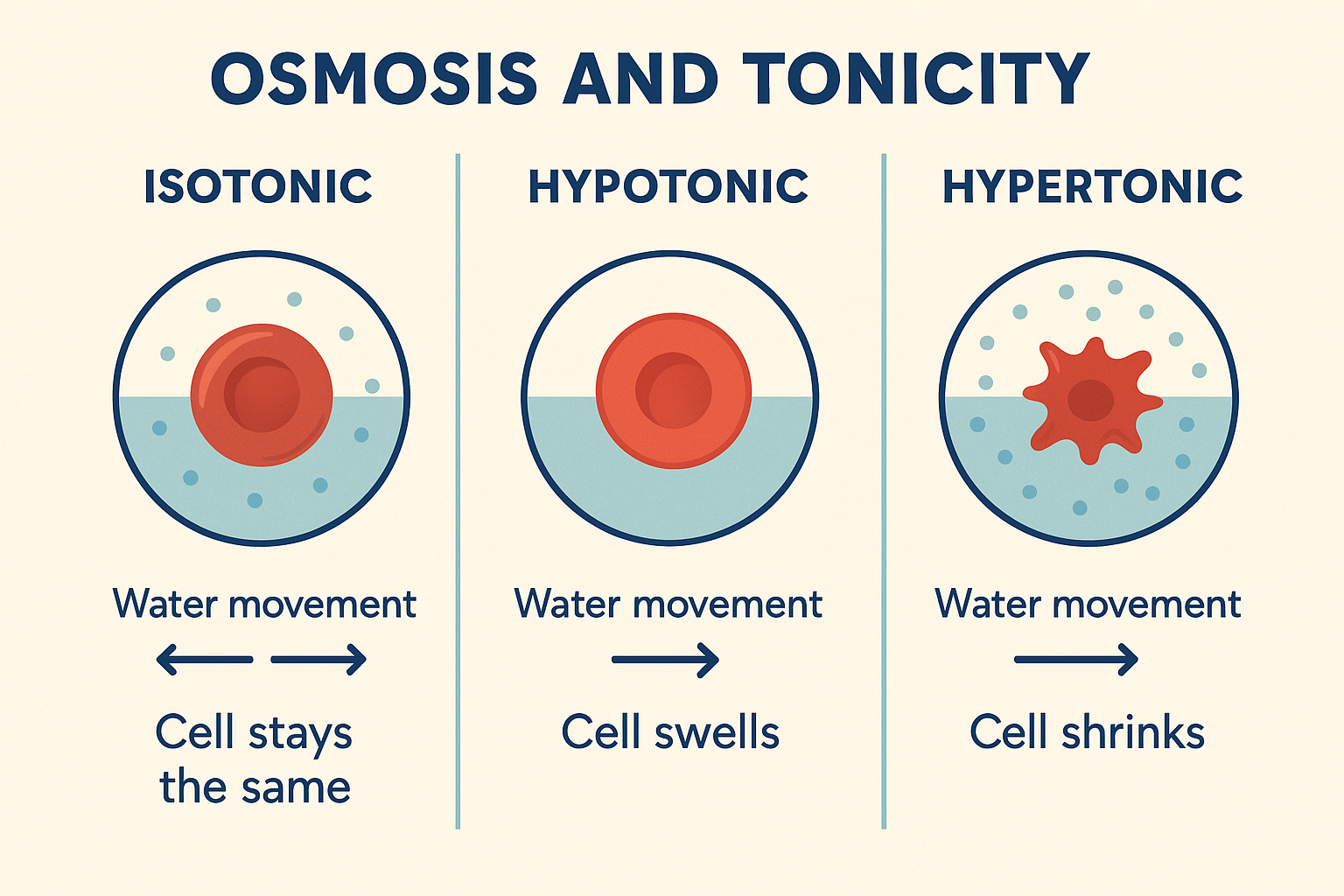
hypotonic solution
a solution containing a lower concentration of dissolved substances and a greater concentration of water than found in the cell
since concentration of water is higher outside cell membrane than inside the cell membrane, there is a net movement of water into the cell by osmosis. This causes the cell to swell
ex: blood cells are blacked in distilled water, the blood cells would swell and burst in a a process called hemolysis
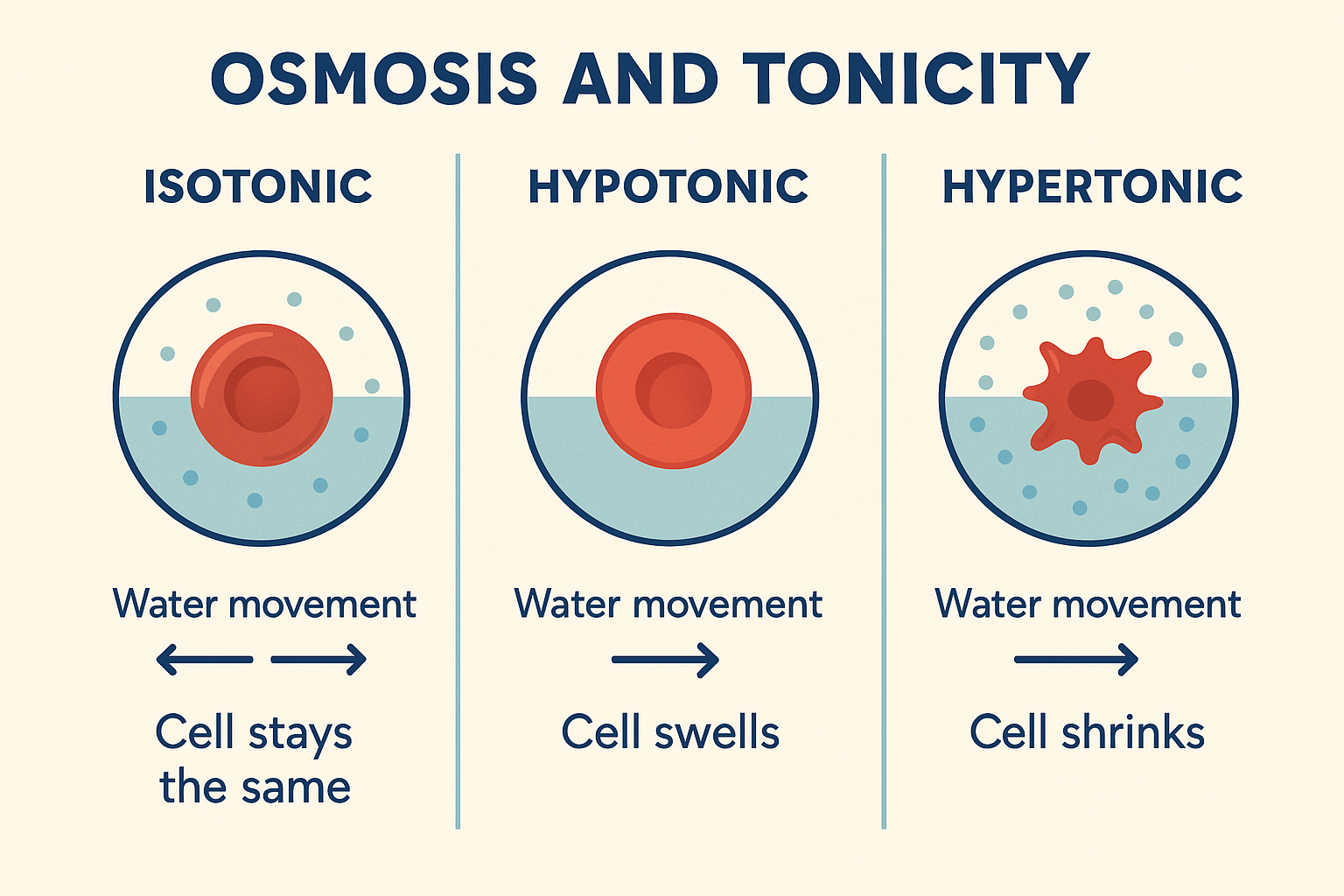
hypertonic solution
water moves out of the cell, more water in cell than cell membrane, cell shrinks
ex; if a person’s boat sinks at sea, he cannot drink the salty sea water or massive dehydration and shrinking of the body cells would result
organelles characteristics
growth
repair
maintence
control of cellular functions
nucleolus
site of ribosome production (rRNA) ribosome factory
DNA
double strand helix of genetic material inside nucleus
RNA
single strand helix of genetic material produced in the nucleus and exists through nuclear pores (mRNA, tRNA, rRNA)
gene
segment of DNA that codes for a protein
chromatin
thread-like, loosely coiled dna
chromosomes
tightly packed DNA prior to cell devision
ribosome
made in nucleolus,
small, round, granular structures
sites of protein synthesis by assembling amino acids in order, made up of special RNA
Endoplasmic reticulum
double membrane channels which are continuos with the nuclear membrane
Smooth ER
free of ribosomes
rough Er
studded w/ribosomes
golgi complex
processes, packages, sports and delivers protiens to cell
secretion of lipid molecules for transport.
form lysosomes from trans face
golgo vesivles or vacuoles
-fluid and product filled organnels enclosed by a lipid bylarey
-varied storage functions are for metabolism transport, enzymes and chemical RNA
-vesicles are smaller than vacules and cdan fuse to other cells
lysosome
small membrane enclosed sphere or digestive enzymes. Intercellular digestion,
autophasy is process by old worn out organells digested
autolysis is process by which lysosome digest themselves
peroxisome
found in liver&kidney, must have metabolic oxygen to function, detoxifying molecules break down fatty acids through beta oxidation
mitochondrea
powerhouse of cell, small spherical or rod shaped,
structures, sites of cellular respiration…conversion of glucose & lipids to ATP, aerobic energy metabolism, Krebs cycle
cytoskeleton
internal structure of cytoplasm
provides support&mains shape of cell, organization for chemical reactions, assists in transport of substances through cytosol
microfilaments
rod-like, variable length- acting & myosin in muscles
microtubles
straight cylindrical structures
intermediate filaments
strucctural support & framework
centrosomes
dense area of spherical cytoplasm generally located near the nucleus
centrioles
dense area of spherical structures located within the centrosome which serves as center of chromosome movement during cell devision
micovilli
folds on cell membrane, increase surface area for absorption of nutrients, digestive system
cilia
slender projections of cell membrane, move substances across surface of cell,

label the cell

cell division
cell reproduce themselves in increased number of cells or hyperplasia. Body cells/somatic cells have 46 chromosomes in every cell. Sex cells or gametes have 23 chromosomes in every cell .
step one: nuclear division
(mitosis)-46 chromosomes
(meiosis)-23 chromosomes
interphase, metabolic phase
replication of DNA molecules go from 46 to 92
replication of centrioles
time-highly variable from non existent to years
nromaly 18-24 hours
mitosis
formation of new daughter cells with identical genetic makeup of the parent cell, called diploid (2n)
meiosis
mechanism which sperm and egg cells are produced, called gametes
fertilization
union and fusion or gametes
zygote
cell produced by fetrilization
mitosis and cytokinesis stages
PMAT
prophase =dna is tightly packed, nuclear membrane disapears
Metaphase=chromosomes line Iine up in middle
anaphase=chromosomes break apart and move to opposite sides
telophase=2 nuclei and nuclear membrane reappears in each cell.
Meiosis process
the gametes ungergo one more round of cell division to create 4 new non identical haploid cells