1.1 Individualism
 Call Kai
 Learn
Learn Practice Test
 Spaced Repetition
 Match
Match Flashcards
 Knowt Play
1/18

Earn XP
Description and Tags
02/02/2026
Name | Mastery | Learn | Test | Matching | Spaced | Call with Kai | Chat |
|---|
No analytics yet
Send a link to your students to track their progress
19 Terms
what is democratic socialism?
a political and economic system where the power ultimately rests with the people, but resources are controlled for the betterment of everyone. appears in the top left corner of the mega spectrum
ex: sweden
what is democratic capitalism?
a political and economic system where the power ultimately rests with the people, but limited government involvement in the economy is preferred. exists in the top right corner of the mega spectrum
ex: USA
what is dictatorial capitalism?
a political and economic system where the government has ultimate authority, but limited government involvement in the economy is preferred. exists in the bottom right corner of the mega spectrum
ex: modern russia, nazi germany,
what is dictatorial socialism?
a political and economic system where the government has ultimate authority, but resources are controlled for the benefit of everyone. exists in the bottom left corner of the mega spectrum
ex: north korea, USSR
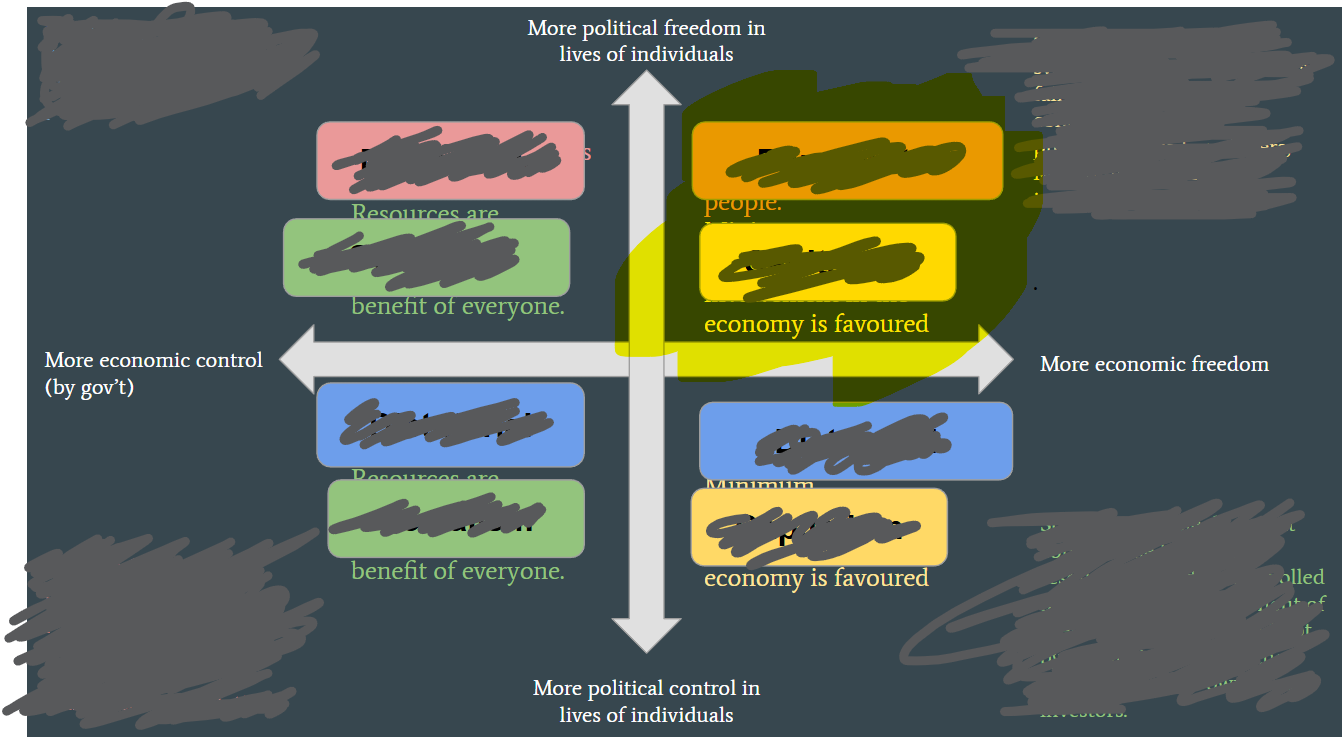
which one is this?
democratic capitalism
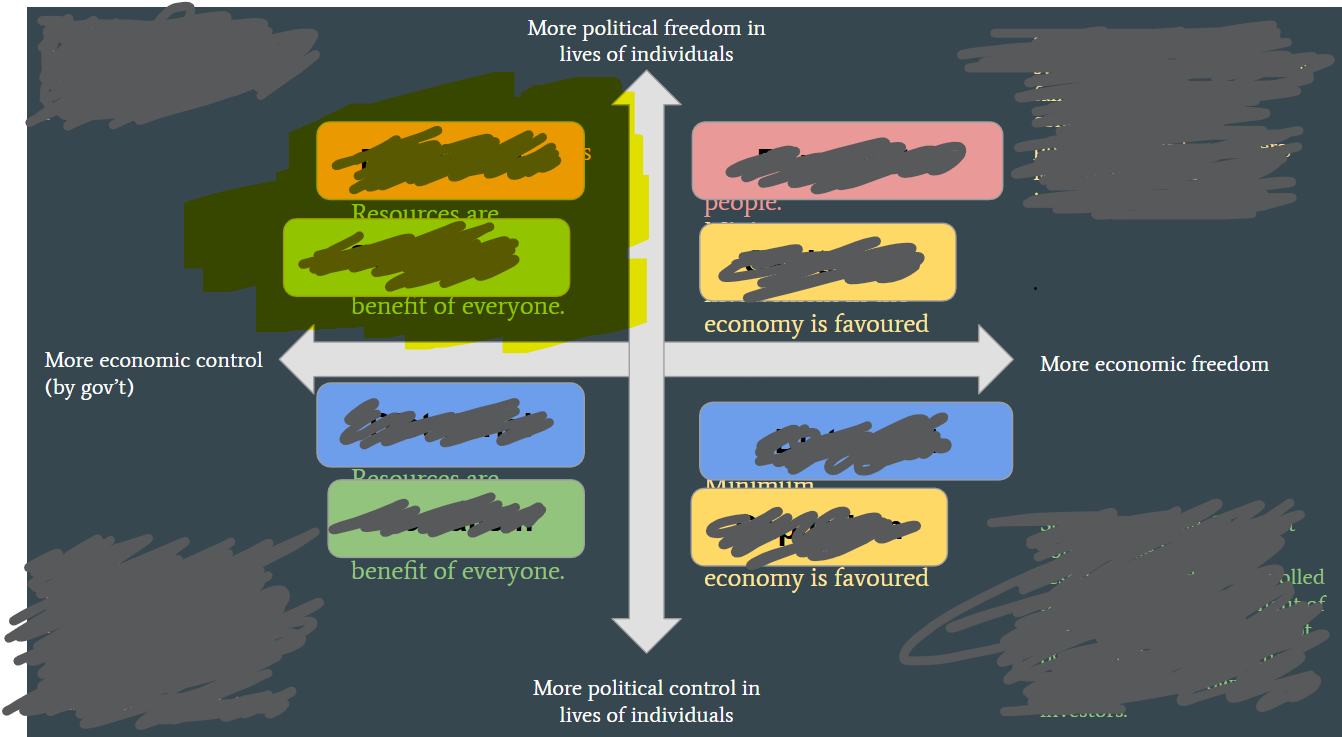
which one is this?
democratic socialism
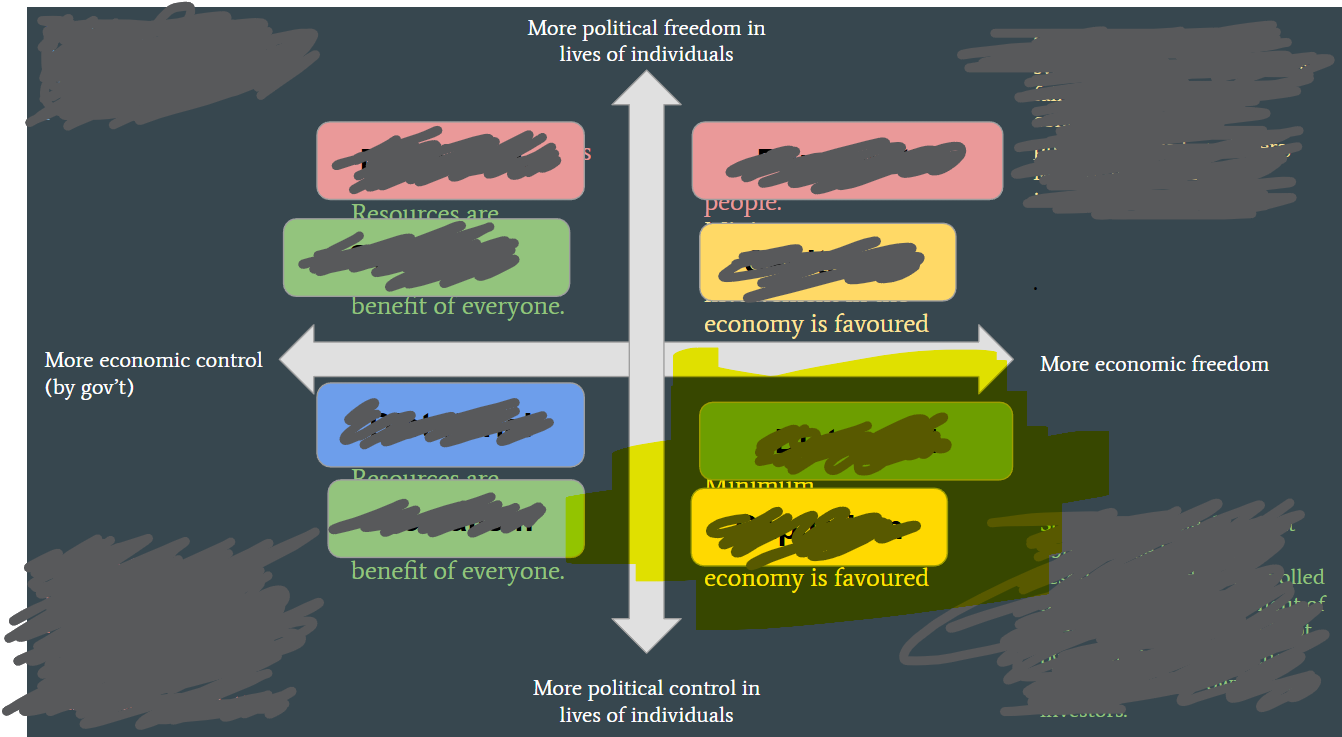
which one is this?
dictatorial capitalism
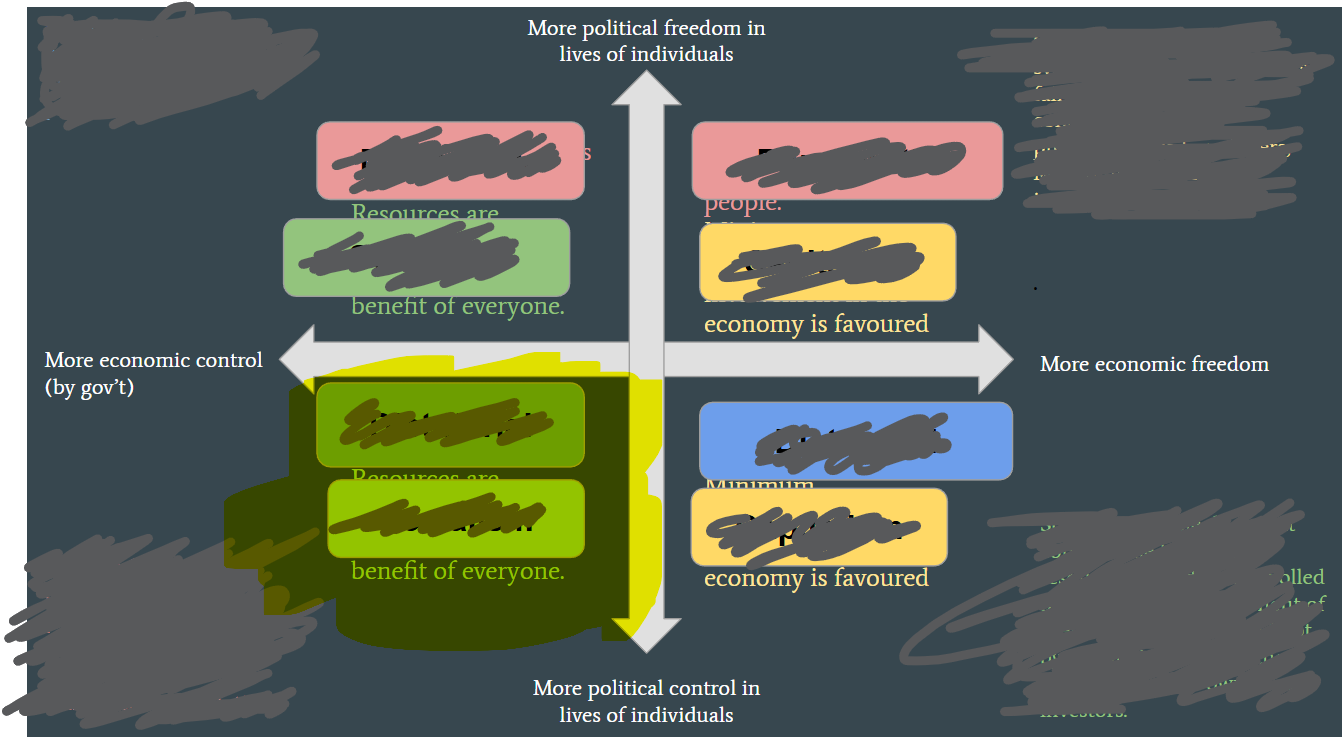
which one is this?
dictatorial socialism
early understandings/developments of individualism
individuality became more important during the Renaissance (1450-1600)
influences form ancient greek culture introduced the idea that people don’t have to be “stuck” in a god-ruled hierarchy
a notion of human potential focused on ideals such as strength, beauty, and reason of individual humans
the protestant reformation (1500-1650) also contributed to individualistic ideals by challenging the authority of the Roman Catholic Church
what is the PRICES acronym
it refers to the principles of individualism:
P: Private Property
R: Rule of Law
I: Individual Rights and Freedoms
C: Competition
E: Economic Freedom
S: Self-Interest
P: private property
the idea that nobody can be denied the the right to accumulate or trade valued items that are not in the property of others
includes the right of use, which allows the owner to utilize their property in any preferred manner as long as it doesn’t infringe on the rights of others
includes the right of disposal, which allows the owner to discard the property, or give ownership to another
includes the right of income, which is the right to use you property as a source of profit (like renting/selling/leasing)
R: Rule of Law
Nobody is above the law; everyone is equal under the law
must be clearly defined rules that make up the law, not arbitrary decisions made by a higher power
states that if two people commit the same crime, they should get the same punishment (justice is blind)
is why in a democracy the judicial branch is separate from the executive branch (can’t challenge law against those who wrote it)
I: Individual Rights and Freedoms
include rights like freedom of religion, freedom of association, the right to life, liberty and security of the person
in liberal democracies, an important right is the right to franchise (the right to vote)
rights and freedoms are not absolute. they can be limited if you are infringing on the rights of others
E: Economic Freedom
the freedom to buy what you want, and sell your labour, idea, or product to whomever you wish
business freedoms include: trade freedom, fiscal (tax) freedom, degree of gov’t regulation, monetary freedom
investment freedoms include: financial freedom, property rights, freedom from corruption, labour fredom
S: Self-Interest
we are allowed to act in a way that benefits us. you can care for others, but you don’t have to
C: Competition
the belief that competition incentivizes the both workers and products to be better, hopefully leading to better quality of life for everyone
profit motive incentivizes businesses to find the efficient/innovative methods for businesses
adam smith
he’s kind of the poster boy for individualism
came up with laissez-faire economics and believed that the economy would regulate itself
believed those that fail to compete fail to survive
also believed in the “invisible hand”
the idea that the market can run itself, that there will be booms and busts but its best not to interfere
believed that working in by working in their self-interest, individuals will benefit all of society inadvertently
believed competition among producers should force the best products to be made at the lowest prices due to supply/demand
if consumers are sovereign, supply/demand will dictate the market
advantages of individualism
People are more self-reliant, which in turn boosts feelings of self-worth
You have the opportunity to be very successful/rich
Freedom to express yourself
Competition brings new advancements and technology
Rule of law = everyone knows the limits in society
Accumulating private property is the reward for being a contributing member of society, gives a feeling of control
disadvantages of individualism
There is limited help available to you if you experience failure
A lot of success depends on luck and personal connections rather than hard work
Property is often concentrated in the hands of the more fortunate
It is difficult to get out of poverty
Competition can lead to high levels of stress
The economy experiences drastic fluctuation because there is limited government controls
Society is more selfish, has less consideration for others