ID4741 - Exam #1 : Identification
 Call Kai
 Learn
 Practice Test
 Spaced Repetition
 Match
 Flashcards
 Knowt Play
1/15

Earn XP
Description and Tags
16 Terms

Identify the Image
(1) Name (Architect/Designer/Artist)
(2) Title
(3) Location (Architect)
(4) Technique/Material (Furniture/Art/Artifacts)
(5) Date
(1 & 2) Death Mask of Tutankhamen
(3) Innermost coffin
(4) Gold with inlay of semiprecious stones
(5) ca. 1350 B.C.E.

Identify the Image
(1) Name (Architect/Designer/Artist)
(2) Title
(3) Location (Architect)
(4) Technique/Material (Furniture/Art/Artifacts)
(5) Date
(1 & 2) Stonehenge
(3) Salisbury Plain, Wiltshire, England
(5) ca. 2000 B.C.E.
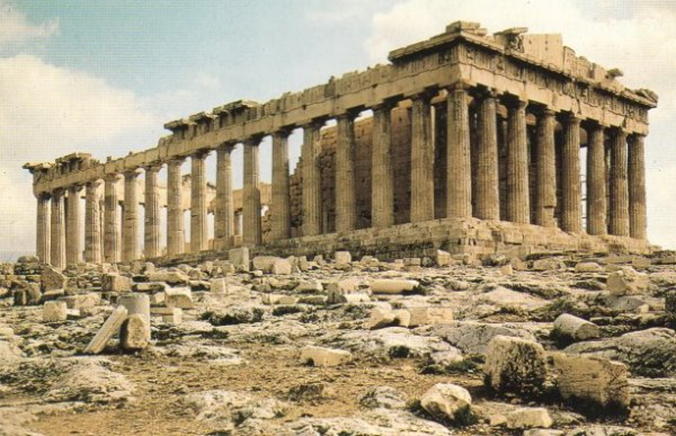
Identify the Image
(1) Name (Architect/Designer/Artist)
(2) Title
(3) Location (Architect)
(4) Technique/Material (Furniture/Art/Artifacts)
(5) Date
(1) Iktinos and Kallikrates
(2) The Parthenon
(3) Acropolis, Athens
(5) 448-432 B.C.E.
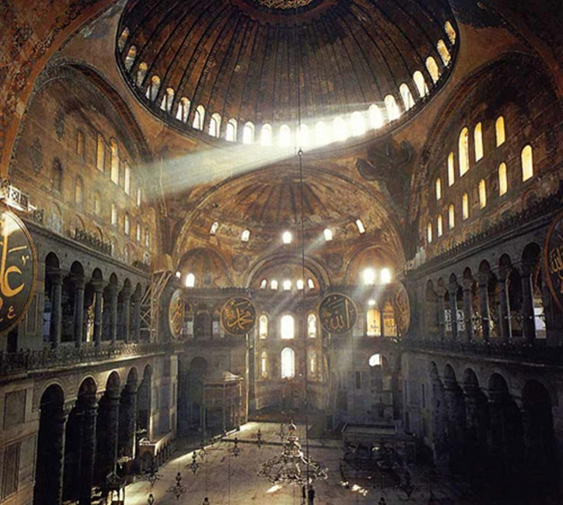
Identify the Image
(1) Name (Architect/Designer/Artist)
(2) Title
(3) Location (Architect)
(4) Technique/Material (Furniture/Art/Artifacts)
(5) Date
(1) Anthemius of Tralles and Isidorus of Miletus
(2) Hagia Sophia
(3) Constantinople (Istanbul)
(5) 532-537

Identify the Image
(1) Name (Architect/Designer/Artist)
(2) Title
(3) Location (Architect)
(4) Technique/Material (Furniture/Art/Artifacts)
(5) Date
(1 & 2) Throne of Frankish King Dagobert I
(*) Legs early 7th century, Arms and Back
(4) Bronze
(5) 1125-1150

Identify the Image
(1) Name (Architect/Designer/Artist)
(2) Title
(3) Location (Architect)
(4) Technique/Material (Furniture/Art/Artifacts)
(5) Date
(1 & 2) The Ziggurat at Ur-Nammu
(5) ca. 2100 B.C.E.
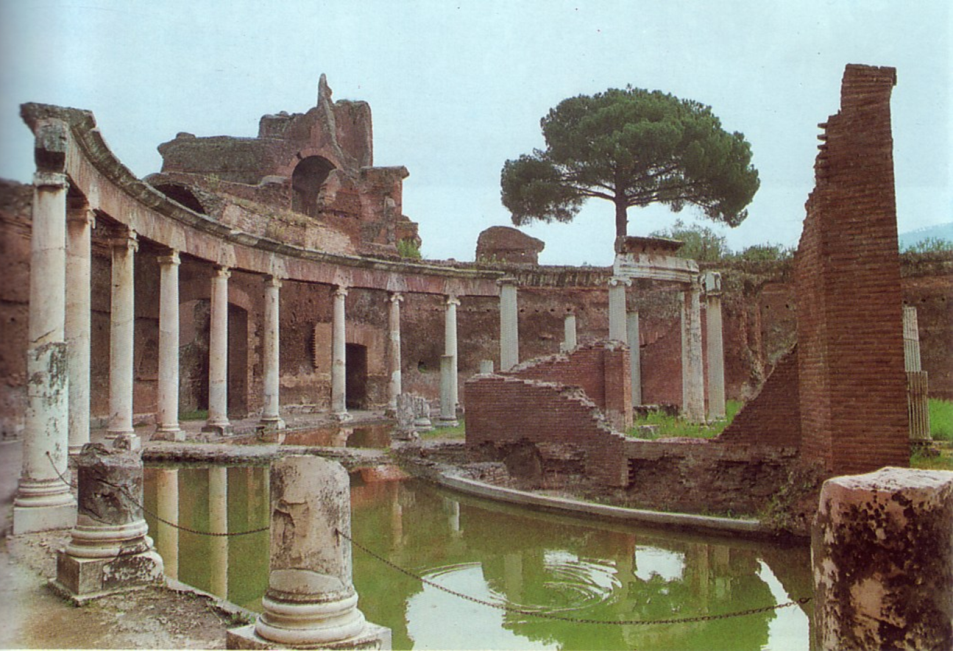
Identify the Image
(1) Name (Architect/Designer/Artist)
(2) Title
(3) Location (Architect)
(4) Technique/Material (Furniture/Art/Artifacts)
(5) Date
(1 & 2) Hadrian’s Villa
(3) Tivoli near Rome
(5) ca. 135 C.E.
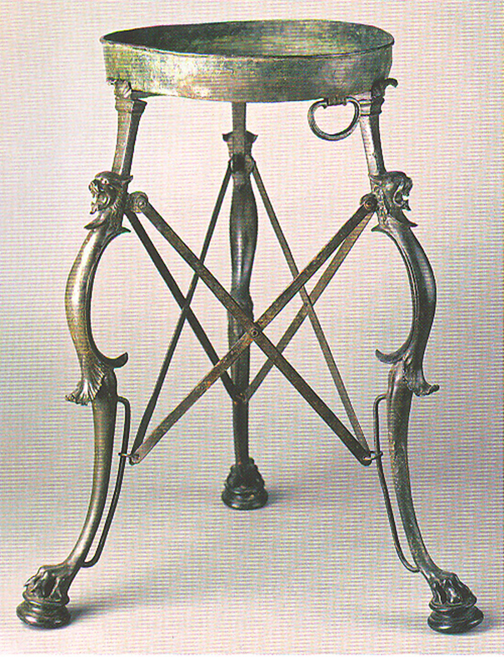
Identify the Image
(1) Name (Architect/Designer/Artist)
(2) Title
(3) Location (Architect)
(4) Technique/Material (Furniture/Art/Artifacts)
(5) Date
(1 & 2) Roman Brazier
(4) Bronze
(5) 1st century C.E.

Identify the Image
(1) Name (Architect/Designer/Artist)
(2) Title
(3) Location (Architect)
(4) Technique/Material (Furniture/Art/Artifacts)
(5) Date
(2 & 3) The Pantheon, Rome
(5) 118-125

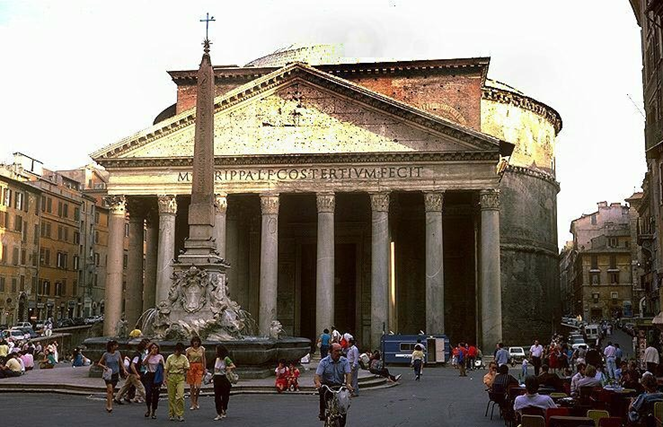
The Background:
The Pantheon, Rome
118-125
• Only building been in continuous use since classical antiquity to the present day; built during rule of Emperor Hadrian 117-138
• Temple dedicated to all gods, later converted into a church
• Temple façade set in front a domed rotunda; dome consists of a shell of concrete that gradually thickens towards the base
• Interior: coffered ceiling (decorative, sunken panels), oculus (round opening in the ceiling); floor slightly convex (drainage)


Identify the Image
(1) Name (Architect/Designer/Artist)
(2) Title
(3) Location (Architect)
(4) Technique/Material (Furniture/Art/Artifacts)
(5) Date
(1) Temple of Amen-Mut-Khonsu
(3) Luxor, Egypt
(5) ca. 1370 B.C.E.
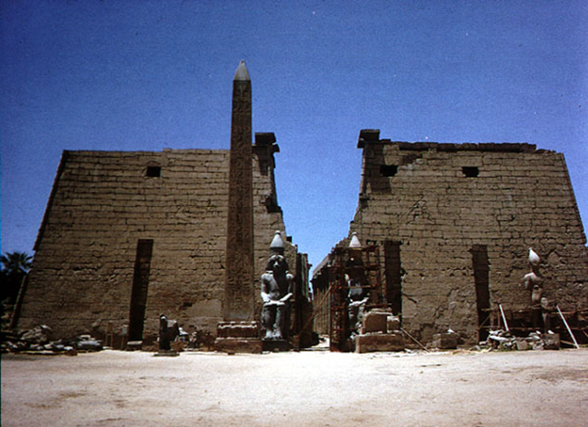
The Background:
Temple of Amen-Mut-Khonsu
Luxor, Egypt
ca. 1370 B.C.E.
• Includes: court, colonnade of Amenhotep III (ca. 1370 B.C.E.), facade
• Façade of the Pylon = simple, massive and sloping walls bisected by temple entrance
• Side of the temple = ruins of the outside wall; alternating bud- and bell-shaped capitals
• Pylon temples with hypostyle halls are typical of the New Kingdom
• Features of Egyptian hypostyle design: clerestory = raised/central rows of columns (higher than those at the sides) to allow light in. The interior of the hall remained in the shadow (cooling effect)
• Plan - Characteristics of a pylon temple: Body mass symmetrical around central axis that runs from an approaching avenue through a succession of colonnaded courts and halls to terminate in a dimly lit inner sanctuary

Identify the Image
(1) Name (Architect/Designer/Artist)
(2) Title
(3) Location (Architect)
(4) Technique/Material (Furniture/Art/Artifacts)
(5) Date
(1 & 2) Gold Throne - Tomb of Tutankhamen
(3) Gilded wood with inlays of semi-precious stones
(5) ca. 1350 B.C.E.

The Background:
Gold Throne - Tomb of Tutankhamen
Gilded wood with inlays of semi-precious stones
ca. 1350 B.C.E.
• Tutankhamen’s burial chamber was richly furnished, giving us a pretty clear idea of what the best of Egyptian interiors would have looked like
• Legs with carved lion head decorations
• Arms of chair are winged serpents (cobra heads with wings of falcons)
• Compare with austerity of Furniture of Queen Hetepheres’ bed
Identify the Image
(1) Name (Architect/Designer/Artist)
(2) Title
(3) Location (Architect)
(4) Technique/Material (Furniture/Art/Artifacts)
(5) Date
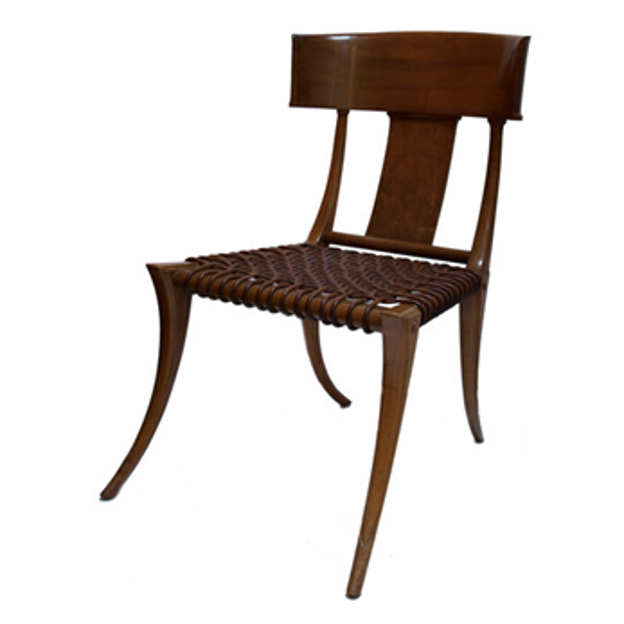
(1) T.H. Robsjohn-Gibbings
(2) Klismos Chair
(4) Wood and leather
(5) ca. 1961

The Background:
T.H. Robsjohn-Gibbings
Klismos Chair
Wood and leather
ca. 1961
• British-American designer with background in antique trade
• Modernist who rejected Bauhaus-style functionalism
• Furniture inspired by Greek models as antidote to functionalism
• Interior Design Writings: Goodbye, Mr. Chippendale (1944), a parody of modern interior design; Mona Lisa's Mustache: A Dissection of Modern Art (1947); and Homes of the Brave (1953)
• In 1960, he met Greek cabinetmakers Susan and Eleftherios Saridis; together, they created the Klismos line of furniture, which drew heavily on classical forms