Basic Cell Biology W1 Biochem
 Call Kai
 Learn
 Practice Test
 Spaced Repetition
 Match
 Flashcards
 Knowt Play
1/19

There's no tags or description
Looks like no tags are added yet.
20 Terms
Nucleus
contains most of cell DNA - DNA is condensed as chromatin
Nuclear Structure
Nucleus surrounded by a double membrane, continuous with the endoplasmic reticulum membrane (ER)
nuclear pores allow proteins and RNA to enter/ leave nucleus
Nucleolus role
site of assembly of ribosomes
Mitochondria role
produces most of cells ATP by oxidative phosphorylation
what happens in inner membrane of mitochondria
site of oxidative phosphorylation
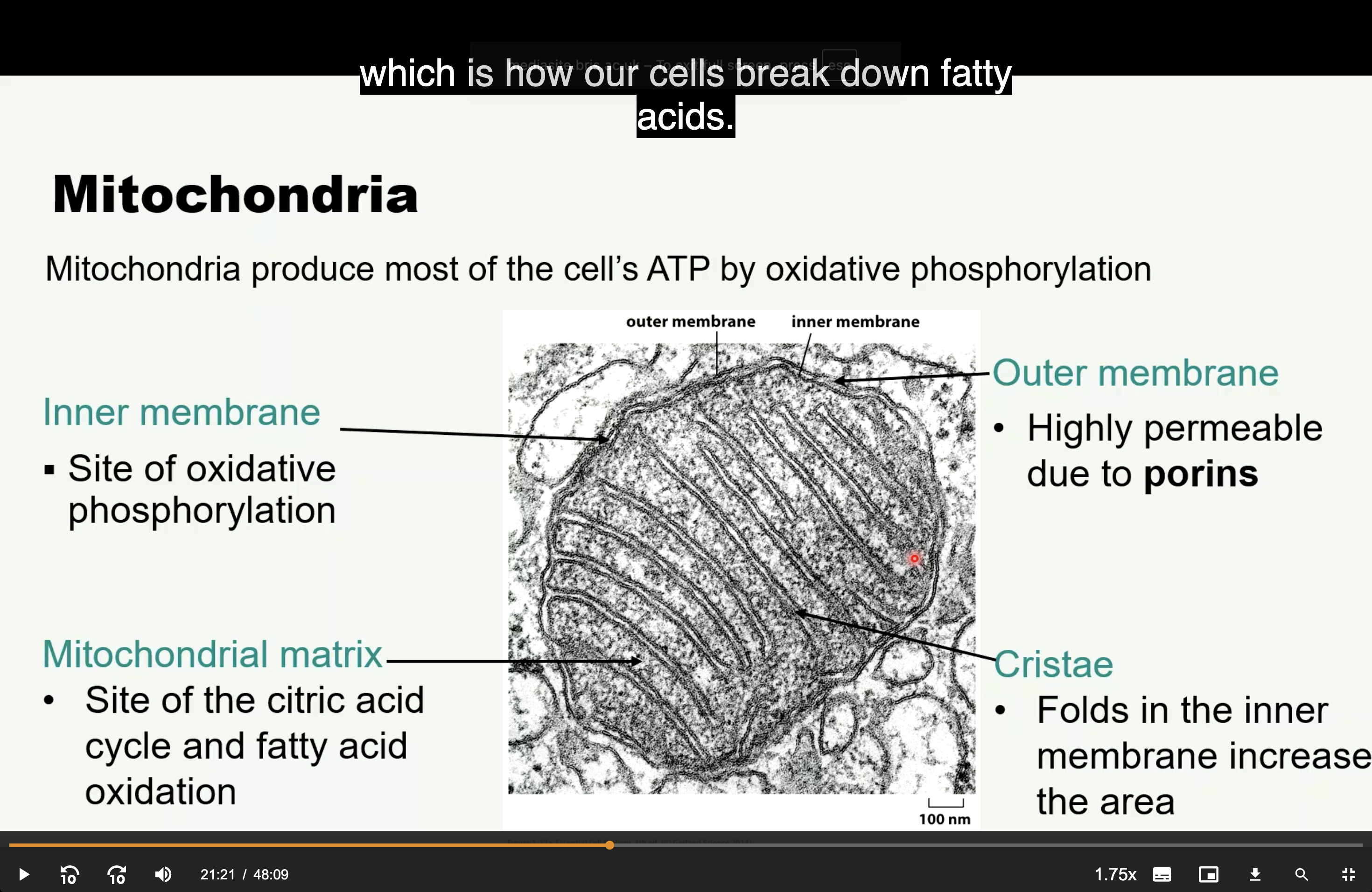
outer membrane of mitochondria
highly permeable due to porins

cristae
folds in the inner membrane which increases surface area
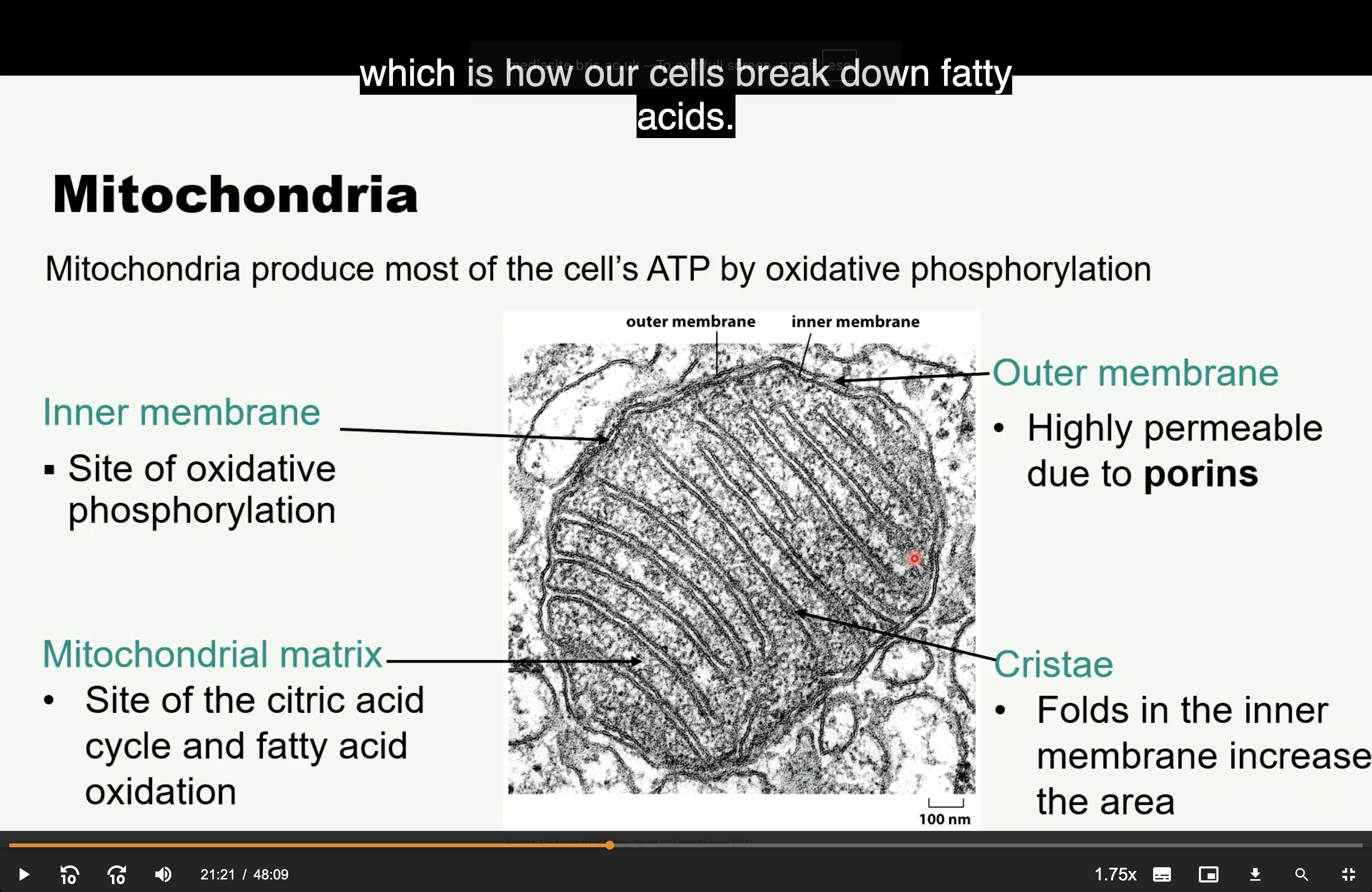
role of mitochondrial matrix
site of citric acid cycle and fatty acid oxidation
rough er
bound by many ribosomes
site of synthesis of protein destined for secretion and membrane proteins
smooth er
no bound ribosomes
site of lipid synthesis
golgi role
modifications of proteons and lipids eg addition of sugard groups
sorts and packages proteins and lipids tp other organelles of the cell
what can transport vesicles of golgi do?
transport vesicles bud off and fuse to allow exchange of material between Golgi, ER, plasma membrane and other organelles
lysosomes
degradation of unwanted cell components
low ph are suited to hydrolase enzymes so work best there
receive waste from golgi vesicles
peroxisomes
contain oxidative enzymes that produce hydrogen peroxide
hydrogen peroxide used to detoxify molecules and kill bacteria
proteasomes
protein complexes that break down proteins marked for disposal by ubiquitin molecules
recycle unwanted or damaged proteins
not membrane bound so not technically oprganelles
cytosol
fluid inside cytoplasm not including membrane bound organelle
3 main types of cytoskeleton components
actin filaments
microtubules
intermediate filaments
actin filament (SMALLEST OF MAIN CYTOSKELETON COMPONENTS)
can grow/shrink by adding/removing actin subunits
change cell shape and cause movement
form cellular extensions eg microvilli
involved in muscle contraction
microtubules (BIGGEST OF MAIN CYTOSKELETON COMPONENTS)
hollow cylinders of tubulin subunits
extended from the centrosome near the nucleus
pull apart chromosomes during cell division
form cilia and flagella e.g. sperm tails
provide ‘tracks’ for transport of molecules or organelles using motor proteins
kinesins - outward tranpsort
dyneins - inward transprt
intermediate filaments
rope like filaments found throughout the cytoplasm
provide mechanical strength for the cell - prevent shearing