A&P Lab - Bones
 Call Kai
 Learn
 Practice Test
 Spaced Repetition
 Match
 Flashcards
 Knowt Play
1/248

There's no tags or description
Looks like no tags are added yet.
249 Terms
axial skeleton
the bones that lie around the body’s center of gravity
appendicular skeleton
bones of the limbs or appendages
compact bone
dense, made up of osteons, hard outer layer of bone
spongy bone
composed of trabeculae and lots of open space, inside
long bones
long, thin shaft with expanded ends, (femur, humerus)
short bones
cube-shaped, contain more spongy bone (carpals & tarsals)
flat bones
thin, wafer-like (sternum, ribs)
irregular bones
bones with various processes and shapes (vertebrae)
sesamoid bones
bones formed within a tendon or ligament (patella)
Wormian/sutural bones
tiny bones between cranial bones
fissure
narrow, slit like opening (crack)
foramen
round or oval opening through a bone (hole)
fossa
shallow basin like depression in a bone, serve as an articular surface
meatus
canal-like passageway
sinus
bone cavity, filled with air and lined with mucous membrane
diaphysis
shaft of a long bone
epiphysis
rounded ends of a long bone
periosteum
membrane around bone
sharpey’s fibers/perforating fibers
fibers that hold the periosteum to the bone
articular cartilage
cartilage at the ends of bones
endosteum
membrane lining the medullary cavity
epiphyseal plate
thin area of hyaline cartilage that provides longitudinal growth
epiphyseal line
thin line that appears after a bone is done growing
medullary cavity
the cavity inside the diaphysis
proximal epiphysis
what is 1?
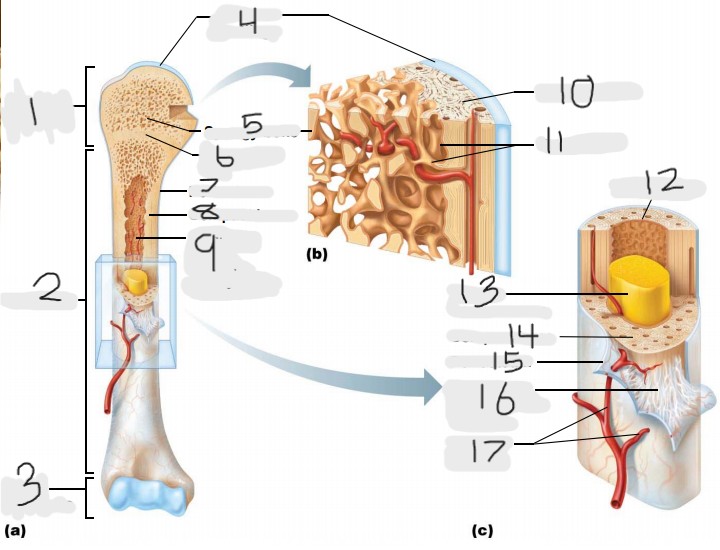
diaphysis
what is 2?

distal epiphysis
what is 3?

articular cartilage
what is 4?

spongy bone
what is 5?
epiphyseal line
what is 6?

periosteum
what is 7?

compact bone
what is 8, 10, and 14?
medullary cavity
what is 9?

endosteum
what is 12?

yellow bone marrow
what is 13?

periosteum
what is 15?

perforating fibers
what is 16?

yellow bone marrow
fatty tissue inside the long bone
red bone marrow
tissue that makes red blood cells and white blood cells
central canal
what is 1 & 15?

osteon
what is 2?

circumferential lamellae
what is 3?

compact bone
what is 4?

spongy bone
what is 5?

volkmann’s canal/perforating canal
what is 6?

endosteum
what is 7?

perforating fibers
what is 8?
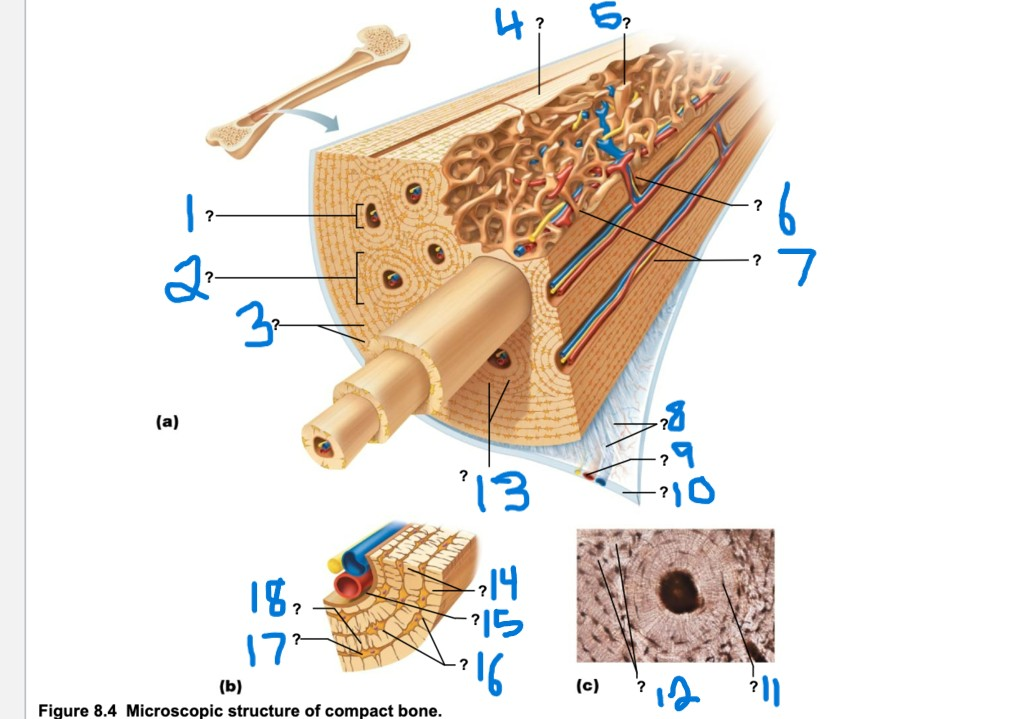
periosteum
what is 10?

interstitial lamellae
what is 12 & 13?

lacuna
what is 11 & 16?
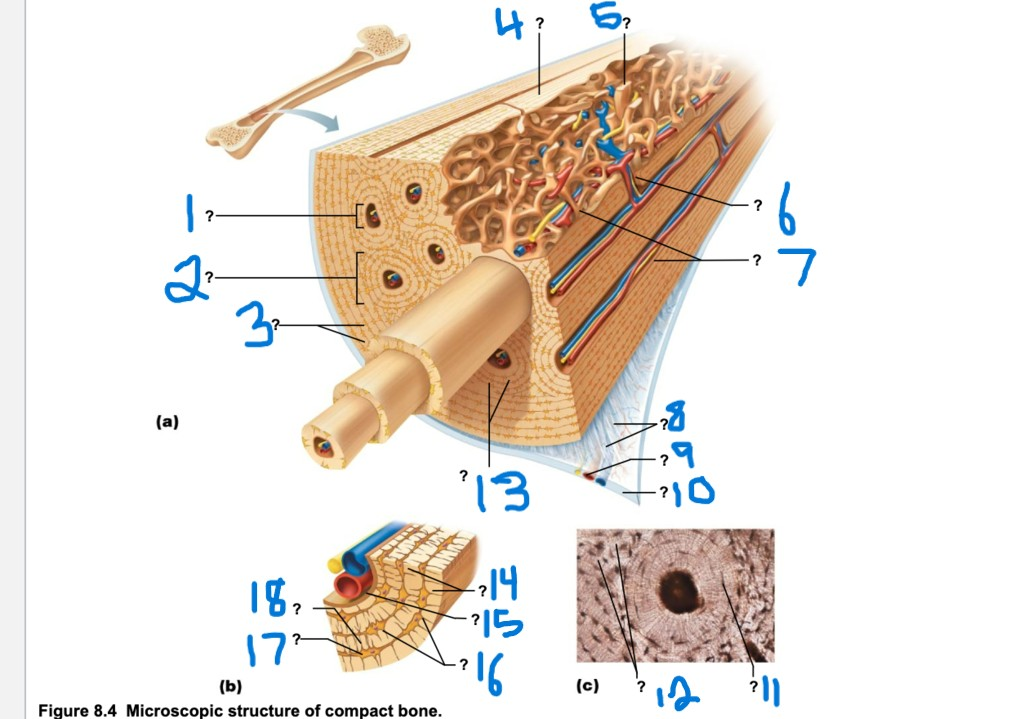
lamellae
what is 14?

osteocyte
what is 17?

canaliculi
what is 18?

central canal/haversion canal/osteonic canal
the middle of an osteon that carries blood vessels, nerves, and lymphatic vessels
osteocyte
mature bone cell
lacunae
chambers/pits that hold osteocytes
concentric clamellae
circles/rings around the central canal
osteon/Haversian system
the central canal + lamellae
canaliculi
tiny canals radiating outward from a central canal to the lacunae of lamella, transportation networks connecting the osteon to nutrient supply
perforating canals/volkmann’s canals
canals that run at right angles to the shaft and connect blood and nerve supply of medullary cavity to central canals
cranial cavity
the area containing the brain
cranial vault/calvaria
superior, lateral, and posterior walls of the skull
cranial base/floor
bottom of the skull
coronal suture
what is 1?

parietal bone
what is 2?

temporal bone
what is 3?

lambdoid suture
what is 4?

squamous suture
what is 5?
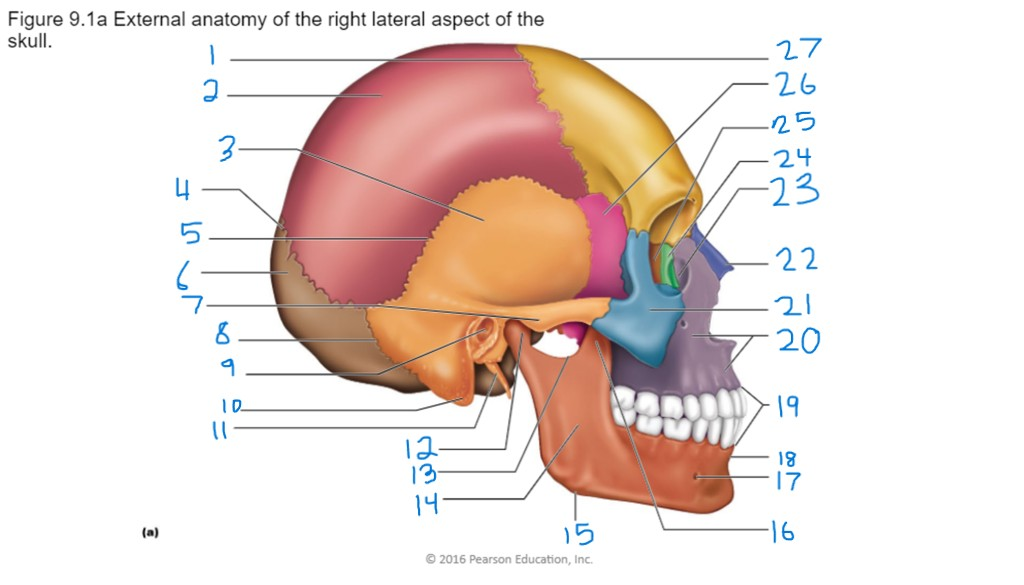
occipital bone
what is 6?

zygomatic process
what is 7?

external acoustic meatus
what is 9?

mastoid process
what is 10?
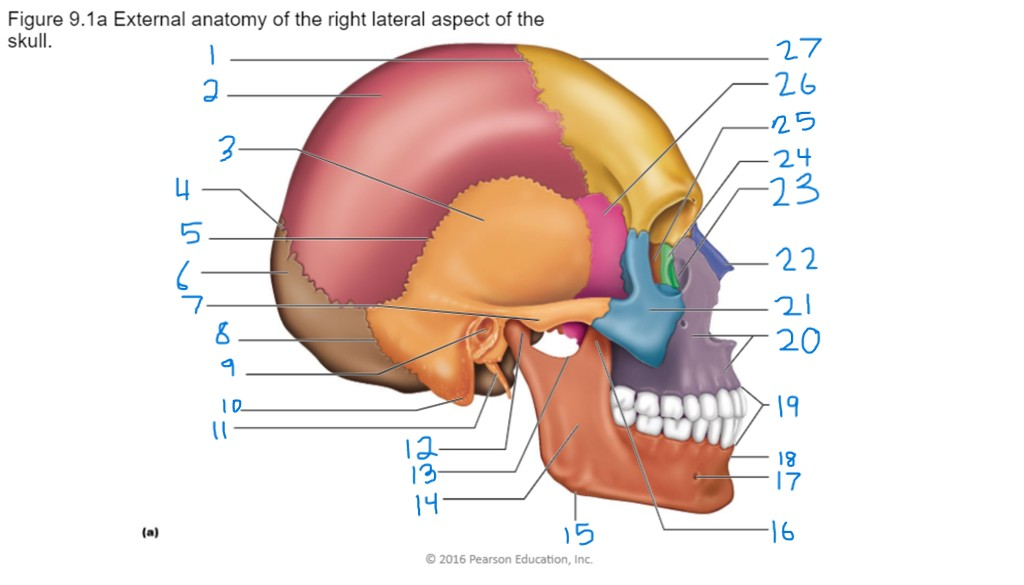
styloid process
what is 11?

mandibular condyle
what is 12?

mandibular ramus
what is 14?

mandibular angle
what is 15?

coronoid process
what is 16?

mental foramen
what is 17?

mandible
what is 18?

alveolar margin/alveolar processes
what is 19?

maxilla
what is 20?

zygomatic bone
what is 21?

nasal bone
what is 22?

lacrimal fossa
what is 23?

lacrimal bone
what is 24?

ethmoid bone
what is 25?

sphenoid bone (greater wing)
what is 26?

frontal bone
what is 27?

palatine process
what is B?
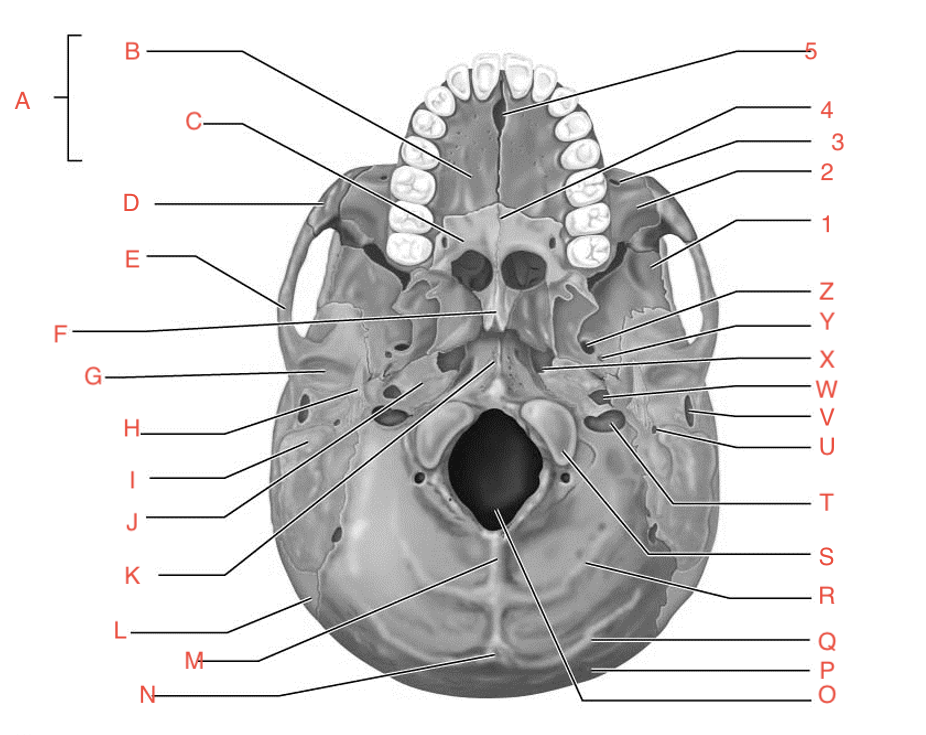
palatine bone
what is C?

zygomatic bone
what is D?

zygomatic process of temporal bone
what is E (specific)?
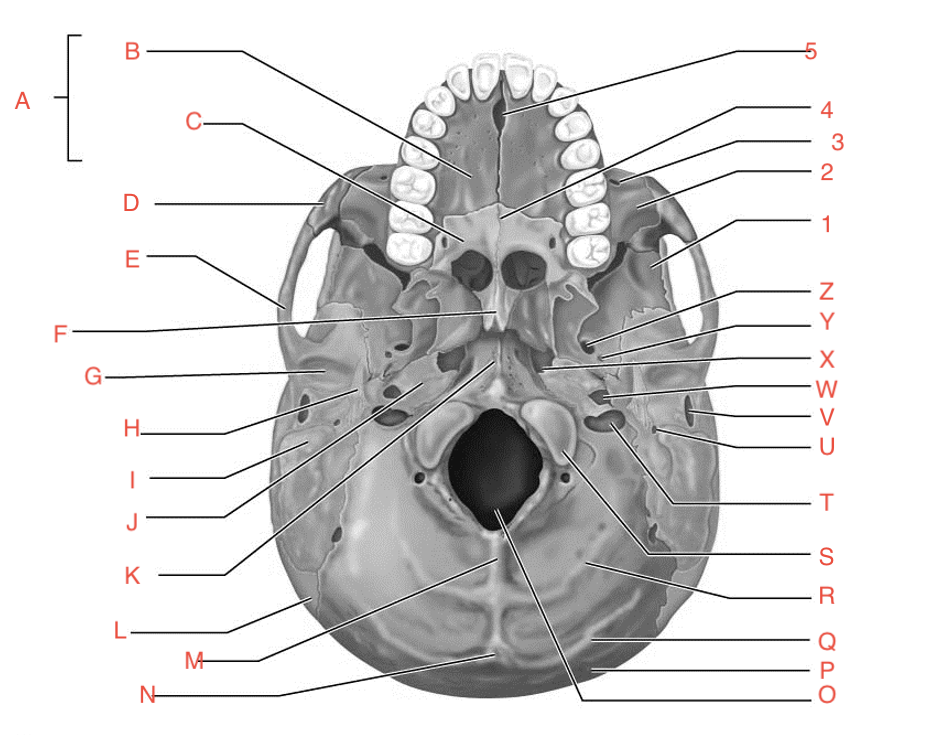
vomer
what is F?

styloid process
what is H?
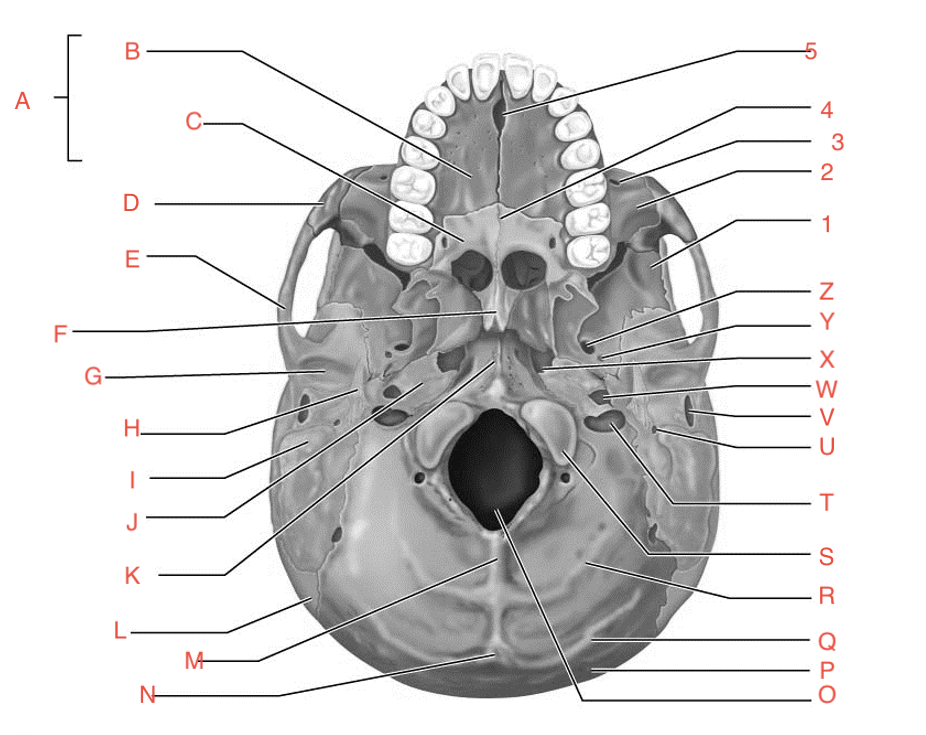
mastoid process
what is I?
petrous part of temporal bone
what is J?

parietal bone
what is L?

external occipital protuberance
what is N?

infraoribital foramen
what is 3?

maxilla
what is 2?
