LAB EXAM 2
 Call Kai
 Learn
 Practice Test
 Spaced Repetition
 Match
 Flashcards
 Knowt Play
1/170

There's no tags or description
Looks like no tags are added yet.
171 Terms
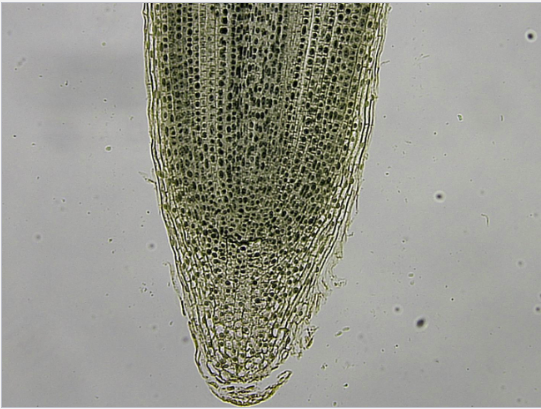
Root cap, used for protection and gravity orientation
meristem above

Cortex cells, starch granules inside

Meristemic region, mitosis + cytokinesis occuring

Meristemic region
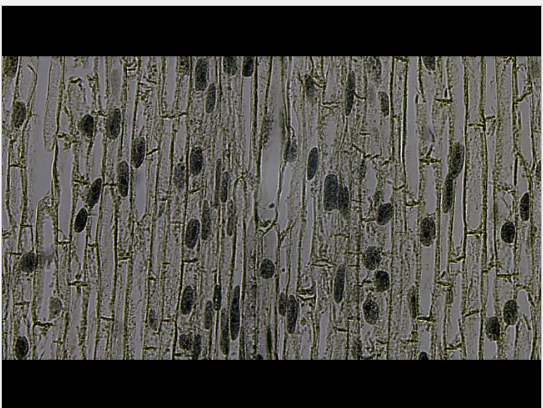
Zone of elongation, cells being stretched out

Monocot Root (Epidermis, cortex, endodermis w/ casparian strip, vascular tissue
Phloem and xylem arranged in a ring in the endodermis
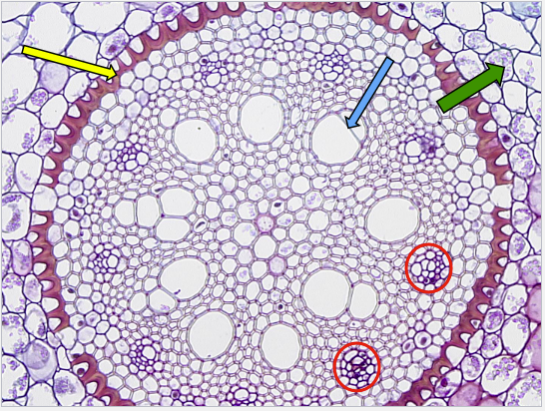
Yellow = endodermis, green = cortex w/ starch, red = phloem, blue = xylem

Green = phloem (sieve tube elements), yellow = xylem, blue = companion cells (adjacent to phloem, nucleus)

Eudicot root, xylem + phloem in the center
green = cortex

Eudicot root, blue = endodermis, green = cortex cells w starch, yellow = xylem, red = phloem
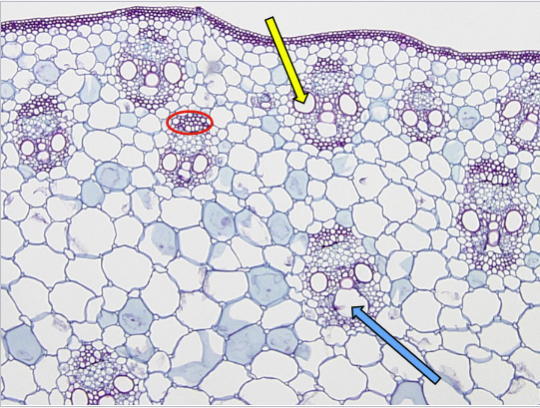
Monocot stem
Epidermis outside
red = phloem, yellow = xylem, blue = air space (irregular shape)

Vascular bundle
Blue = xylem, red = air space, yellow = sieve tube element, green = companion cell

Vascular bundles close to epidermis, likely Eudicot stem
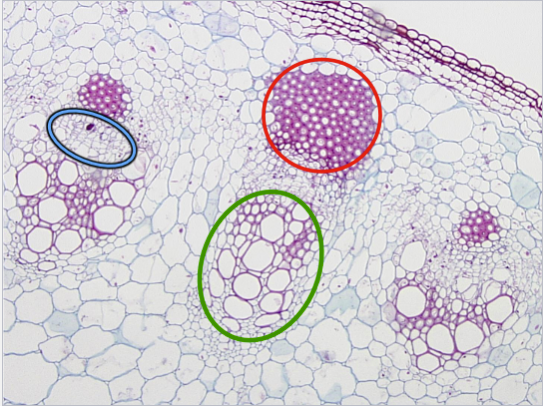
Green = xylem, red = phloem, blue = vascular cambium
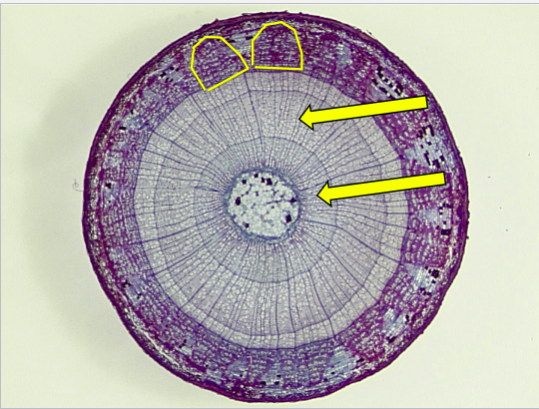
Tree rings
Vascular cambium
yellow arrow = annuli, yellow = phloem
primary xylem in center, rings = secondary xylem

Brackets in annuli = spring and summer wood
Spring = inner, ideal growth conditions
summer = outer
Eudicot = left, monocot = right (no annuli)


Leaf, likely monocot
red = upper epidermis, yellow = stoma (in lower epidermis), red circle = vascular bundle, blue = lower epidermis

Eudicot leaf
Blue bracket = spongy mesophyll, yellow bracket = palisade mesophyll, red = vascular bundle, yellow arrow = cuticle (waxy layer)
Palisade usually oriented beneath upper epidermis (top of leaf)

Eudicot leaf
Blue = space, black = vascular bundle
Yellow = mesophyll (spongy and palisade)

Stoma (blue arrow), yellow = guard cells

Stoma = blue arrow, yellow = guard cells
Stoma opens when guard cells are full of water
Light triggers protons to be pumped out → K+ enters and negative ion wants to follow. Water and ion potential goes down. → guard cells swell
A lot of solute = negative solute potential = negative water potential
Water potential low in atmosphere = transpiration

Hyphae

Gametangia

Sporophyte, diploid sporangium (Allomyces)

Rhizopus, asexual reproduction (sporangia made without other mating type)


Rhizopus, sexual reproduction
white = hyphae, yellow = zygosporangium (diploid), blue = soon to be zorosporangia


Ascomycota

Red = ascus, blue = ascospores (sexual)

Aspergillus, Phylum Ascomycota
blue = conidia, red = conidiophore

Ascomycota, Morel mushroom (ascocarp)
pits = sacs of sac fungi

Agaricus, Basidiomycota,( basidiocarp)
yellow = gills
Blue = Stem (or Stipe)
Red = Cap (or Pileus)
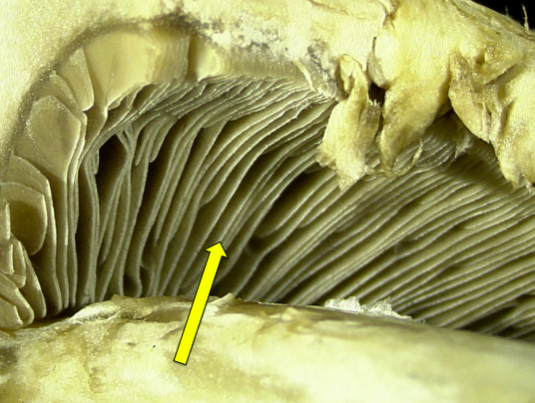
Agaricus
Gills

yellow = basidiospores
sexual
?

Yellow Arrow: Basidiospores
Blue Arrow: Basidium

Basidia with basidiospores
Hyphae below fungi
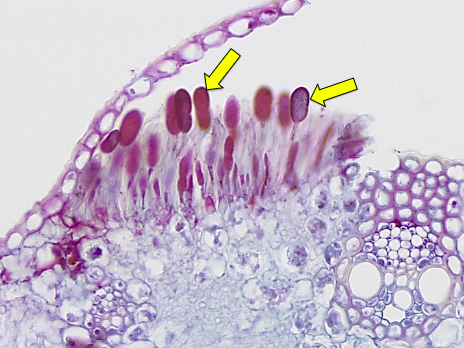
Basidiomycota
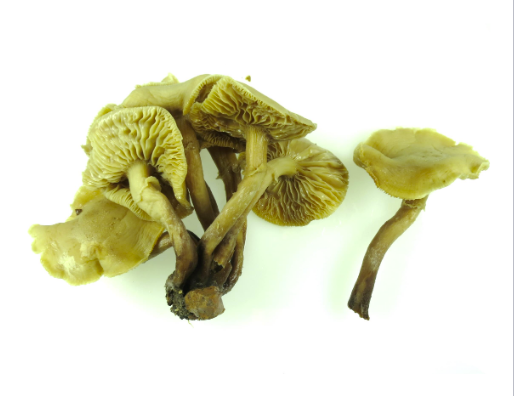
Shelf Fungus
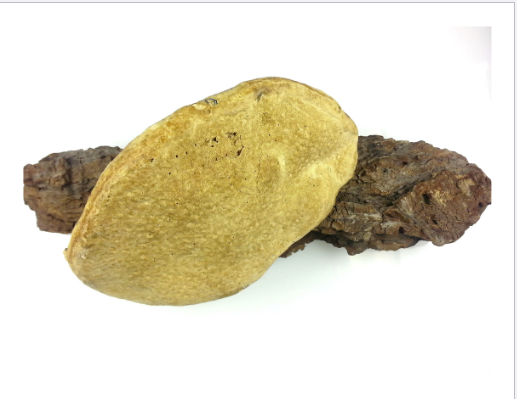
?

Lichen cross section, Ascomycota
mint = hyphae
yellow = photosynthetic symbionts
red = ascocarp
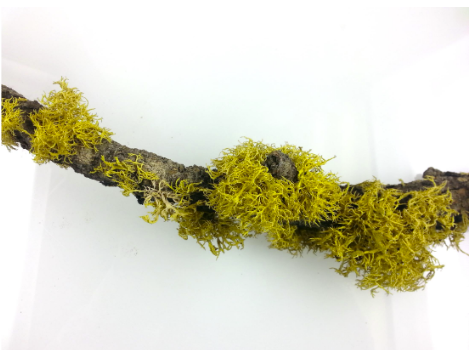
Lichen Specimen (Macroscopic view)

Lichen
Convergence with plants
Photosynthetic symbionts provide products (plus N2 if cyanobacteria)
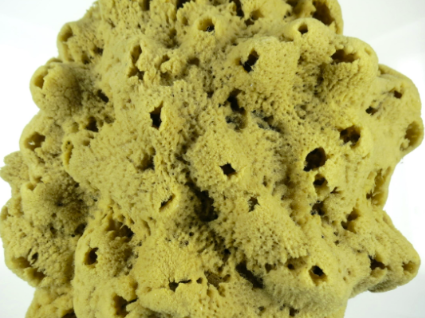
Phylum Porifera
Sponge
asymmetrical and cellular grade construction (no real tissue)
acoelomate (lacks a fluid-filled body cavity (a coelom))

Spicules
Calcium carbonate or Silica

Spicules
Calcium carbonate or Silica

Phylum Gnidaria
Class Hydrozoa
Hydra

Phylum Gnidaria
Class Hydrozoa
Obelia
Yellow: Gonozooid - Structures inside will bud of as medusae
Blue: Gastrozooid - For eating, contains tentacles for capturing food

Phylum Gnidaria
Class Hydrozoa
Obellia
Yellow = mouth/anus
blue = tentacles (gastrozooid)
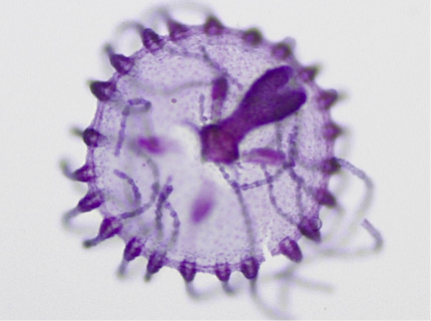
Radial symmetry, medusa form of a cnidarian

Hydrozoan sample, colony/composite of several organisms

Gnidara, Class Scyphozoa, Aurelia
Planular larvae

Scyphistoma, polyp stage
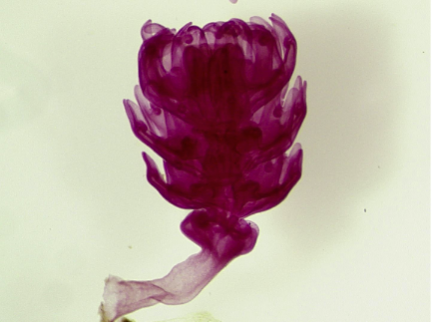
Strobila (young stacked medusae)

Ephyra, juvenile medusa, Aurellia

Sea fan, Class Anthozoa, Phylum Gnidaria

Corals, Calcium carbonate
Colored when alive because of zooxanthellae (dinoflagellates)

Coral
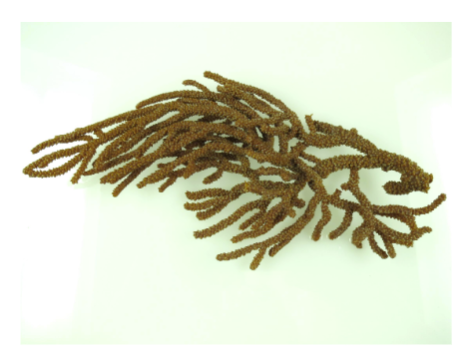
Coral
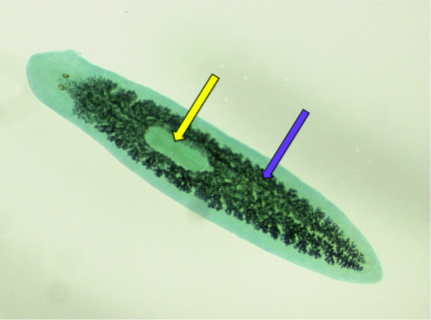
Phylum Platyhelminthes (flat form) - free-living (digestive system)
Blue = gastrovascular cavity (leads to mouth/anus), “branches” = diverticula
Yellow = pharynx = long appendage that extends out from body to get food from the environment
early in the digestive track

Class Turbellaria, Planaria
Blue = ocellus (photoreceptor to detect light, moves away from light)
Yellow = auricle (chemosensory organs = detect chemicals in environment)
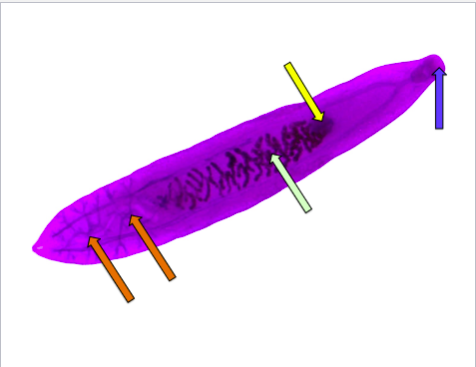
Parasitic flatwork (fluke), Phylum Platyhelminthes, Class Trematoda, Clonorchis sinensis
Blue = oral sucker (attaches to host’s bile duct)
yellow = sucker (acetabulum, attaches to tissue of host)
mint = uterus
orange = testes

Fluke - anterior Phylum Platyhelminthes, Class Trematoda, Clonorchis sinensis
blue = sucker
yellow = pharynx
mint = intestines

Fluke - posterior (hermaphroditic) Phylum Platyhelminthes, Class Trematoda, Clonorchis sinensis
mint = ovary
yellow = seminal receptacles (sperm received here)
blue = uterus
orange = yolk glands (nutrition for organisms in uterus)

orange = testis?
blue = intestines

Tapeworm, Phylum Platyhelminthes, Class Cestoda
small bracket (head) = scolex
hooks and suckers = adheres to host’s intestinal lining
big bracket = proglottid segments

Tapeworm, Phylum Platyhelminthes, Class Cestoda
blue = hookers
Orange = suckers

Proglottid Segment
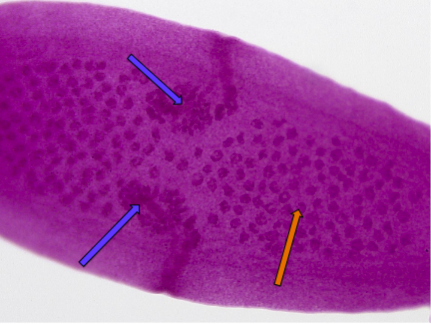
Tapeworm, Phylum Platyhelminthes, Class Cestoda
Orange: Testis
Blue: Ovaries

Uterus

Phylum Brachiopoda (not Bivalvia)
Valves are different sizes
Only brachiopods have an opening in the back for the pedicle = for attachmen

Phylum Annelida, Class oligochaete
Clitellum = makes cocoon-like structure to deposit eggs
Hermaphroditic

Phylum Annelida, Class oligochaete
Annelidgreen = circular muscle
blue arrow = longitudinal muscle (alternately contracts/relaxes with circular)
yellow = coelom (fluid filled cavity)
red = typhlosole? = increases SA
Bracket: Intestine

Earthworm
right = anterior
green = intestine
yellow = gizzard (striated muscles)
blue = crop = stores food

Metamerism = same structures in every segment
blue = nephridia = excretion/osmoregulation (like kidneys)

Nephridia
red lines = blood vessels
closed circulatory system

Yellow = intestine
blue = ventral nerve cord (splits into nerves that reach suprapharyngeal ganglia)

blue = cerebral ganglia
yellow = circumpharyngeal connectives (go around the pharynx)
green = pharynx

Stained micrograph of nervous system
blue = ventral nerve cord
green = connectives
yellow = cerebral ganglia
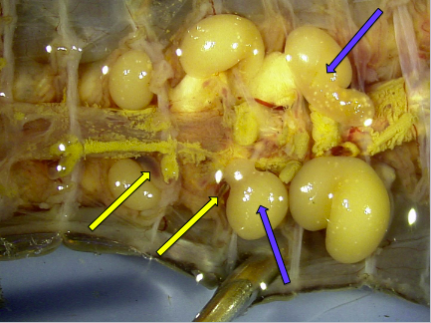
blue = seminal vesicles, yellow = seminal receptacles

Class Polychaetes, phylum Annelida
blue = parapodia w/ bristles

Polychaete worm
sessile lifestyle = living in tube
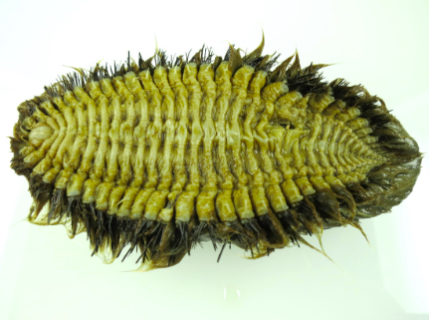
Sea mouse (Polychate)
ventral surface, segmentation
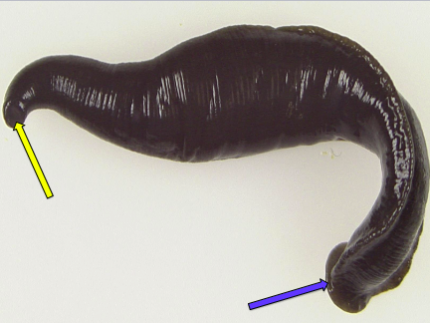
Phylum Annelida, Class Hirudinea, Leech
yellow = anterior sucker
blue = posterior sucker

Stained radula
Radulae found inside mouth of squid and snails (mollusca)

Class Polyplacophora, phylum Mollusca
no metamerism

Snail shells
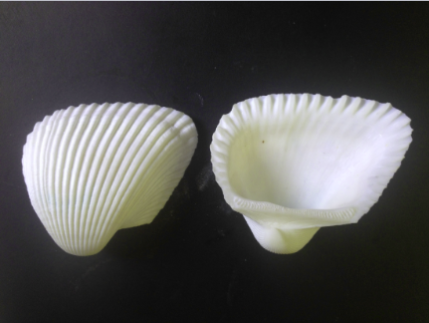
Bivalvia
no opening for pedicle

Phylum Mollusca
Class Cephalopoda
Species: Loligo
green = siphon (water pushed out)
water enters through opening in mantle
blue = tentacle
green = arm

Phylum Mollusca
Class Cephalopoda
Species: Loligo
beak

Phylum Mollusca
Class Cephalopoda
Species: Loligo
eye

Phylum Mollusca
Class Cephalopoda
Species: Loligo
Tentacles

Phylum Mollusca
Class Cephalopoda
Species: Loligo
Suckers

Phylum Mollusca
Class Cephalopoda
Species: Loligo
Sucker ring teeth (made of chitin)

Phylum Mollusca
Class Cephalopoda
Species: Loligo
yellow = fin, blue = mantle

Phylum Mollusca
Class Cephalopoda
Species: Loligo
pigmented spots = chromatophores = used for camouflage, signaling, communication
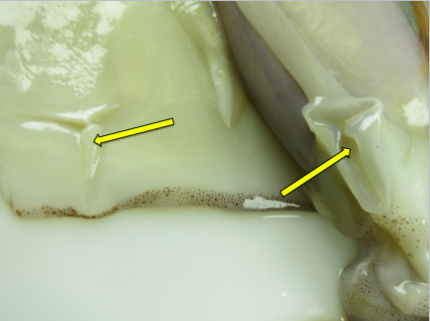
Phylum Mollusca
Class Cephalopoda
Species: Loligo
Yellow = interlocks = locks in place to give the mantle stability

Phylum Mollusca
Class Cephalopoda
Species: Loligo
yellow = digestive gland/hepatopancreas = makes digestive enzymes
green = intestine
blue = ink sac (both empty out of the siphon)

Phylum Mollusca
Class Cephalopoda
Species: Loligo
Gil = gas exchange (a lot of surface area)

Phylum Mollusca
Class Cephalopoda
Species: Loligo
Female squid
yellow = nidamental gland = produces casing for eggs
blue = ovary

Phylum Mollusca
Class Cephalopoda
Species: Loligo
yellow = gil, blue = nidamental glands, green = ovary