Sustainability INTRO FINAL
0.0(0)
Studied by 3 people Call Kai
 Learn
Learn Practice Test
 Spaced Repetition
 Match
Match Flashcards
 Knowt Play
Card Sorting
1/39

Earn XP
Description and Tags
Last updated 1:16 AM on 12/9/22
Name | Mastery | Learn | Test | Matching | Spaced | Call with Kai | Chat |
|---|
No analytics yet
Send a link to your students to track their progress
40 Terms
1
New cards
Sustainability
Everything that we need for our survival and well-being depends, either directly or indirectly, on our natural environment.
To pursue sustainability is to create and maintain the conditions under which humans and nature can exist in productive harmony to support present and future generations. - United states environmental protection agency
To pursue sustainability is to create and maintain the conditions under which humans and nature can exist in productive harmony to support present and future generations. - United states environmental protection agency
2
New cards
Think Globally, Act Biblically
God Spoke "Let us make human beings in our image, make them reflect our nature so they can be responsible for the fish in the sea, the birds in the air, the cattle, and yes, earth itself, and every animal that moves on the face of earth."
3
New cards
A Global, Systemic Response to Sustainability
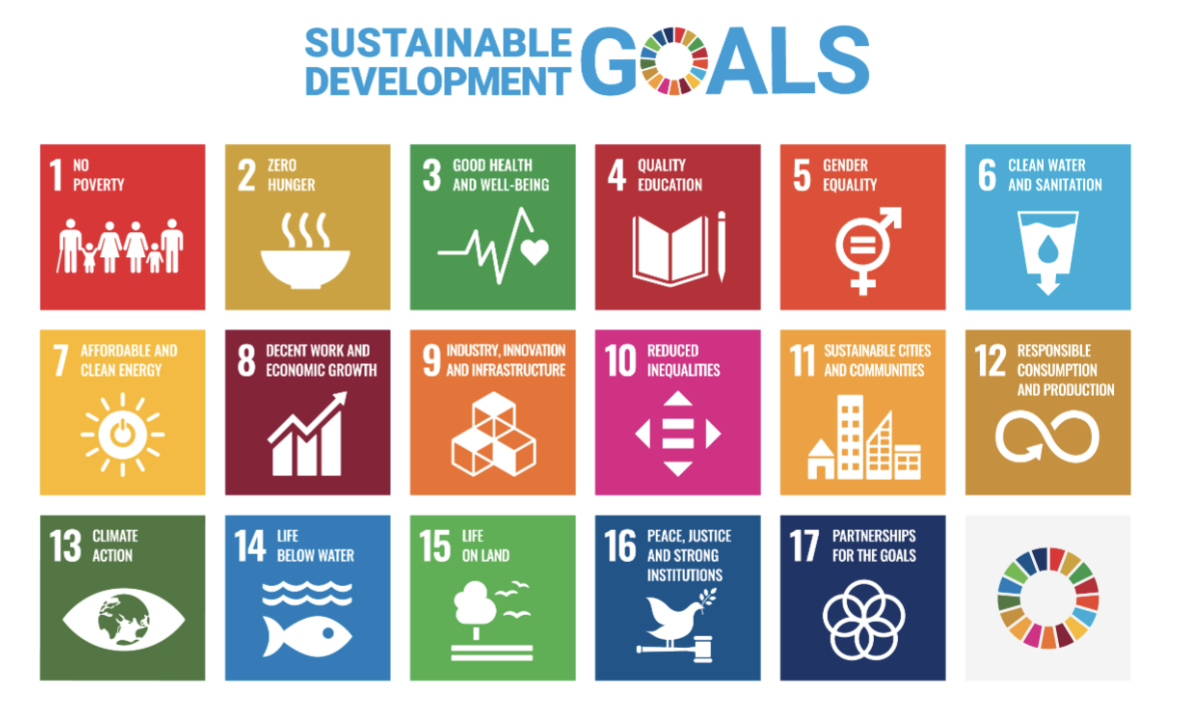
In 2015, the United Nations developed 17 sustainable developmental goals.
They are called to action for the world "To end poverty, protect, the planet, and improve the lives and prospects of everyone, everywhere."
They are meant to be achieved by 2030 a 15-year journey.
There are countries that have already achieved some of the goals; others are not on track.
They are called to action for the world "To end poverty, protect, the planet, and improve the lives and prospects of everyone, everywhere."
They are meant to be achieved by 2030 a 15-year journey.
There are countries that have already achieved some of the goals; others are not on track.
4
New cards
Sustainable Development Goals
1 - No Poverty
2 - Zero Hunger
3 - Good Health and Well Being
4 - Quality Education
5 - Gender Equality
6 - Clean Water and Sanitation
7 - Affordable and clean energy
8 - Decent Work and Economic Growth
9 - Industry, Innovation, and Infrastructure
10 - Reduced Inequalities
11 - Sustainable cities and communities
12 - Responsible Consumption and Production
13 - Climate Action
14 - Life Below Water
15 - Life on Land
16 - Peace, Justice, and strong institutions
17 - Partnerships for the goals.
2 - Zero Hunger
3 - Good Health and Well Being
4 - Quality Education
5 - Gender Equality
6 - Clean Water and Sanitation
7 - Affordable and clean energy
8 - Decent Work and Economic Growth
9 - Industry, Innovation, and Infrastructure
10 - Reduced Inequalities
11 - Sustainable cities and communities
12 - Responsible Consumption and Production
13 - Climate Action
14 - Life Below Water
15 - Life on Land
16 - Peace, Justice, and strong institutions
17 - Partnerships for the goals.
5
New cards
How does an Interior Designer Make a Difference?
As a part of the design and development of built spaces, we can have an influence on:
6 - Clean Water and Sanitation
7 - Affordable and Clean Water
9 - Industry Innovative and Infrastructure
11 - Sustainable Cities and Communities
12 - Responsible Consumption and Production
6 - Clean Water and Sanitation
7 - Affordable and Clean Water
9 - Industry Innovative and Infrastructure
11 - Sustainable Cities and Communities
12 - Responsible Consumption and Production
6
New cards
12 - Responsible Consumption and Production
The US EPA reports 9.8 million tons of furniture waste per year (2009).
- Reduce
- Reuse
- Recycle
- Rethink
- Reduce
- Reuse
- Recycle
- Rethink
7
New cards
12 - Reduce
Using a licensed Interior Designer will reduce the instances of mismeasurement or miscalculation for purchasing products, reducing the need to re-order or replace.
8
New cards
12 - Reuse
Vintage, second-hand, antique; not all sourced furniture needs to be new!
Refurbished furniture will almost always have lower embodied energy than buying new.
Refurbished furniture will almost always have lower embodied energy than buying new.
9
New cards
12 - Recycle
If furniture has reached the end of its life cycle, dispose of it responsibly (cradle to cradle vs. cradle to grave.)
10
New cards
12 - Rethink
Determine what is really needed for the project!
In the case of renovation, what can be refurbished or preserved instead of replaced?
In the case of renovation, what can be refurbished or preserved instead of replaced?
11
New cards
Sourcing: What is it made of?
Raw Materials
- Responsibly sourced
- Rapidly renewable material
Made from Recycled Materials
- Pre-Consumer
- Post-Consumer
Made from Recyclable Materials
- Cradle to Cradle: Upcycling Vs Downcycling
Location of Material
- Locally sourced materials lessen embodied energy.
- Responsibly sourced
- Rapidly renewable material
Made from Recycled Materials
- Pre-Consumer
- Post-Consumer
Made from Recyclable Materials
- Cradle to Cradle: Upcycling Vs Downcycling
Location of Material
- Locally sourced materials lessen embodied energy.
12
New cards
Sourcing: How is it made?
Embodied energy, or embodied carbon: The total energy (or CO2 released) of any item, from cradle to grave.
13
New cards
How is it made? Social Sustainability: Labor and Human Rights
Is the Manufacturer providing fair wages? Fair working hours?
14
New cards
How is it made? Environmental Sustainability: Energy Sources
Renewable Energy?
15
New cards
How is it made? Environmental Sustainability: Water Resources
How much water is used, and how is it disposed of or recycled?
16
New cards
How is it made? Environmental Sustainability: Byproducts
Disposal, reuse, or recycling of byproducts, cast offs, or other waste in the manufacturing process.
- source of pre-consumer recycled materials.
- source of pre-consumer recycled materials.
17
New cards
How is it made? Environmental Sustainability: Packaging
The amount and type of packaging.
18
New cards
Sourcing: Where did it come from?
As much as 90% of embodied energy is spend before the product is available to consumers.
19
New cards
Where did it come from? Transportation
Can account for large amount of embodied energy of a product, especially if manufactured overseas.
Consider:
- Source of raw material
- Processing location
- Manufacturer location
- Where is it warehoused?
- Retail location
- Source locally when you can!
Consider:
- Source of raw material
- Processing location
- Manufacturer location
- Where is it warehoused?
- Retail location
- Source locally when you can!
20
New cards
How is it maintained? Durability
A well-made product will not have to be replaced as quickly.
- Quality Construction Methods
- Quality and well-suited materials
- Quality Construction Methods
- Quality and well-suited materials
21
New cards
How is it maintained? Maintenance and Preservation: Life Cycle Cost
If upkeep is prohibitively expensive or complicated, the item or material is more likely to fall into disrepair and be replaced.
22
New cards
How is it maintained? Refurbishing and Rehabilitation
Can the product be easily repaired, or individual components replaced?
Antique, vintage, second-hand: significantly lower embodied energy than new products.
Antique, vintage, second-hand: significantly lower embodied energy than new products.
23
New cards
Product Life Cycle: Cradle to Grave
A one-way path of a product being produced (cradle), used and then disposed of (grave), no longer offering usefulness.
24
New cards
Product Life Cycle: Cradle to Cradle
A cycle, keeping a product or materials out of landfills and in good use.
25
New cards
Product Life Cycle: Upcycling
Furniture or materials (carpet, for example) are able to be disassembled and utilized for the same or similar purposes.
26
New cards
Product Life Cycle: Downcycling
Reduces the quality of material overtime, leading to an eventual end in a landfill.
27
New cards
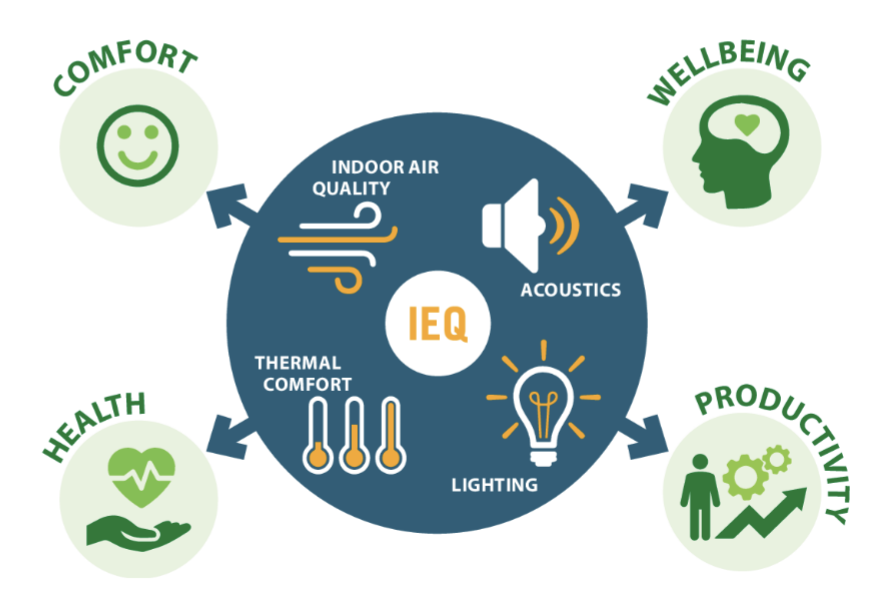
How does this product or space affect the well-being of occupants? Indoor Environment Quality (IEQ)
A characteristic of spaces in buildings that impacts occupants' comfort, health, well-being, and productivity.
28
New cards
How does this product or space affect the well-being of occupants? Indoor Air Quality (IAQ)
IAQ is a characteristic of air in buildings, typically measured as a combination of:
- Relative Humidity
- CO2 Concentration
- Particulate matter concentration (Can indicate inadequate ventilation.)
- Relative Humidity
- CO2 Concentration
- Particulate matter concentration (Can indicate inadequate ventilation.)
29
New cards
How does this product or space affect the well-being of occupants? Volatile Organic Compounds (VOCs)
A variety of chemicals that release into the air as a gas and can have harmful health implications.
- Most often found in paint, materials and finishes such as carpet or wood products, and others.
- Low or no-VOC products are widely available.
- Most often found in paint, materials and finishes such as carpet or wood products, and others.
- Low or no-VOC products are widely available.
30
New cards
How Much Energy and Resources does this Product Require to Operate?
This Addresses the remaining embodied energy of a product.
Energy use:
- lighting
- Appliances
- HVAC
Water Use:
- Low-Flow Fixtures
Energy use:
- lighting
- Appliances
- HVAC
Water Use:
- Low-Flow Fixtures
31
New cards
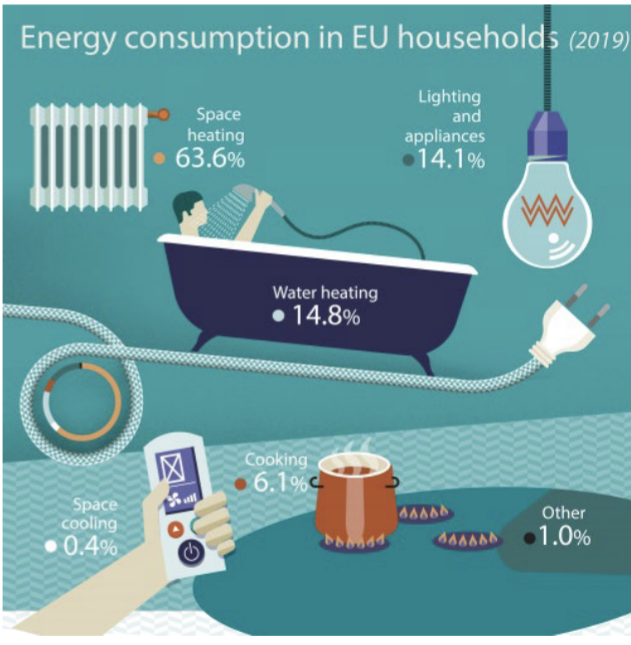
How Much Energy and Resources does this Product Require to Operate? Energy Consumption in EU Households (2019)
Space Heating: 63.6%
Lighting and Appliances: 14.17%
Water Heating: 14.8%
Space Cooling: 0.4%
Cooking 6.1%
Other 1.0%
Lighting and Appliances: 14.17%
Water Heating: 14.8%
Space Cooling: 0.4%
Cooking 6.1%
Other 1.0%
32
New cards
Sourcing: Watch out for Greenwashing! Definition
"Greenwashing is an act of misleading consumers regarding the environmental practices of a company or the environmental benefits of a product or service." -UL
33
New cards
Watch out for Greenwashing!
In a 2010 study, at least one of the following "7 sins of Greenwashing" were utilized by 95% of the 4,744 products in the study:
1. The Hidden Trade-Off
2. No Proof
3. Vagueness
4. Worshiping False Labels
5. Irrelevance
6. Lesser of Two Evils
7. Fibbing
1. The Hidden Trade-Off
2. No Proof
3. Vagueness
4. Worshiping False Labels
5. Irrelevance
6. Lesser of Two Evils
7. Fibbing
34
New cards
Doing Some of the Work for you: Certifying Organizations: Product Certifying Organizations: 3rd Party
Standards/Certification should be 3rd party (no financial interest in products.)
- Green seal, FSC, Green Guard, Living Building Challenge
- Green seal, FSC, Green Guard, Living Building Challenge
35
New cards
Doing Some of the Work for you:
Certifying Organizations: product Certifying Organizations: 2nd Party
Certifying Organizations: product Certifying Organizations: 2nd Party
2nd Party (People connected to a product or type of product)
- CRI, Floor score, Green Globes, BIFMA, Sustainability Forestry Initiatives.
- CRI, Floor score, Green Globes, BIFMA, Sustainability Forestry Initiatives.
36
New cards
Built Environment Certifiying Organizations
37
New cards
LEED: Leadership in Energy and Environmental Design
An internationally recognized building certification system development by the USGBC - US Green Building Council.
LEED provides 3rd party verification that a building was design and built using strategies aimed at improving embodied and ongoing energy required in buildings.
LEED provides 3rd party verification that a building was design and built using strategies aimed at improving embodied and ongoing energy required in buildings.
38
New cards
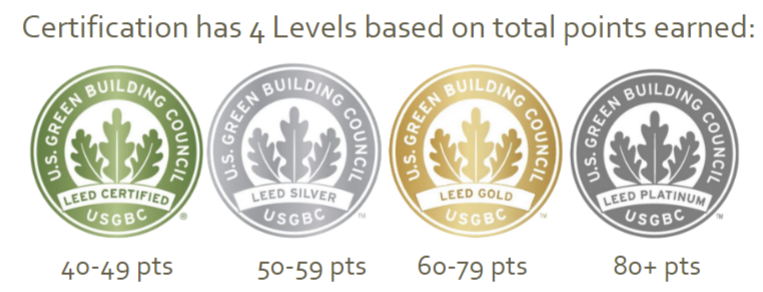
Certification has 4 levels based on a total point earned:
Leed Certified: 40-49 points
Leed Silver: 50-59 points
Leed Gold: 60-79 points
Leed Platinum: 80+ points
Leed Silver: 50-59 points
Leed Gold: 60-79 points
Leed Platinum: 80+ points
39
New cards
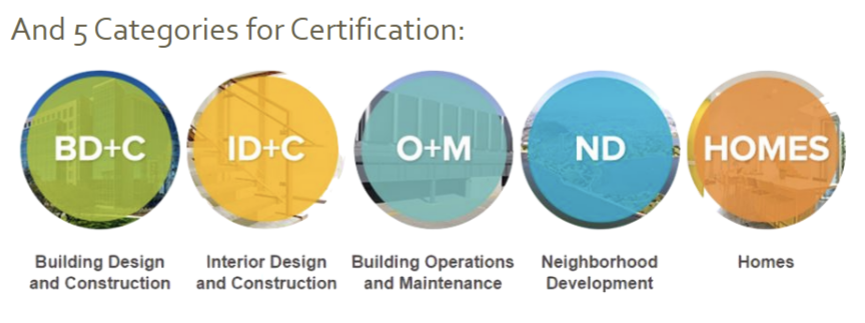
5 Categories for certification:
B + C - Building Design and Construction
ID + C - Interior Design and Construction
O + M - Building Operations and Maintenace
ND - Neighborhood Development
Homes - Homes
ID + C - Interior Design and Construction
O + M - Building Operations and Maintenace
ND - Neighborhood Development
Homes - Homes
40
New cards
Leed: Leadership in Energy and Environmental Design: Interior Design and Construction
Project teams that wish to work towards LEED Certification select the appropriate certification type and follow the rating system, which is broken into categories, the following are the categories for Interior Design and Construction (ID+C) for Commercial Interiors, Retail and Hospitality:
- Integrative process
- Location and Transportation
- Water Efficiency
- Energy and Atmosphere
- Materials and Resources
- Indoor Environmental Quality
- Innovation
- Regional priority
- Integrative process
- Location and Transportation
- Water Efficiency
- Energy and Atmosphere
- Materials and Resources
- Indoor Environmental Quality
- Innovation
- Regional priority