Topic 4
 Call Kai
 Learn
 Practice Test
 Spaced Repetition
 Match
 Flashcards
 Knowt Play
1/53

There's no tags or description
Looks like no tags are added yet.
54 Terms
difference in electrical charge between the inside and outside of a cell
membrane potential
what are voltage differences in the membranes of excitable cells at rest called
resting membrane potential
Na+, K+, Cl-, and proteins are _ distributed on either side of the plasma membrane
unequally
There is typically more sodium on the _ of the cell rather than the _
outside, inside
There is typically more potassium _ the cell rather than _
inside, outside
There is typically more chloride _ the cell rather than _ the cell
outside, inside
When the cell is at rest, which channel is more open over the other types of ion channels?
K+
The inside of the cell is mostly what charge?
negative
In the sodium potassium ATPase pump, sodium _ the cell
leaves
In the sodium potassium ATPase pump, potassium _ the cell
enters
What are the 3 basic steps of skeletal muscle contraction?
Excitation, contraction, relaxation
When the skeletal muscle cell is stimulated at the sarcolemma by a motor neuron
excitation
When the stimulus leads to the shortening of sarcomeres
contraction
When cellular mechanisms stop the contraction process
relaxation
A single motor neuron and all the muscle fibers in innervates is called a
motor unit
the process of generating force in a muscle due to cross bridge activity
contraction

force exerted by a muscle on a load
tension/effort
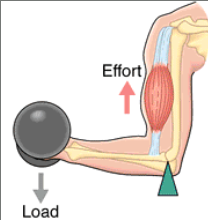
force that opposes the tension/effort generated by muscle contraction
load

muscle changes in length and moves a load
isotonic
what are the two types of isotonic contraction?
concentric and eccentric
the type of isotonic contraction that shortens muscles
concentric
the type of isotonic contraction that lengthens muscles
eccentric

the type of contraction where tension is generated but there is no shortening or lengthening
isometric
muscle contraction classifications that measure strength of a contraction as weak to strong are called
graded muscle contractions
rapid and strong stimuli to muscle cause what contractions
strong
low frequency and weak stimuli causes what contractions
weak

when a second stimulus is applied to a muscle before it finishes relaxing
summation

similar to wave summation but stimuli are delivered more frequently
incomplete, unfused tetanus

prolonged smooth contractions caused by rapid stimulation
complete, fused tetanus
what are the two ways to increase the strength/tension of a contraction?
increased frequency, increased stimuli strength
What is the preferred fuel for muscle contraction?
ATP
What fuel is needed to fuel the power stroke, detach cross bridges, and relax sarcomeres?
ATP
what accounts for 8-10 seconds of contraction?
creatine phosphate
what process makes ATP quick but has a lower yield?
anaerobic glycolysis
what process makes ATP slow but has a high yield?
aerobic respiration
length of time that a muscle can continue to contract using aerobic pathways
aerobic endurance
point at which muscle metabolism switches from aerobic to anaerobic
anaerobic threshold
state where a muscle is physiologically unable to contract bc ATP consumption is higher than production
muscle fatigue
term for the amount of oxygen needed to restore muscle to its resting metabolic state
oxygen debt
oxygen helps the muscle convert lactic acid back to what
pyruvic acid
pyruvic acid can be metabolized into what
ATP
in the liver lactic acid is converted to what and stored as what?
glucose, glycogen