Energy and metabolism lecture 21A
 Call Kai
 Learn
 Practice Test
 Spaced Repetition
 Match
 Flashcards
 Knowt Play
1/10

There's no tags or description
Looks like no tags are added yet.
11 Terms
Some components of the pancreas
alpha cells
Secrete glucagon
D cells
Secrete somatostatin
Beta cells
Secrete insulin and amylin
A lot more of this kind of cell compared to alpha cells!
This is bc all cells need glucose whereas glucagon is just taken up
Anabolic (fed) state
Glucose is elevated here
This means elevated:
glycolysis
Glycogenesis
Fat synthesis
Protein synthesis
More insulin used than glucagon
Anabolic cascade: tissue level effects
NOTES:
Insulin binds in cells and we get a response!
Decreasing glucose in plasma stops this cascade
Don’t want glucagon to be synthesized at the same time as insulin
Glucagon up regulates the breakdown of glycogen
Don’t wanna use the glucose stores when you just fed on glucose! Wasteful!

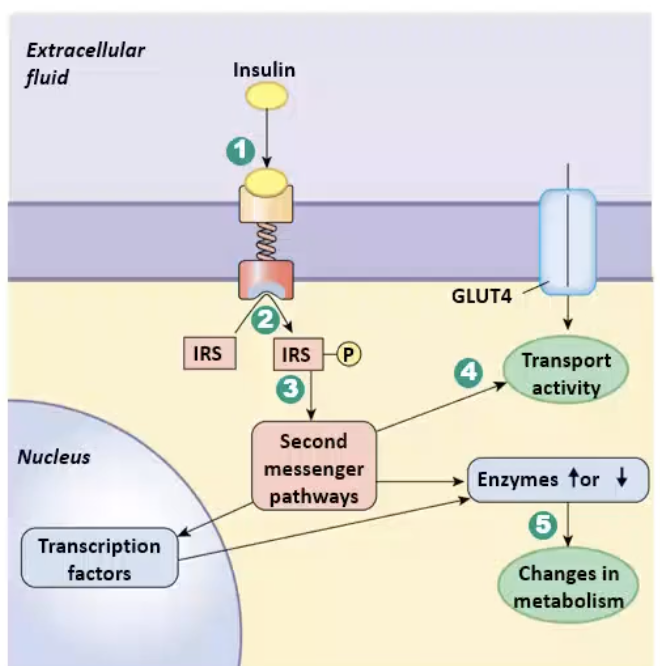
Insulin works through second messenger
Insulin binds to tyrosine kinase receptor
Receptor phosphorylates insulin-receptor substrates (IRS) on basal side
Second messenger pathways alter protein synthesis and existing proteins
Membrane transport is modified
GLUT4 is a membrane transporter!
It’s not there before insulin docks on the receptor
This is because you wanna regulate things! You don’t want the cells to be taking in glucose like all the time
Cell metabolism is changed
Note:
Gradient is maintained by converting the glucose (that moved down its gradient) into G6P
You don’t want equilibrium because the glucose goes into the cell via DIFFUSION and if everything is equal things can’t go from high to low
Hexokinase?!
Phosphorylates glucose
Liver idk
How do insulin and glucagon have opposite effects?
Once you eat, glucagon levels drop significantly while insulin levels spike! !”
Glucagon is low before eating, so it’s levels are higher because it’s like ur using ur savings bc u haven’t gotten paid yet
Insulin levels are low before meal, which signals glucagon to be used in that cascad from earlier!
Now that we have eaten, we don’t need to sue glucagon anymore so it’s levels drop while insulin spikes because you’re eating carbs, which will be converted to glucose, and insulin is like the key that unlocks the cells so they can use the glucose
Actually, the insulin spikes right before we eat because of the integration center thing!
Catabolic (fasted) state!
Glucose is low here!
The following is increased:
Glycogenolysis
Gluconeogenesis
Ketogenesis
This is when a fatty acid is turned into acetyl coa
More glucagon being used compared to insulin
Catabolic cascade: tissue level effects
Notes:
When sugar levels are low, then you start breaking things down in order to increase things like glucagon as we can do Glycogenolysis and Gluconeogenesis
Stuff that gets broken down is muscles, adipose, and other cells
Also making ketones! Which are sent to other tissues
Sending AA to make glucose and ketones

Gluconeogenesis?
Creates new glucose molecules from non carbohydrate carbon sources
Fasted state energy balance
Liver glycogen becomes glucose
Adipose lipids become free fatty acids and glycerol that enters blood
Brain uses only glucose and ketones
Muscle glycogen is used for energy!
Muscles use fatty acids and can break down proteins to amino acids that enter the blood
notes:
Ketones used by other tissues but are made in liver
The liver can also use ketones to make its own energy
notice that brain doesn’t send anything to anyone!
Brain can take ketones, but prefers glucose
Amino acids = less effecient way to make atp
