Reproduction
 Call Kai
 Learn
 Practice Test
 Spaced Repetition
 Match
 Flashcards
 Knowt Play
1/110

There's no tags or description
Looks like no tags are added yet.
111 Terms
What is reproduction?
Reproduction is the biological process by which living organisms produce offspring.
Reproduction is essential for the survival of a species.
It allows genetic information to be passed from one generation to the next.
Sexual reproduction
Genetic information comes from two parents
Offspring usually have different combinations of characteristics
Asexual reproduction
Genetic information comes from one parent
Offspring are usually genetically very similar to the parent
Sexual reproduction examples
Most animals and plants, including humans and flowering plants.
Asexual reproduction examples
Some animals and plants, including starfish and strawberries.
What does the male reproductive system produce and deliver?
The male reproductive system produces and delivers sperm.
What does the female reproductive system produce and support?
The female reproductive system produces egg cells and supports fertilisation.
What is the role of the male reproductive system?
Produce healthy sperm
Transport sperm through the reproductive system
Deliver sperm to the female reproductive system
Why is transport an important role of the male reproductive system?
Transporting sperm is important because sperm need to reach the female reproductive system to fertilise an egg cell. This allows reproduction to occur.
How does the female reproductive system contribute to reproduction?
Producing egg cells
Receiving sperm
Allowing fertilisation to occur
Supporting early development after fertilisation.
How does the female reproductive system support reproduction after producing an egg cell?
facilitating sperm to reach the egg cell.
assisting fertilisation.
providing a place where early development of offspring can begin.

Bladder
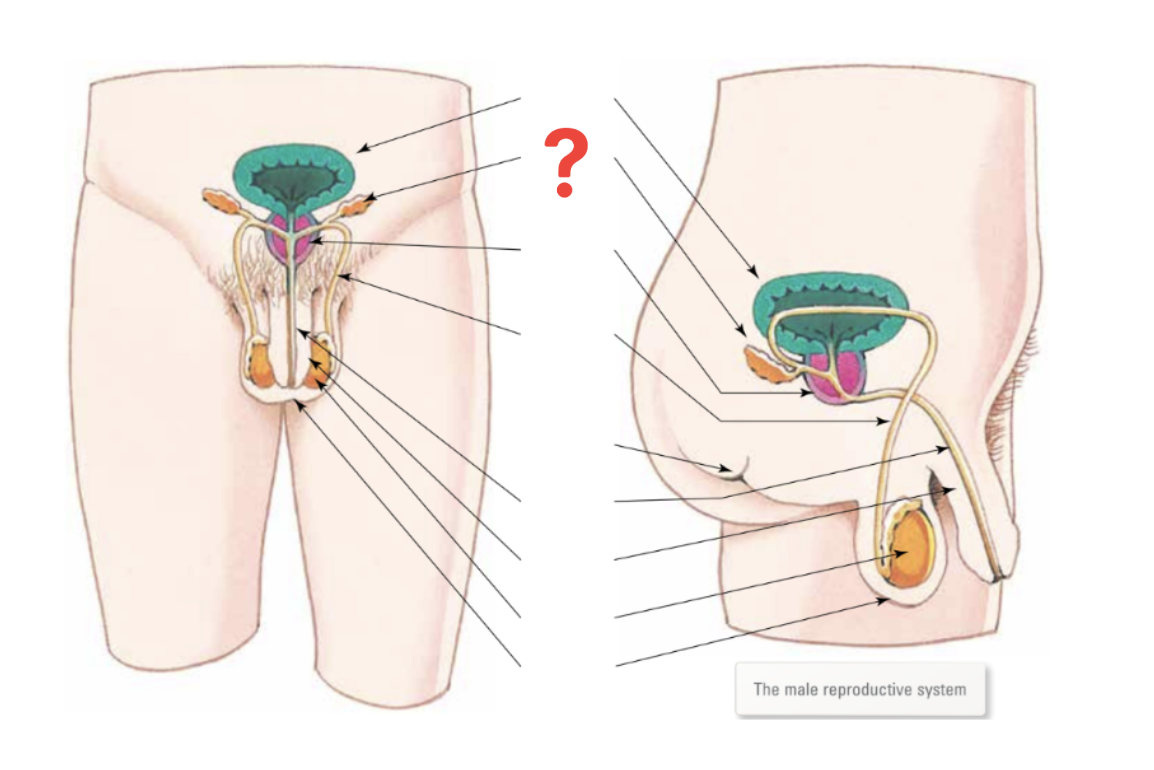
Seminal vesicle

Prostate gland

Sperm duct/Vas deferens

Anus

Urethra

Penis

Testes

Scrotum
Function of testes
Produces sperm and testosterone.
Function of scrotum
Holds the testes outside the body. Keeps the testes at a slightly lower temperature then the rest of the body/regulates the temperature
Function of vas deferens
Transports sperm toward the urethra.
Function of urethra
The tube inside the penis through which semen leaves that male’s body
Function of penis
Swells during sexual arousal. Semen containing sperm cells is ejaculated from the penis into the vagina
Function of seminal vesicle
Adds sugar-rich fluid that provides energy for sperm.
Function of prostate
Secretes some of the fluid that is added to sperm to make semen. This fluid is alkaline and full of enzymes, helping to keep the sperm cells alive once they enter the vagina.
Function of epididymis
Stores sperm and allows them to mature. Sperm develop the ability to move and fertilise an egg cell.
What is the sperm pathway?
testes → epididymis → vas deferens → urethra → penis (Along the way, fluids from the seminal vesicles and prostate gland are added to form semen)
How do the structures of the male reproductive system work together to move sperm out of the body?
Sperm are produced in the testes, then move to the epididymis, where they mature and are stored. They travel through the vas deferens, mix with fluids to form semen, and leave the body through the urethra and penis.
If one part does not function correctly, it can affect:
sperm production
sperm storage or maturation
sperm transport
semen delivery
Testosterone
a hormone produced by the testes.
What is a hormone
A hormone is a chemical messenger that helps control processes in the body.
In the male reproductive system, testosterone supports:
sperm production
male reproductive development
the functioning of the male reproductive system

Fallopian tube/oviducts

Ovary

Uterus

Cervix

Anus

Vagina

Hymen

Vulva

Clitoris

Urethra

Bladder
Function of ovaries
Produce ova. One egg is produced about once a month from one ovary. They also release hormones such as oestrogen and progesterone
What does oestrogen and progesterone do
regulates the reproductive cycle and prepare the body for possible pregnancy.
what does oestrogen and progesterone help control
the release of an egg.
initial growth and thickening of the uterine lining.
Function of fallopian tubes
Tube the ova travels from the ovaries into the uterus. This is where fertilization happens.
Function of uterus
Where the embryo implants and a baby develops. Its lining (endometrium) thickens in preparation for possible implantation.
Function of cervix
The passageway between the vagina and the uterus, allows sperm to enter. During childbirth the cervix dilates (opens) to allow the baby to leave the uterus.
Function of vagina
Elastic tube that connects the uterus to the outside world through which semen enters the female reproductive system.
Function of clitoris
Swells during sexual arousal and becomes highly sensitive when erect
What is the bladder and urethra a part of
the excretory system.
What is

the function of the fimbriae
catch mature eggs released during ovulation and guide them inside the fallopian tube
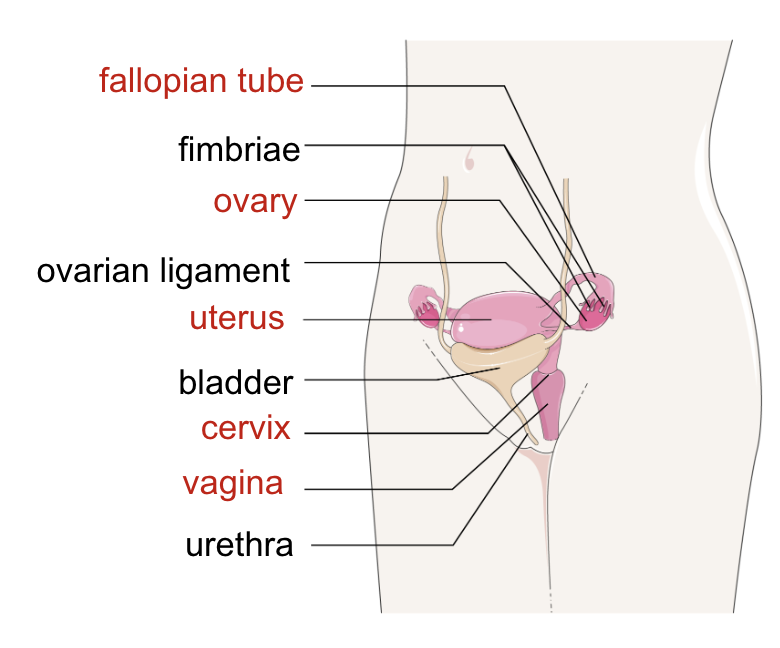
the function of the ovarian ligaments
hold the ovaries in place.
egg pathway:
ovary → fallopian tube → uterus
sperm entry pathway:
vagina → cervix → uterus → fallopian tube
Where does fertilisation typically occur?
Fertilisation typically occurs in the fallopian tube if sperm are present.
what happens to the uterine lining if fertilisation does not occur
the uterine lining breaks down and leaves the body. This process is called menstruation.
What are gametes
A haploid/sex cell with 23 chromosones. Examples include the ovum and sperm
What is the male gamete
Sperm cells
What is the female gamete
Egg cells
What is a zygote
A fusion of the nucleus and sperm, with 46 chromosones
Sperm specialised structure:
Sperm are small, mobile, and streamlined so they can travel to reach the egg.
Egg specialised feature
Eggs are larger and contain stored nutrients and resources to support the early development of a new organism after fertilisation.

Label the sperm
a) head, b) tail c) nucleus d) midpiece
Function of sperm head
contains genetic material and enzymes, which helps the sperm digest and break through outer layers of the egg to fertilise it
function of sperm midpiece
packed with mitochondria, which helps it to generate energy for movement, because the sperm needs a constant energy supply to swim.
function of sperm tail
long and whip-like, which helps it to propel the cell forward

label the egg cell
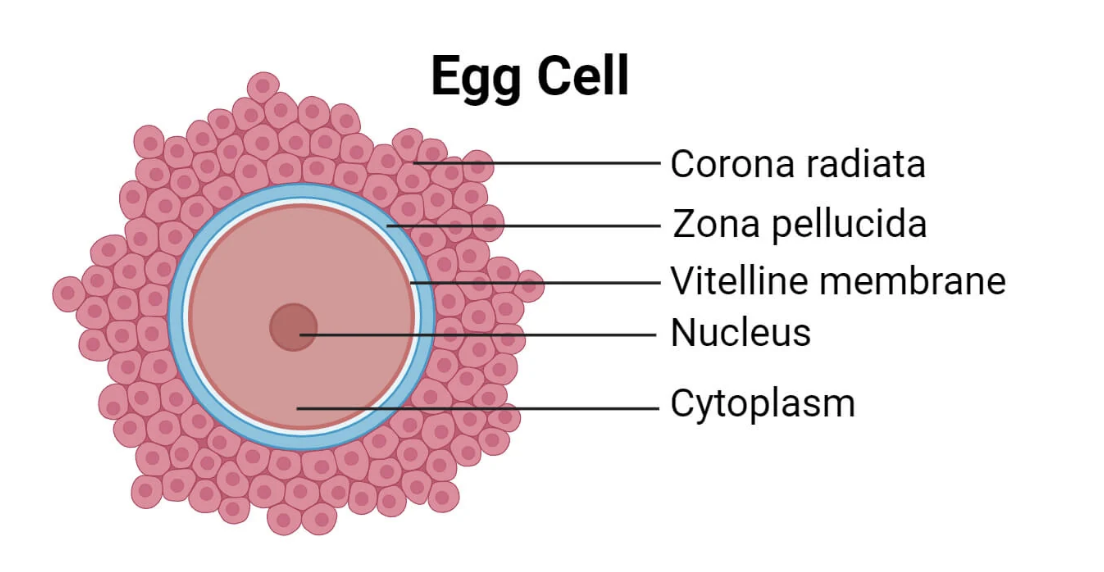
Corona radiata
consists of follicular cells. These cells play a role in nourishing and protecting the egg.
Zona pellucida
s composed of glycoproteins and provides structural support to the egg. It also plays a crucial role in sperm-egg interaction during fertilization.
Vitelline membrane
is the innermost layer. This membrane provides additional protection to the egg.
egg cytoplasm
contains essential reserves in the form of yolk which provides essential proteins, lipids, and other nutrients necessary for early development.
Internal Fertilization
In animals that live and breed on land, internal fertilisation occurs. This keeps the gametes inside the body so there is no chance of dehydration occurring. In this situation, sperm are introduced into the female by a process called copulation (or sexual intercourse).
External Fertilization
In some animals, especially those that live or breed in water such as fish and amphibians, fertilisation occurs outside the female’s body. In this situation, the female releases her unfertilised eggs into the water to be fertilised by the male’s sperm, which are also released into the water.
What is variation?
Variation is the differences in physical traits, genes, or behaviors amongst a population
Examples of variation
Height
Eye colour
Body size
Resistance to disease
Fur colour
Is asexual reproduction mitosis or meiosis
mitosis
Is sexual reproduction mitosis or meiosis
meiosis
Factors that can change about the environment include:
Temperature changes, changes in food availability, new diseases
What are alleles
forms of genes
Asexual reproduction is an effective method for:
- No mate required
- Faster process
- Energy and time efficient
Disadvantages of Asexual Reproduction
- No genetic variation
- Same disease resistances
- Risk of overpopulation due to reproduction speed
Advantages of Sexual Reproduction
Genetic Variation
Disease resistance
Eliminates harmful mutations
Disadvantages of Sexual Reproduction
- High energy and time demand
- Requires 2 parents
- Slower rate of reproduction
What are the three types of Asexual Reproduction?
binary fission, fragmentation, and budding
Fragmentation
Fragmentation occurs when part of an organism separates from the parent and develops into a new individual.
Budding
Budding occurs when a small outgrowth, called a bud, forms on the parent’s body.
Fission
Fission occurs when one organism divides into two separate individuals.

label the flower

What does the ovule and ovum become after flower fertilisation
ovule, seed. ovary, fruit
stamen
filament + anther
carpel
stigma + style + ovary
List 3 different methods of pollination
Insect pollinated, wind pollinated, water pollinated
Insect pollination
Plants lure insects using bright petal colors, ultraviolet patterns, sweet or putrid scents, and sugary nectar rewards to pollinate them.
Wind pollination
plants use air currents to transfer pollen from male to female reproductive structures without needing insect or animal vectors
Water pollination
a rare form of plant reproduction where water currents act as the medium to transfer pollen from male flowers to female flowers
What is Vegetative Propagation?
Asexual reproduction in plants