physics 5b
 Call Kai
 Learn
Learn Practice Test
 Spaced Repetition
 Match
Match Flashcards
 Knowt Play
1/54

There's no tags or description
Looks like no tags are added yet.
Name | Mastery | Learn | Test | Matching | Spaced | Call with Kai | Chat |
|---|
No analytics yet
Send a link to your students to track their progress
55 Terms


a


\(W = -p\Delta V\) → only for constant pressure
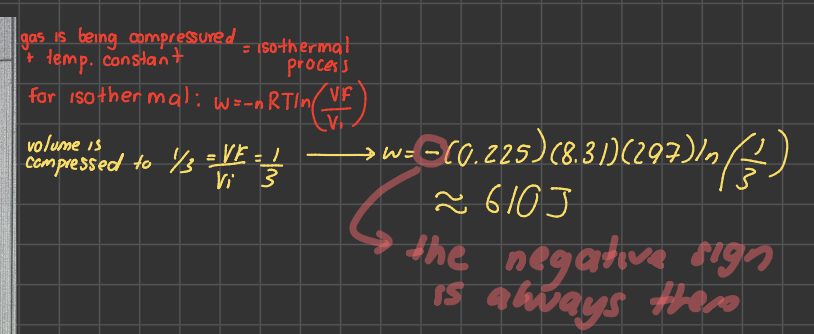
🌡 Isothermal process (temperature stays constant)
“Isothermal” =
For an ideal gas, the work equation becomes:
W=-nRTln (Vf/V1)


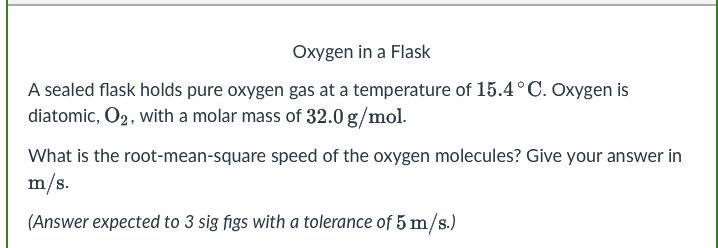
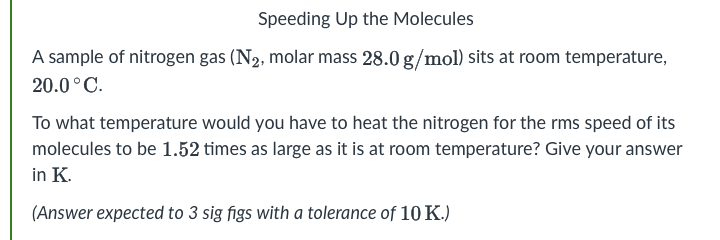
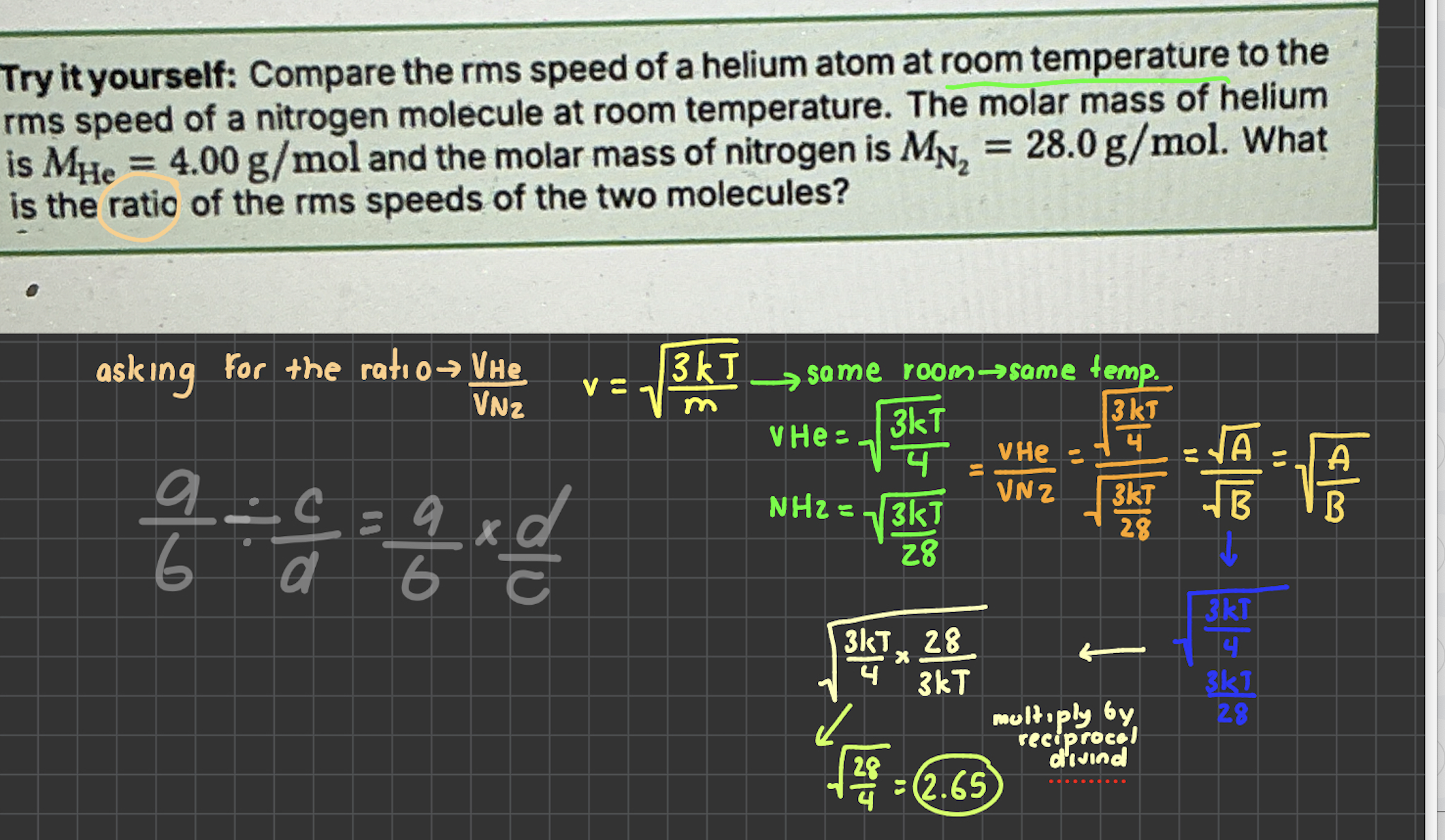
v=Square root of 3kT/m

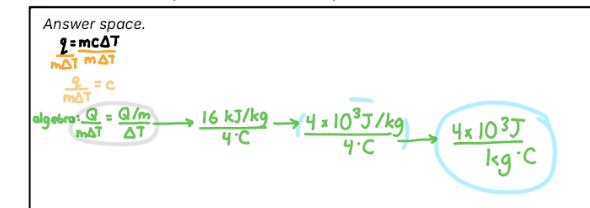
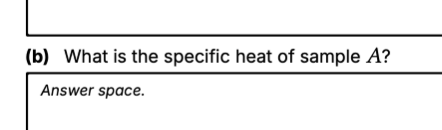


for part a, b, c, d
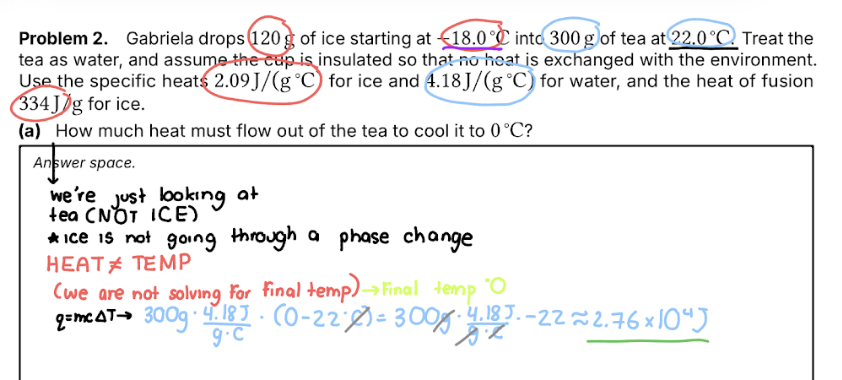





WRONGGGGG


(a) What was the temperature of the bath before you put the thermometer in?
WRONGGG


(b) The thermometer reads low. What property should a thermometer have so that measuring
a sample changes the sample’s temperature as little as possible? Explain your reasoning.


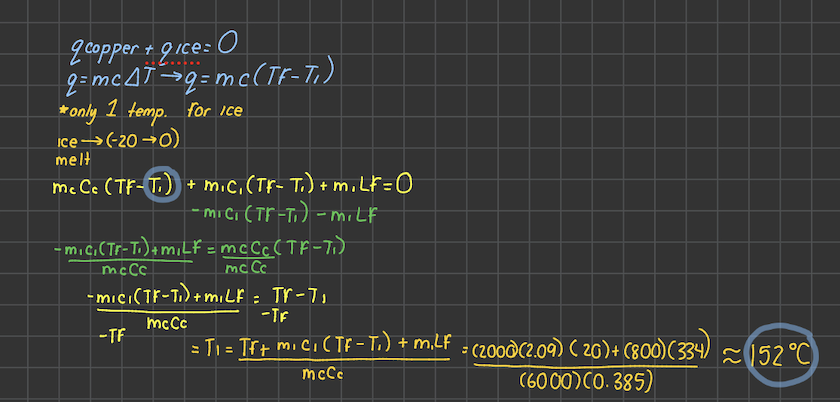

(a) What is the largest mass of ethanol that 3.50 kJ of heat can completely boil away?


(b) What fraction of the 3.50 kJ goes into boiling the ethanol rather than warming it to its
boiling point?
*Boiling the ethanol =mLf


WRONGGG


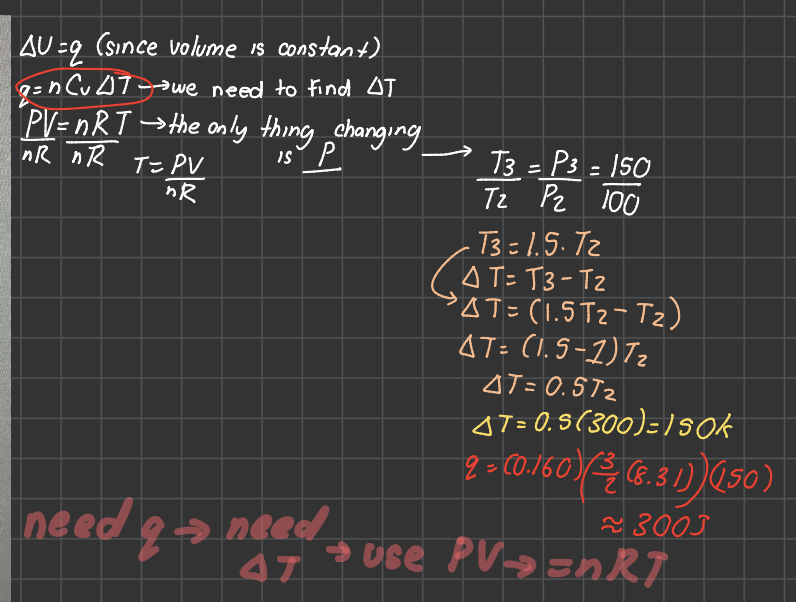
(a) What is the change in the internal energy of the gas?
(answer should be 757)


(b) What is the molar specific heat at constant volume 𝐶𝑉 of the gas?
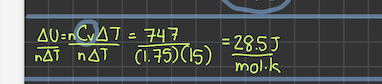

(c) Compare your value of 𝐶𝑉 with 3/2 𝑅 and 5/2𝑅. Could the gas be monatomic or diatomic?
Explain your reasoning.


(a) How many moles of nitrogen are in the container?


(b) What is the change in the internal energy of the gas?


(c) What is the work done on the gas? Include the sign.


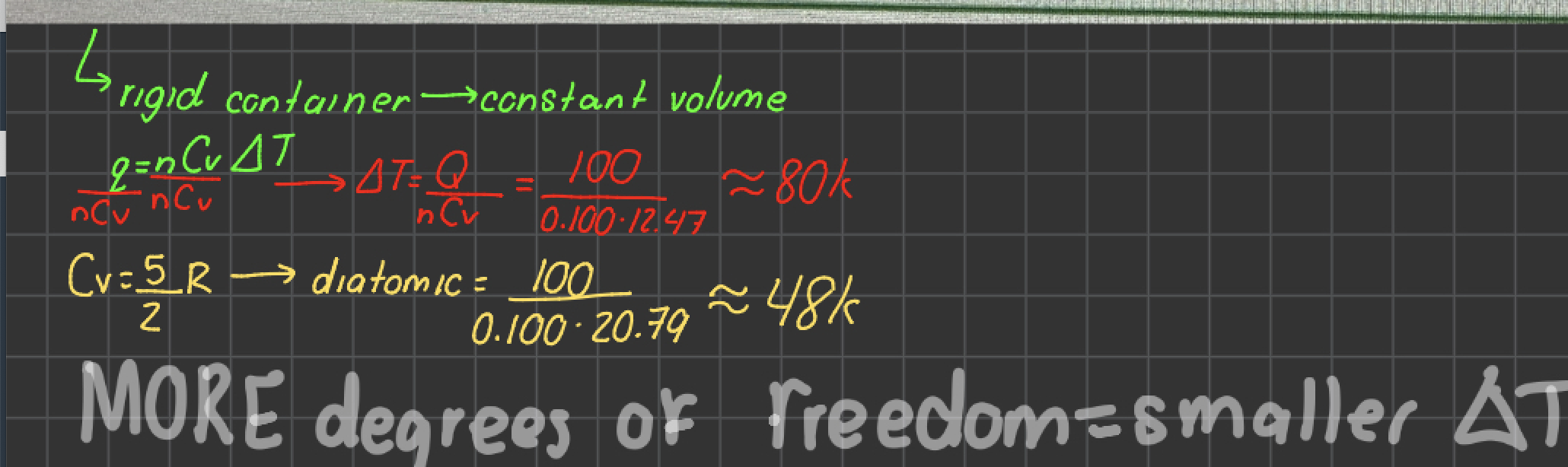
(d) Suppose instead that the gas were cooled through the same temperature change with its
volume held constant. How much heat would leave the gas? Explain why this differs from the
heat that leaves at constant pressure.




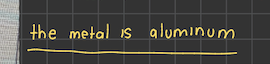
Return to Alyssa's calorimetry measurement from the previous question. Compare the specific heat you found there with the reference values in that question's table.
Which metal is Alyssa's sample most likely made of?

Wronggg