AP Human Geography-Unit 3
 Call Kai
 Learn
 Practice Test
 Spaced Repetition
 Match
 Flashcards
1/51

There's no tags or description
Looks like no tags are added yet.
52 Terms
culture
a group of belief systems, norms, and values practiced by a people

Folk Culture
Culture traditionally practiced by a small, homogeneous, rural group living in relative isolation from other groups.

folklore
the traditional beliefs, customs, and stories of a community, passed through generations by word of mouth

popular culture
large culture that incorporates heterogeneous populations, is typically urban, and experiences quick changing traits.

material culture
the things a group of people construct, including homes, clothing, sports, and foods. (Must be tangible)

nonmaterial culture
beliefs, practices, and values of a group of people. EX) bowing as a greeting

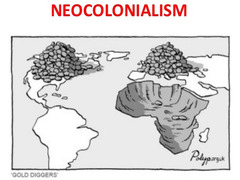
neocolonialism
Also called economic imperialism, this is the domination of newly independent countries by foreign business interests that causes colonial-style economies to continue, which often caused monoculture (a country only producing one main export like sugar, oil, etc).
ethnic neighborhoods
a neighborhood, typically situated in a larger metropolitan city and constructed by or comprised of a local culture, in which a local culture can practice its customs

assimilation
the social process of absorbing one cultural group into harmony with another (typically the minority group into the majority group)

acculturation
the process of adopting SOME elements of the dominant culture EX) People learning English in the US

sequent occupance
theory that a place is occupied by different groups of people, each group leaving an imprint on the place from which the next group learns

placelessness
the loss of uniqueness of place in the cultural landscape so that one place looks like the next

folk songs
traditionally sung by the common people of a region and forms part of their culture

folk food
food that is tradtionally made by the common people of a region and forms part of their culture

race
A group of human beings distinguished by physical traits, genetic code patterns, or genetically inherited characteristics.

ethnicity
the fact or state of belonging to a social group that has a common national or cultural tradition.

dialect
a variant of a language along regional or ethnic lines. Made of differences in: vocab, spelling, pronunciation EX) Southern-English

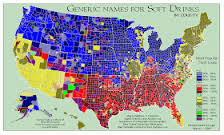
isogloss
a geographic boundary in which a particular linguistic feature occurs. Rarely a simple line. EX) You say Coke, she says Pop, and he says Soft Drink
language family
A collection of languages related to each other through a common ancestor long before recorded history.

Language Branch
a collection of languages within a family related through a common ancestral language that existed several thousand years ago

Indo-European language
most spoken language family in all the world

lingua franca
A language mutually understood and commonly used in trade by people who have different native languages

pidgin language
A form of speech that adopts a simplified grammar and limited vocabulary of a lingua franca, used for communications among speakers of two different languages.

creole language
a pidgin language that has developed a more complex structure and a vocabulary and has become a native language of a group of people EX) Haitian Creole

monotheistic religion
a religion with one god
polytheistic religion
a religion with more than one god
animistic religion
centered on the belief that inanimate objects, such as mts., trees, rivers, and boulders. posses spirits and should be revered. EX) Shamanism

universalizing religions
Religions that seek to gain converts
ethnic religion
religion that is identified with a particular ethnic or tribal group and that does not seek new converts
Hinduism
a major religious and cultural tradition of South Asia, developed from Vedic religion.

Sikhism
a monotheistic religion founded in Punjab in the 15th century by Guru Nanak.

Buddhism
A religion based on the teachings of the Buddha.

Shintoism
Ethnic faith originated in Japan

Judaism
A religion with a belief in one god. It originated with Abraham and the Hebrew people. Yahweh was responsible for the world and everything within it. They preserved their early history in the Old Testament.

Christianity
A monotheistic system of beliefs and practices based on the Old Testament and the teachings of Jesus as embodied in the New Testament.

Sunni Islam
Muslims belonging to branch of Islam believing that the community should select its own leadership. The majority religion in most Islamic countries.
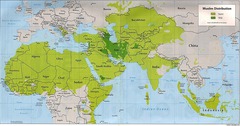
Shia/Shi'ite islam
a branch of Islam that regards Muhammad's son-in-law Ali as his rightful successor.
minaret
A distinctive feature of mosque architecture, a tower from which the faithful are called to worship.

ethnic enclave
A place with a high concentration of an ethnic group that is distinct from those in the surrounding area

genocide
Deliberate extermination of a racial or cultural group
ethnic cleansing
Process in which more powerful ethnic group forcibly removes a less powerful one in order to create an ethnically homogeneous region
theocracy
A government controlled by religious leaders
Ethnocentrism
Belief in the superiority of one's nation or ethnic group.

cultural relativism
the practice of judging a culture by its own standards
Sino-Tibetan Language Family
2nd largest language family. Includes Mandarin, Thai, Cantonese and Burmese

centripetal force
An attitude that tends to unify people and enhance support for a state
centrifugal force
a force that divides people and countries

Colonialism
An attempt by one country to establish settlements and to impose its political, economic, and cultural principles in another territory.
Imperialism
A policy of extending a country's power and influence through diplomacy or military force.

cultural divergence
The likelihood or tendency for cultures to become increasingly dissimilar with the passage of time.

cultural convergence
The tendency for cultures to become more alike as they increasingly share technology and organizational structures in a modern world united by improved transportation and communication.

Syncretism
the combining of elements of two groups into a new cultural feature
