photosynthesis and cellular respiration
 Call Kai
 Learn
Learn Practice Test
 Spaced Repetition
 Match
Match Flashcards
 Knowt Play
1/48

There's no tags or description
Looks like no tags are added yet.
Name | Mastery | Learn | Test | Matching | Spaced | Call with Kai | Chat |
|---|
No analytics yet
Send a link to your students to track their progress
49 Terms
Adenosine Diphosphate (ADP) and Adenosine Triphosphate (ATP):
ADP: A low-energy molecule that can be turned into ATP by adding a phosphate group.
ATP:The main energy-carrying molecule in cells; stores and provides energy for processes. (basket).
NADP+ and NADPH:
NADP+: energy carrier, accepts electrons; high-energy form that carries electrons for use in reactions. (The "Empty" Truck)
NADPH: accepts a pair of electrons and a hydrogen ion to become NADPH. Transports hydrogen and electrons from the light dependent to light independent stage. (The "Full" Truck)
Photosynthesis
Ultimate source of energy for most living things comes from sunlight energy. Convert light energy into chemical potential energy, all contain chlorophyll.
Two stages in photo synthesis: ‘photo’ = light and ‘synthesis’ = put together
Stage 1 (the ‘photo’ part): The light-dependent reactions, occurs on thylakoid membranes in the grana.
Stage 2 (the ‘synthesis’ part): The light-independent reaction (the Calvin cycle), occurs in the stroma.

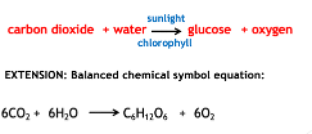
Word equation (ALL YOU NEED): of photosynthesis
Purpose of Glucose:
u Source of energy for plant.
u Stored by plant as starch for later use (can be converted back into glucose).
u Chemical starting point for the synthesis of complex compounds (cellulose, proteins).
What are coenzyme:
Additional non-protein components needed for reaction. Enzymes = workers, coenzymes = tools they need to do the job.
The ADP-ATP Cycle:
Coenzyme ATP carries energy for immediate use in its phosphate bond.
When the bond is broken, this energy is released for use.
ATP then becomes ADP and inorganic phosphate (Pi).
To ‘recharge’ the ATP molecule, chemical energy is taken from the breakdown of food (e.g. glucose).
ADP + Pi ←→ ATP

Structure of the Chloroplast:
u Phospholipid bilayer – composed of an outer membrane and inner membrane.
u Thylakoid membranes – folded inner membrane, site of light dependent reactions.
u Thylakoid lamellae (sing. lamella) – flat membrane sheets between the grana.
u Grana (sing. granum) – stacks of flattened hollow discs of the thylakoid membrane that contain chlorophyll.
u Stroma – enzyme-rich fluid matrix that fills the chloroplast, site of light independent reactions.
Chloroplast: The part of a plant cell where photosynthesis happens.
Chlorophyll: The green pigment in plants that absorbs light energy for photosynthesis.

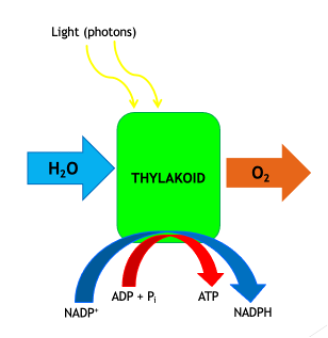
Light-Dependent Reactions (in the presence of light):
Purpose: release ATP and hydrogen ions to be used in the next stage.
Where: membranes of the thylakoid (in the grana) where the chlorophyll and enzymes are located.
Involves: Sunlight energy is absorbed by the chlorophyll and used to produce ATP (from ADP Pi to ATP).
H20 is split into O2 and H+.
H+ is gathered by NADP (carrier molecules) for later use.
O2 is a waste product.
Inputs: light (photons),12 H2O (water), 12 ADP+Pi, 12 NADP+.
Outputs: 6 O2 (oxygen), 12 ATP, 12 NADPH
Light-Independent Reactions (without light): Calvin cycle:
Purpose: to make glucose, carbon reduction: Carbon dioxide is reduced to make glucose.
where: In stroma
Inputs: 12 ATP and 12 NADPH (from light dependent), needs 6 CO2 from atmosphere.
Outputs: glucose (C6 H12 O6) , 12 ADP + Pi, 12 NADP+, 6 H2O.
Process: Products of the light-dependent reactions are released into stroma. Also needs CO2 from atmosphere. NADPH provides reaction with necessary hydrogen ions (H+) and energy in the form of 2 electrons. In several steps, the H+ and CO2 molecules are used to make a simple C3 carbohydrate called glyceraldehyde 3-phosphate (or G3P; a three-carbon sugar). 2 G3P molecules combine to make glucose in the cytosol.

The role of Rubisco:
Enzyme
helps attach carbon dioxide to molecules in the Calvin cycle. binding to CO2 and fixing it to RuBP.
Key enzyme of light-independent stage. Creating organic compound 3-PGA, initiating Calvin cycle.
Slow, so plants have adapted by producing vast amounts of this enzyme.
Its action can vary: Sometimes it binds to carbon dioxide and facilitates Calvin cycle, or it binds to oxygen and initiates a wasteful process called photorespiration (no glucose produced).
need to know for calvin cycle
happen twice for full glucose
Converting carbon dioxide (CO2) into organic molecules (glucose). Catalysed by the enzyme Rubisco.
energy is used to convert molecules CO2 into a higher-energy form (like making sugar).
Starting molecule (RuBP) is remade so the cycle can continue.
Two cycles will use 6 carbon dioxide molecules and create enough G3P to form a glucose molecule.
Carbon Fixation:
Converting carbon dioxide (CO2) into organic molecules (like sugars). Catalysed by the enzyme Rubisco.
1. 3 Carbon dioxide molecules (CO2) enter the Calvin Cycle.
2. Rubisco uses three CO2 and three (5 carbon) RuBP molecules, to create six 3C molecules (3-PGA).

Reduction
Phase Calvin cycle
energy is used to convert molecules into a higher-energy form (like making sugar).
ATP and NADPH from the Light Dependant Stage are used to convert 3-C molecules (3-PGA) into another 3-C molecule (G3P).
2. One G3P leaves the cycle in order to make glucose. (Two G3P molecules are needed to form one glucose).

Regeneration and Repeat:
Starting molecule (RuBP) is remade so the cycle can continue.
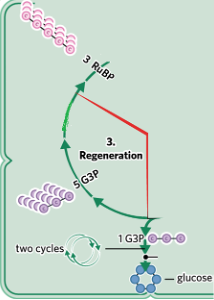
1. The remaining five G3P molecules are recycled into RuBP, the molecule at the start of the cycle.
2. The cycle must turn twice to create enough G3P to form one glucose molecule.
Two cycles will use 6 carbon dioxide molecules and create enough G3P to form a glucose molecule.
Affinity:
preference other one molecule to another (when binding)
The Problem with Rubisco:
Can bind to both oxygen and carbon dioxide.
Binds to O2 = photorespiration, leads to a loss of carbon and glucose is not produced (Calvin cycle does not occur).
High temperatures, photorespiration increases even further, reducing the efficiency of photosynthesis.
Stomata (pores in leaves) close and O2 cannot be removed as waste, increasing likelihood that Rubisco will bind to it.
Higher temperatures also cause Rubisco to have a greater affinity for O2.

Adaptations to Reduce Photorespiration in C3, C4 and CAM Plants:
It is advantageous for plants to expose Rubisco to high concentrations of CO2 and low concentrations of O2 in order to limit photorespiration and increase photosynthesis.
Plants can be divided into three groups based on their adaptive mechanisms to stop photorespiration, differ in their methods: C3, C4, and CAM plants .
Photorespiration in C3 Plants:
Rubisco can use oxygen instead of carbon dioxide (photorespiration), wasting energy, loss of carbon and glucose is not produced as the Calvin cycle does not occur.
No features to fight photorespiration. ‘normal’ and standard conditions. (trees, cereals (wheat and rice), most nuts, fruits and vegetables).
When a C3 plant is affected by high temperatures this increases photorespiration even further. Stomata (pores in leaves) close and O2 cannot be removed as waste, increasing likelihood that Rubisco will bind to it. Higher temperatures also causes Rubisco to have a greater affinity for O2.

Photosynthesis in C4 Plants:
Mesophyll cell: inner leaf cells where most photosynthesis happens, closer to the stroma .
Bundle sheath cell: Cells around leaf veins that help in photosynthesis in C4 plants.
Reduce photorespiration by separating initial carbon fixation from the rest of the Calvin cycle over space, (grasses and crops e.g. sugarcane and corn).
Have adapted to reduce photorespiration.
Light dependent stage is same in C3 and C4 plants. Light independent stage is different, where C4 plants undergo carbon fixation seperated from rest of Calvin cycle in two different cells.
Mesophyll cells use PEP carboxylase to fix CO₂ into malate. PEP carboxylase does not bind O₂, so photorespiration is reduced. Malate moves to bundle-sheath cells and releases CO₂. The high CO₂ concentration allows rubisco to carry out the Calvin cycle efficiently to make glucose.
This adaptation helps plants survive in hot, dry environments.
Disadvantage: requires extra ATP (energy).

Photosynthesis in CAM Plants:
CAM plants separate photosynthesis steps by time.
Stomata open at night to take in CO₂, reducing water loss.
CO₂ is fixed into malate and stored in vacuoles.
During the day, stomata stay closed to reduce transpiration.
Malate releases CO₂ for the Calvin cycle to make glucose.
Adaptation helps plants survive in hot, dry environments (e.g. cacti).
Disadvantage: less glucose is produced, so plants grow slowly.

Factors Affecting the Rate of Photosynthesis: Light:
As light intensity increases, the rate of photosynthesis increases.
Eventually a saturation point is reached, where the rate plateaus.
At this point, photosynthesis is at its maximum rate because enzymes and chloroplast systems are working at full capacity.
Red light is most effective for photosynthesis, while green light is least effective.

Factors Affecting the Rate of Photosynthesis: Carbon dioxide concentration:
Plants need carbon dioxide to photosynthesise.
Carbon dioxide concentration in the atmosphere remains relatively stable. Plants take in carbon dioxide from atmosphere via open stomata on their leaves.
Amount of carbon dioxide intake is affected by number of stomata and whether they are open or closed.
Limited carbon dioxide limits the rate of photosynthesis, even in ample light conditions.

Factors Affecting the Rate of Photosynthesis: Temperature:
Each stage of photosynthesis is catalysed by enzymes, and enzymes are sensitive to temperature.
Temperatures below the optimum slow down reactions. Enzymes become inactive, and they have less kinetic energy to move around.
Temperatures above the optimum can denature enzymes by breaking the hydrogen bonds and causing shape to be destroyed.
The temperature that is the optimum for the functioning of enzymes involved in photosynthesis will therefore be the temperature that the maximum rate of photosynthesis occurs.

Factors Affecting the Rate of Photosynthesis: Water Availability:
It is an input in the light-dependent stage of photosynthesis. Influences the opening and closing of stomata.
The amount of water used in photosynthesis is very small compared to the amount that is needed to keep cells alive, therefore a living plant will usually have plenty of water available to carry out photosynthesis (and it is not considered a limiting factor).
Plants may experience a lack of water during droughts or periods of hot weather or any changes to the plant’s external environment.
To prevent mass water loss, plants close their stomata on their leaves so that water does not evaporate out of the plant.

Stomata
pores, most usually found on the underside of leaves. Opening and closing of stomata controls water loss and gas exchange.
Used to prevent photorespiration.
CRISPR Cas-9 Increasing Crop Yield and Photosynthetic Efficiency: Applications of CRISPR in agriculture are vast:
Gene editing has been occurring in plants since 2013. Reducing stress to crops (abiotic and biotic) (Resistance to flood, drought and soil salinity, Resistance to disease (bacterial, viral or fungal).). Increasing nutrition. Increase quality of a crop (size and volume). Increasing the efficiency of photosynthesis. Increase photosynthetic enzyme abundance. Minimise photorespiration.

Applications of CRISPR:
Used to improve crop yield (more of crop) and effiency of photosynthesis. A benefit is that CRISPR can be used to target one of multiple genes at the same time. Rice is a staple across the world and therefore targeted to increase the yield and quality of the crops produced.

Purpose of Cellular Respiration:
Create useable energy (ATP) from a series of biochemical reactions, involving breakdown of glucose.

Types of Cellular Respiration: Aerobic respiration (with oxygen)
Breaking down (catalyzing) glucose to release energy (exergonic/catabolic reactions).
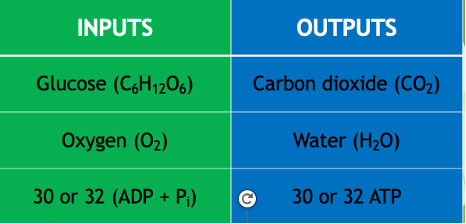
ATP yield: variation between amounts of ATP produced depending on the tissue. In total 30 or 32 molecules of ATP are produced in aerobic respiration (process= phosphorylation).
Total ATP Yield: Per each glucose molecule, the entire process of aerobic respiration releases a total of 30 or 32 ATP molecules (depending on the efficiency of the tissue).
From glycolysis = 2, Krebs cycle =2, 26 or 28 from the electron transport chain
Equations:
glucose + oxygen → carbon dioxide + water + 30 or 32 ATP
C6H12O6 + 6O2 → 6CO2 + 6H2O + 30 or 32 ATP
Summary of cellular respiration

Glycolysis: (where= cell cytosol):
Inputs: 1 glucose, 2 ADP + Pi, 2 NAD+
Outputs: 2 Pyruvate, 2 ATP, 2 NADH.
Involves a rapid release of energy, anaerobic (does not require oxygen).
Glucose is converted to 2 pyruvate and 2 ATP produced.
Breaking glucose down. No CO2 is released in this stage.

Krebs cycle (or citric acid cycle), (where = mitochondrial matrix):
Inputs: 2 Pyruvate, 2 ADP+ Pi, 2 NAD+, 2 FAD+.
Outputs: Carbon dioxide (6CO2), 2 NADH, 2 FADH2, 2 ATP.
Cycles once for each of the two pyruvates created in glycolysis.
pyruvate converted to CO2, 2 ATP is produced.
Pyruvate broken down each pyruvate molecule yields: 3 carbon dioxide molecules, loaded NADH molecules (carrying H+ and electrons), loaded FADH2 molecule (another coenzyme carrying two H+ and two electrons), one ATP molecule.

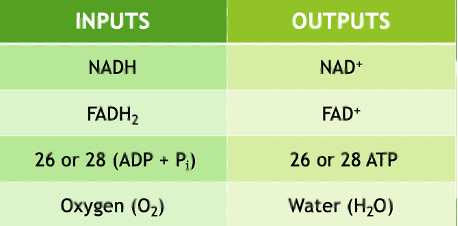
Electron transport chain: (cristae, fold of mitochondria):
Inputs: oxygen (6 O2), 26 or 28 ADP+ Pi, NADH, FADH2, electrons.
Outputs: 6 H2O, NAD+, FAD+, 26 or 28 ATP.
H combines with O to produce water, 26 or 28 ATP is produced with the energy harnessed from NADH and FADH2 unloading H .
Purpose: releases energy from electrons in small steps to produce ATP.
Electrons move along carrier proteins (cytochromes) in the inner mitochondrial membrane.
Oxygen acts as the final electron acceptor, combining with H⁺ and electrons to form water.
Anaerobic fermentation (without oxygen): Importance of Anaerobic Fermentation:
Mammalian muscle tissue can switch to anaerobic respiration during short periods of strenuous exercise when the oxygen supply to the muscles cannot keep up with the demand.
Some organisms live in environments without oxygen or oxygen shortages occur.
Each reaction must be processed by the next reaction in the chain for the pathway to continue (like a queue in traffic). Lack of oxygen limits rate of electron transport chain and so this continues back through pathway, making pyruvate accumulate.
NADH also needs to be converted back into NAD+ to allow glycolysis to occur. Organisms that carry out anaerobic respiration convert pyruvate into lactic acid and NADH to NAD+. Means that pyruvate is removed (and pathway unblocked) and a constant supply of NAD+ is provided.

Anaerobic fermentation (without oxygen): process.
Glycolysis: 2 ATP, same as aerobic respiration.
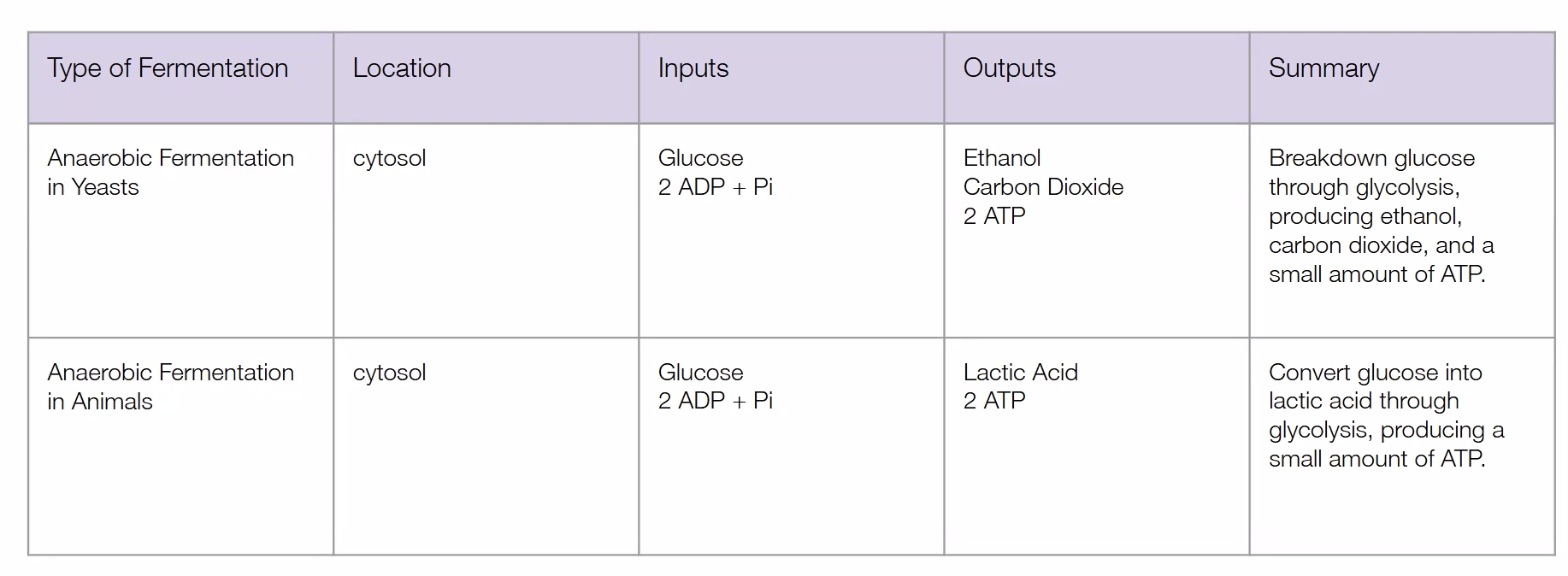
(Lactic acid or alcohol) fermentation (cytosol of cells): no ATP produced. Oxygen is not required. In animals, lactic acid is produced, cannot accumulate indefinitely. It lowers pH of our cells and blood and can be toxic in high amounts. When oxygen becomes available again, lactic acid is converted back to pyruvate for aerobic respiration. In plants, yeast and bacteria; alcohol and carbon dioxide are produced. NO LACTIC ACID.
Mitochondria: and parts,
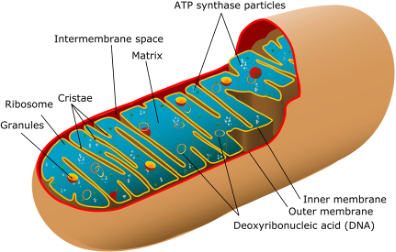
Mitochondria: Site of aerobic respiration, Krebs cycle and electron transport chain.
Cristae: folded inner membrane inside mitochondrion (increases surface area).
Mitochondrial matrix: is fluid inside inner membrane.
The intermembrane space: is space between inner and outer membranes.
Comparing Aerobic and Anaerobic:

What is Biofuel:
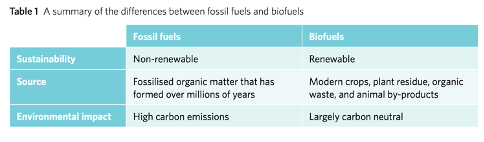
Made from organic material (biomass, Plant or animal byproducts and biological waste that can be sourced from many of our existing industries (such as agriculture and forestry and food manufacturing).) Can offer renewable, sustainable alternatives to fossil fuels (coal and gas). Typically carbon neutral, believed be better for environment (cause no net increase in the amount of CO2 produced).
Two main types of biofuels:
u Bioethanol: made from carbohydrates (plant sugars)
u Biodiesel: made via breakdown of lipids and fats (animal fats and veg oils)
Renewable vs Non-renewable
Renewable: replenished at same rate or faster than it is being used.
Non-renewable: used faster than we can replenish it.
Production of Bioethanol:
Deconstruction: increase surface area by breaking down cell wall and cellulose. Enzymes, acids, physical grinding and heating can all be used.
Digestion: Enzymes (eg: Amylase) breaks down starch and cellulose into glucose and other sugars.
Fermentation: Yeast facilitates anaerobic fermentation of the sugars producing large amounts of ethanol.
Purification and dehydration: Ethanol is distilled and water is removed, leaving finished biofuel.
Yeast Used in the Production of Bioethanol:
Yeast are used because they:
produce lots of ethanol
grow quickly
are cheap to culture
Challenges:
complex carbohydrates must be broken down first
temperature and pH must be controlled
high ethanol levels can kill yeast
Genetic modification can:
increase yeast resistance
allow breakdown of more sugars
improve ethanol production efficiency.
Applications of Biofuels:
Can be used as an alternative to traditional fuels (petrol and diesel). Bioethanol is blended with gasoline to cut down on carbon monoxide and other smog-causing emissions. (Most common ethanol blends , fuel E10, 10% ethanol and 90% gasoline).
Be stored and used in energy generation → often used in backup power systems and generators for schools, hospitals, community and residential facilities.
Applications could extend into areas such as cleaning and heating homes in future as researchers develop more cost-effective and efficient ways to generate biofuels.

Strengths and weaknesses of biofuel:

Factors Affecting the Rate of Cellular Respiration: Temperature:
High or low temperatures = decreased rate of respiration.
Each stage is catalysed by enzymes, are sensitive to temperature.
Temperatures below the optimum = slow down reactions. Enzymes become inactive, less kinetic energy to move around.
Temperatures above the optimum= denature enzymes by breaking hydrogen bonds and causing specific 3D shape to be destroyed.

Factors Affecting the Rate of Cellular Respiration:pH
Each stage of is catalyzed by enzymes, are sensitive to pH.
pHs specific to enzyme (the intermembrane space of the mitochondria usually has a pH of around 7.0-7.4 (while the matrix has a pH of 7.8).
Above or below the optimum pH, enzymes begin to denature and the rate of respiration slows.

Factors Affecting the Rate of Cellular Respiration: Glucose Concentration:
Is an input/reactant in first stage of cellular respiration (glycolysis).
Limiting number of reactants limits the rate of glycolysis, and vice versa.
As outputs / products of glycolysis become inputs for the Krebs cycle, limited glucose will limit the reactions in the next stages.
Providing temperature remains constant, increasing the glucose concentration will increase the rate of respiration, until it reaches its maximum rate (as controlled by the concentration of enzymes and cofactors).
Low glucose concentration = decreased rate of respiration.
(HOW TO ANSWER)

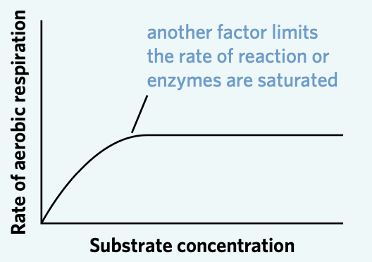
Factors Affecting the Rate of Cellular Respiration: Oxygen Availability:
In aerobic respiration, a constant supply of oxygen is necessary.
Is an input of electron transport chain, so limiting concentration of oxygen will limit rate at which electron transport chain can function.
As oxygen levels rise = rate of aerobic respiration increases.
More oxygen = faster ATP production.
Low oxygen concentration = decreased rate of respiration.
