module 17 cellular respiration I
 Call Kai
 Learn
 Practice Test
 Spaced Repetition
 Match
 Flashcards
 Knowt Play
1/63

There's no tags or description
Looks like no tags are added yet.
64 Terms
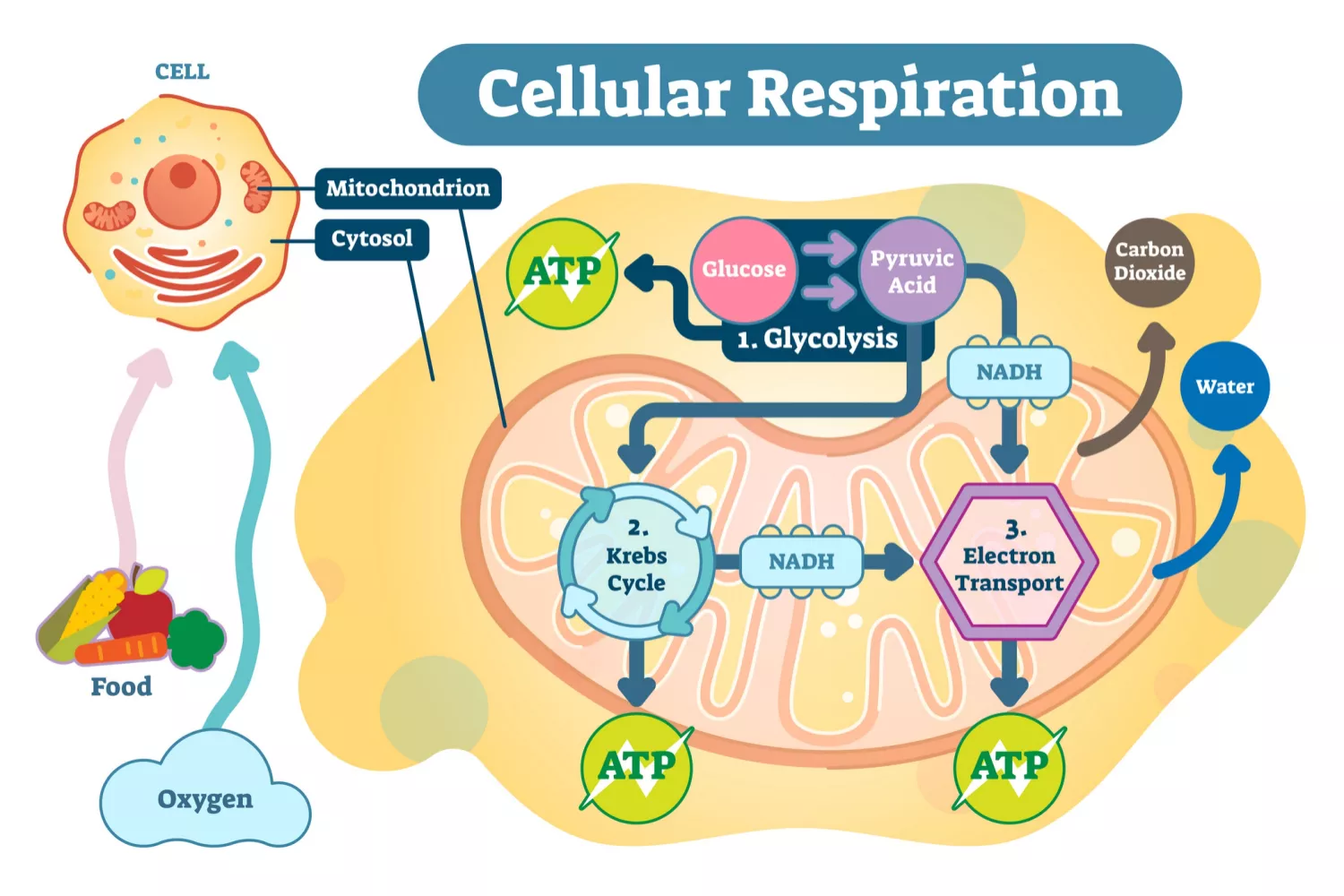
Define cellular respiration
A series of chemical reactions in which organic molecules are oxidized to carbon dioxide, converting the energy stored in organic molecules to ATP
Discuss the importance of converting organic molecules into ATP
ATP can then be used to power many of the chemical reactions that occur all of the time in cells.
Define aerobic respiration
Cellular respiration that occurs in the presence of oxygen
Define anaerobic respiration
Cellular respiration that occurs in the absence of oxygen
Write the reaction for cellular respiration
C6H12O6 + 6O2 —> 6CO2 + 6H2O + Energy
Glucose + Oxygen —> Carbon dioxide + Water + Energy (ATP)
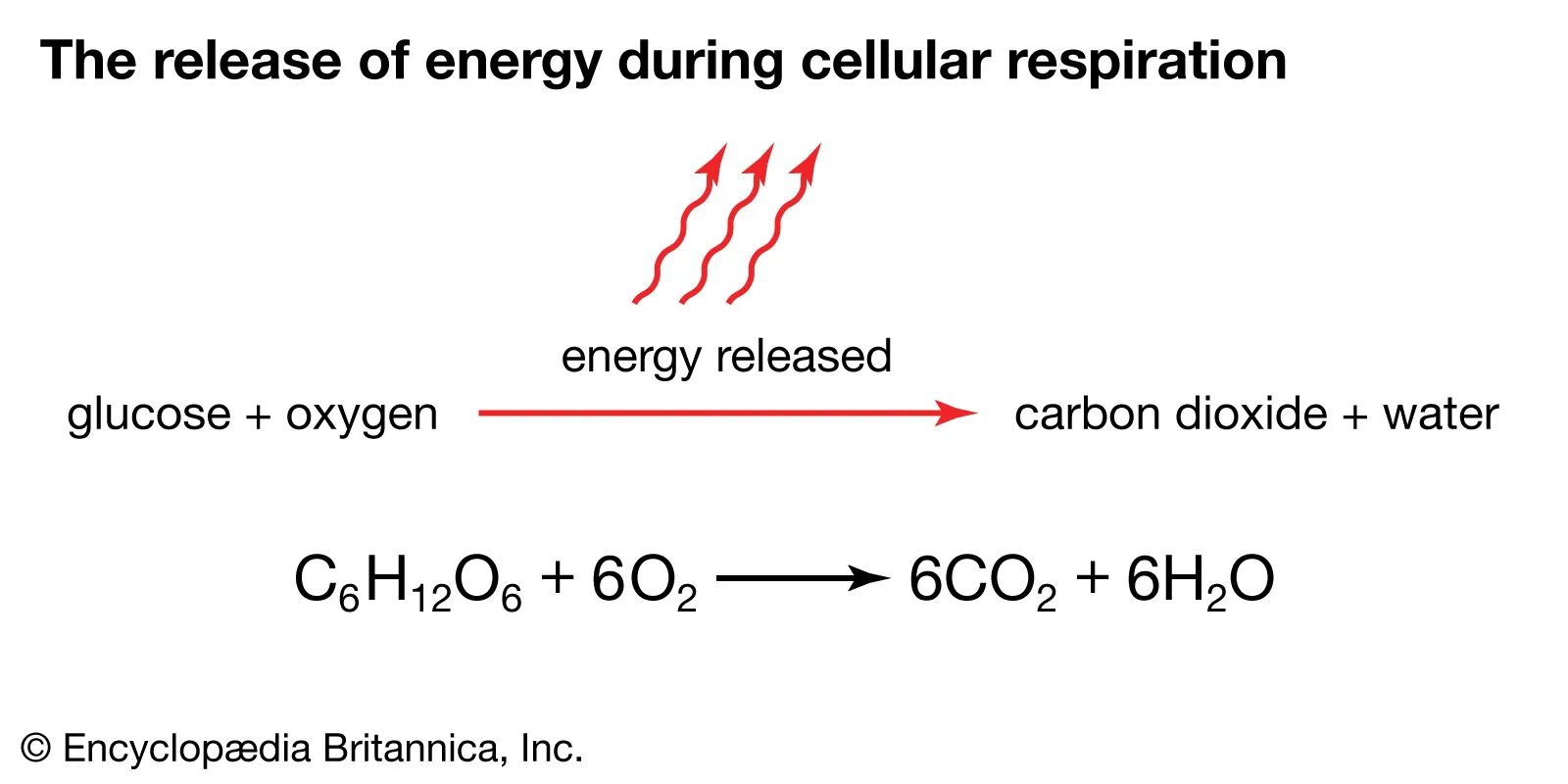
Explain how the cellular respiration reaction provides energy
Cellular respiration releases a large amount of free energy (energy available to do work) bc the sum of the potential energy in all of the chemical bonds of the reactants (glucose and oxygen) is higher than that of the products (carbon dioxide and water)
Identify the maximum amount of free energy released during cellular respiration
-686 kcal per mole of glucose

Describe why cellular respiration is a reduction-oxidation (redox) reaction
Bc the loss and gain always happen in a single coupled reaction where electrons are transferred from one molecule to another. One molecule loses electrons, and one molecule gains those same electrons. Its molecules lose and gain electrons, they also lose and gain energy.

Describe how glucose is oxidized in the cellular respiration reaction
The carbon atoms in glucose are oxidized bc they go from sharing electrons equally in the carbon-carbon bonds to losing electrons in the carbon-oxygen bonds of the carbon dioxide molecule

Describe how oxygen is reduced to water in the cellular respiration reaction
In oxygen gas, electrons are shared equally, between two oxygen atoms
In water, the electrons that are shared between hydrogen and oxygen are more likely to be found near oxygen —> oxygen is more electronegative than hydrogen
—> oxygen gains electrons and is reduced in the reaction
Oxygen atoms go from sharing electrons equally to gaining electrons when water is formed
2 major mechanisms for atp production
Substrate-level phosphorylation
Oxidative phosphorylation

Define substrate level phosphorylation
A phosphorylated organic molecule directly transfers a phosphate group to ADP.
This pathway produces only a small amount of the total ATP generated in the process of cellular respiration

Define oxidative phosphorylation
Most atp generated
Final stage of cellular respiration
Oxidation reactions are coupled to the reduction of electron carriers which hand off their electrons to the electron in transport chain
As electrons are passed along this chain to oxygen, protons are pumped across the inner mitochondrial membrane, providing energy to drive the synthesis of ATP
How much ATP energy is produced through substrate-level phosphorylation
4 ATP per glucose in glycolysis & 2 additional ATP per glucose in Krebs Cycle
Identify the primary electron carriers for cellular respiration
Nicotinamide adenine dinucleotide (NADH)
Flavin Adenine dinucleotide (FADH2)
Write the reaction for the reduction of NADH and FADH2
NAD+ + 2e- + H+ → NADH
FAD + 2e- + 2H+ → FADH2

describe why the formation reduced NADH and FADH2 are important.
They transport electrons and energy to the respiratory electron transport chain → electron carriers act as shuttles, transferring electrons and energy derived from the oxidation of fuel molecules such as glucose to the respiratory electron transport

Describe the respiratory electron transport chain
A series of membrane-associated proteins in the inner membrane of mitochondria that transfers electrons to a final electron acceptor.
The electron movement drives the ______ across the membrane, and the resulting electrochemical gradient is used to _____
Pumping of protons
Produce atp
State why the use of electron transport to produce ATP is called oxidative phosphorylation
Bc oxygen is then final electron acceptor, this mechanism of synthesizing ATP is called oxidative phosphorylation
Final product when oxygen accepts electrons
Water

Cellular respiration in the electron transport systems
Electron transport chain harnesses energy from fuel molecules like glucose
Electron transport located in inner membrane of mitochondria

Photosynthesis in the electron transport chain
Harnesses energy from sunlight
Located in thylakoid membrane
Similarities of the electron transport systems in photosynthesis and cellular respiration
The high surface area of the folded membranes allows for the harnessing of a great deal of energy

Describe why plants have both chloroplasts and mitochondria
Plants require cellular respiration when dark at night + no light energy to make ATP → cells that have chloroplasts, where photosynthesis occurs contains mitochondria where cellular respiration occurs
Identify the molecule that is oxidized and the molecule that is reduced in the overall reaction for cellular respiration
Glucose is oxidized and converted to carbon dioxide
Oxygen gas is reduced and converted to water
Identify the reduced, oxidized, and which ever has more/less chemcial energy
Reduced molecules: NADH, FADH2, C6H12O6
Oxidized molecules: NAD+, FAD, CO2
Reduced forms have more chemical energy than their corresponding oxidized forms

Describe why cellular respiration requires multiple reactions in four stages
Series of reactions (redox)
Oxidized slowly and in a controlled manner, allowing energy to be harnessed
Some of this energy is used to synthesize ATP directly by substrate level phosphorylation ; some is stored temporarily in redcued electron carriers → used to generate ATP by oxidative phosphorylation
These stages take place in diff regions of the cell & all have different reactants + products
Stage 1
Glycolysis
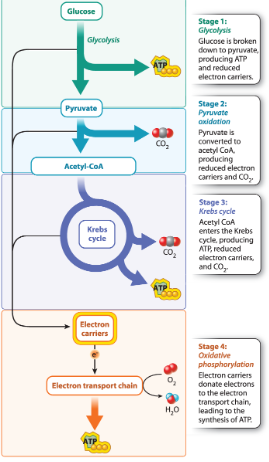
Stage 1 site
cytoplasm

Stage 1 input
Glucose

Stage 1 Actions/Products
Glucose is broken down to pyruvate, producing ATP and reduced electron carriers
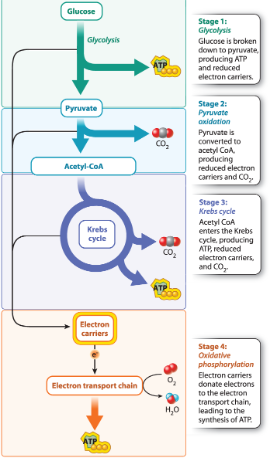
Stage 2
Pyruvate oxidation

Stage 2 site
mitochondria in eukaryotes

Stage 2 Actions/Products
Pyruvate is converted to acetyl CoA, producing reduced electron carriers and CO2

Stage 3
Kreb Cycle (citric acid cycle)

Stage 3 site
mitochondria in eukaryotes
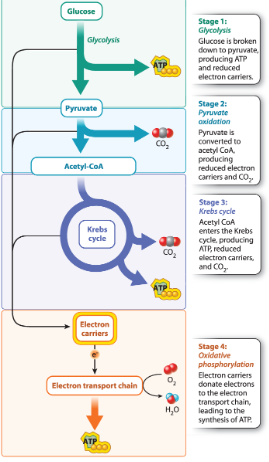
Stage 3 Input
Acetyl CoA

Stage 3 Actions/Products
Acetyl CoA enters + broken down & CO2 is released ; producing ATP, reduced electron carriers, and CO2
Stage 4
Oxidative Phosphorylation

Stage 4 site
Inner mitochondrial membrane

Stage 4 input
Electron Carriers

Stage 4 Actions/Products
Electron carriers donate electrons to the electron transport chain, leading to the synthesis of ATP
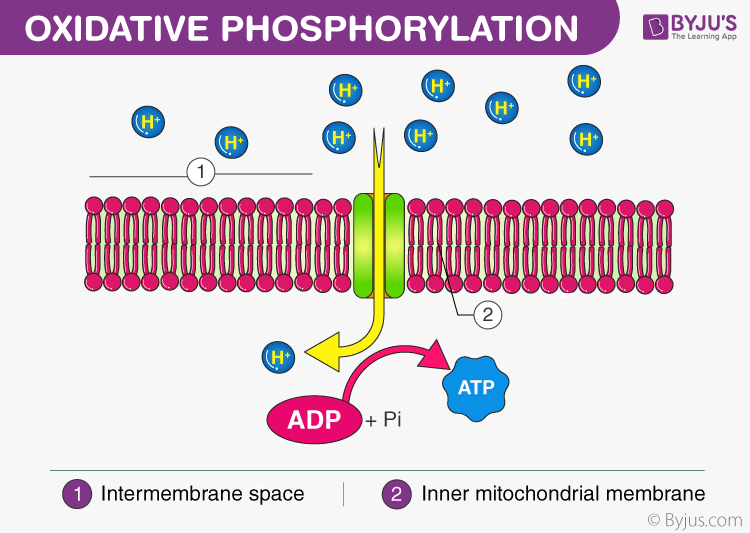
What does the respiratory electron transport chain do to the electrons in oxidative phosphorylation?
Transfers electrons along a series of membrane associated proteins to a final electron acceptor
In the process, harnesses the energy of the electrons to produce a large amount of ATP
In aerobic respiration, oxygen is the final electron acceptor, consumed, and water is produced

Describe the energy flow through cellular respiration
Glucose is oxidized through a series of chemical reactions, releasing free energy in the form of ATP and the reduced electron carriers NADH and FADH2. A decrease in free energy indicates that the reaction is exergonic. These exergonic reactions lead to the production of ATP and reduced electron carriers.
Identify the 4 major stages of cellular respiration
Glycolysis
Pyruvate oxidation
The Krebs Cycle
Oxidative phosphorylation

Identify the storage form of glucose in plants and animals
Glycogen in animals & starch in plants
Describe what the polysaccharides starch and glycogen have in common
Both glycogen and starch are large branched polymers of glucose

Describe what happens to blood glucose levels after a meal.
The blood glucose level becomes high, glucose molecules that are not needed are linked to form glycogen in liver and muscle cells
Describe the fate of glycogen in the muscle
Glycogen stored in muscle cells provides the substrate for the catabolic process
Outcome: generates atp as needed for repeated muscle contractions
Describe how the body accesses the energy in glycogen
By breaking it down into glucose, → can then undergo cellular respiration to produce ATP (useable energy)
Glycogen is stored mainly in liver + muscles
3 disaccharides that can provide energy for cellular respiration
Maltose, lactose, sucrose

3 monosaccharides that provide cellular energy
Fructose, mannose, galactose
disaccharides are hydrolyzed into monosaccharides → transported into cells

Where does carbohydrates enter in the stage of cellular respiration?
Glycolysis
Where does glycerol enter in the stage of cellular respiration
Glycolysis
Where does fatty acids enter in the stage of cellular respiration
Acetyl-CoA
Where do amino acids enter in the stage of cellular respiration
Acetyl-CoA
Where do other amino acids enter in the stage of cellular respiration?
The Krebs Cycle
Identify the breakdown products of triacylglycerols
1 Glycerol & 3 Fatty Acids
Identify the energy products of clipping 2-carbon segments from long chain fatty acids
Fatty acid breakdown produces electron carriers NADH, which provides electrons for ATP synthesis through oxidative phosphorylation
Produces acetyl-CoA, enters the Krebs Cycle and generates additional reduced electron carriers (NADH + FADH2) for ATP production
Describe the energy produced from palmitic acid, 16-carbon fatty acid, compared to the energy produced from glucose.
Palmitic acid produces 106 ATP molecules when completely oxidized
In comparison, the complete oxidation of one glucose molecule produces 32 ATP molecules
Palmitic acid produces more energy than glucose
Describe how proteins can provide energy
Protons first break down to amino acids, which enter at various points in glycolysis, pyruvate oxidation, and the Kreb Cycle
Why are proteins called a “last resort” energy source?
They serve structural and other roles important for cells
Identify 3 fuel molecules that can be broken down by cellular respiration
Carbohydrates, lipids, proteins