ISS 4304 Modules 8 - 10
 Call Kai
 Learn
 Practice Test
 Spaced Repetition
 Match
 Flashcards
 Knowt Play
1/64

Earn XP
Description and Tags
Complexity in Social Sciences, Social Network Analysis, & Systems Thinking
65 Terms
Complexity
the inherent intricacy and interdependence in systems where numerous elements or agents interact nonlinearly, often producing emergent properties and behaviors that traditional reductionist methods struggle to predict or explain
Complexity Theory
A framework for studying systems made up of many interconnected, adaptive parts. Emphasizes that social outcomes often arise through nonlinear interactions, feedback loops, emergence, and adaptation, rather than through simple linear cause-and-effect relationships
Paradigm
A worldview that underlies the theories and methodologies of a particular subject
Newtonian Science
Linear systems: isolated objects that interact linearly in a cause-and-effect manner
Materialistic and atomistic: entities that can be defined in isolation and described in terms of a set of properties
Mechanistic: The system operates as a perfect machine governed by the laws of classical physics
Reductionism: The whole is the sum of its parts
Complexity Science
Nonlinear adaptive systems: Numerous agents that interact with each other, adapting and evolving over time in response to each other’s behavior
Holistic: phenomena are characterized by parts that are intimately interconnected and can only be fully understood in reference to the whole system
Adaptation: The system changing its state in response to changes within its environment, aiming to optimize its state within that environment according to some metric
Synthesis: Entities are described based on their connection and functions within the whole system of which they are a part
Nonlinearity
The idea that small changes can sometimes trigger very large outcomes, while a large intervention may end up having only a limited effect. This happens because social systems involve many interacting parts and those interactions can amplify or dampen change
Ex. social media: one post may disappear unnoticed while another suddenly goes viral and shapes public discussion
Emergence
Refers to patterns that appear at the level of the whole system even though they are not planned by any one individual actor. In other words, when many people interact, their combined behavior can produce larger outcomes that we would not fully understand just by studying each person separately
Ex. traffic jams, public opinion, residential segregation
Self-Orginization
Means that order can arise without a central authority directing the entire process. In social life, people often adjust to one another, and over time stable patterns emerge even when no one is fully in charge.
Ex. informal norms in classroom, routines in a workplace, online communities developed from repeated interaction
Adaptation
Refers to the ability of people, organizations, or institutions to change their behavior in response to new conditions. The main reason why social systems are difficult to predict; once people respond to a situation, the situation itself changes
Feedback
Occurs when the results of a process influence what happens next. An outcome can loop back and shape future behavior. Sometimes feedback strengthens a trend, and sometimes it reduces or stabilizes it.
Ex. rising housing prices may attract more buyers which pushes the prices even higher
Path Dependence
History matters. Early decisions, accidents, or institutional choices can shape what becomes possible later on. Once a society, organization, or policy system moves in one direction, it can become difficult to reverse the course, even if other alternatives might have worked better
Nested or multilevel systems
Complex social systems usually operate at more than one level at the same time. Individuals exist within families, families within communities, communities within regions, and so on. These levels are connected, so what happens at one level can influence what happens at another.
Systems Theory
Examines how parts of a system are connected and how the whole system behaves
Network Analysis
Studies how patterns of relationships shape influence, diffusion, and coordination
Agent-Based Modeling
Simulates interactions among individual agents to examine how collective outcomes emerge
Computational methods and machine learning
Identify patterns in large and complex datasets and improve prediction
Systems, components, relations, purpose, and boundaries
A system is a set of connected parts that influence one another. Boundaries matter because they help us decide what is inside the system we are studying and what lies outside it.
Interdependence
Means that the parts of a system do not operate independently. A change in one part of the system can affect many other parts, sometimes directly and sometimes indirectly
Feedback Loops
Occur when the output of a system becomes an input back into that same system. This is one of the main ways systems change over time
Hierarchy and Levels
Systems often contain multiple levels and those levels are frequently organized in a hierarchy
Wholeness
means that a system must be understood as a whole, not just a collection of separate parts.
Social Systems
Parts within a system have agency - meaning they are agents capable of making choices and taking action
Agents
abstract models of individuals, groups, or organizations
Agency
the capacity to make choices and act independently to change the system’s state
Simple Rules
Cause and effect, heuristics, simple algorithms
Complex Rules
Many interacting parts, influenced by the agent’s perception of reality or environment
Positive Interdependency
positive correlation between individuals perceived probabilities of attaining their goals
ex. cooperation, collaborative organizations, order, adaptability of roles and relationships
Negative Interdependency
negative correlation between individuals’ perceived probabilities of attaining their goals
ex. competition and conflict, dominance relations and power structure, potential for disorder, polarization
Exchange
Involves mutual benefit through reciprocal transactions, but without necessarily sharing a common goal
Principal Agent Relationships
Agents often delegate their agency to other people or organizations
ex. in a representative democracy, “the people” is the principal and the president is the agent
Social Network Analysis
a powerful formal language for analyzing the structure of social relations and how connectivity defined the overall social system
Social Network Graphs
the basic elements include nodes and edges: nodes represent actors; edged represent relationships between actors, edges can be directed or undirected depending on whether the relation has a direction
Path
a sequence of ties linking one node to another
Distance
the length of the shortest path between them
Diameter
the largest-shortest path (distance) between any two nodes
Average Path
the length is the average of the shortest path (average distance) across pairs of nodes. Tells us how close actors are to one another, on average, within a connected network or connected component in a network
Centrality
measures how structurally important a node is within a network. Different measures capture different kinds of advantages: direct connectedness, speed of reach, brokerage, and connection to influential others
Degree Centrality
counts a node’s direct ties, often normalized by the maximum possible degree but raw counts are useful in simple examples
Closedness Centrality
measures how near a node is to all the other reachable nodes, using the shortest paths
Betweenness Centrality
measures how often a node lies on shortest paths between other pairs of nodes
Eigenvector (Prestige) Centrality
gives higher scores to nodes connected to other well- connected nodes; a node can be important not because of its ties, but its proximity to influential others
Homophily
the tendency of similar actors to connect with one another
Strong Tie
usually involves frequent interaction, trust, or emotional closeness
Weak Tie
usually involves less frequent or less intimate interaction; often connect people to different social circles
Clusters
Locally dense groups withing a larger network; high when many of a person’s contacts are also connected to each other. Support trust, coordination, and social support
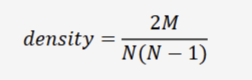
Density of a Network
the proportion of all possible ties that are actually present in the network
Degree Distribution
a network that describes the relative frequency of nodes with different degrees
Systems Thinking
A mindset and approach that focuses on the bigger picture. It emphasizes that everything is connected - a change in one part of the system can affect the whole
System
consists of a set of parts (or elements) and a set of connections between these elements known as relations, these parts become interdependent and collectively influence an outcome
Closed System
limited or no interaction with the environment
Open System
external interactions in the form of energy, information, or material transfers into or out of the system boundary
Elements
the physical or measurable parts of a system (people, groups, institutions, machines, data, resources)
Connections
Relationships or flows between elements (information, physical goods, influence, power, etc)
Purpose
the reason the system exists
System Mapping
A visual representation of a system’s elements and interconnection
Casual Loop Diagram
A visual mapping tool that represents the cause-and-effect relationship among various elements in a system
Reinforcing Feedback Loop
amplifies change
Balancing Feedback Loop
resists change, prompts stability
Stock
measurable quantity at a specific time
Flow
movement that increases or decreases a stock over time
Sources and Sinks
origins or destinations outside the system’s scope
Inflows and Outflows
represented by positive or negative symbols
System Traps
common patterns in systems where well-meaning actions lead to unintended or undesirable consequences; human made.
Ex. Cobra Effect: when incentives backfire, Shifting the Burden: over0relying on a short term fix, Drift to Low Performance: standards gradually decline over time
System Archetypes
recurring predictable patterns of behavior in systems that help us understand why a system behave the way it does over time. They serve as templates for diagnosing problems and design better interventions
Ex. Limits to Growth: growth slows due to a hidden constraint, Fixes that Fail: quick fixes worsen the problem long-term
Leverage Points
places in a system where a small shift in one thing can produce big changes elsewhere