Sociotechnical and Human-Centered Perspectives (9/14)
 Call Kai
 Learn
 Practice Test
 Spaced Repetition
 Match
 Flashcards
 Knowt Play
1/19

There's no tags or description
Looks like no tags are added yet.
20 Terms
“AI ate my homework”
gap between AI is so powerful it can do all of these things versus how it is actually used by people
homework example
with AI, students doing really good on homework but really bad on exams

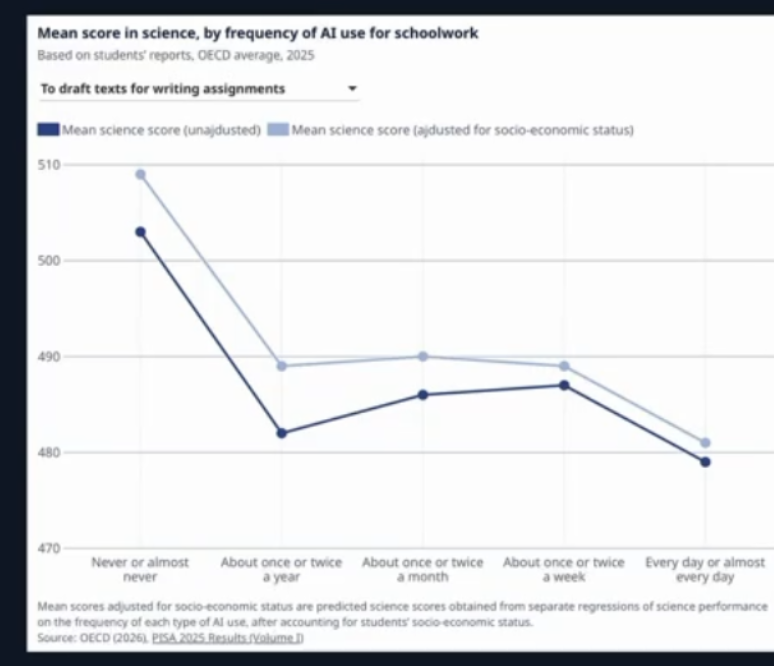
OECD Programme for Internaional Student Assessment (PISA) Report
PISA data show that students who use AI for specific schoolwork tasks attain lower scores in science than students who don’t use AI
in these scenarios, students who do not use AI outperform those who do (equivalent to being one year of schooling ahead of their peers)
just because AI is powerful does not mean it increases people’s expertise, capacity, etc
A Sociotechnical Frame
sociotechnical systems is the generic name we use to refer to the complex systems of social and technical components intertwined
the concept of sociotechnical system acknowledges that attempts to understand a device or a social practice (institution, relationship, etc) as an independent entity are misleading. to treat either as a separate unit, is to abstract it from reality.
Lisanne Bainbridge - Ironies of Auomation
Typical Approach to Automation
the designers view of the human operator may be that the operator is unreliable and inefficient, so should be eliminated from the system
there’s this idea that we want to make the technology as good as people, and we don’t really worry about who the users are.
Men are better at, Machines are better at
neatly segment these things into diff buckets, people you do the things you’re better at and machines you do the thing you’re better at. kind of best of both worlds.
this never works in practce
Bainbridge points out there are a large number of challenges when you throw people and technology and try to get the best of both worlds
The Ironies
irony: combination of circumstances, the result of which is the direct opposite of what might be expected
1) Designer errors can be a major source of operating problems
designers of the technology do not have a great understanding of who these people, that are the users are.
computer scientists or other developers tend to think the job of a doctor or teacher is simpler than it actually is. so they assume that the computer or machine can do a better job not recognizing that it creates its own problem
2) The designer who tries to eliminate the operator still leaves the operator to do the tasks which the designer cannot think how to automate. The operator can be left with an arbitrary collection of tasks and little thought may have been given to providing support for them.
when you try to automate certain tasks, you’re still leaving someone to do tasks the machine cannot do.
leaving the human operator with the “remains” of that process.
The Results
automation of industrial processes may expand rather than eliminate problems with the human operator
leaving the human operator with very difficult, edge case components that are very difficult and the operator may not even be able to handle it
by taking away the easy parts of his task, the automation can make the difficult part of the human operator’s task even more difficult
Manual Skills
physical skills deteriorate when they are not used, particularly the refinements of gain and timing. this means that a formerly experienced operator who has been monitoring an automated process may now be an inexperienced one.
when manual take-over is needed, there is likely to be something wrong with the process, unusual actions may be needed to control it and one could argue the operator needs to be more rather than less skilled and less.
self-driving car example
a lot of systems are built with the idea that machines will do most of the work but if something goes wrong it hands it back to the human. but, when it does get handed over, it will be very difficult to fix.
human operator is getting less experience and then suddenly its handed back to them where its a particularly difficult situation.
Long-Term Knowledge
an operator will only be able to generate new successful strategies for unusual situations if he has adequate knowledge of the process
problems
efficient retrieval of knowledge from long term memory depends on frequency of use
this type of knowledge only develops through use and feedback about its effectiveness
newer workers may not develop as much expertise if they never have to operate a system
Working Knowledge
it is difficult to take over a system without working knowledge about its current state
manual operators may come into the control room quarter to half an hour before they’re due to take over control, so they can get this feel for what the process is doing
human monitors may not know enough about how a system has been operating in order to take over control
driving a car: how many cars are around you, how are other people driving, lanes in the highway, etc
Monitoring
monitoring seems simple but raises notable contradictions
it is impossible for even a highly motivated human being to maintain effective visual attention towards a source of info on which very little happens, for more than half an hour
also, the automation has been put in because it can do the job better but the operator is being asked to monitor if it is working effectively
in complex modes of operation, the monitor needs to know what the correct behavior of the process should be. such knowledge requires either special training or special displays.
the moviation for automation is that a computer can make more decisions quicker and with more accuracy. therefore, there is no way the human operator can check in real time if the machine is following its rules correctly.
the human monitor has been given an impossible task
Two strategies to deal with these ironies
1) Maintain the efficiency and skills of the operator if he is expected to monitor and take over control.
automatic systems should fail in an obvious way
the computer should decisions using methods and criteria which the operator can follow
allow the operator can use hands-on control for a period in each shift
2) keep the human operator on-line with computer support
support the skills of people rather than replacing them
provide instructions
provide feedback to mitigate human error
reduce overall workload w/o replacing human
Lucy Suchaman et al → Reconstructing Tech As Social Practice
Examining technologies in context
systems development is not the creation of discrete, intrinsically meaningful objects but the cultural production of new forms of practice. as practice, tech can be assessed only in their relations to the sites of their production and use.
this paper highlights the importance of studying technology use and impacts in practice - rather than examining technologies as isolated technical artifacts
to understand tech ethnographically, it is required that we locate artifacts within the sites and the relations of their everyday use
look at how people are actually using these systems
Studying An Airport Operations Room
accumulation of tech over time
the operations room presented us with an archaeological layering of artifacts acquired, in bits and pieces, over time
rather than being homogeneously and seamlessly integrated, these artifacts comprised a heterogenous collection of information and community technologies
go inside airport operations room and see how people interact with technology. diff tech that people are navigating looking at how this system is working, what people are doing with technology.
all these diff technologies people are navigating. there’s often so many technologies. all these diff software, computers, radars, etc. all of these are diff tools and generally not meant to work together, but people in this airport operations room have to triangulate across all these pieces of info.
rather than a network of computer-based workstations in which information is stored, we observed an array of partial, heterogenous devices brought together into coherent assemblages
to be made useful these devices do need to be read in relation to each other
Airport Operations Room Part 2
intricacies of the work:
we assumed those things that were most fundamental to the work would be least likely to be mentioned by them. for this reason, need to observe them as well.
Design Interventions
powerful technical systems require artful integrations
individual tech only adds value to the extent they are assembled into effective configurations
looking in detail at how people work, using existing and/or prototype technologies provide a basis for innovative design and well-integrated tech
James Scott - Seeing like a State
Metis: describing the kind of knowledge that can only be acquired by long practice at similar but rarely identical tasks, which requires constant adaptation to changing circumstances
its really about this idea of the type of second nature behaviors that skilled practitioners develop over time
experiential knowledge that people build from dealing with difficult situations over time
its this form of expertise and behavior that is important to think about when designing or evaluating technology
like in Bainbridge, machinery can disrupt this metis
Principles and Limits of Algorithm-In-The-Loop Decision Making (Prof Green’s Study)
motivated by the goal from analyzing algorithms through a socio-technical lens to point out distinction between theory and practice
should center the human not the algorithm
key questions
normative: what criteria characterize an ethical and responsible algorithm in the loop decision?
empirical: do the ways that people make algorithm-in-the-loop decisions satisfy these criteria?
Principles and Limits of Algorithm-In-The-Loop Decision Making (Prof Green’s Study)
Accuracy, Reliability, Fairness
not very accurate
people cannot tell when a model is correct or not correct
disparity in respondents with people who saw algorithm first