exam 5: final (respiratory, digestive, urinary, endocrine, reproductive)
 Call Kai
 Learn
 Practice Test
 Spaced Repetition
 Match
 Flashcards
 Knowt Play
1/260

There's no tags or description
Looks like no tags are added yet.
261 Terms
Two parts of the respiratory system
upper respiratory tract
lower respiratory tract

Parts of the upper respiratory tract
nose
nasal cavity
paranasal sinuses
pharynx
larynx

Parts of the lower respiratory tract
trachea
bronchi
lungs
bronchioles
alveoli

Basic functions of the respiratory system
area
move air
protection
sound
regulation
Function of the respiratory system: area
Provides an area for gas exchange between the air and the blood
Function of the respiratory system: moves air
Moves air to and from exchange surfaces of lungs
Function of the respiratory system: protection
Provides protection against invading pathogens
Function of the respiratory system: sound
Produces sound involved in verbal communication
Function of the respiratory system: regulation
Assists in the regulation of blood volume, blood pressure, and body fluid pH

1
epicranius, frontal belly

2
root and bridge of nose

3
dorsum nasi
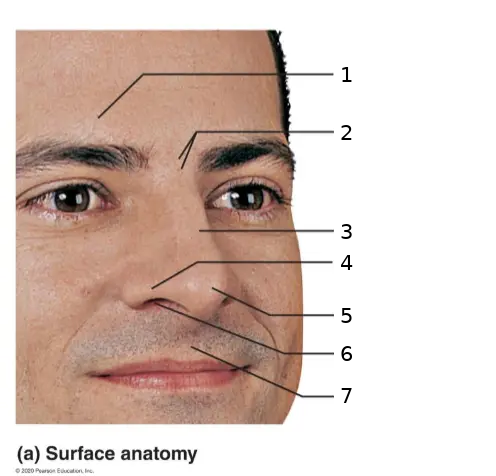
4
ala of nose
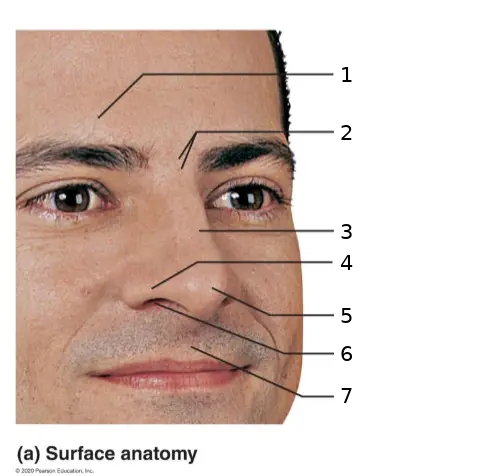
5
naris (nostril)

6
philtrum
Important parts of the nose
dorsum (bridge)
apex (tip) of the nose
nasal bones
external areas
naris or nostrils

1
septal cartilage

2
lateral process of septal cartilage
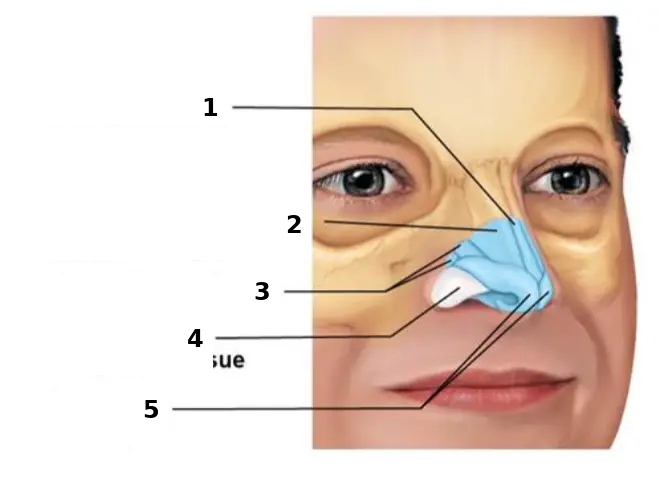
3
minor alar cartilages

4
dense fibrous connective tissue

5
major alar cartilages
Nasal septum formed by
the vomer and perpendicular plate of the ethmoid
Separates right and left nasal cavities

Hard palate and soft palate
Separate nasal and oral cavities
Nasal conchae (walls)
Posterior nasal apertures
Nasal cavity is (location and lining)
surrounded by paranasal sinuses
lined by two mucous membranes
Two mucous membranes that line the nasal cavity
olfactory mucosa (smell)
respiratory mucosa
Rhinitis
Inflammation of nasal mucosa
Where does nasal cavity end?
posterior nasal aperture

1
cribriform plate of ethmoid bone

2
spehnoidal sinus
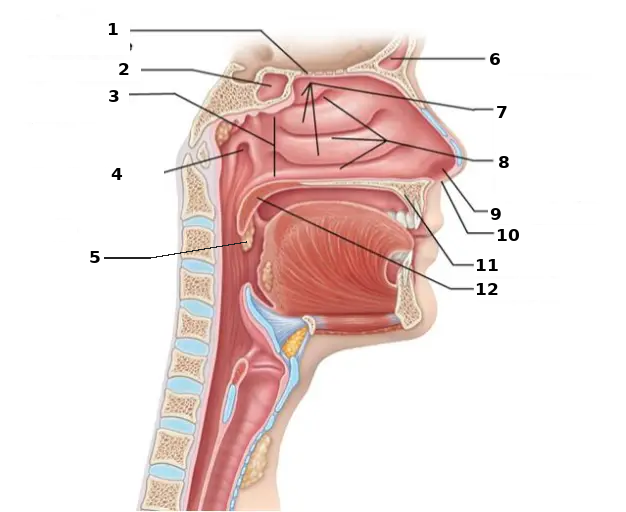
3
posterior nasal aperture

4
opening of phrangotympanic tube
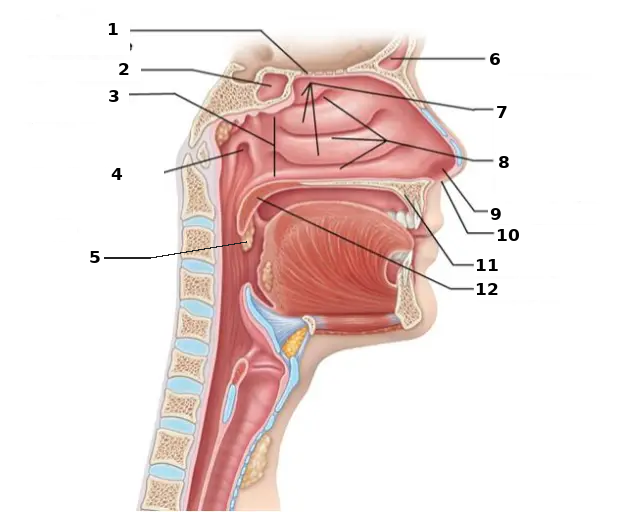
5
uvula

6
frontal sinus
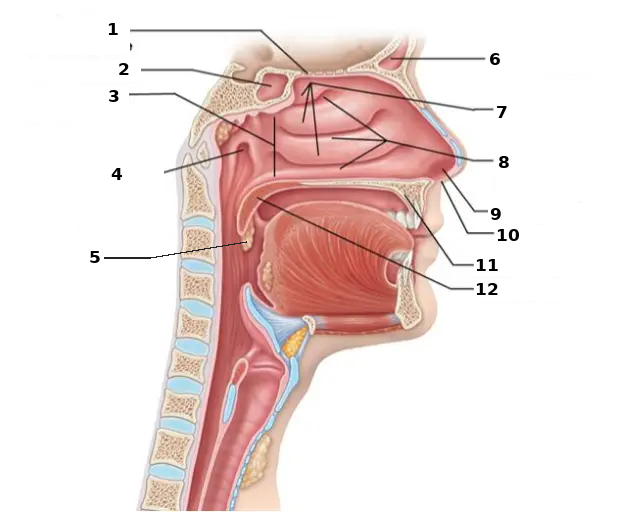
7
nasal conchae (superior, middle, and inferior)

8
nasal meatuses (superior, middle, and inferior)

9
nasal vestibule

10
nostril

11
hard palate
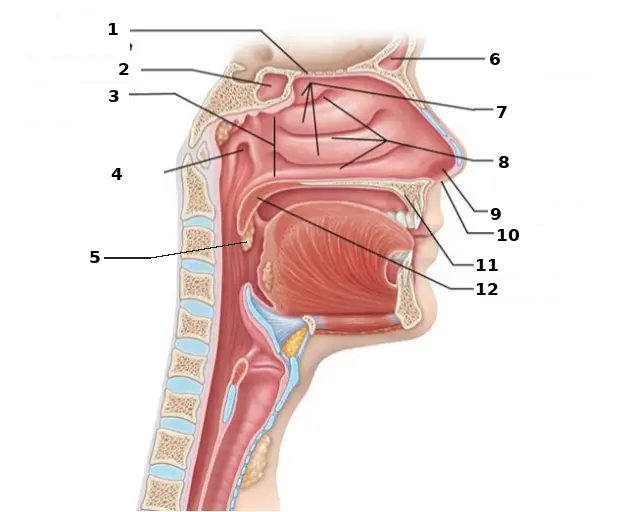
12
soft palate
Pharynx
passageway that connects the nose, mouth and throat

What systems contain the pharynx?
Shared by respiratory and digestive systems
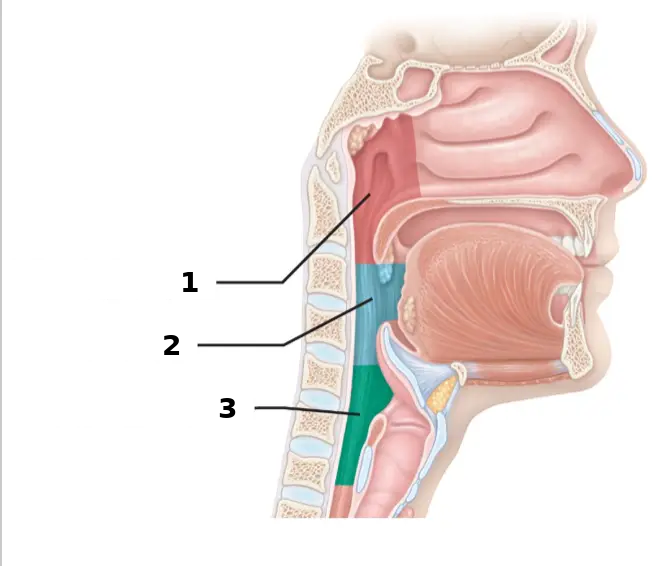
1
nasopharynx
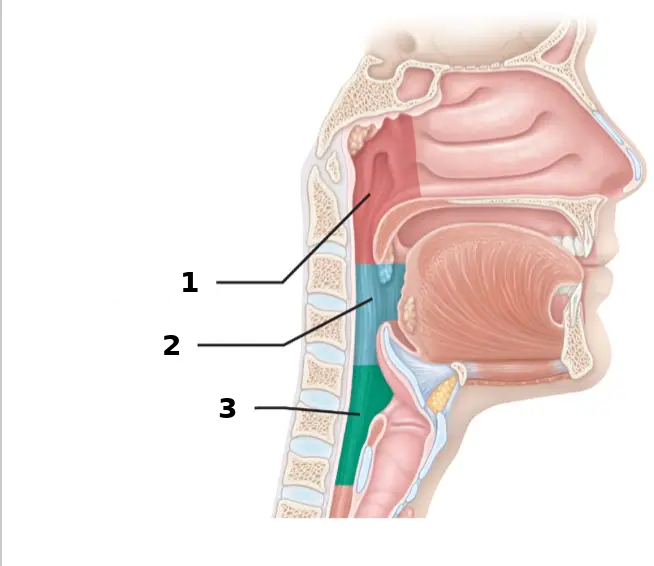
2
orophanrynx

3
laryngopharynx
Nasopharynx
The back of the nose area
Contains pharyngeal opening of auditory tube (pharyngotympanic tube), and adenoids or pharyngeal tonsils
Oropharynx
The back of the mouth area
Consists of pharyngeal arch. Palatine tonsils, and uvula
Laryngopharynx
The area that has the entrance to the trachea and esophagus
Glottis location
At the end of the pharynx is the slit-like opening
allowing air directly to the larynx and vocal cords.

Larynx
A cylinder whose cartilaginous walls are stabilized by ligaments or skeletal muscles or both

Location of larynx
Begins vertebra C3 to C5 →Ends vertebra C6 to C7
How is the larynx supported?
Larynx is supported by three unpaired and three paired pieces of cartilage.
Three types of unpraired laryngeal cartilages
thyroid
cricoid
epiglottis

1
epiglottis

2
hyoid bone

3
laryngeal prominence
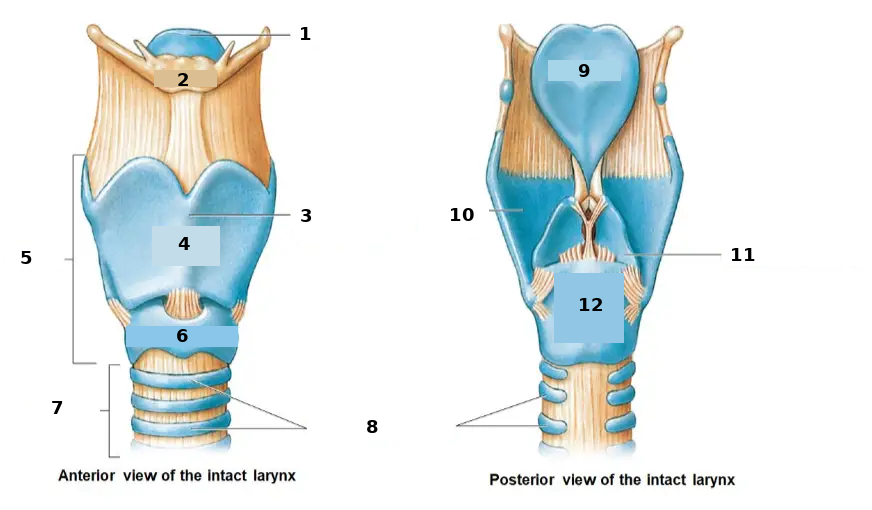
4
thyroid cartilage
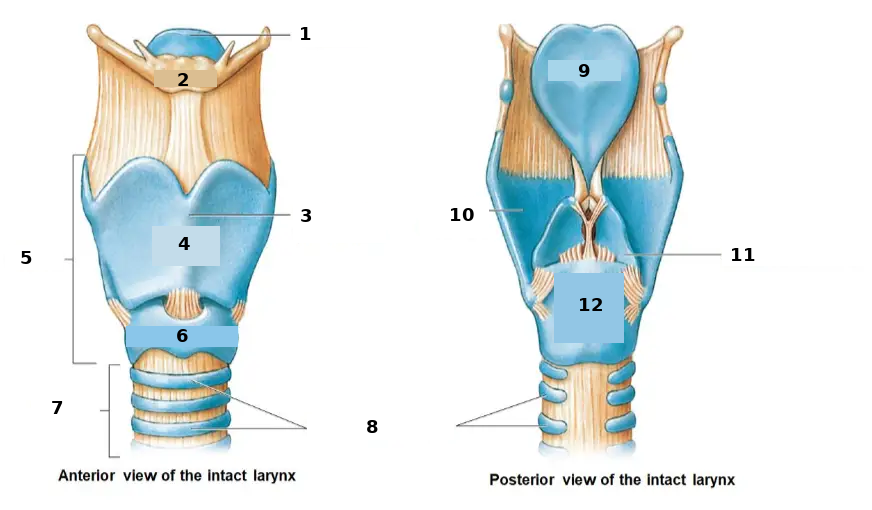
5
larynx

6
cricoid cartilage

7
trachea
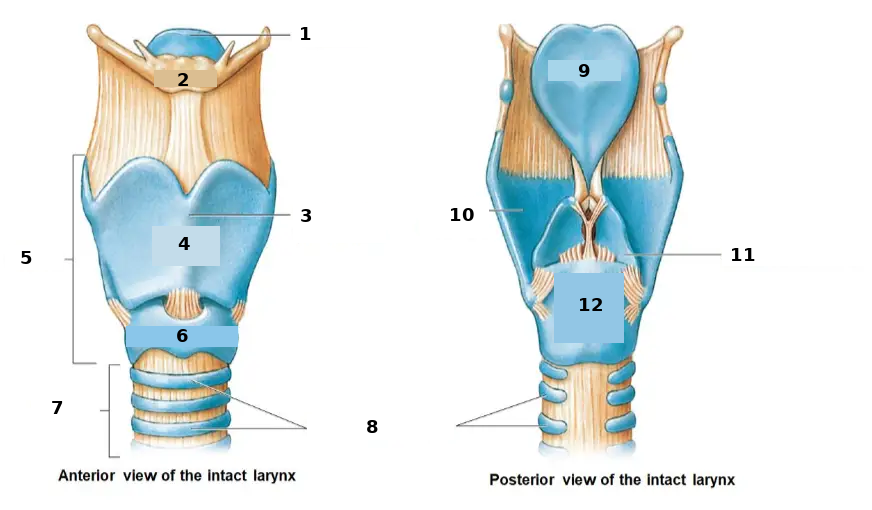
8
tracheal cartilages
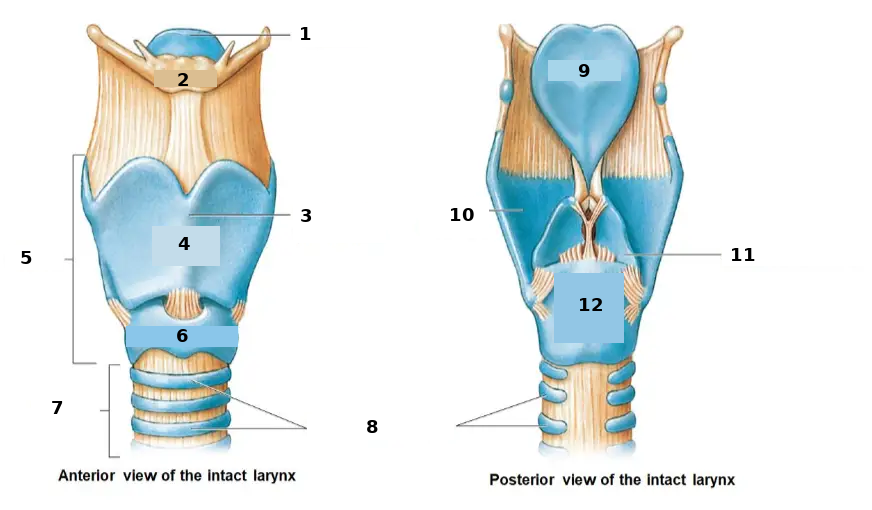
9
epiglottis

10
thyroid cartilage
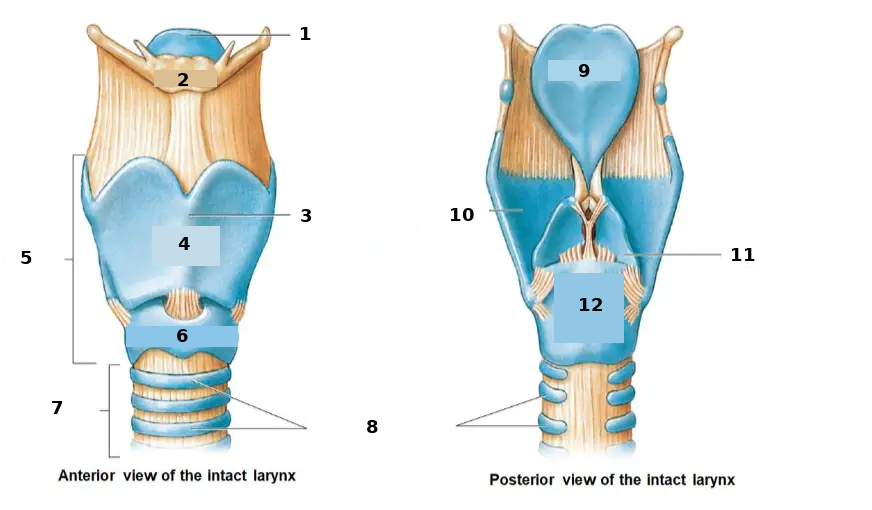
11
artynoid cartilage

12
cricoid cartilage
thyroid cartilage
The Laryngeal prominence
(Hyaline cartilage)

Cricoid cartilage
Encircles the trachea
(Hyaline cartilage)
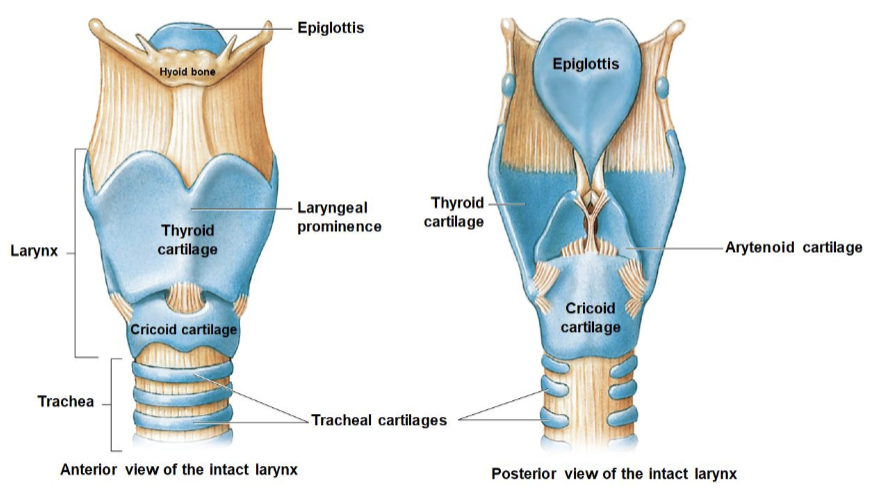
Epiglottis
Closes over the glottis during swallowing of food (elastic cartilage)
“Shoehorn shape”

epiglottis shape and attachment
Blade-shape flap tissue (elastic cartilage)
Attached to the posterior and superior surface of the thyroid cartilage
During swallowing, larynx is ____ and epiglottis ______________________
During swallowing, larynx is elevated and epiglottis folds back over the glottis
Epiglottis function
Prevents liquids and solids (bolus)
from entering the respiratory
passageways
Steps of swallowing

Three paired Laryngeal Cartilages
arytenoid
corniculate
cuneiform
some play a role in the opening
and closing of the glottis

1
epiglottis
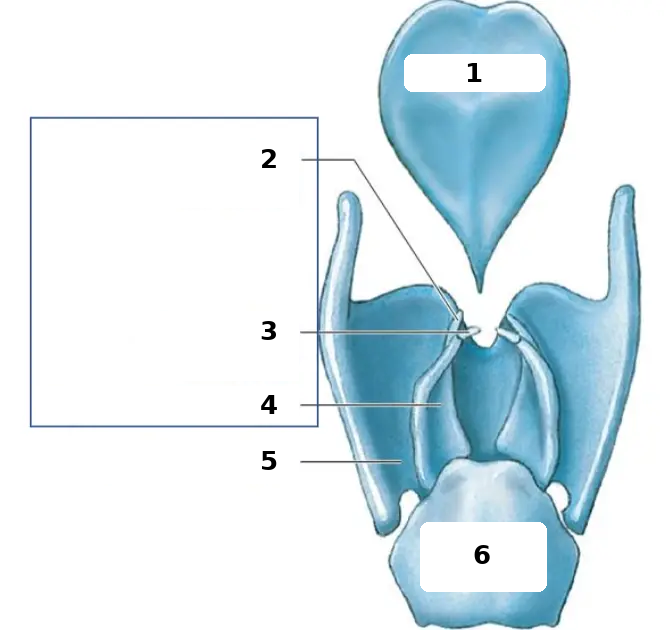
2
cuneiform cartilage
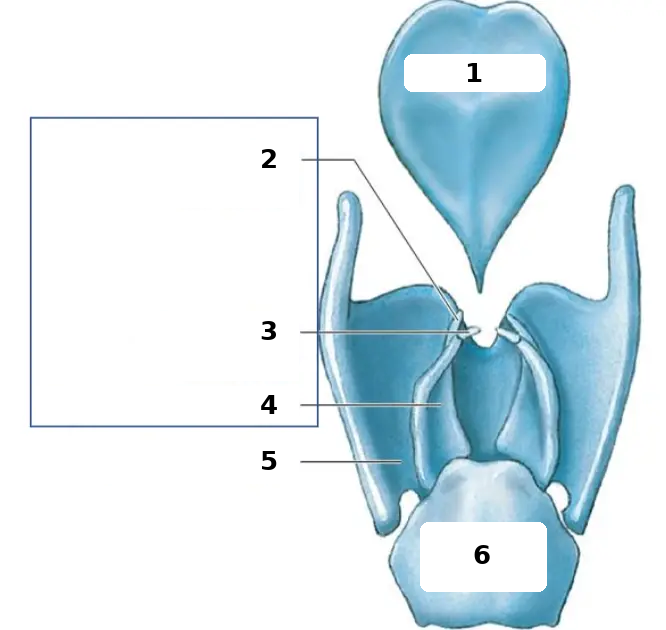
3
corniculate cartilage

4
arytenoid cartilage

5
thyroid cartilage

6
cricoid cartilage
arytenoid cartilage
(hyaline cartilage)

corniculate cartilages
(hyaline cartilage)

cuneiform cartilages
(elastic cartilages)

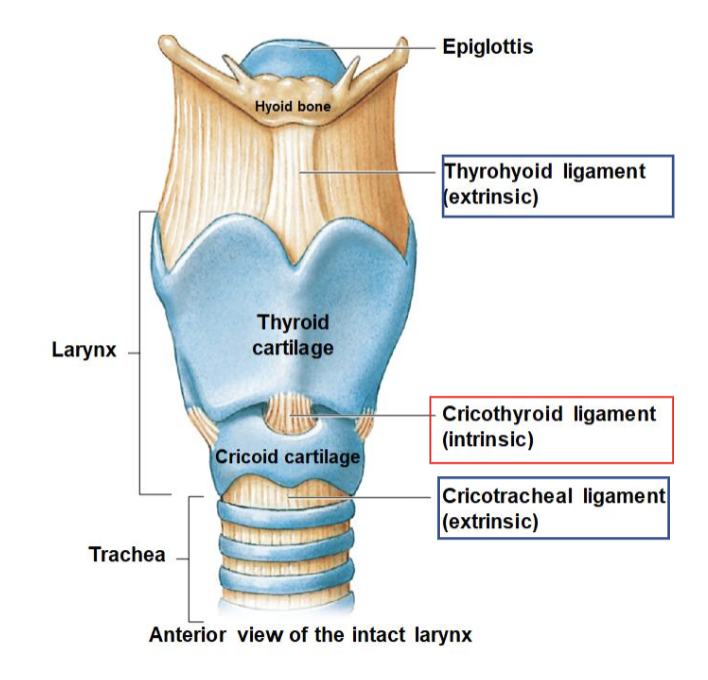
intrinsic laryngeal ligaments
Bind all laryngeal cartilages together
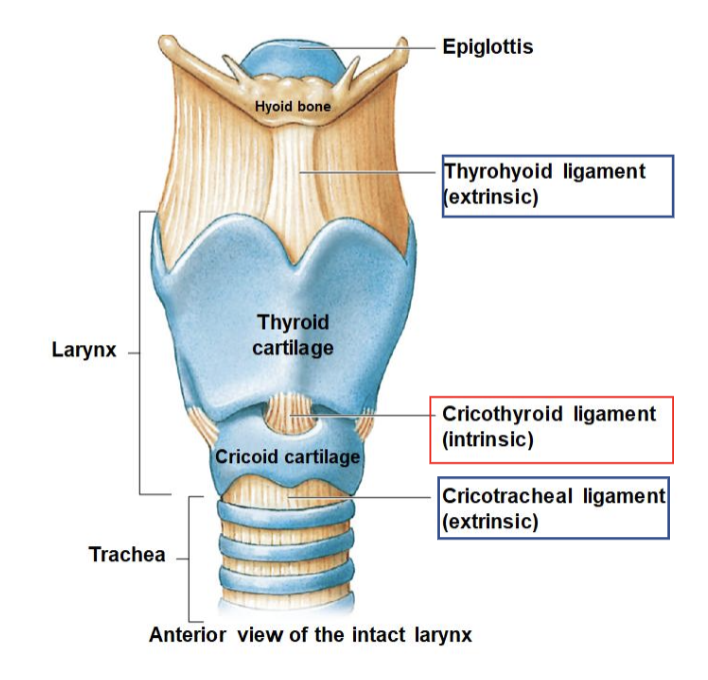
extrinsic laryngeal ligaments
Bind the thyroid cartilage to the hyoid
bone and cricoid cartilage to the
trachea
laryngeal ligaments: Vestibular and Vocal ligaments
Extend between the thyroid cartilage and the arytenoids
Vestibular ligaments lie within the vestibular folds

false vocal cord: laryngeal ligaments
vestibular fold
Also known as vestibular ligaments, these ligaments do not produce sound but help protect the vocal cords and support the laryngeal structure.
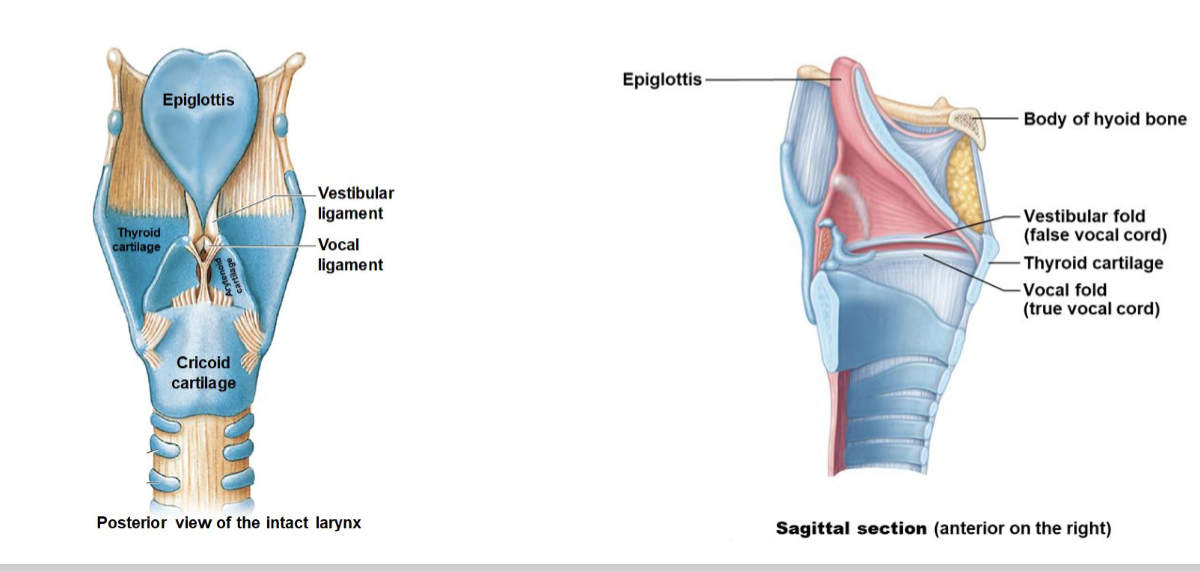
true vocal cord: laryngeal ligaments
vocal fold
Also known as vocal ligaments, these ligaments extend between the thyroid cartilage and the arytenoids, playing a crucial role in sound production.

inelastic vestibular folds
The inelastic vestibular folds are also known as false vocal cords and play no role in sound production
The vocal ligaments are associated with the __________
The vocal ligaments are associated with the delicate vocal fold
elastic vocal folds
The elastic vocal folds are also known as the true vocal cords and play a role in sound production.

sound production
Air passing through the glottis vibrates the elastic vocal folds and creates sound
pitch depends on the ___, ___, ___ in the vocal cords
Pitch depends on the diameter, length, and tension in the vocal cords.
Why do kids have high-pitched sound?
Children have slender, short vocal folds thus creating a high-pitched sound
At puberty, vocal folds
At puberty, the vocal folds of males become thicker and longer thus producing a deeper voice than females
Amplification of sound occurs in the
sinus cavities
Production of distinct sounds depends on
movement of the
lips
tongue
cheeks
Structures of the Lower
Respiratory Tract
trachea, bronchi, lungs, bronchioles, and alveoli
trachea size and location
11 cm long and 2.5 cm diameter
Begins at C6

Bifurcation of the trachea
Bifurcates at the carina into the
right and left bronchi at T5
amount of tracheal cartilages
Contains 15–20 tracheal cartilages