AP Psychology Unit 1
 Call Kai
 Learn
Learn Practice Test
 Spaced Repetition
 Match
Match Flashcards
 Knowt Play
1/116

There's no tags or description
Looks like no tags are added yet.
Name | Mastery | Learn | Test | Matching | Spaced | Call with Kai | Chat |
|---|
No analytics yet
Send a link to your students to track their progress
117 Terms
Epigenetics
focus on how the environment and a person’s behavior affect a persons genes and how they work
Plasticity
The brain’s ability to change and adapt as a result of experiences
Central Nervous System (CNS)
Brain and spinal cord
Peripheral Nervous System (PNS)
—>System of different nerves that branch off the brain and spine
—>Connects the CNS to all the body’s organs and muscles
The nervous system uses 2 kinds of nerves to send signals. These nerves are _______ and the _________
—>Afferent(sensory) neurons
—>Efferent(Motor) neurons
Afferent neurons
send signals from the sensory receptors to the central Nervous system
Efferent neurons
send signals from the central Nervous system to peripheral Nervous system
Somatic nervous system (skeletal nervous system)
includes your 5 senses and skeletal muscle movements
these movements happen consciously and voluntarily
Autonomic nervous system
controls involuntary activities (digestion, heartbeat, breathing)
The autonomic nervous system has 2 parts: the ______ and the _________.
Sympathetic division and the parasympathetic division
The sympathetic system
mobilizes your body and gets it ready for action (heartbeat faster, eyes dilate)
the Parasympathetic system
relaxes your body (slows heart, increases digestion and helps focus on saving and storing energy)
Two types of neural cells:
1) Glial
2) Neurons
Glial cells
—provide structure, communication and waste transportation
—nonconducting cells that outnumber neurons in the brain
do not process information
Neurons
—communicate with each other by using electrical and chemical signals
3 types of neurons:
1) Sensory neurons
2)Motor neurons
3)Inter neurons
To trigger an action potential a neuron must _______, which happens when an outside stimulus is strong enough to reach the ____________ that causes depolarization to occur and then the neuron fires an _______ __________.
1)depolarize
2) threshold
3) action potential
Repolarization
brings the neuron back to resting potential
Synapse
the gap between the axon terminal of one neuron and the dendrite of another(where neurotransmitters are exchanged)

Presynaptic gap
axon terminal of one neuron which converts the electrical signal to a chemical one and sends the neurotransmitter into the synaptic gap
Postsynaptic gap
where neurotransmitters are accepted in the dendrite of the receiving neuron
Reuptake
The process of taking excess neurotransmitters left in the synaptic gap
Excitatory neurotransmitters
will excite the likelihood that a neuron will fire an action potential, through the depolarization process in the postsynaptic neuron
Inhibitory neurotransmitter
Decrease the likelihood that a neuron will fire an action potential
Inhibitory neurotransmitters decrease the likelihood that a neuron will fire an action potential this leads to ___________ to occur
hyperpolarization
Hyperpolarization
when the inside of the neuron becomes more negative moving the neuron farther away from its threshold or intensity level needed for an action potential
Acetylcholine (neurotransmitter)
enables muscle action, learning and helps with memory
Substance P (neurotransmitter)
helps with transmitting pain signals from the sensory nerves to the CNS
Dopamine (neurotransmitter)
Helps with movement, learning, attention and emotions
Serotonin (neurotransmitter)
Impacts an individual’s hunger, sleep, arousal and mood
Endorphins (neurotransmitter)
Help with pain control and impact an individual’s pain tolerance
Epinephrine/Adrenaline (neurotransmitter)
help with the body’s response to high emotional situations and helps form memories
Norepinephrine (neurotransmitter)
Increase blood pressure, heart rate, alertness
Glutamine (neurotransmitter)
Helps with long term memory and learning
GABA (neurotransmitter)
Helps with sleep, movement and slows down your nervous system
Endocrine system
Sends hormones through the blood to target larger areas of the body
Leptin (Hormone)
Helps regulate energy balance by inhibiting hunger
Ghrelin (Hormone)
Hunger hormone, also helps promote the release of the growth hormone
Melatonin (Hormone)
Produced by the pineal gland and helps regulate circadian rhythms.
Oxytocin (Hormone)
Love hormone
Produced in the hypothalamus and released by the pituitary gland
Agonist drugs
—increase the effectiveness of a neurotransmitter
—bind to the receptors that are in the synapse that are for neurotransmitters and increase the effectiveness of neurotransmitters by blocking the reuptake (makes them more available in the synapse)

Antagonist Drugs
—Decrease the effectiveness of a neurotransmitter
—block neurotransmitters from being released or block neurotransmitters from binding

Stimulants
Excite and promote neural activity.
Give energy, reduce appetite and can cause them to become irritable
Ex: Caffeine, nicotine, cocaine
Depressants
Reduce neural activity
drowsiness, muscle relaxation, lowered breathing
Ex: Alcohol, sleeping pills
Hallucinogens
Cause someone to sense things that went actually there
Ex: marijuana, LSD
Opioids
Function as a depressant but have their own category due to their addictive nature
Can give pain relief
Ex: morphine, heroin, oxycodone
Hindbrain structures:
-pons
-medulla
-cerebellum
-spinal cord
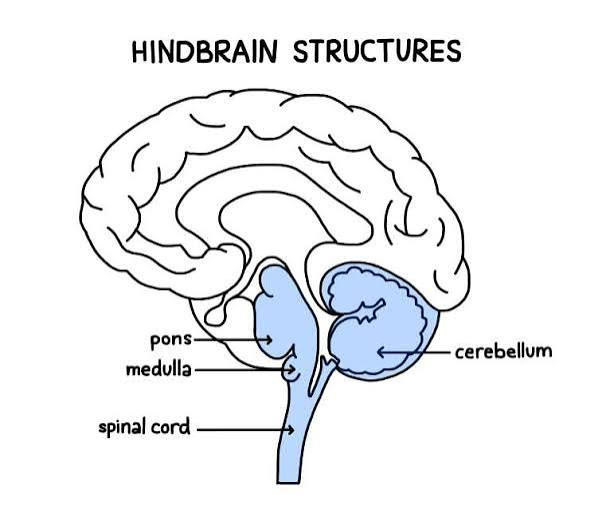
Midbrain:

Forebrain structures:
-Cerebral cortex
-corpus callosum
-thalamus
-hypothalamus
-hippocampus
amygdala
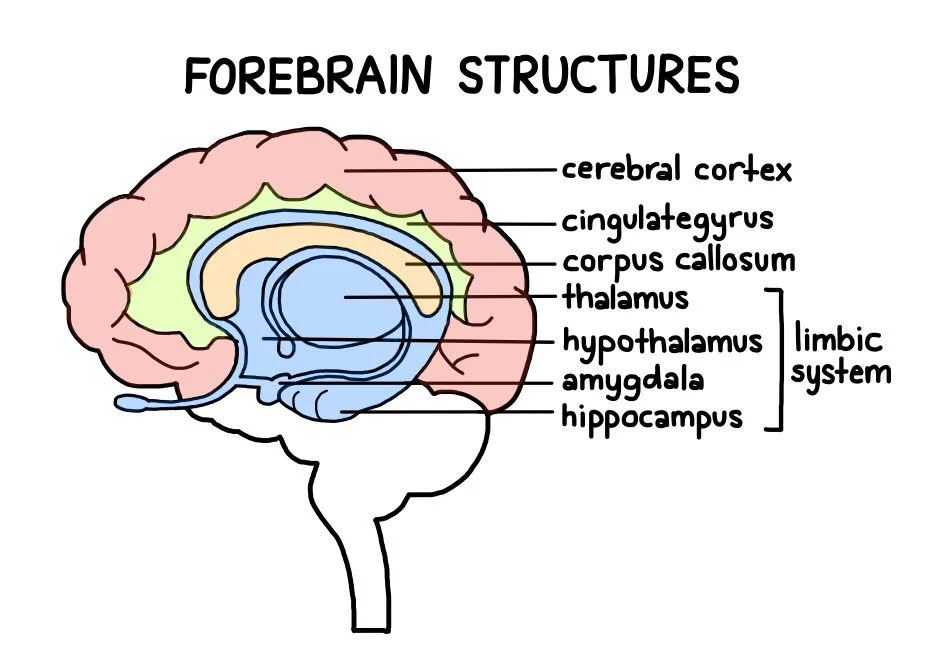
brain stem include:
medulla, pons and midbrain
controls autonomic functions

Medulla
helps with heartbeat and breathing
pons
connects medulla with cerebellum and helps with movement
reticular activating system
network of nerves within the brain

cerebellum
coordinating voluntary movement, posture, balance
Corpus callosum
thick nerve fibers that connect the left and right hemispheres
Frontal lobe two areas:
1)Prefrontal cortex
2)motor cortex
Prefrontal cortex
foresight, judgement, speech and complex thought

Motor cortex
voluntary movement

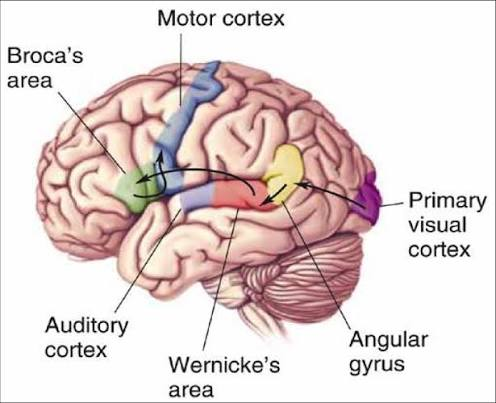
Broca’s area
language production, and movement of muscles involved in speech

Parietal lobe
Main function: receive sensory information

Frontal lobe
Main function: higher level thinking

somatosensory cortex
processing touch, temperature, pressure and body position

temporal lobe

Main function: processing auditory and linguistic information
temporal lobe structures
-amygdala
-hippocampus
-auditory cortex
-Wernikes area

amygdala (temporal)
where you get emotion reaction from
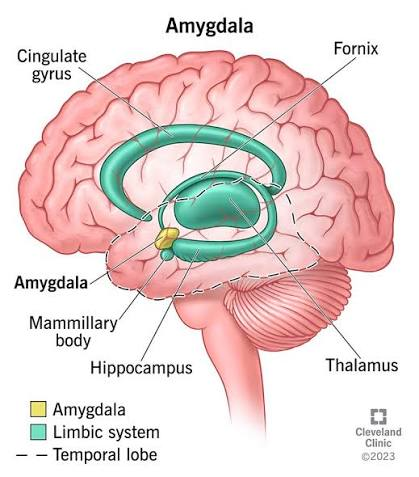
hippocapmus (temporal)
help learn and form memory
not where memories are stored

auditory cortex (temporal)
processes different sounds

wernikes’s area (temporal)
left temporal lobe
responsible for creating meaningful speech

Occipital lobe
Main function: Processing visual information

occipital lobe structures
-primary visual cortex
Primary visual cortex
receives visual input from eyes
Thalamus (frontal)
receives sensory information for every sense except smell
relays information to appropriate areas of the cerebral cortex for processing

Limbic system
located on both sides of the thalamus

Main function: emotion, learning, memory and basic drives
hypothalamus (part of limbic system)
helps keep body balanced, allows homeostasis, and control drives
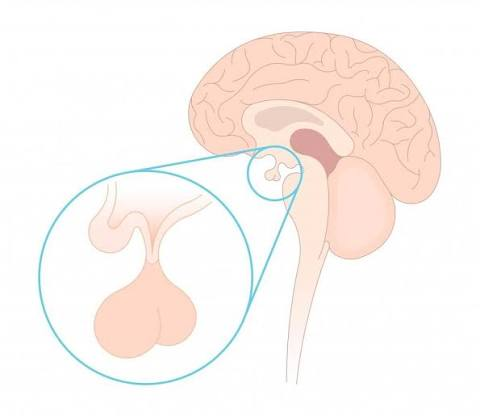
works with pituitary gland to regulate hormones

Pituiary gland
produces and releases hormones that regulate bodily functions and helps other endocrine glands throughout the body
Legion studies
doctors and researchers will destroyed specific parts of the brain to gain insight into different functions of the brain
Neuroplasticity
the brains ability to repair itself
EEG
uses electrodes that are placed on an individuals scalp.
Allows researchers to record electrical signals from neurons firing
helps with study sleep cycles by giving a visual to different brain waves

fMRI
similar to an MRI, but shows metabolic functions, this can better understand brain activity.

cognitive neuroscience
studies how brain activity is linked to cognition
Circadian Rhythm
biological clock, regulating hormones, changing blood pressure and internal temperature
brain waves:

NREM stage 1
light sleep
about 5-10 minutes
start to relax
Alpha waves
NREM stage 2
transitional stage
10-20 minutes
Theta waves
NREM stage 3
deepest state of sleep
around 30 minutes
growth hormones are produced
may experience sleep talking or walking
Delta waves
REM Rapid Eye Movement
last stage
external muscles are paralyzed
internal muscles are active
about 10 minutes
dreams
Beta waves -paradoxical because brain waves are similar to wakefulness
REM sleep deprivation
will enter REM rebound and enter REM stage faster and more frequently
Hypnagogic sensations
NREM 1
experience sensations that you imagine are real (falling)
activation synthesis theory
dreams are the brains way of making sense of random neural activity during sleep
consolidation theory
dreams help process and strengthen our memories and experiences
restoration theory
we need sleep because we are tired from daily activities and need to restore our energy and resources
rem sleep behavior disorder
person acts out their dreams during rem sleep
sensation
process of detecting information from the environment
in order to experience sensations you need to hit the ___________ ________
absolute threshold
Absolute threshold
smallest amount of sensation needed for you to notice a sensation of at least 50% of the time
sensory adaptation
happens when we have a stimulus that is consistent and doesn’t change (ex: lighting a candle in a room—smells at first, but throught the day cant smell it anymore)
Habituation
when you are repeatedly exposed to a stimulus and start to have a reduced response to the stimulus (ex; drug tolerance—need to take more and more of the drug to feel the same effect)
Difference threshold
minimum change between two stimuli that causes an individual to detect change
weber-fechner law
in order for us to notice a difference between two stimuli, the two stimuli must differ by a constant percept—not a constant amount
synesthesia
neurological condition where one sense is experienced through another