Chem Exam 2
 Call Kai
 Learn
 Practice Test
 Spaced Repetition
 Match
 Flashcards
 Knowt Play
1/51

There's no tags or description
Looks like no tags are added yet.
52 Terms

Kinetic Energy
energy of motion, WORK

Potential Energy
stored energy, energy of the position of an object or the chemical composition of an object
Heat (thermal energy)
lost energy
a form of KE
energy associated with motion of particles
calories
1 Cal = 1 kcal = 1000 cal
Heat of reaction
Exothermic: reaction that gives off heat energy (heat is a product) ex = hand warmer
Endothermic: reaction that requires heat energy (heat is a reactant) ex = ice pack
Free Energy (G) change
Exergonic: gives off energy of any kind (products < reactants) NEGATIVE delta G
Endergonic: energy of some kind is required for the rxn (products > reactants) POSITIVE delta G
Activation Energy
the energy necessary to align reactants and cause them to collide productively
always needs a little energy to be put in, in order to start the process to become products
Δ G
Exergonic = - Δ G, a VERY negative Δ G indicates that most of the energy will be lost as heat
Endergonic = + Δ G
Larger Δ G: more free energy needs to be put in or will come out in the end
Small Δ G: less free energy needs to be put in or will come out in the end
Spontaneous vs. Non-spontaneous
Spontaneous rxs: DONT require energy from external source in order to occur (-Δ G) ex: moving with the current on a boat
Non-spontaneous: REQUIRE energy from external source in order to occur (+Δ G) ex: moving against current, need paddling
Kinetics - Factors that affect reaction rate
Temperature: increase temp, increases rate of rxn
Amount of reactant: more reactants = more products
Catalyst: increase rate of rxn through external factors, coordinates reactants to make more products
Combustion
a type of decomposition rxn
Alkane/Alkene/Alkyne + O2 —> CO2 + H2O + energy
EX: energy in the body is produced by combustion of glucose
ADDITION RXNS (hydrogenation and hydration)
Hydrogenation (for alkenes and alkynes): ADD HYDROGEN
Hydration: acid catalyst is required (H+): ADD WATER
The H goes to the carbon w/more hydrogen atoms
The OH goes to the carbon w/fewer hydrogen atoms
Alkane
C-C
Alkene
C=C
Alkyne
carbon carbon triple bond

Ether
—O—
Aldehyde

Ketone

carboxylic acid

ester

Amine
N is on its OWN
CH3—NH2
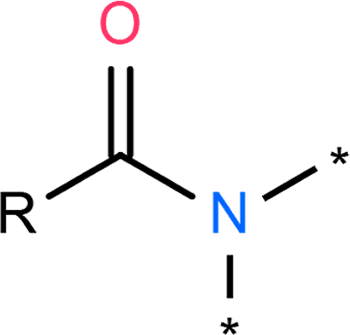
Amide
N is with CARBON
Carbohydrates
Monosaccharide: 1
Dissacharide: 2
Oligosaccharide: 3-9
Polysaccharide: 10-10,000
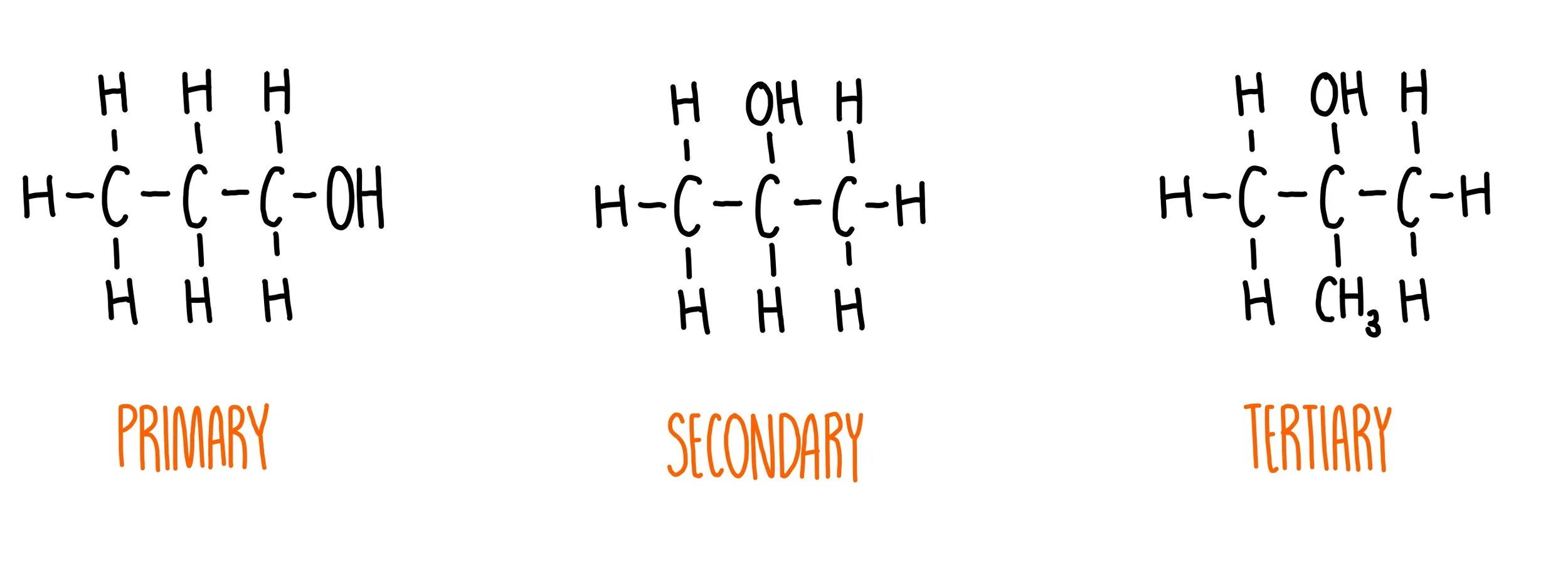
Primary Alcohol

Secondary Alcohol
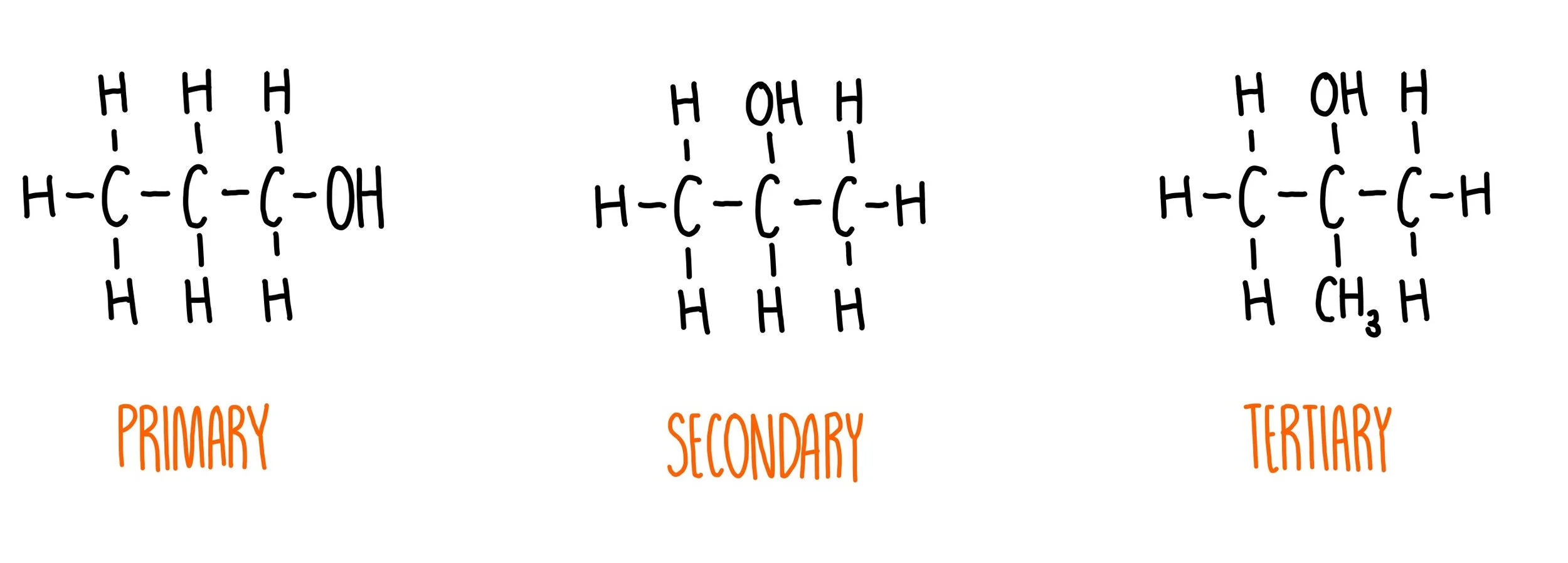
Tertiary Alcohol
Chirality
Chiral Carbon: has 4 different groups bonded to it
Number of stereoisomers: 2^n (n = number of chiral centers in the molecule)
Isomers
Enantiomer: mirror image
Diastereomers: different everything, NOT same
Anomer: only differs at anomeric carbon
Epimer: differ at only ONE chiral center
D-Glucose

D-Galactose

D-Fructose
ketone version of glucose

Ring formation
C6 ALWAYS ON TOP
6-membered ring = pyranose
5-membered ring = furanose
Left = up
Right = down
C1 = ANOMERIC CARBON
alpha = down
beta = up
OXIDATION/REDUCTION rxns
Oxidation: INCREASE OXYGEN, decrease hydrogens
Reduction: INCREASE HYDROGEN, decrease oxygen
Oxidation
primary alcohol —> aldehyde —> carboxylic acid
secondary alcohol —> ketone
CANT OXIDIZE TERTIARY ALCOHOL = NO RXN
Reduction
aldehyde —> primary alcohol
ketone —> secondary alcohol
Reducing Sugars
ONLY the carbonyl (top O=C-H) of a sugar is reduced
CONDENSATION AND HYDROLYSIS
Condensation: Water is a product when two organic molecules react
Hydrolysis: Wanter is a reactant with in an organic molecule split into two
CONDENSATION AND HYDROLYSIS (pt.2)
alcohol + alcohol = ether + H2O
alcohol + carbox. acid = ester + H2O
amine + carbox. acid = amide + H2O
Disaccharides
a-D-glucose + D-glucose = maltose
b-D-galactose + D-glucose = lactose
a-D-glucose + b-D-fructose = sucrose (NOT A REDUCING SUGAR)
Blood
AB = universal acceptor
O = universal donor
A = can receive A and O, donates to A and AB
B = can receive from B and O, donates to B and AB
Polar vs. Nonpolar
Polar = C-O, C=O, O-H, N-H, C-N, C-X (halogen)
Nonpolar = C-H, C-C
Polar compound: has at least 1 polar group, 4 or less carbons in carbon chain (1 polar group: 4 carbons in a chain)
Nonpolar compound: 1 polar group but 5 or more carbons in a carbon chain
Polar Covalent Bonds
Assign partial charges (S- and S+)
Attractive Forces
(weakest) London forces —> Dipole-dipole —> Hydrogen bonds —> Ion-dipole —> Ionic (strongest)
strength depends on distance (far = weak, close = strong)
DONT PLAY A ROLE IN GASES
London forces
weakest force
anything with mass + electrons has it MOST IMPORTANT FOR NON POLAR
larger molecules = stronger LDF
caused by momentary disturbance
Dipole-Dipole
permanent partial charges distributed around bonds and their molecules
stronger than LDF bc charges are permanent but still weak bc they can be disrupted by energy
Hydrogen Bonds
NEED TO HAVE DONOR AND ACCEPTOR
H bond DONOR = H (H-N, H-O,H-X)
H bond ACCEPTOR = N, O, X (with lone pairs)
strong dipole-dipole attraction
dependent on presence of two dipole groups one with partial + and the other with partial -
Ionic
occurs between ionic charges in ionic compounds and partial charges in polar molecules
attraction btwn opposite charges of ions
Solubility
“like dissolves like”
polar + polar = do mix
nonpolar + nonpolar = do mix
Amphipathic molecules
contain both polar and nonpolar regions
Hydrophilic = polar, projects away from non polar and toward polar solvent
Hyrophobic = nonpolar, comes from long hydrocarbon chain
Micell = basis of soaps and detergents
Boyle’s Law
pressure and volume
Pi x Vi = Pf x Vi
breathing example: chest cavity expands by rib and diaphragm muscles, volume increase —> pressure decrease so gas rushes in
when muscles relax, chest cavity decreases (volume decreases, pressure increases, gas flows out)
Charles’s Law
Volume and temperature at constant pressure
Vi/Ti = Vf/Tf
Temp (°C) + 273.15 = Temp (K)
Fatty Acids
Saturated = one double bond
Monounsaturated = two double bonds (cis double bonds)
Polyunsaturated = 2+ double bonds