organizational structure, culture, and development
 Call Kai
 Learn
 Practice Test
 Spaced Repetition
 Match
 Flashcards
 Knowt Play
1/29

There's no tags or description
Looks like no tags are added yet.
30 Terms
organizational structure
organizational design
organizational structure
organizations must balance
differentiation
integration
organizational design
assessing the organization’s strategy and environmental demands
determining the appropriated organizational structure
organizational structure
sum of ways an organization divides its labor into distinct, coordinated tasks
differentiation
division of tasks into subtasks that are performed by individuals with specialized skills
integration
facilitation of cooperation and interaction of various parts of the organization
dimensions of organizational structure
traditional organizations
nontraditional organizations
decision making:
centralization
decentralization
line
chain of command
span of control
traditional organizations
formally defined roles for members and rule-driven, stable, and resistant to change (e.g., corporations)
non-traditional organizations
characterized by less formalized work roles and procedures (e.g., start-ups)
centralization
decision-making power rests at the upper levels of the organizational hierarchy
under decision making
decentralization
distribute decision making to the lower levels
under decision making
line
line (directly produce product/service, e.g., assembly line workers) vs. staff (support line employees, e.g., HR)
chain of command
number of authority levels
span of control
number of workers reporting to a single supervisor

based on chain of command and span of control, the shape of organizational structures can be:
tall: long chain of command and narrow span of control
flat: short chain of command and wide spam of control
functional structure

product structure
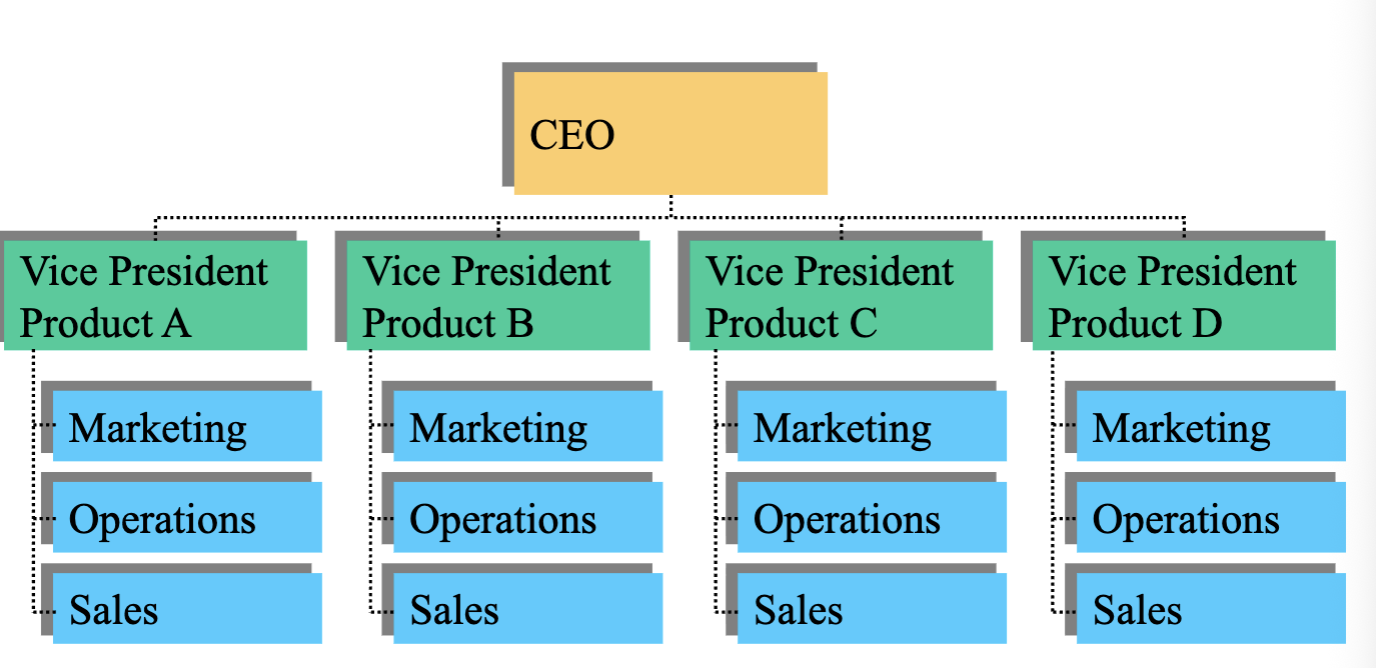
division structure

customer structure

geographical/regional structure
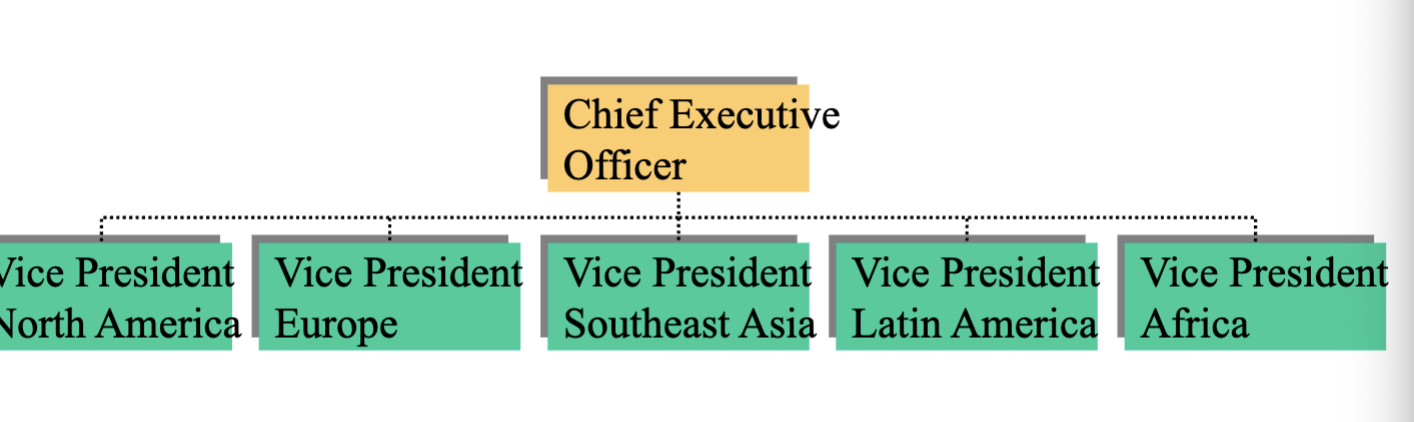
matrix structure

network approach

levels of culture
organizational culture
artifacts
values
assumptions
organizational culture
shared values, beliefs, assumptions, and patterns of behavior within an organization
artifacts
visible manifestations of a vulture such as its art, clothing, food, architecture, and customs
values
enduring beliefs that specific conduct or end states which are personally or socially preferred to others
assumptions
the beliefs about fundamental aspects of life lying below the surface, but supporting the culture
managerial relevance of culture
impact of culture on behavior
how people observe and interpret the business world around them
can lead to different beliefs about “right” behaviors
subordinates who identify with the culture of a unit or company are likely to try harder to make it successful
cultural diversity in the workplace
globalization
increasingly culturally diverse U.S. workforce
cultural as a management tool
once established, culture guides employee behaviors without overt or constant supervision
managers must be careful what they instill as the cultural values of the unit (organization)
organizational development
organizational development is the process of assisting organizations in preparing for and managing change
occurs in phases:
diagnosis of significant problems
development of appropriate interventions
intervention implementation
evaluation of intervention results
OD practitioners are often called change agents
organization development techniques
action research
survey feedback
t (training) — groups
team building
process consultation (vs. content expertise)
management by objectives (MBO)
quality circles
organizational development
the effectiveness of OD programs is difficult to evaluate
results of evaluations of OD programs are mixed
positive effects may be greater in job satisfaction and organizational commitment than in increased productivity (Bass, 1983)
successes of OD programs may be long-term changes that are difficult to trace back to OD