chemistry Chapter 4 - excluding c4.6-4.8- and some giant covalent structures
 Call Kai
 Learn
 Practice Test
 Spaced Repetition
 Match
 Flashcards
 Knowt Play
1/61

Earn XP
Description and Tags
Chapter 4 - Chemical calculations (will not include C4.6-4.8 - concentrations and titrations) 6 marks on giant covalent structures
62 Terms
chemical symbol of hydroxide ion

chemical symbol of carbonate ion

chemical symbol of sulfate ion

chemical symbol of nitrate ion

chemical symbol of phosphate ion

chemical symbol of ammonium ion

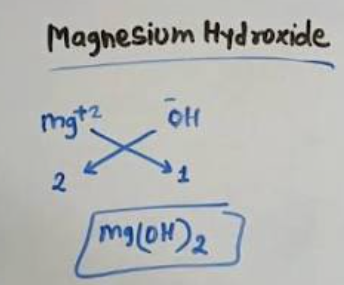
when doing the cross over method with compound/complex ions, what do you do?
add brackets if there is another little number. if not, you DONT NEED TO ADD BRACKETS
Ar
relative atomic mass
Mr
relative formula mass
what is relative atomic mass (used for elements)
trying to count the number of particles reacting would be very hard
instead, we use Ar to link mass and number of particles
it is a scale with carbon-12 as its reference, which has 12 units (6 protons, 6 neutrons)
the Ar of an element is the mean Ar of all of its isotopes.
form most cases, it is equivalent to the mass number on a periodic table.

what is relative formula mass (used for compounds)
Mr is just the Ar of all the atoms that make up a compound added together
can be used whether the compound is made up of elemtns or ions
can also be referred to as relative molecular mass in molecular substances

what is the mole
a word representing the number
unit is mol
also known as avogadro’s constant
usually used in chemistry to count numbers of ‘particles’- e.g. atoms, ions, molecules
be careful- e.g. 1 molecule of cl2 is 2 atoms of cl
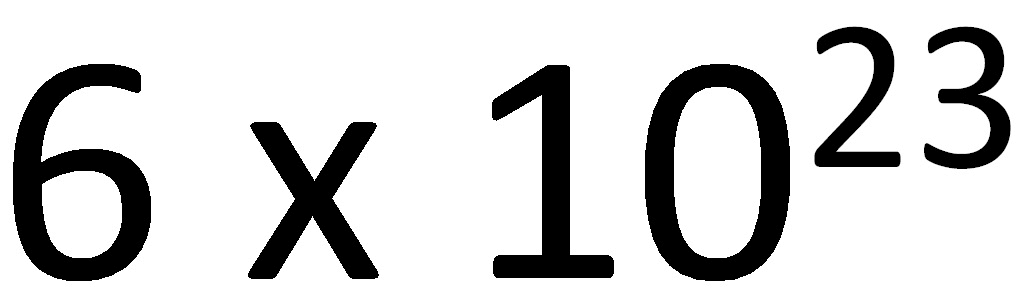
1 mol of cl2 contains 6.2×10 23 cl2 molecules
how are Mr and Ar linked to moles
1 mole of any element/ compound will have the same mass as its Ar(element) or Mr(compound), in grams
e.g. 1 mole of HCl = 1+35.5=36.5g
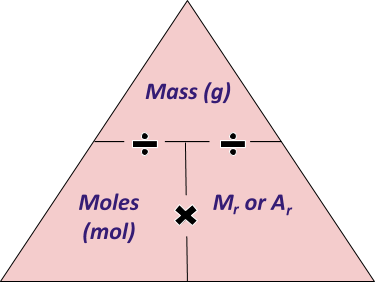
moles from masses equation

moles from masses equation triangle
what do you do if you are asked for the mass in g of a certain number of moles of a substance?

what is percentage mass
it tells you how much of a compound is made up of a particular element as a percentage.
how to work out percentage mass
work our Mr of compound
count how many atoms there are of the element youre interested in
multiply this number of atoms by the Ar of that element
divide this number by the total Mr of the whole compound
multiply by 100 to turn into a percentage
what is percentage abundance
it is how common an isotope of an element is. the percentage of how many of that isotope there is out of all the isotopes of the element.
Ar from percentage abundance equation
Ar=


interpret this chemical equation in terms of moles
shows that one mole of magnesium reacts with two moles of hydrochloric acid to produce one mole of magnesium chloride and one mole of hydrogen gas.
how to use balanced equations to calculate the masses of reactants and products
reacting mass calculations
what are reacting mass calculations
calculations for working out the quantities of reacting substances needed or estimate the quantities of products being made, using moles.
what are molar ratios
in balanced equations the reactants will react in certain ratios with each other as shown by the balancing number. (see example)

what are molar ratios used for
reacting mass calculations
reacting mass calculations method
start with a balanced equation (you need the balancing numbers to work out molar ratios)
convert the mass you are given into moles (use the equation you have learnt)
find molar ratio for known substance: unknown substance
use this molar ratio to find moles of unknown substance
convert moles of unknown substance to grams to get your final answer
using moles to balance equations
sometimes in experiments you are only given the masses of the substances
by converting these masses into moles, working out molar ratios and then the simplest whole number ratios, you can write the balanced equation.
method for using masses/ moles to balance equations
find the moles of each substance (use mass/ Mr)
write the molar ratio of reactants and products
simplify the ratio into whole numbers- e.g. 0.2:0.1 becomes 2:1
write the balanced equation
example of method using masses/moles to find balanced equations (just read through and understand how molar ratio is used to make a balanced equation)

what is a limiting reactant? (or limiting reagent)
substance in a chemical reaction that:
is used up first
stops the reaction
limits the amount of product that can be made
the other reactant is called the excess reactant
how to work out limiting reactants in equations
write a balanced chemical equation
work out number of moles of each reactant we have
compare these to molar ratio of balanced equation
we can see which reactant has the least amount and is therefore the limiting reactant
example of working out a limiting reactant in an equation
read through and understand everything

what is empirical formula
shows the simplest whole number ratio of the atoms of each element in a compound.
sometimes the numbers are already as simple as they can be so you dont need to change them

example of finding empirical formula using the same process as mole calculations

what is yield in a chemical reection
the amount of product made
2 types of yield
theoretical yield
actual yield
what is theoretical yield (used in calculating percentage yield)
the maximum calculated amount- it is an estimate of how much you expect to make. this is your ‘reacting mass calculation’
what is actual yield (used in calculating percentage yield)
amount obtained in reaction- the real amount you actually collect from the reaction.
what is percentage yield?
a calculation that compares how much you made compared to what you expected to make, as a percentage.
the values range from 0-100% (it will never reach 100% for a number of reasons)
the larger the value, the better.
percentage yield equation

example of working out percentage yield
NOTE: the first part of the question makes this a higher tier question, as you are ‘calculating the theoretical mass of a product from a given mass of reactant and the balanced equation for the reaction.’ - from spec, so learn how to do the first part too.

factors affecting percentage yield (why cant it be 100%?)- learn list completely
the reaction may be reversible, so some of the desired products react, forming the reactants again
some of the reactants may react in unexpected ways, producing different products than desired
some of the product may be lost in handling or left in the apparatus
the reactants may not be pure, producing less products
some of the desired product may be lost during its separation from the reaction mixture
what is atom economy
measure of how much of the reactants become useful products, expressed as a percentage
inefficient Vs wasteful processes in terms of atom economy
inefficient, wasteful processes have low atom economies- they generally make large quantities of unwanted by-products
efficient processes have high atom economies, and are improtant for sustainable development, as they use fewer natural recources and create less waste
atom economy equation

example of atom economy equation

under certain conditions, RTP, 1 mole of any gas will occupy the same volume. what is this volume?
24 dm³ or 24,000 cm³
what is the volume of 1 mole of gas at RTP known as
molar volume (the volume 1 mole of gas will occupy)
what is RTP in the context of gas pressure
room temperature and pressure
room temperature= 20°C
pressure= 1 atmosphere
gas volume equation involving moles:

gas volume equation involving moles triangle

gas volume equation example

example of a gas volume calculation combined with a reacting mass calculation
read through and understand
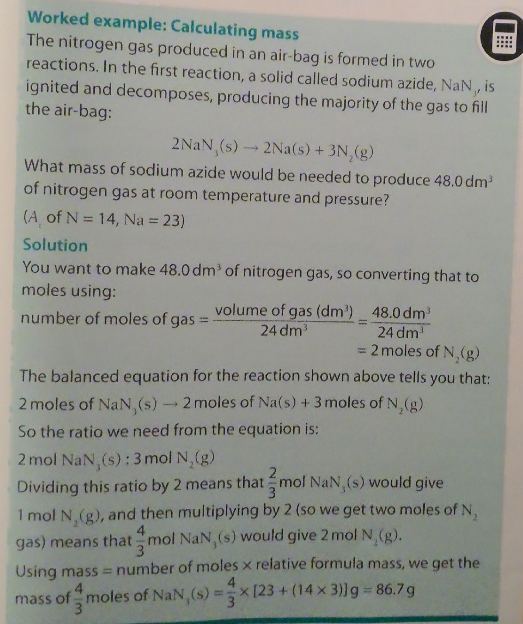
what can molar gas volume and balanced symbol equations be used for?
calculating volumes of gaseous reactants or products.
COVALENT STRUCTURES: what are allotropes
pure forms of the same element but with different structures
carbon has lots of different allotropes, including diamond and graphite
what are giant covalent structures
some substances, such as diamond, form very different structures tosimple molecules
these don’t have relatively small numbers of atoms arranged in simple molecules
they form huge networks of atoms held together by strong covalent bonds in giant covalent structures.
diamond (learn everything, be able to list)
giant covalent structure
four covalent bonds for each carbon atom
all electrons used
does not conduct electricity
hard (strong covalent bonds)
very high melting point- boiling point 4827°C (dont need to know)

graphite
giant lattice (also a giant covalent structure)
each carbon atom joins to 3 others
delocalised electrons which move through the structure
therefore can conduct electricity
weak forces between lattice layers- layers can slide
excellent conductor of thermal energy

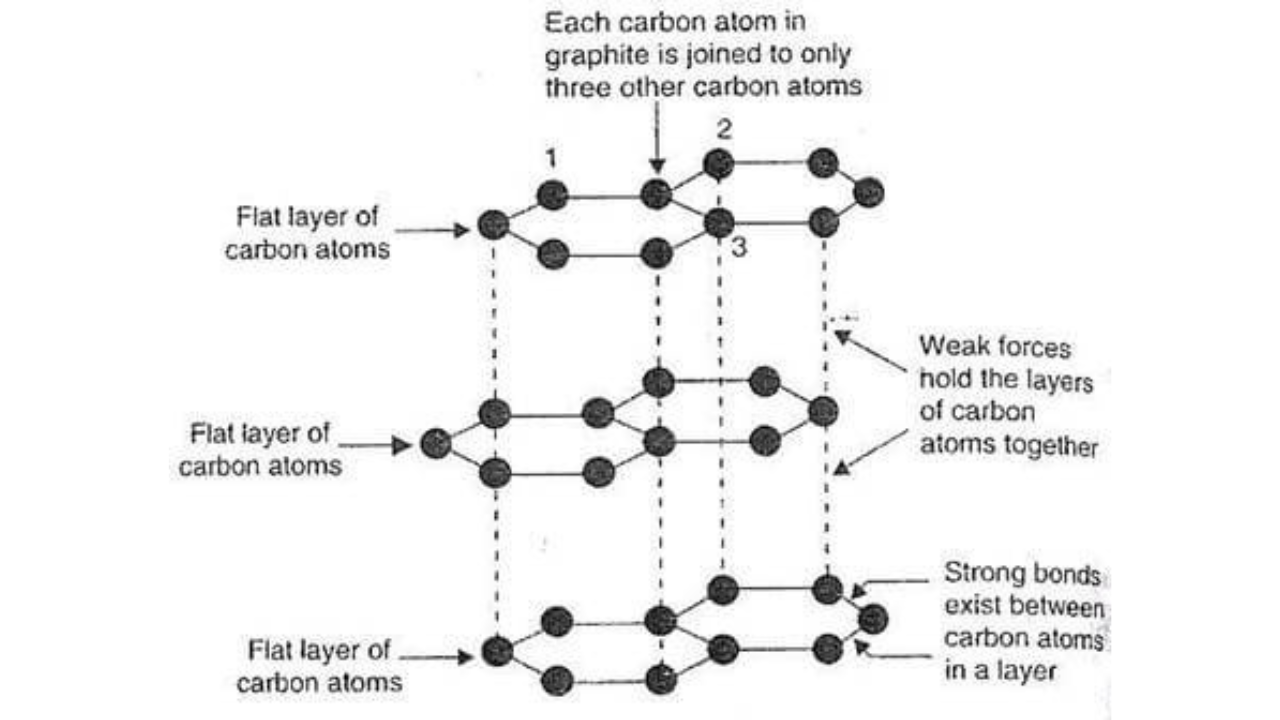
bonding in graphite+ delocalised electrons
as the carbon atoms in graphite’s layers are arranged in hexagons, each atom forms three strong covalent bonds.
carbon atoms have four electrons in their outer shell available for bonding. this leaves one spare outer electron on each carbon atom in graphite.
these mobile electrons can move freely throughout the layers. they are called delocalised electrons.
silicon dioxide
SiO2
giant covalent structure
each silicon atom covalently bonded to 4 oxygen atoms, and each oxygen atom is covalently bonded to 2 silicon atoms
found as quartz in granite, or sand on a beach
very hard, high melting/ boiling boints (strong covalent bonds)
doesnt conduct electricity

properties of giant covalent structures
very high melting and boiling points
insoluble in water
apart from graphite, hard+ dont conduct electricity
graphene
a single layer of graphite
same properties, except is hard not soft (no layers to slide over eachother)
