N&H Exam 2
 Call Kai
 Learn
 Practice Test
 Spaced Repetition
 Match
 Flashcards
 Knowt Play
1/123

There's no tags or description
Looks like no tags are added yet.
124 Terms
What are the 3 major classes of lipids?
triglycerides
phospholipids
sterols
What are major functions of lipids in the body?
Energy storage
Cushioning and insulation
Cell membrane structure and signaling
Raw materials for hormones, bile, and vitamin D
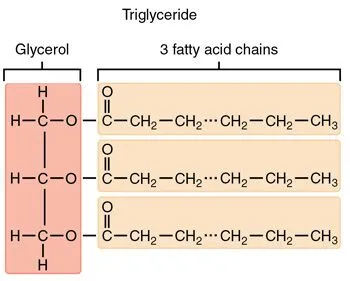
What is the structure of a triglyceride?
1 glycerol backbone + 3 fatty acids
What is the main storage form of fat in the body?
triglycerides stored in adipocytes (fat cells).
How many kcal does 1 gram of fat provide?
9 kcal/g
What are the 3 fatty acid types by saturation?
saturated
monounsaturated
polyunsaturated
How many double bonds do saturated fatty acids have?
0 - their carbon chains are saturated with hydrogen
How many double bonds do MUFAs and PUFAs have?
MUFA: 1
PUFA: 2 or more
How does saturation affect melting point?
More saturation generally means higher melting point and more solid fat.
How does fatty acid chain length affect properties?
Longer chains generally have higher melting points and lower water solubility.
What is the different between cis and trans fatty acids?
cis: hydrogens on same side, bent chain
trans: opposite sides, straighter chain
What do omega-3 and omega-6 designations indicate?
Position of the first double bond from the omega (methyl) end.
What is an alpha carbon in a fatty acid?
The carbon adjacent to the carboxyl carbon.
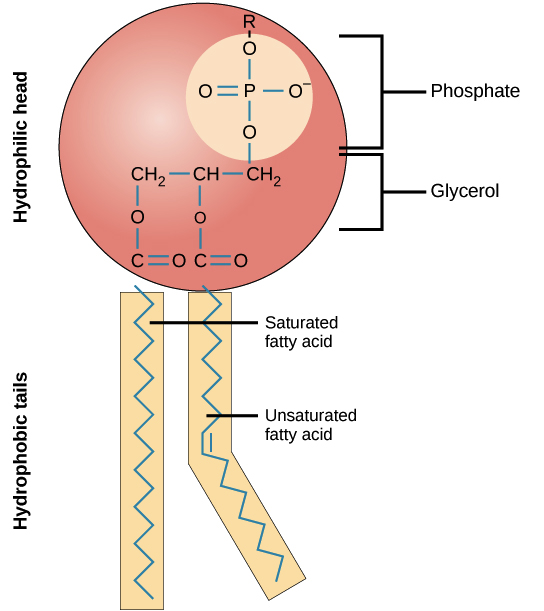
What is the structure of a phospholipid?
glycerol, 2 fatty acids, and a phosphate-containing head group
Why are phospholipids amphipathic?
They have a hydrophilic head and hydrophobic tails.
What is the main role of phospholipids in cells?
Form the cell membrane bilayer and participate in signaling.
Why lecithin useful in foods?
It emulsifies oil and water, stabilizing mixtures.

What is the basic structure of a sterol?
4 fused carbon rings
What are 4 functions of chelosterol?
Cell membranes
precursor for bile acids
steroid hormones
vitamin D
Where is dietary cholesterol found?
animal-derived foods, such as eggs, meat, and dairy.
What is a cholesteryl ester?
Cholesterol joined to a fatty acid; used for cholesterol storage and transport.
Where does most lipid digestion and absorption occur?
small intestine
Where is bile made and stored?
made in the liver; stored in the gallbladder
What is bile’s role in fat digestion?
Emulsifies fat into small droplets, increasing surface area for lipase.
Which enzyme digests dietary triglycerides?
pancreatic lipase
What are the major products of triglyceride digestion?
Free fatty acids and monoglycerides
What is a micelle’s function?
Carries long-chain lipid digestion products to the enterocyte surface.
Do intact micelles enter enterocytes?
NO - they release their lipids at the cell membrane for absorption.
How do short- and medium-chain fatty acids travel?
enterocytes → portal blood → liver
transported with albumin
What is the transport pathway for long-chain fatty acids?
micelles → enterocytes → re-esterification → chylomicrons → lymph → blood
What happens to long-chain lipids inside enterocytes?
triglycerides, phospholipids, and cholesterols are reformed.
Why do chylomicrons enter lymph before blood?
They are too large to enter ordinary intestinal blood capillaries.
What are the 4 major blood lipoproteins?
chylomicrons
VLDL
LDL
HDL
What is the main function of chylomicrons?
carry dietary triglycerides from the intestine to body tissues.
What is the main function of VLDL?
Carry liver-produced triglycerides to body tissues
What is the main function of LDL?
deliver cholesterol to body tissues; high levels increase cardiovascular risk
What is the main function of HDL?
help return excess cholesterol from tissues to the liver.
What does lipoprotein lipase (LPL) do?
hydrolyzes triglycerides in chylomicrons and VLDL, releasing fatty acids
How does VLDL eventually become LDL?
triglyceride removal converts VLDL → IDL → LDL
Which lipoproteins mainly transport triglycerides?
chylomicrons and VLDL
Which lipoprotein mainly transport cholesterol?
LDL and HDL
What are the 2 essential fatty acids?
Linoleic Acid (omega-6)
Alpha Linolenic Acid (omega-3)
Why are linoleic and linolenic acids essential?
because the body cannot synthesize them; they must come from food
What are eicosanoids?
Fatty-acid-derived signaling molecules regulating inflammation and other processes.
How do omega-3 and omega-6 fatty acids affect inflammation?
Both form signaling molecules; omega-3 derivatives are often less inflammatory.
What are important roles of DHA?
supports brain, nerve, and retinal structure and function
What does hydrogenation do to oils?
adds hydrogen to double bonds, making oils more solid and oxidation-resistant.
Why are industrial trans fats harmful?
raise LDL, often lower HDL, and increase cardiovascular risk
Which plant oils are especially high in saturated fat?
coconut oil & palm oil
Which oils are rich in monounsaturated fat?
canola oil & olive oil
What is a healthier replacement for butter?
olive oil or another unsaturated vegetable oil
What is the adult AMDR for total fat?
20-35% total daily calories
Why does fat type matter more than fat amount alone?
Replacing saturated/trans fats with unsaturated fats generally improves blood lipids.
What is the debate about dietary cholesterol and eggs?
Dietary cholesterol matters, but saturated fat and genetics often have greater effects.
What are major benefits and risks of eating fish?
omega-3 fatty acids and protein; some species contain mercury
What is metabolism?
the sum of chemical reactions that build and break down molecules.
How do catabolism and anabolism differ?
catabolism: breaks down molecules and releases energy
anabolism: builds molecules
What is ATP?
Adenosine Triphosphate: the cell’s immediate energy currency
What happens when ATP is hydrolyzed?
ATP → ADP + phosphate, releasing usable energy
How is ATP produced from carbohydrates?
glycolysis → acetyl-CoA → citric acid cycle → electron transport chain
How are fatty acids used to produce ATP?
beta-oxidation produces acetyl-CoA, which enters aerobic energy pathways.
How can proteins be used to produce ATP?
Amino acids are deaminated; carbon skeletons enter energy pathways
What is the main fuel state after eating?
Postprandial (fed) state: insulin rises; glucose use and nutrient storage increase
What happens during the post-absorptive state?
Insulin decreases; glucagon promotes glycogen breakdown and fat mobilization.
What happens during the prolonged fasting?
glycogen declines; gluconeogenesis, fat oxidation, and ketone production increase
What is glycogenolysis?
breakdown of stored glycogen to supply glucose
What is gluconeogenesis?
production of glucose from noncarbohydrate precursors
What is lipolysis?
breakdown of stored triglycerides into fatty acids and glycerol
What is ketosis?
As glycogen runs low, the body transitions to burning fat and producing ketones for fuel through a process
What is energy balance?
relationship between energy intake and energy expenditure
What happens during positive energy balance?
energy intake exceeds expenditure; excess energy is stored
What happens during negative energy balance?
energy expenditure exceeds intake; stored fuels are mobilized
What are the 3 main components of energy expenditure?
basal metabolism, physical activity, and thermic effect of food
What is basal metabolic rate (BMR)?
energy requried to maintain vital functions at rest
What is the thermic effect of food (TEF)?
Energy used to digest, absorb, and process food; approximately 10%.
What is the thermic effect of food (TEF)?
Energy used to digest, absorb, and process food; approximately 10%
What is body composition?
properties of fat mass and fat-free mass, including muscle, bone, and water.
How is BMI calculated?
Weight (kg) / height (m)²
What is an important limitation of BMI?
It does not distinguish muscle from fat or show fat distribution?
What is the difference between visceral and subcutaneous fat?
visceral surrounds internal organs; subcutaneous lies beneath the skin
Why is excess visceral fat concerning?
associated with inflammation, insulin, resistance, and cardiometabolic disease.
What are adipocyte hypertrophy and hyperplasia?
Hypertrophy: fat cells enlarge
Hyperplasia: fat cell number increases
Which hormone stimulates hunger?
ghrelin, produced mainly by the stomach
Which hormone helps suppress appetite?
Leptin, released by adipose tissue.
What is the set-point theory of body weight?
Body regulation tends to defend a weight range through appetite and expenditure changes
What external factors contribute to increased body fat?
food environment, inactivity, stress, sleep disruption, and socioeconomic conditions
What health risks can occur with too little body fat?
Hormonal disruption, poor insulation, nutrient deficiencies, and impaired immunity
What are key features of effective behavior change?
specific goals, self-monitoring, realistic habits, social support, and relapse planning
How does fatty acid saturation affect cell membrane fluidity?
More unsaturated fatty acids increase fluidity; saturated fatty acids pack tightly.
Why are short-chain fatty acids more water-soluble?
Their short hydrocarbon chains allow the polar carboxyl group (hydrophilic) to dominate
What is the carbon length of a short-chain fatty acid?
fewer than 8 carbons
How much dietary fat can the intestine absorb?
up to approx. 98%
How does dietary fat affect digestion time?
fat slows digestion, so higher-fat meals take longer to digest
What activates lipoprotein lipase (LPL)?
ApoC-II on the surface of chylomicrons
What happens when LPL acts on chylomicrons?
Triglycerides are hydrolyzed, releasing fatty acids and leaving remnants
What happens to chylomicron remnants?
They are taken up by the liver
How does hydrogen improve oil shelf life?
it reduces double bonds, making oils more resistant to oxidation
What is the recommended limit for saturated fat?
Less than 10% of daily calories
Why is soluble fiber recommended for cholesterol management?
It helps lower LDL cholesterol.
Why is waist circumference useful alongside BMI?
It helps assess abdominal fat and cardiometabolic risk.