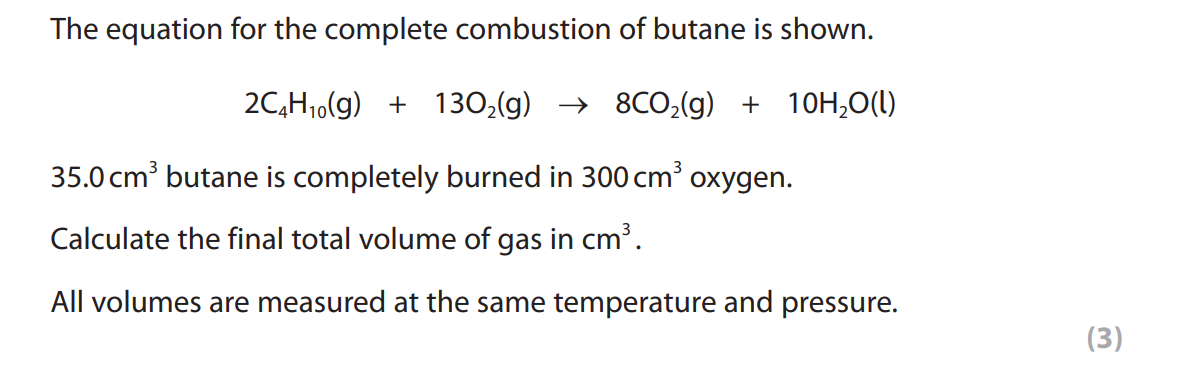
Chem U1 IAL pp mistakes [2020-2023]
 Call Kai
 Learn
 Practice Test
 Spaced Repetition
 Match
 Flashcards
 Knowt Play
1/45

There's no tags or description
Looks like no tags are added yet.
46 Terms
State what happens to nuclear charge, shielding and effective nuclear charge:
- down the group
- across the period
down the groupboth nuclear charge and shielding increases so effective nuclear charge is almost same(very slight increase)
Across the period nuclear charge increases while shielding remains same so effective nuclear charge increases
NOTE:
Nuclear charge = the actual positive charge of the nucleus, determined by the number of protons
effective nuclear charge = nuclear charge - shielding


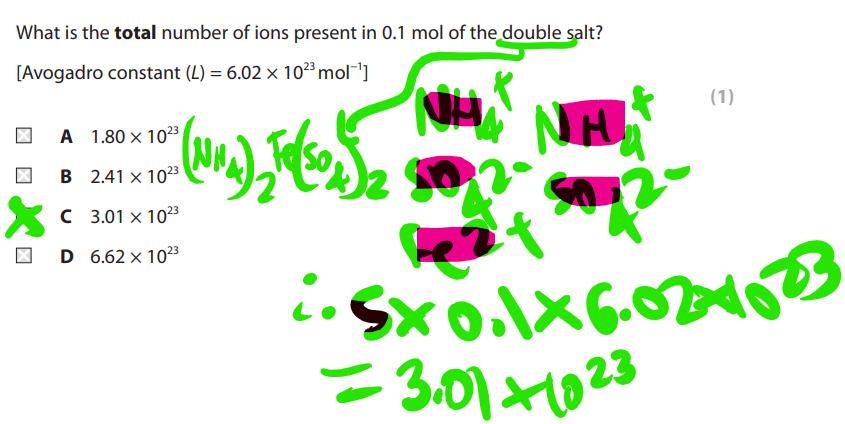
= 5.4 * 10 ^ 23
= 3.9 * 10 ^ 23
= 6.02 x 10^23
= 4.5 * 10 ^ 23
so you can see C has most no. of ions


C
carbon because it has 4 valence electron and giant covalent structure


Explain the difference in the first ionisation energies of chlorine and bromine.
(3 marks)
chlorine has higher first I.E than Br
because down the grp shielding and nuclear charge increases,soclorine's outermost electron experiences less shielding effect
Chlorine's outermost electron is also in a lower energy level and so closer to the nucleus [3p] than bromine [4p]
( thus more energy is needed for ionisation)

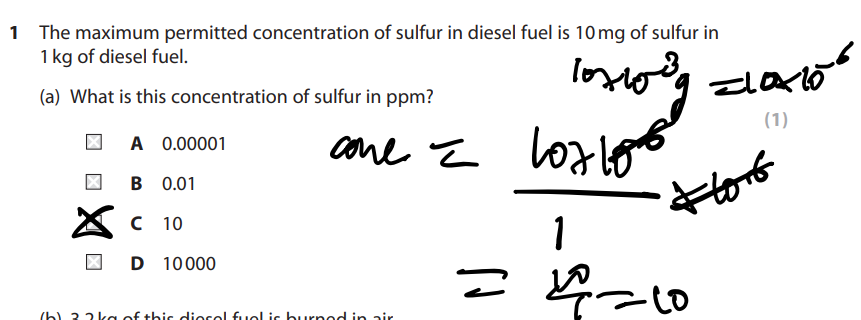
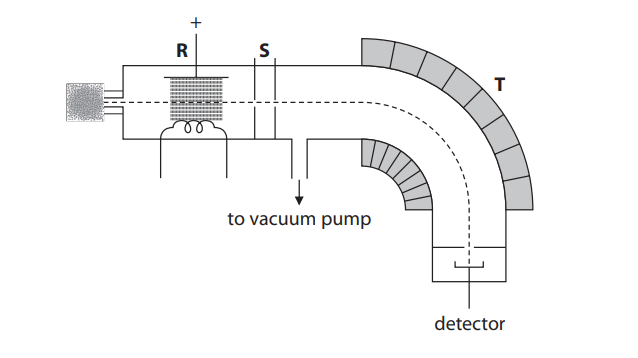
Label R, S and T

Explain whether Al or Mg has a greater first I.E
(3marks)
magnesium has greater first I.E than Al
because Al outermost electron is in a higher level 3p and so it experiences more shielding so it has less first I.E
Mg outermost electron is in 3s, so less shielding and more first I.E




(ii) give the reagents needed for reaction 2

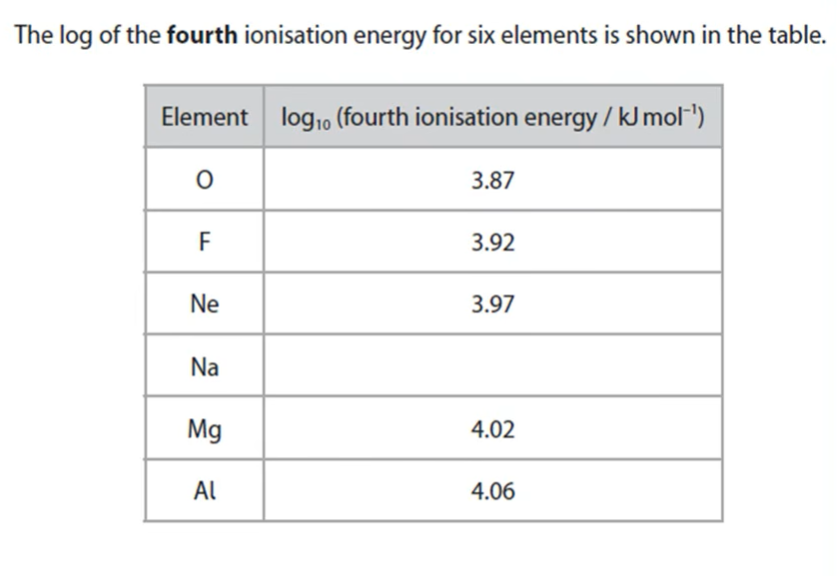
plot a graph of this data
NOTE:
always try to distribute the numbers as much as you can,
like lowest value is 3.87 and highest 4.07
So instead of starting from 0 or 3, start from 3.85 or 3.80 and end at 4.10 or 4.5

the 4th I.E of sodium is around 3.995 KJ mol-1 in log10,
what is the I.E in KJ mol-1?
logbaseanswer = power format basically


Chromium most commonly exhibits +3 and +6
thus it is Cr2O3


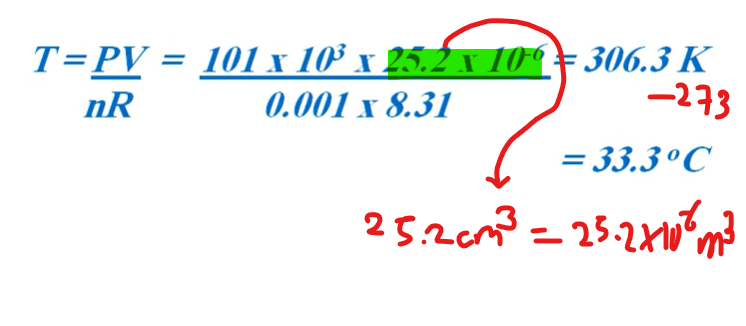
NOTE, the conditions for pV = nRT
p(Pressure) = in Pa not Kpa
Volume (V) must be in m3
T(temperature) must be in K
where 1K = 1 C + 273
(or 1C = 1K -273)

reduce pollution
renewable
reduce waste going to landfill

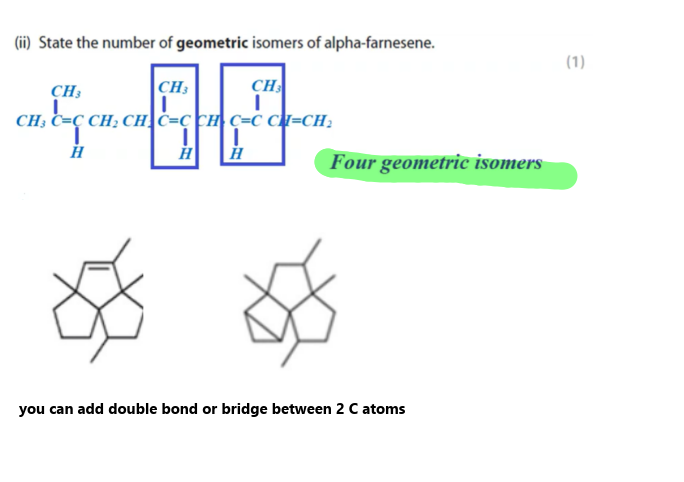
both double bonds in isoprene have two atoms of hydrogen on one end / need to have different groups on both ends to form geometric isomers
Allow two identical groups / atoms are attached to one carbon of the double bond



Explain why first I.E of sulfur is less than phosphurus (2marks)
electron being removed from sulfur is paired electron in p orbital but for phospurus it is unpaired electron in p orbital
repulsion between paired electrons means less energy is needed to remove them
There must be a mention of p (orbital)

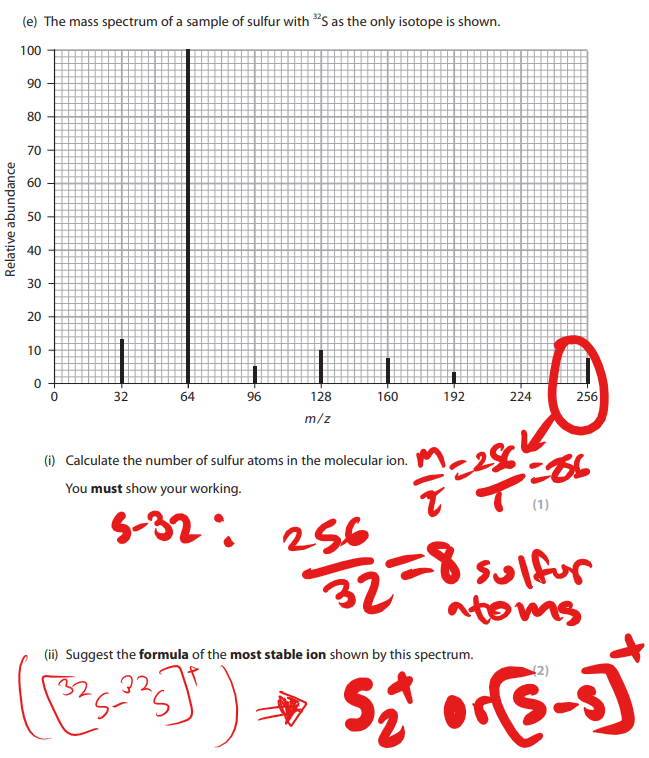
The peak with the highest m/z value is the molecular ion (M ) peak
so i.e it is 256/1 = 256
my idea was right for (ii) but the notation for formula of stable ion is S2+ not what i wrote

both solutions will turn colorless
bromine water goes from orange to colorless while acidified kMno4 goes from purple to colorless (when alkene is added)


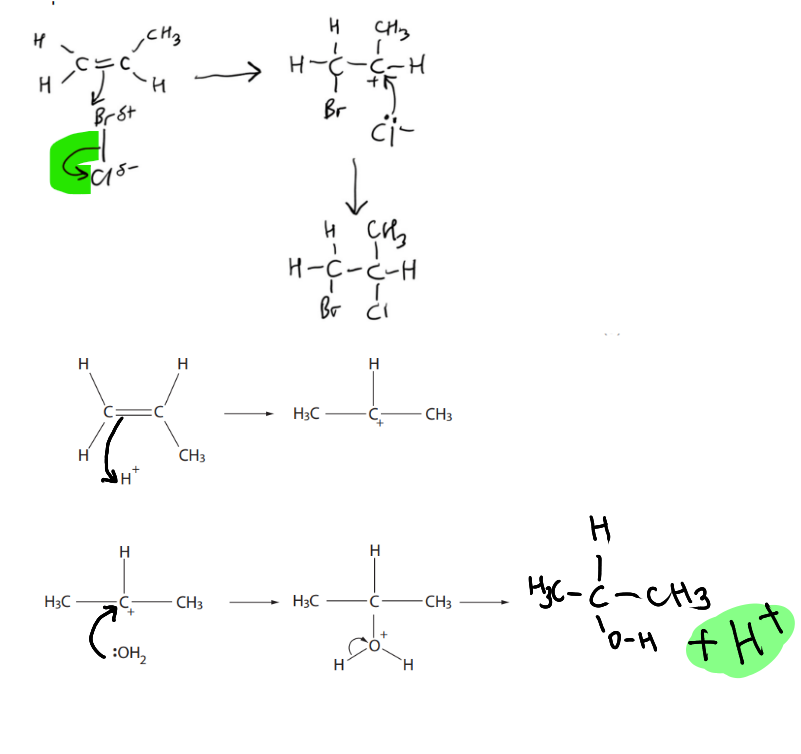
Draw the mechanism for the formation of 1-bromo-2-chloropropane in this reaction. Include curly arrows, and relevant lone pairs. (3marks)
complete the following mechanism in pic
ooof everything right just forgot to give the highlighted arrow
for the second Q forgot to give H+……..
Suggest 3 properties that make squalane a liquid alkane useful in cosmetics.
1) inert / unreactive
2) colorless & odorless
3) non-toxic
[alkanes are inert, non toxic colorless and odorless]

got everything except the hydrogenation concept:
6 hydrogenation occured meaning 6 double bonds broke, so 6 C=C present
(when alkene undergoes hydrogenation double bond breaks and it becomes alkane)


restricted rotation about/around C=C
(only) central C=C has two different groups attached to each carbon of the C=C



Give a reason for adding cycloalkane to petrol
prevents knocking


Give the reagent and condition needed for Reaction 2.
Alkene + H20 → Alcohol
reagent = H20
condition = phosphoric acid
[reagentreacts with starting material while condition is the setup like an acid or temperature]


"pentene" is an incomplete chemical name cause double bond can be in any place
so you have to specify like i.e pent-2-ene

600 cm3 = ? m3
600 cm3 = 600×10-6 m3


balance the equation

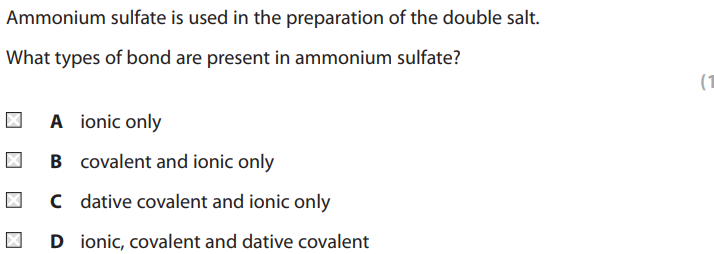


Ammonium iron(II) sulfate, (NH4)2Fe(SO4)2·6H2O, is a double salt that is used as a source of iron(II) ions.

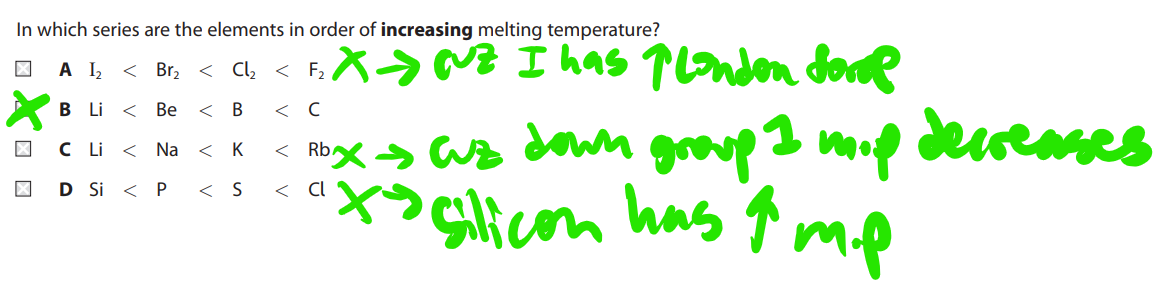
as you go down group 1, MP decreases so:
Lithium (Li) has a higher melting point than rubidium (Rb)

A is correct
D is incorrect because it is E-1-chlorobut-2-ene

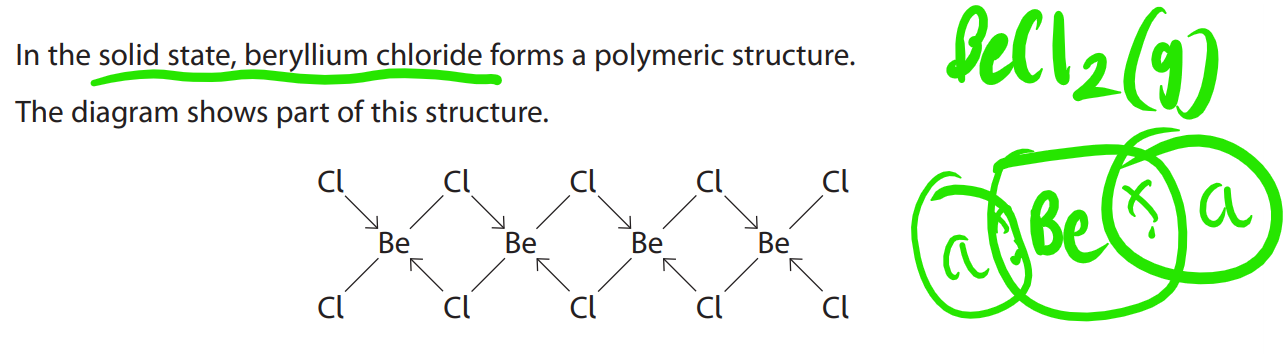
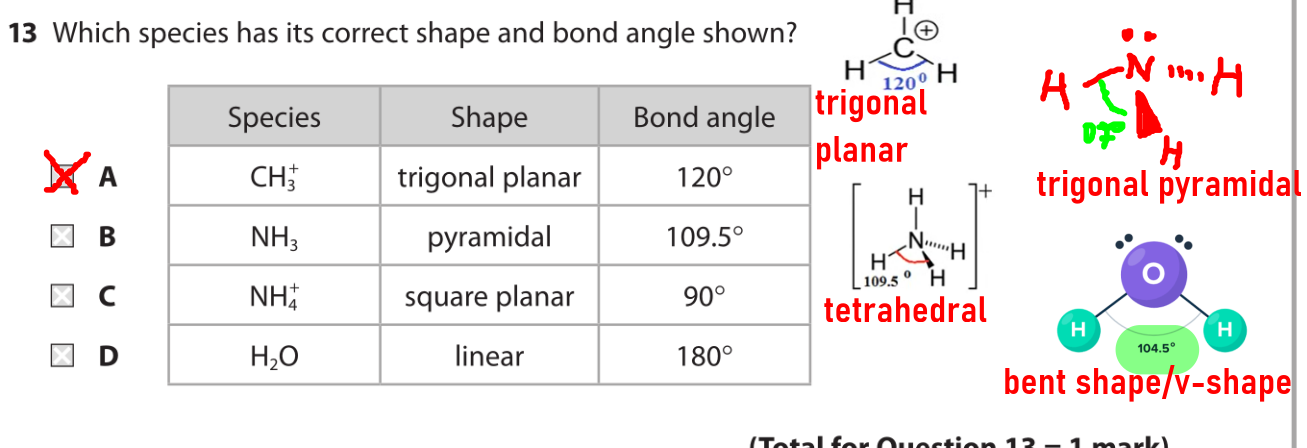
State the bond angle of Cl-Be-Cl of BeCl2 (g) and solid state polymeric berylium chloride
BeCl2 (g) has 2 bp and 0 lp so bond angle is 180 degrees
BeCl2 solid from the diagram we can see has 4 bp and 0lp, so it should be tetrahedral and therefore bond angle of 109.5 degrees


silicon dioxide has giant covalent structure and strong covalent bonds
these bonds need a lot of energy to break and thus they have high MP
SiO2 has no delocalised electrons so is an electrical insulator
(Si can form 4 bonds and it has 4 BP with Oxygen so no delocalised electrons)

Give 2 possible reasons for producing hydrogen from aluminium rather than from fossil fuels
Explain the main hazard when using butane as a fuel in a portable heater in an enclosed space.
[2marks]
reduces CO2 emission which contributes to Global warming
Fossil fuels are non-renewable but aluminium can be recycled
- in an enclosed space lot of Carbon monoxide can be produced
- CO binds to haemoglobin irreversibly causing breahting difficulty

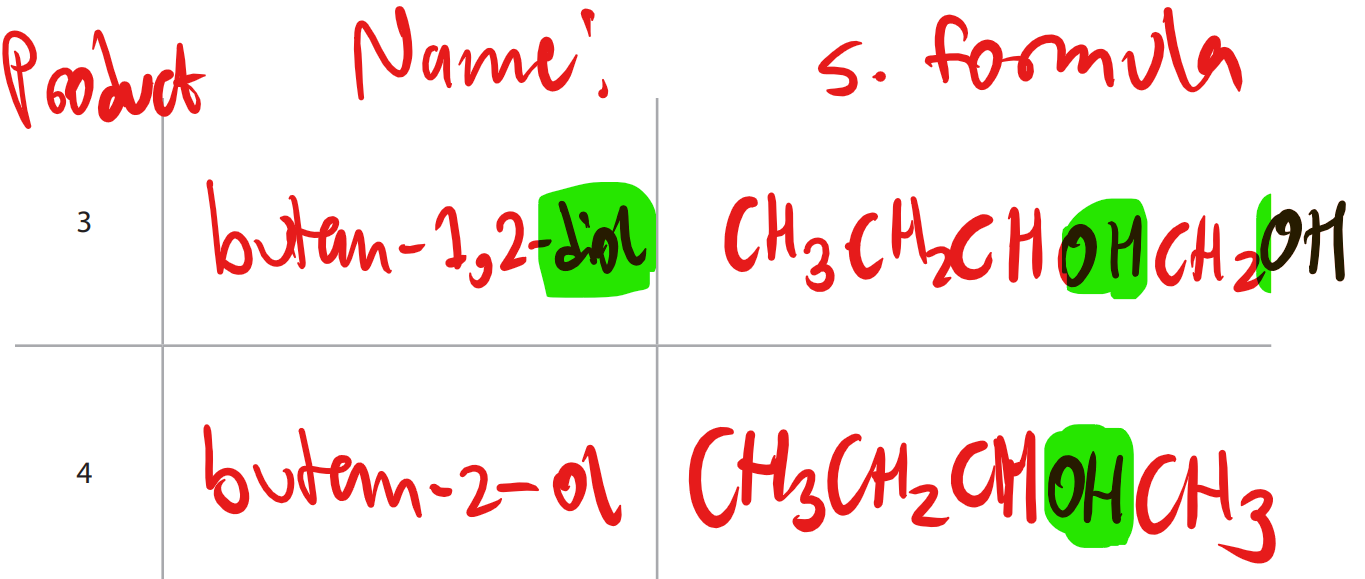
give the name and structural formula for product 3 and 4
alkene + acidified kmno4 = alcohol diol
but-1-ene + steam forms butan-2-ol as that 2nd C is more stable according to markivnovs law

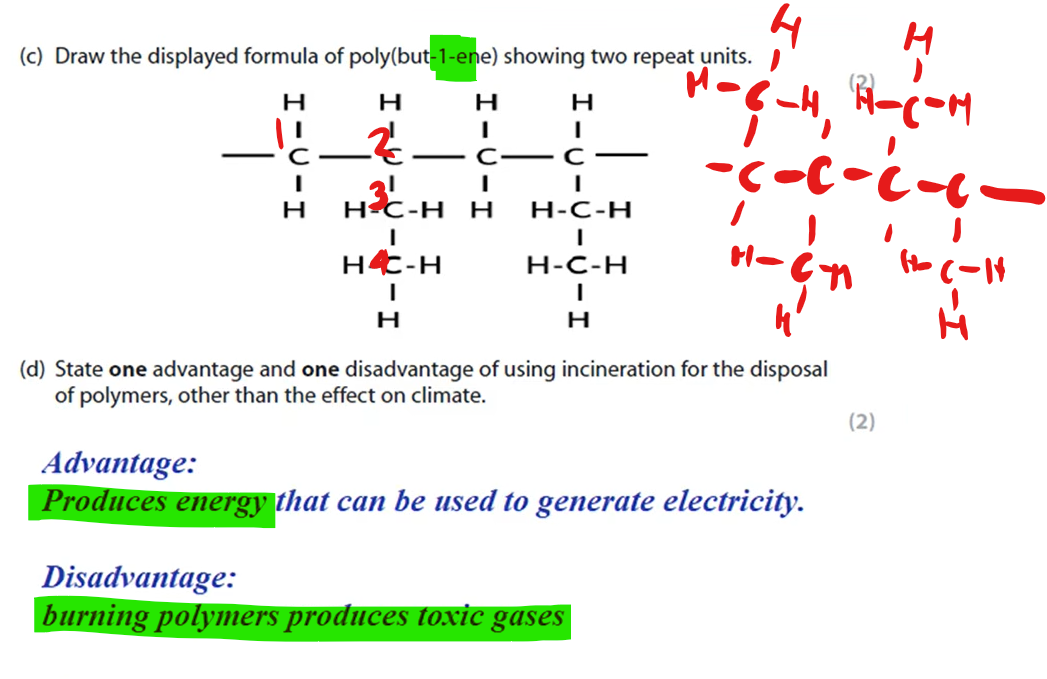
what i drew in red is WRONG, cuz that gives poly(but-2-ene) and we want poly(but-1-ene),
so draw with the ethyl group
(NOT 2 methly groups on 2 carbons)