Med Term Chapter 14 - Musculoskeletal System
 Call Kai
 Learn
 Practice Test
 Spaced Repetition
 Match
 Flashcards
 Knowt Play
1/231

There's no tags or description
Looks like no tags are added yet.
232 Terms
bone
organ made up of hard connective tissue with a dense outer layer and spongy inner layer
periosteum
(per-ē-OS-tē-um)
outermost layer of the bone, made up of fibrous tissue
compact bone
dense, hard layers of bone tissue that lie underneath the periosteum
cancellous bone
tissue encased within compact bone that contains little spaces like a sponge; provides structural support and houses bone marrow that produces blood cells (also called spongy bone)
endosteum
(en-DOS-tē-um)
membranous lining of the hollow cavity of the bone

diaphysis
(dī-AF-i-sis)
middle section (shaft) of the long bones
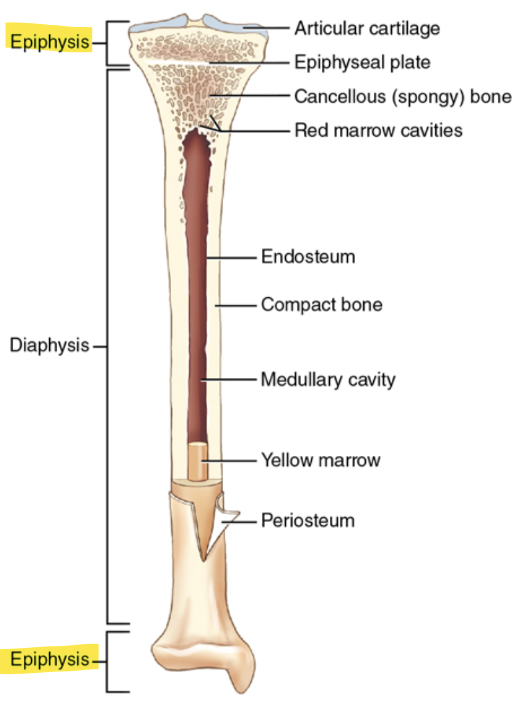
epiphysis (pl. epiphyses)
(e-PIF-i-sis), (e-PIF-i-sēz)
end of each long bone
bone marrow
material found in the cavities of bones
red marrow
thick, bloodlike material found in flat bones and the ends of long bones; location of blood cell formation
yellow marrow
soft, fatty material found in the medullary cavity of long bones
maxilla
upper jawbone
mandible
lower jawbone
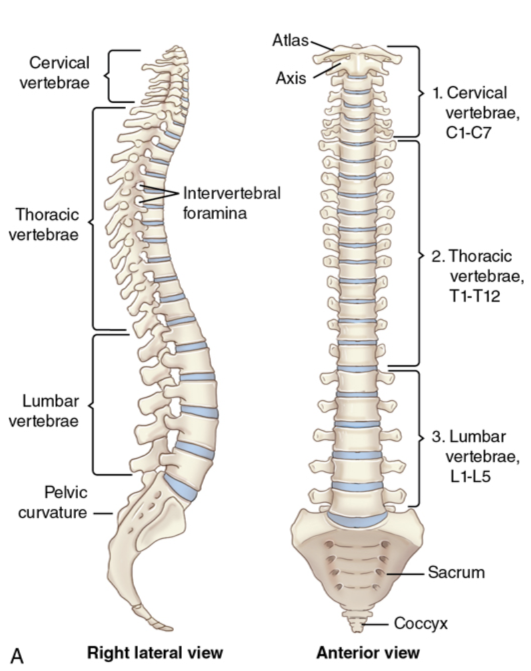
vertebral column
(ver-TĒ-brel) (KOL-em)
curved structure made up of bones called vertebrae (pl.) or vertebra (s.) through which the spinal cord runs. The vertebral column protects the spinal cord, supports the head, and provides points of attachment for ribs and muscles.
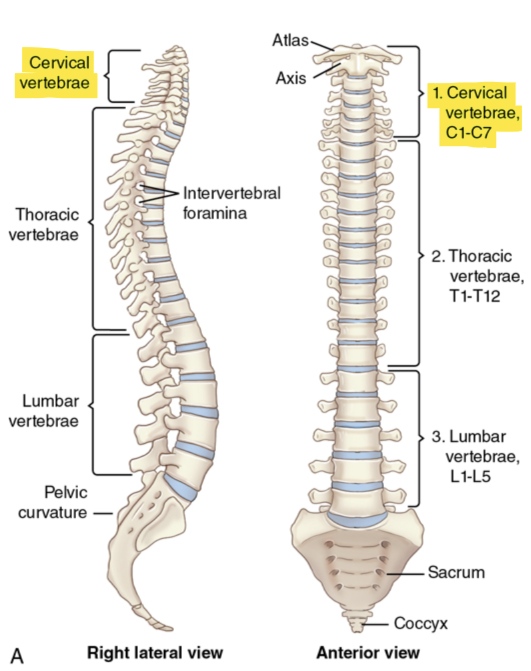
cervical vertebrae (C1 to C7)
first set of seven vertebrae, forming the neck (contains the first anterior curve of the spine)

thoracic vertebrae (T1 to T12)
second set of 12 vertebrae. They articulate with the 12 pairs of ribs to form the outward (posterior) curve of the spine.

lumbar vertebrae (L1 to L5)
third set of five larger vertebrae, which forms the inward curve of the spine (lower anterior curve)

sacrum
next five vertebrae, which fuse together to form a triangular bone positioned between the two hip bones, forming joints called the sacroiliac joints

coccyx
four vertebrae fused together to form the tailbone

laminae (s. lamina)
(LAM-i-nā) (LAM-i-na)
flat plates of bone that form the vertebral arch, the posterior portion of the spinal canal
clavicle
collarbone
scapula
shoulder blade
acromion process
extension of the scapula, which forms the superior point of the shoulder
sternum
breastbone
xiphoid process
(ZĪ-foid) (PRA-ses)
lower portion of the sternum
humerus
upper arm bone
ulna and radius
lower arm bones
olecranon process
(ō-LEK-ra-non) (PRA-ses)
projection at the proximal end of the ulna that forms the bony point of the elbow
carpal bones
wrist bones; there are 8 carpal bones in each wrist
metacarpal bones
hand bones (also called metacarpus)
meta-, meaning beyond, and carpus, meaning wrist
phalanx (pl. phalanges)
(FĀ-lanks) (fa-LAN-jēz)
finger and toe bones
pelvis
bowl-like structure made up of three bones fused together (also called pelvic bones and hip bones)
ischium
(IS-kē-um)
lower, posterior portion of the pelvis on which one sits
ilium
upper, wing-shaped part on each side of the pelvis
pubis
anterior portion of the pelvis
acetabulum
(as-a-TAB-ū-lum)
large socket in the pelvis for the head of the femur
femur
upper leg bone
tibia and fibula
(TIB-ē-a), (FIB-ū-la)
lower leg bones
patella (pl. patellae)
(pa-TEL-a) (pa-TEL-ē)
kneecap
tarsal bones
ankle bones; there are 7 tarsal bones in each ankle
calcaneus
(kal-KĀ-nē-us)
heel bone
metatarsal bones
foot bones
joint
junction of two or more bones, which often allows for movement of these bones (also called articulation)
cartilage
firm connective tissue primarily found in joints. Articular cartilage covers the contacting surfaces of bones.
meniscus
crescent-shaped cartilage found in some joints, including the knee
intervertebral disk
(in-ter-VUR-tē-bral) (disk)
cartilaginous pad found between the vertebrae in the spine (also called intervertebral disc)
pubic symphysis
(PŪ-bik) (SIM-fi-sis)
cartilaginous joint at which two pubic bones come together anteriorly at the midline
synovia
(si-NŌ-vē-a)
fluid secreted by the synovial membrane and found in joint cavities, bursae, and around tendons (also called synovial fluid)
bursa (pl. bursae)
(BUR-sa) (BUR-sā)
fluid-filled sac that allows for easy movement of one part of a joint over another
ligament
flexible, tough band of fibrous connective tissue that attaches one bone to another at a joint
tendon
band of fibrous connective tissue that attaches muscle to bone
aponeurosis
(ap-ō-noo-RŌ-sis)
strong sheet of tissue that acts as a tendon to attach muscles to bone
muscle
tissue composed of specialized cells with the ability to contract to produce movement; the three types of muscle tissue are skeletal, smooth, and cardiac
fascia
band or sheet of connective tissue that encloses muscles and separates their layers
skeletal muscles
attached to bones by tendons and make body movement possible. Skeletal muscles produce action by working in pairs and pulling on bones to which they connect.
They are also known as voluntary muscles because we have control over these muscles. Alternating dark and light bands create striations (stripes). (also called striated muscles)
smooth muscles
located in internal organs such as the walls of blood vessels and the digestive tract. They are also known as involuntary muscles because they respond to impulses from the autonomic nerves and are not controlled voluntarily. (also called unstriated muscles)
cardiac muscle
forms most of the wall of the heart. Its involuntary contraction produces the heartbeat. (also called myocardium)
ankylosis
(ang-ki-LŌ-sis)
abnormal condition of stiffness (often referring to fusion of a joint, such as the result of chronic rheumatoid arthritis)

arthritis
(ar-THRĪ-tis)
inflammation of a joint (The most common forms of arthritis are osteoarthritis and rheumatoid arthritis.)
bursitis
(ber-SĪ-tis)
inflammation of a bursa
chondromalacia
(kon-drō-ma-LĀ-sha)
softening of cartilage
chondrosarcoma
malignant tumor of cartilage
cranioschisis
(krā-nē-OS-ki-sis)
fissure (split) of the cranium (congenital)
discitis
inflammation of an intervertebral disk
fasciitis
(fa-shē-Ī-tis)
inflammation of the fascia (connective tissue enclosing and separating muscle layers)
fibromyalgia
(fī-brō-mī-AL-ja)
pain in the fibrous tissues and muscles (a common condition characterized by widespread pain and stiffness of muscles, fatigue, and disturbed sleep)

kyphosis
(kī-FŌ-sis)
abnormal condition of a hump (in the thoracic spine)
(also called hunchback or humpback)

lordosis
(lōr-DŌ-sis)
abnormal condition of bending forward (in the lumbar spine)
(also called swayback)
meniscitis
(men-i-SĪ-tis)
inflammation of a meniscus
myeloma
(mī-e-LŌ-ma)
tumor of the bone marrow (malignant)
osteitis
(os-tē-Ī-tis)
inflammation of the bone
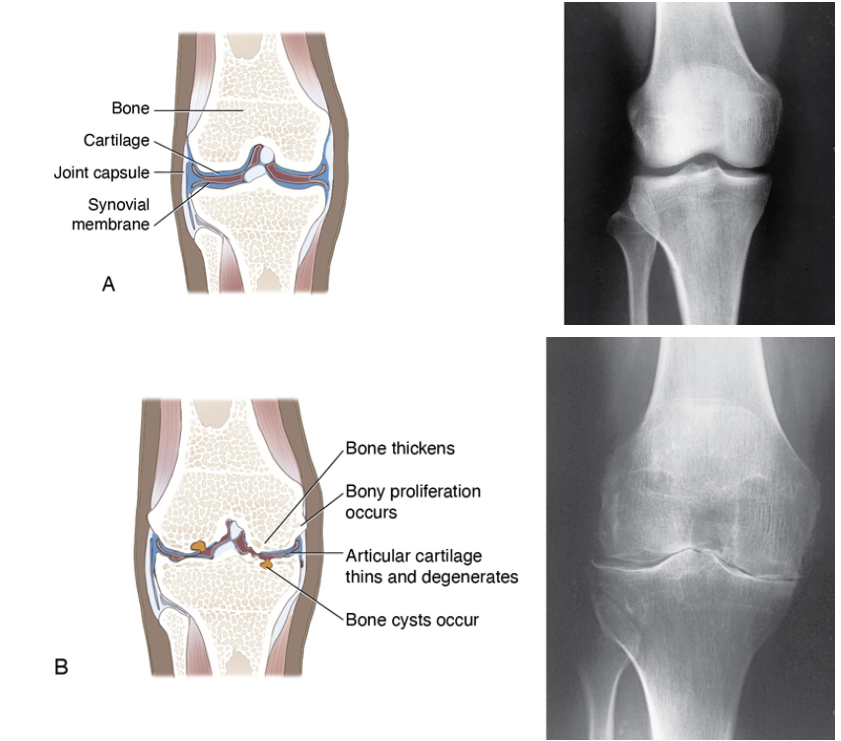
osteoarthritis (OA)
(os-tē-ō-ar-THRĪ-tis)
inflammation of the bone and joint
osteochondritis
(os-tē-ō-kon-DRĪ-tis)
inflammation of the bone and cartilage
osteochondroma
(os-tē-ō-kon-DRŌ-ma)
tumor composed of bone and cartilage (benign)
osteomalacia
(os-tē-ō-ma-LĀ-sha)
softening of bone
osteomyelitis
(os-tē-ō-mī-e-LĪ-tis)
inflammation of the bone and bone marrow (caused by bacterial infection)
osteonecrosis
(os-tē-ō-ne-KRŌ-sis)
abnormal condition of bone death (due to lack of blood supply)
osteopenia
(os-tē-ō-PĒ-nē-a)
abnormal reduction of bone mass (caused by inadequate replacement of bone lost to normal bone lysis and can lead to osteoporosis)
osteopetrosis
(os-tē-ō-pe-TRŌ-sis)
abnormal condition of stonelike bones (very dense bones caused by defective resorption of bone)
osteosarcoma
(os-tē-ō-sar-KŌ-ma)
malignant tumor of the bone
polymyositis (PM)
(pol-ē-mī-ō-SĪ-tis)
inflammation of many muscles
rachischisis
(ra-KIS-ki-sis)
fissure (split) of the vertebral column (congenital)
(also called spina bifida)
rhabdomyolysis
(rab-dō-mī-OL-i-sis)
dissolution of striated muscle (caused by trauma, extreme exertion, or drug toxicity; in severe cases renal failure can result)
sarcopenia
(sar-kō-PĒ-nē-a)
abnormal reduction of connective tissue (such as loss of skeletal muscle mass in the elderly)

scoliosis
(skō-lē-Ō-sis)
abnormal condition of (lateral) curved (spine)
spondylarthritis
(spon-dil-ar-THRĪ-tis)
inflammation of the vertebral joints
(also called spondyloarthritis)
spondylosis
(spon-di-LŌ-sis)
abnormal condition of the vertebrae (a general term used to describe changes to the spine from osteoarthritis or ankylosis)
synoviosarcoma
(si-nō-vē-ō-sar-KŌ-ma)
malignant tumor of the synovial membrane
tendinitis
(ten-di-NĪ-tis)
inflammation of a tendon
(also spelled tendonitis)
tenosynovitis
(ten-ō-sin-ō-VĪ-tis)
inflammation of the tendon and synovial membrane
ankylosing spondylitis
(ang-ki-LŌ-sing) (spon-di-LĪ-tis)
form of arthritis that first affects the spine and adjacent structures and that, as it progresses, causes a forward bend of the spine
(also called Strümpell-Marie arthritis or disease, or rheumatoid spondylitis)
bunion
abnormal prominence of the joint at the base of the great toe, the metatarsal-phalangeal joint. It is a common problem, often hereditary or caused by poorly fitted shoes. (also called hallux valgus)

carpal tunnel syndrome (CTS)
(KAR-pl) (TUN-el) (SIN-drōm)
common nerve entrapment disorder of the wrist caused by compression of the median nerve; symptoms include pain and tingling in portions of the hand and fingers
compartment syndrome
painful condition caused by increased pressure within a muscle that can lead to ischemia; acute compartment syndrome is a medical emergency and is caused by severe injury

dislocation
displacement of bones in a joint from their normal alignment (also called luxation)
exostosis
(ek-sos-TŌ-sis)
abnormal benign growth on the surface of a bone (also called spur)
fracture (fx)
broken bone

ganglion cyst
collection of jellylike fluid forming a benign mass arising from joints, most commonly appearing in the wrist, hand, and ankle
gout
disease in which an excessive amount of uric acid in the blood causes sodium urate crystals (tophi) to be deposited in the joints, producing arthritis. The great toe is frequently affected.

herniated disk
rupture of the intervertebral disk cartilage, which allows the contents to protrude through it, putting pressure on the spinal nerve roots
(also called slipped disk, ruptured disk, herniated intervertebral disk, or herniated nucleus pulposus [HNP])
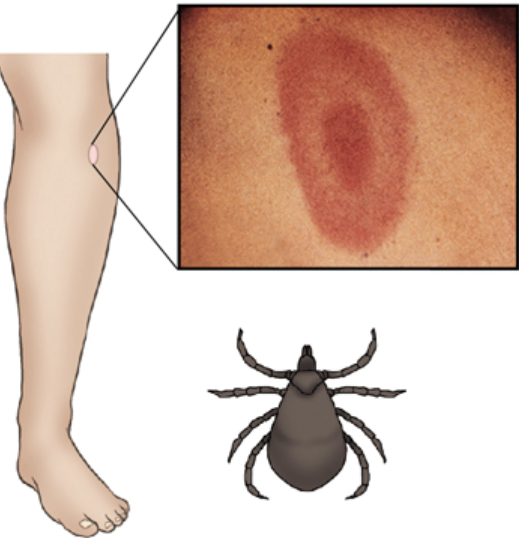
Lyme disease
infection caused by a bite from a deer tick infected with Borrelia burgdorferi.
This bacterium provokes an immune response in the body, the symptoms of which can mimic several musculoskeletal diseases. Patients may experience fever, headache, and joint pain. A rash (target lesion) may initially arise at the site of the tick bite.