Inflammation and mobility- MS, Osteoarthritis, Rheumatoid arthritis 1260
 Call Kai
 Learn
 Practice Test
 Spaced Repetition
 Match
 Flashcards
 Knowt Play
1/33

There's no tags or description
Looks like no tags are added yet.
34 Terms
What is Multiple Sclerosis
A chronic, progressive autoimmune disease- leading to the demyelination of the CNS
Frequently the disease is relapsing and remitting, symptoms include fatigue weakness, numbness, difficulty coordination, loss of balance, pain and visual disturbances.
Multiple sclerosis pathophysiology
Immune system attacks it’s own myelin sheath
Inflammation occurs adding to the damage
Demyelination: loss of myelin disrupts nerve signals and transmission
Axonal Damage: Nerve fibers themselves can also be damaged
Multiple sclerosis types- courses
Relapsing- Remitting
Clear relapse with full/ partial recovery- stable between relapses
Primary progressive- Steady progression from the onset with minor recovery
Secondary progressive
Pattern of relapse but never fully return to normal- begins to have periods without remission
Progressive relapsing: Rare
Progressive onset with ACUTE relapses- condition deteriorates fast

Multiple sclerosis risk factors
Genetic- 15 fold increase when first degree relative has it
HLA-DR2 gene- more at risk
Environmental
Northern latitude
Epstein barr virus
Autoimmune diseases
Diabetes type 1, thyroid disease, IBS
MS manifestations
Vision problems, eye pain, nystagmus, muscle weakness, spasticity,
Gait problems, vertigo, poor coordination, bladder and bowel incontinent.
Depression, inflammation
V — Vision problems
M — Muscle weakness and spasticity
S — Sensory changes
C — Coordination problems
B — Bladder dysfunction
F — Fatigue
MS diagnostic tests
Rule out other diseases
MRI for MS plaque or scarring
Evoked potential- test that measures the electrical activity in brain
Lumbar puncture ⬇
Elevation of IgC and the presence of oligoclonal band- indicates MS
Interventions for MS
Promote exercise, relaxation, avoid strenuous activity- aggravates symptoms, Bowel and bladder control ( medication, bowel and bladder program, fluid and fiber)
Swallowing instructions (dysphagia)- reduce risk of aspiration
Memory aids and daily routine to enhance cognitive function
Modify home to promote adl completion-
Treatment of MS goals, drugs and collaborative care
Goal: to delay progression of disease, manage s/s and treat exacerbations- no cure
Disease modifying drugs- reduce autoimmune response
Corticosteroids to reduce inflammation
Rehabilitate
Speech and vision therapy
Range of motion exercises
Adaptive equipment
physical therapy
MS meds
Immunomodulator- slow ms progression, reduce frequency and duration of relapse- infection risk
Corticosteroids: reduce acute inflammation
Antispasmodics- manage spasticiyt- drowsiness, liver damage
Carbamezapine- used for parasthesia
Oxybutynin- bladder dysfunction
MS complications
Falls, UTI, Constipation, Contracture deformities, pressure injuries, constipation, rectal distention, osteoporosis, pneumonia
MS Nursing diagnosis- things we treat
Impaired mobility, risk for injury, impaired bowel and bladder, disturbed thought process, ineffective coping
Goals for patients with MS
Promote physical mobility, avoid injury, bowel bladder control, speech and swallowing mechanisms, coping mechanism
Encourage fluid intake, communication board for dysarthria, coping mechanisms, cluster care to aid in energy conservation
May need eye patch for double vision
What is arthritis
Joint inflammation or destruction that leads to pain and tenderness that can cause an effect on mobility
What is Rheumatoid arthritis
Connective tissue disease➡ affecting multiple organs
Autoimmune, chronic inflammation- systmeic
Gets better as the day goes on- key difference
RA pathophysiology
Autoimmune activation (T and B cells) → Synovial membrane becomes inflamed (synovitis) → Pannus formation (invasive inflammatory granulation tissue) → Cartilage destruction → Bone erosion → Joint deformities and decreased ROM.
RA risk factors
Female at birth
Age
Family History
Nulliparity
Obesity
Tobacco Use
Geographic location
Diet Periodontitis Lung disease
Rheumatoid Arhritis Symptoms
Pain at rest and with movement- Joint discomfort early sign
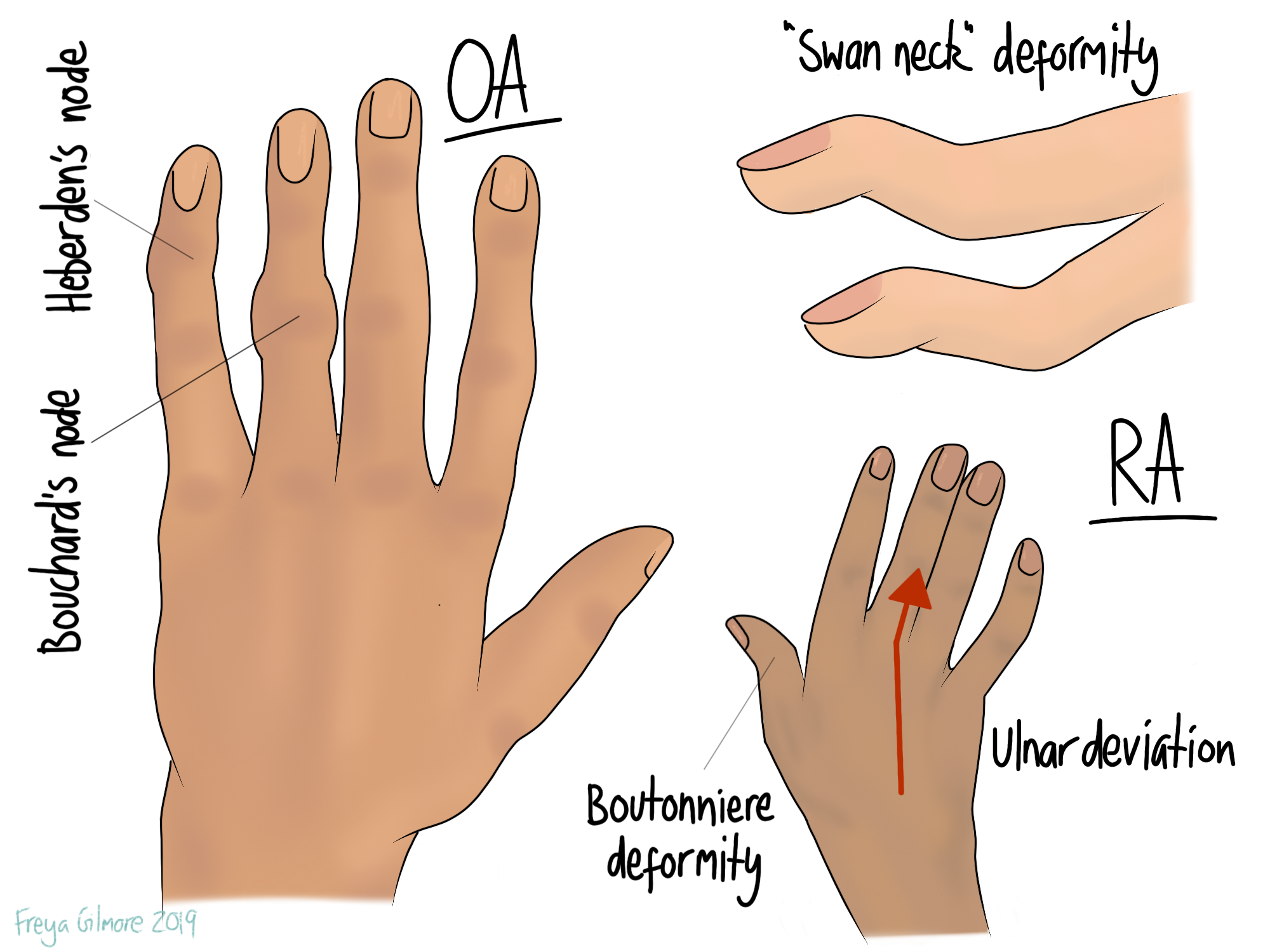
Joint swelling- swan neck deformation
Ulnar deviation
Limited movement
Stiffness- morning longer than 30 minutes
Weakness/ Fatigue- early sign
RA tests
Rhematoid factors- autoimmune test
CBC, UA, UC
X rays, ct scan, mri
RA interventions
Nutrition
Small frequent meals
High protein and iron/vitamins
Pain
Provide comfort measures
Admin anti-inflammatory analgesic
Fatigue
Energy conservation
Activity with planned rest
RA complications
Joint deformity, disability, chronic pain, Osteoporosis (chronic inflammation= osteoclast stimulation), cardiovascular disease ( chronic inflammation can destroy blood vessels)
RA treatment lifestyle and pharm
Heat/Cold therapy (heat for stiff, cold for pain)
Exercise walking and stretching
NSAID
Steroid
Biologics
Rheumatoid arthritis goals
Relief of pain, slow down progression, prevent joint deformity, reduce immobility, improve coping
Help manage stiffness
What is Osteoarthritis (OA)
OA- slow progressive non-inflammatory degenerative joint disorder
Most common form of arthritis and leading cause of disability in older adults
OA patho
Think Wear and Tear
Cartilage degradation: Progressive loss of hyaline cartilage causes erosion of articular surfaces.
Bone changes: Formation of bone spurs (osteophytes) around joints.
Synovial inflammation: Inflammation of the synovial membrane causes pain and swelling.
Joint space narrowing: Cartilage loss decreases the space between bones.
Synovial fluid changes: Reduced lubrication contributes to cartilage erosion, bone-on-bone friction, and loose cartilage fragments within the joint.
Hyaline cartilage degradation → Joint space narrowing → Bone-on-bone friction → Osteophyte formation + Synovial inflammation.

Osteoarhtrits Assessment- health history
Joint pain that worsens with activity & alleviated with rest (in early stage)
Difficulty sitting to standing
ADLs may be prevented by joint pain
Asymmetry of affected extremities- typically only affects one side
Grating sound
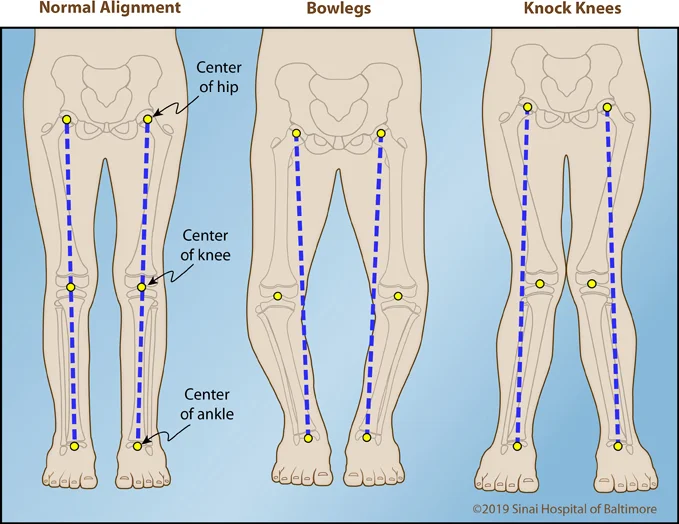
Bowlegged- knockneed
Joint effusion- moved from one area of the joint to the other
Osteoarthritis symptoms
Joint pain after movement- stiffness, pain gets worse as day goes on
Tenderness, loss of flexibilty
Bouchards nodes and herberdens nodes

Crepitus- grating sound when using joint
OA risk factors
Age
Women
Obesity
Joint injuries
Genetics
Bone mass
OA Diagnostic tests
Bone scan
CT/MRI- osteophytes detected
X-Ray are joints narrowing
OA Interventions
ROM exercises
OT/PT
Immobilize affected joint with brace during inflammation
Educate on maintaining appropriate weight
Use moist heat for joint tenderness
Cold therapy for inflammation and pain
Admin prescribed drug therapy
OA Complications
Chronic pain- decreased mobility, joint deformity, falls, joint instability, muscle weakness and atrophy, disability, depression and social isolation, sleep disturbances
These people need to maintain quality of life and minimize disability- wear and tear disease
OA vs RA Patho

OA vs RA complications and manifestations

OA vs RA tests and treatment- non pharm

OA vs RA meds and treatment complications

Obviously RA is going to need immunosuppression drugs as well as anti inflammatory
OA isn’t necessarily going to need the same thing- right think patho and why these must be different OA= mechanical breakdown of the joint- bone spurs- affects one side usually- not a given that it won’t affect the other- more topical treatments because it is not a systemic issue.