NU 352 - E4 - PP3 (TBL) Cancer Pain Management
 Call Kai
 Learn
 Practice Test
 Spaced Repetition
 Match
 Flashcards
 Knowt Play
1/8

There's no tags or description
Looks like no tags are added yet.
9 Terms
Cancer Pain Management: Goal
Ensure adequate and continuous relief of pain.
Maintain functional ability and participation in daily life.
Improve overall quality of life throughout treatment and survivorship.
Pain relief should be proactive, scheduled, and patient-reported
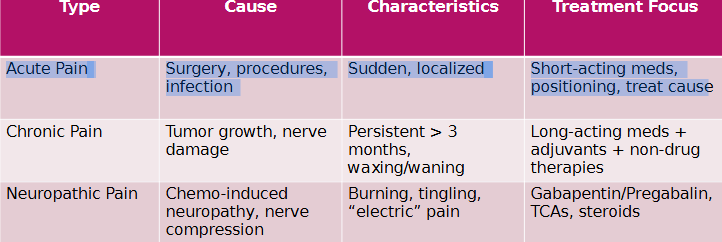
Understanding Cancer Pain
Sources of cancer pain:
o Tumor pressing on tissues/nerves
o Treatment-related (chemo, radiation, surgery)
o Emotional stress or anxiety related to illness
Pain affects more than the body:
o Can interfere with sleep, eating, movement, mood, and feeling safe/supported
Your role as a nurse:
o Assess and treat pain consistently
o Advocate for adequate pain control (no stigma or judgment)
o Support patients who may hesitate to report pain (fear of addition, burdening others
Pain Assessment
Use consistent pain scales (0-10 or Wong-Baker)
-Ask about:
Location, intensity, quality
What worsens or relieves pain
Impact on sleep, mood, function
Previous pain control strategies
-Assess for breakthrough pain (pain despite scheduled meds)
-Reassess 30-60 mins after intervention
First-Line Medications
*We start with non-opioids for mild-moderate pain. These medications often stay in the plan even when opioids are added, because they help reduce the total amount of opioid needed
-Non-Opioid Analgesics (for mild-moderate pain)
Used as the starting point in cancer pain, often combined with opioids for stronger pain control.
-Acetaminophen (Tylenol):
Good baseline analgesic + antipyretic
Max dose: 4 g/day (watch combination meds like Percocet!)
Monitor liver function (AST/ALT), especially in patients with:
Alcohol use
Liver metastases
Malnutrition
-NSAIDs (Ibuprofen, Naproxen, Ketorolac):
Decrease inflammation, helpful in bone pain
Monitor kidney function (BUN/Cr), especially if: Dehydrated or already receiving chemo affecting kidneys
Risk of GI bleeding or ulcers -> consider PPIs for protection
Opioid Analgesics
Used for moderate-severe cancer pain (often scheduled + PRN for breakthrough
Always check for co-prescription bowel regiment (Senna or Docusate) to prevent opioid-induced constipation

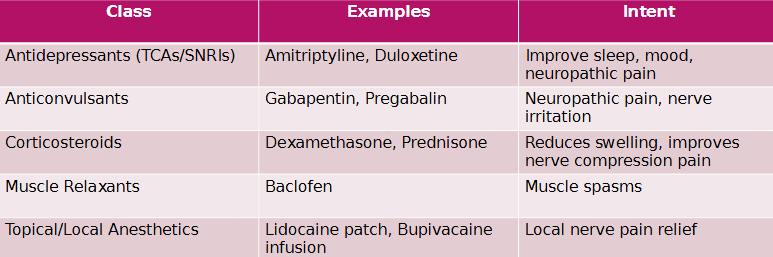
Adjuvant Pharmacology
Used when pain has neuropathic or inflammatory features.
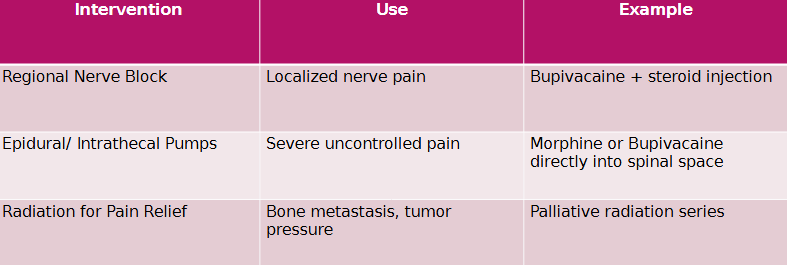
Interventional Pain Management
-Sometimes necessary when oral meds are insufficient.
-Often coordinated through Palliative Care/ Pain Specialists.
Non-Pharmacologic Interventions
Encourage patient-controlled supportive measures:
Heat/cold therapy (avoid on radiation-treated skin)
Repositioning & support pillows
Massage therapy & gentle stretching
Guided imagery & relaxation breathing
Musci therapy/ spiritual support
Emotional Counseling or Support Group
Nursing Responsibilities
- Believe and validate the patient’s pain report.
-Advocate for adequate pain control without stigma or judgment.
-Monitor for opioid side effects:
Respiratory depression
Sedation
Constipation
Nausea
-Educate:
Pain relief should be scheduled, not only PRN.
Safe medication storage at home.
When to notify provider (e.g., uncontrolled pain, new numbness).
-Collaborate with Palliative Care Early – if pain is difficult to manage, do not wait until end-of life.