ASU bio 201 lab brain and cranial nerves
 Call Kai
 Learn
 Practice Test
 Spaced Repetition
 Match
 Flashcards
 Knowt Play
1/41

There's no tags or description
Looks like no tags are added yet.
42 Terms
frontal lobe (part of cerebrum)
responsible for voluntary motor functions, motivation, foresight, planning, memory, mood, social judgement and aggression.

parietal lobe (part of cerebrum)
primary site for receiving and interpreting signals of the general senses and taste

occipital lobe (part of cerebrum)
visual processing center of the brain

temporal bone (part of cerebrum)
responsible for hearing, equilibrium, smell, learning, memory and some aspects of emotion.

central sulci (part of cerebrum)
divides frontal and parietal lobes
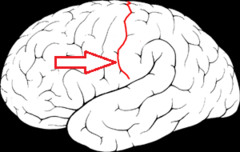
lateral sulci (part of cerebrum)
separates temporal and parietal lobe (sideways division)
cerebral cortex (part of cerebrum)
surface layer over the cerebrum and cerebellum
longitudinal fissure(part of cerebrum)
separates the right and left hemispheres *deep

transverse fissure (part of cerebrum)
separates the cerebellum and the occipital lobe

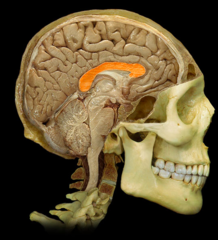
carpus callosum (part of cerebrum)
connects the right and left hemispheres
lateral ventricle brain

third ventricle

fourth ventricle
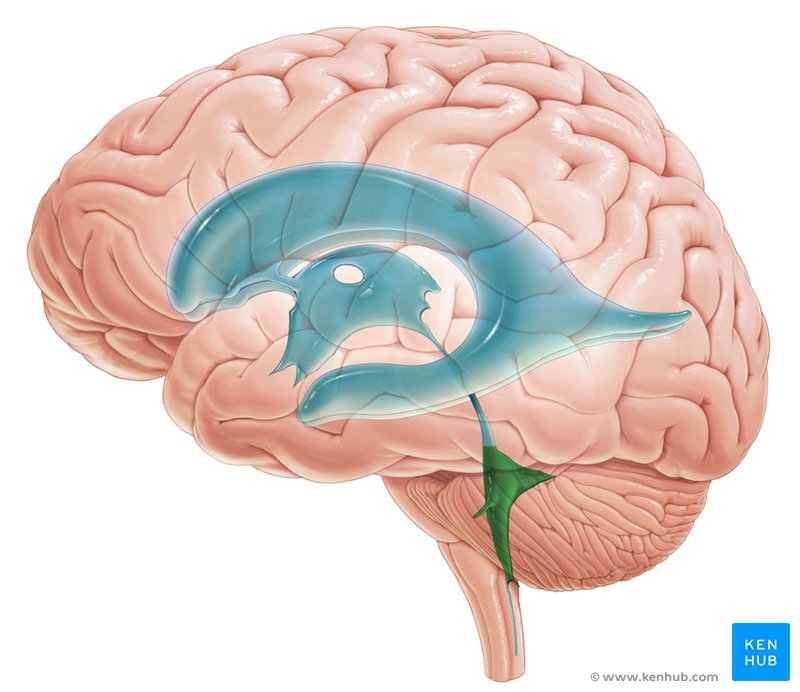
cerebral aqueduct
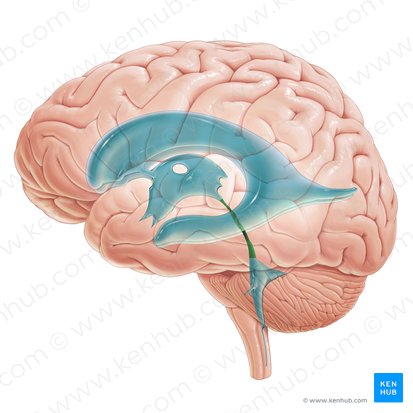
central canal
below the 4th ventricle

meninges
1. dura mater
2. arachnoid mater
3. pia mater

thalamus (part of deincephalon)
relay center for sensory info

hypothalamus
major control center for regulation of homeostatic responses such as hormone secretion, autonomic effect, thermoregulation, and food/water intake

infundibulum
connects the hypothalamus to the pituitary gland

pituitary gland
works with the hypothalamus to release/secrete hormones

mammillary body
relay center for long term memory

pineal gland
regulates circadian rhythm, makes melatonin from seratonin

arbor vitae (only structure in cerebellum)
brings sensory motor into to and from the cerebellum
involved in fine motor skills
synchronizes muscular actions
-timekeeping

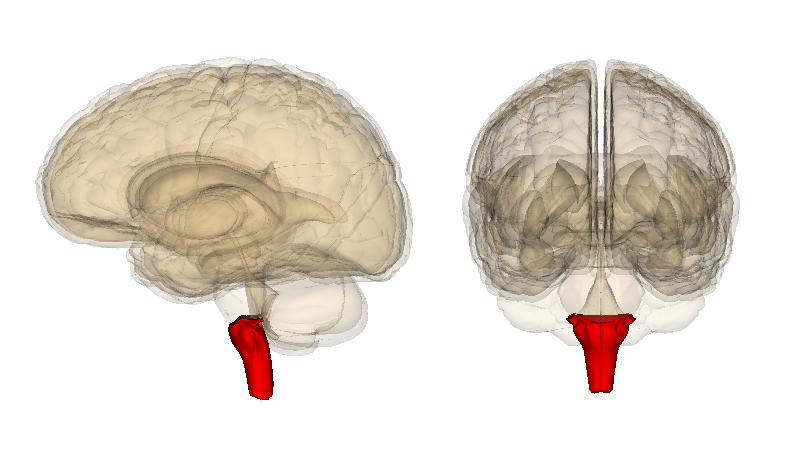
medulla oblongata (part of brain stem)
connects spinal cord to pons)
all fibers that connect to brain pass thru here
neural networks involved in important sensory and motor functions
corpora quadrigemina (part of brain stem)
four rounded eminences located on the tectum (dorsal aspect) of the midbrain. They play a vital role in processing automatic sensory reflexes.

midbrain (part of brain stem)
connects diencephalon to the pons

pons (part of brain stem)
connects brain stem to cerebellum and has ascending sensory tracts and descending motor tracts

1. olfactory
- sensory
- smell
- if damaged= impaired smell

olfactory bulb

2. optic nerve
-sensory
-vision
-if damaged= blindness

optic chiasm

3. oculomotor nerve
-motor
- eye movement., opening of eye and pupil constriction
- if damaged = drooping eyelid, dilated pupil, inability to move eye in some directions

4. trochlear nerve
-motor
-eye movement (superior oblique muscle)
- damage = weakened ability to look downward

5. trigeminal nerve
- two sensory division and one mixed
- sensory(face) and motor (muscles of mastication)
damage = loss of facial sensation and impaired chewing

6. abducens nerve
-motor
- lateral movement of eye
-damage = inability to turn eye laterally

7. facial nerve
-mixed
- sensory (taste on anterior 2/3 of tongue)
-motor (several facial and neck muscles and glands)
-damage = inability to control facial muscles and impaired sense of taste

8. vestibulocochlear nerve
-sensory
-hearing and balance
damage = deafness and impaired balance

9 glossopharyngeal nerve
-mixed composition
-sensory (taste, touch, pressure, pain and temp, of posterior 1/3 of tongue)
-motor (salivation, swallowing and gagging)
-damage = loss of taste and impaired swallowing

10 vagus nerve
- mixed composition
-sensory (taste, hunger and fullness)
-motor (swallowing, speech, and regulation of heart and gi tract)
-damage =impaired swallowing and GI motility, fatality if both vagus nerves are damaged

11 accessory nerve
-motor composition
- swallowing. head, neck, and shoulder movements
-damage = impaired movement of head, neck and shoulder

12 hypoglossal nerve
- motor composition
- tongue movements for speech, food manipulation and swallowing
-damage = impaired tongue movements for speech and swallowing

fornix of the diencephalon
