TERMINOLOGY - Test #2
 Call Kai
 Learn
 Practice Test
 Spaced Repetition
 Match
 Flashcards
 Knowt Play
1/51

There's no tags or description
Looks like no tags are added yet.
52 Terms
Moving towards root tip
Apically

Moving around root tip
Per-Apical
Where the root and crown meet
Neck / Cervical Region

Moving towards the crown
Coronally

Surface of tooth towards the lips (canines n incisors)
Labial
Surface of tooth towards cheeks (molars and premolars)
Buccal
Outside surface of tooth (is interchangeable w labial or buccal as its a combination)
Vestibular
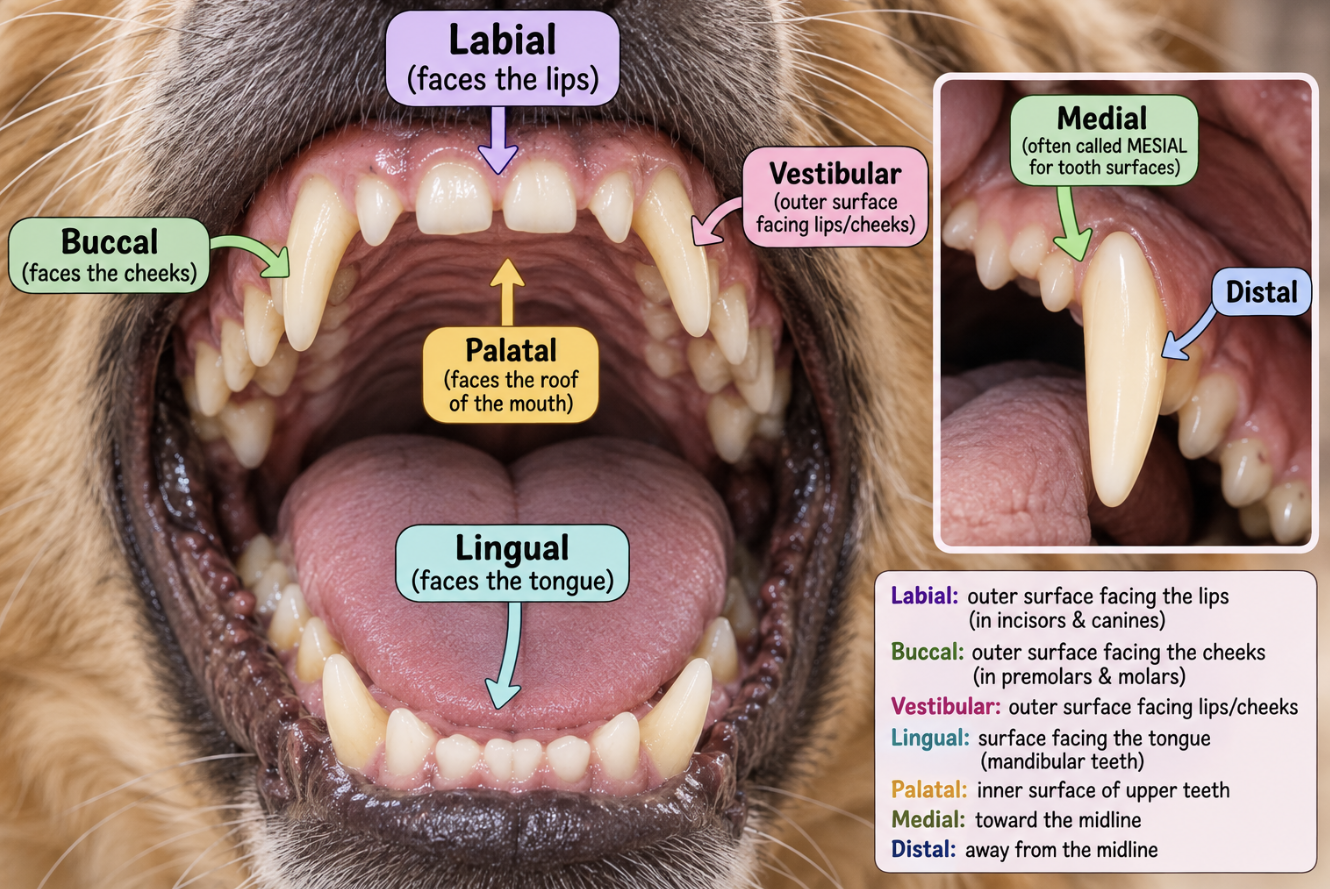
surface of tooth towards tongue (bottom jaw)
Lingual
surface of tooth towards palate (top jaw)
Palatal
The surface of the tooth closest to the tooth behind (moving away from nose)
Distal

The surface of the tooth closest to the tooth in front (moving towards nose)
Mesial

area where root join together (ONLY in a multirooted tooth)
Furcation

The portion of the tooth above the gums line that is covered w enamel
Crown
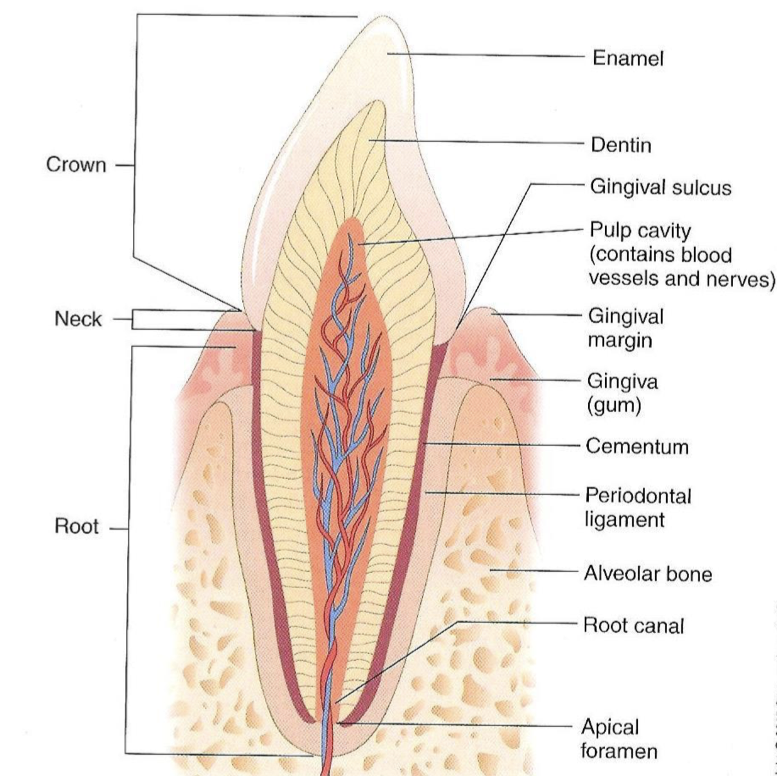
The portion of the tooth below the gum line that is covered w cementum
Root

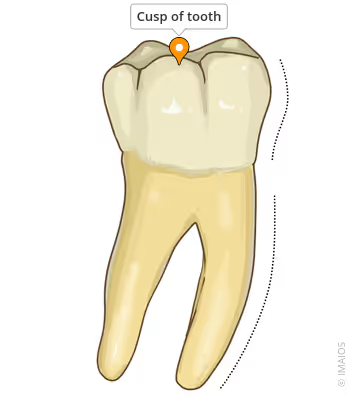
tip of the crown
Cusp
bottom of root
Apex
covers crown
hardest substance in the body
made of crystals arranged in prisms
acellular (non-living); no sensory capacity
formation stops b4 tooth eruption
can’t regenerate once lost (non-regenerative)
has NO flexibility so not ideal if entire tooth was it (would break)
Enamel

What are the diff thicknesses of enamel btw cats n dogs?
dog: 0.1 - 0.6mm
cat: 0.1 - 0.3mm
Makes up bulk of tooth
Hard as bone but softer than enamel
Bone-like material made 72% mineral, 18% collagen (4 flexibility), 10% water
Living tissue w sensory capacity (feels pain)
Produced throughout life of tooth
Arranged in tubules running from enamel to pulp
Dentin

What are the 3 types of dentin?
Primary
Normal Secondary
Irregular Secondary / Tertiary
What type of dentin is formed prior to tooth eruption w the enamel?
Primary Dentin
What type of dentin is continuously formed after the tooth erupts and causes a gradual reduction in the size of the pulp chamber as it is produced?
Normal Secondary Dentin
What type of dentin is formed in areas exposed to injury? Will be darker in colour, have no nerve fibres, fewer tubules, and a distorted collagen pattern.
Irregular Secondary Dentin / Tertiary Dentin

T or F - Pulp chambers decrease in size w age
True
What is the difference btw tertiary dentin vs debris?

What is the name of the ONLY place the ligament attaches to?
Cementum

Bone-like (calcified connective) tissue that covers the root of the tooth
Provides attachment for the periodontal ligament (PDL)
Thickening at the root tip (apex) can occur from trauma or pulp irritation, making extraction difficult
If lost, the PDL can’t attach properly, potentially causing a deep periodontal pocket
Cementum

What are the 2 diff types of cementum?
primary - acellular
secondary - cellular
What type of cementum covers the cervical 2/3 of the root and forms prior to tooth eruption?
Primary cementum
What type of cementum is around the apical 3rd and is formed after tooth erupts continuing throughout life increasing in thickness as patient ages?
Secondary cementum
What is the fusion of cementum and the surrounding bone called which obliterates the periodontal ligament?
Ankylosis
What are 3 ways ankylosis can occur?
excessive occlusal trauma (too much bitting pressure)
chronic periapical irritation
post tooth re implantation
Located in the crown (coronal) or root (root)
Is loose connective tissue containing blood vessels and nerve fibers
Enters through tiny openings @ root tip, collectively called apical delta
Pulp

Cavity inside the crown that contains the pulp
Has pulp horns that correspond to the shape of the tooth cusps
DECREASES in size w age as secondary dentin forms
Pulp Chamber

Alveolar Bone

Alveolar Crest
Lamina Dura
Apical Delta
Apical Foramen

Epithial Attachment
Gingiva

Free/marginal gingiva
Free gingival margin
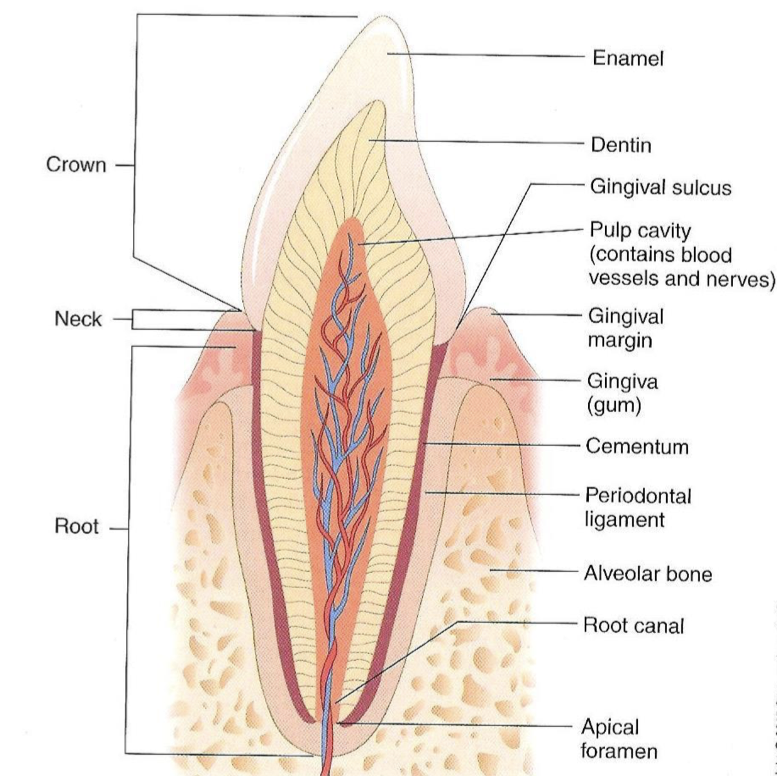
Attached gingiva
Interdental gingiva
Gingival sulcus

Periodontal ligament

What are the vital functions of the periodontal ligament?
Cento-enamel junction
Alveolar mucosa
Muco-gingival line