A&P lab (week 7)
 Call Kai
 Learn
 Practice Test
 Spaced Repetition
 Match
 Flashcards
 Knowt Play
1/63

There's no tags or description
Looks like no tags are added yet.
64 Terms
Articulation
point at which two or more bones meet
Ligament
connects bone to bone
Tendon
connects muscle to bone
What are the three joint classifications according to movement?
synarthrotic
allows no movement
amphiarthrotic
allows some movement
diarthrotic
freely moveable
What are the classifications of joints according to how they connect?
bony
fibrous
cartilaginous
synovial
Bony joint
immovable
contain two or more bones fused together
location: mandible, frontal bone, sternum, sacrum, coxa
Fibrous joints
immovable or slightly mobile
contain collagen fibers
ex. 3 types
Sutures
fibrous joint
immovable joint located in the skull

Gomphoses
fibrous joint
immovable joint binding teeth to mandible and maxillae
ex. held in place by periodontal ligament
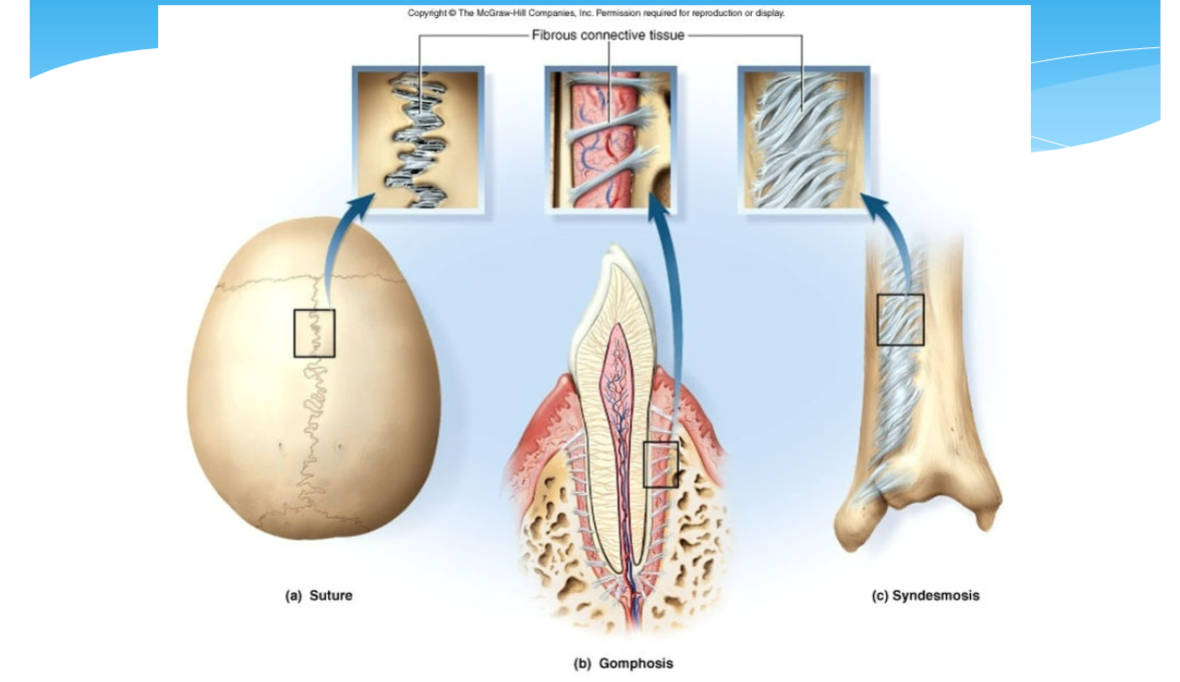
Syndesmosis
fibrous joint
slightly moveable joint connecting radius-to-ulna and tibia-to-fibula
ex. held in place by interosseous membrane

Cartilaginous joints
immovable and slightly mobile
held together by cartilage
ex. 2 types

Synchondrosis
cartilaginous joint
immovable joint composed of hyaline cartilage
found within epiphyseal plates and rib 1-sternum
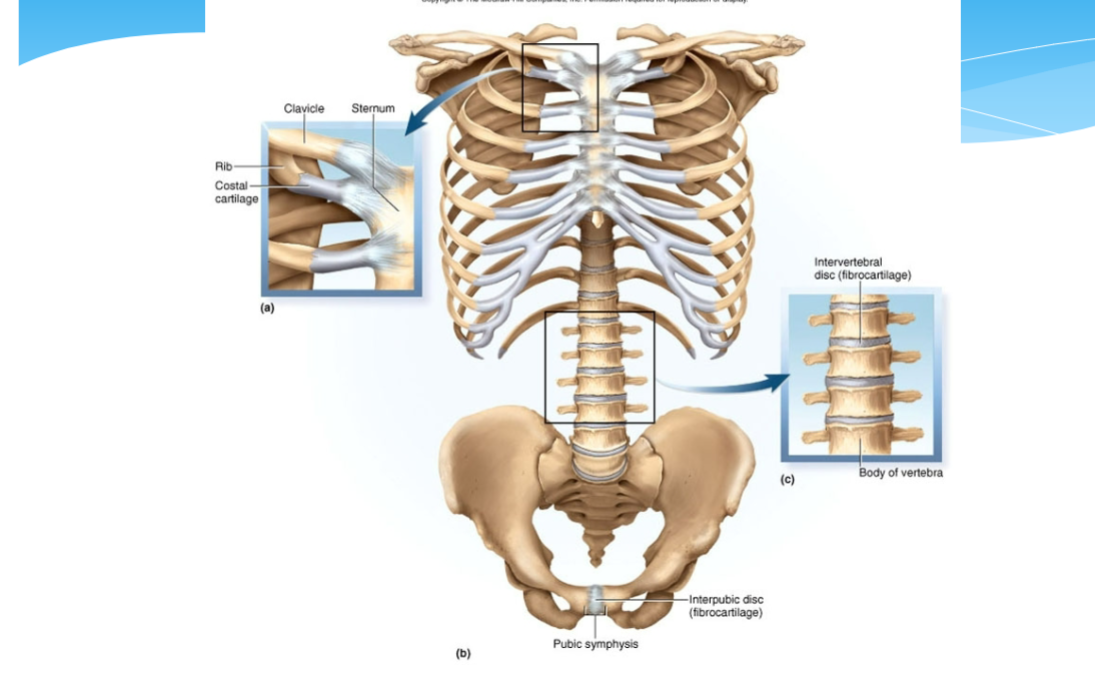
Symphyses
cartilaginous joint
slightly moveable joint composed of fibrocartilage
found within the pubic symphysis and intervertebral discs
Synovial joints
freely moveable joints
held together by a joint capsule
ex. most complex
What are the two layers of the joint capsule?
outer fibrous capsule
inner synovial membrane (secretes synovial fluid)

Which type of cartilage lines the ends of bones within the joint capsule?
articular cartilage (hyaline)
Bursae
sacs of synovial fluids
function: reduce friction between surfaces
Menisci
located within the knee
pads of fibrocartilage
function: keep the bones aligned
What are the synovial joint supported by?
tendons
ligaments
ex. both composed of dense regular connective tissue

Elbow
What are the three joints of the elbow?
humerus to ulna
humerus to radius
radius to ulna
ex. two hinge and one pivot
Humerus to ulna joint
Hinge joint

Ulnar collateral ligament
fibers straight up and down
connects humerus to ulna


Radial collateral ligament
connects humerus to radius


Annular ligament
fibers arranged horizontally
connects radius to ulna

Humerus to ulna
hinge joint
Radius to ulna
pivot joint

Shoulder joint
ex. most freely moveable
What type of joint is the shoulder joint?
ball and socket joint
ball is head of humerus
socket is glenoid cavity
What is the most freely moveable joint?
the shoulder

What are the four tendons of the rotator cuff?
supraspinatus
superior
infraspinatus
inferior
teres minor
within armpit
subscapularis
anterior

What is the function of a labrum?
increases depth
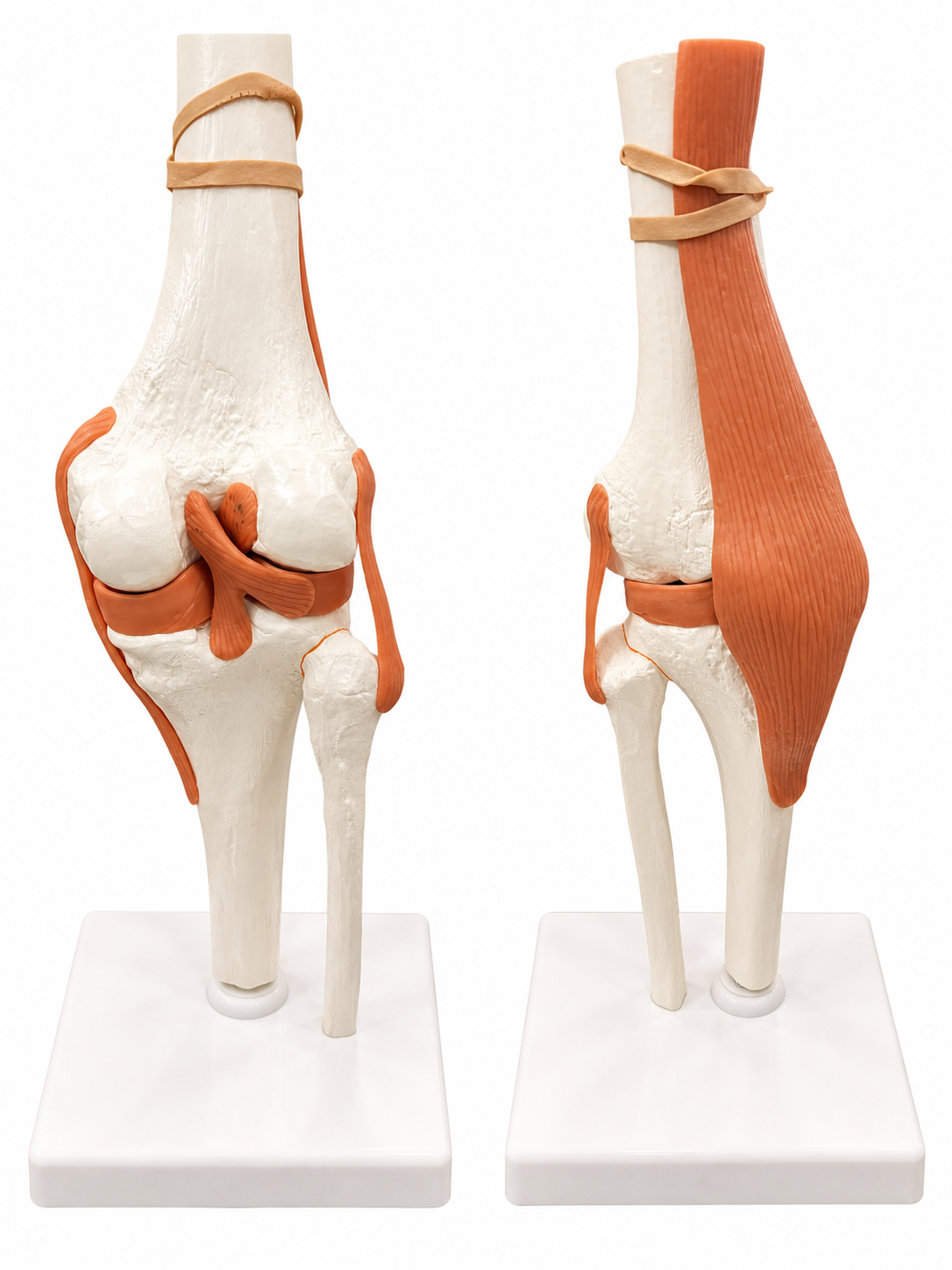
Knee
What is the most complex and stressed joint?
the knee
What are the two joints of the knee?
tibia to femur
patella to femur
Tibia to femur
hinge joint
Patella to femur
plane joint
What are the four major ligaments of the knee?
medial collateral ligament (tibial)
lateral collateral ligament (fibular)
anterior cruciate ligament
posterior cruciate ligament

Anterior cruciate ligament (ACL)
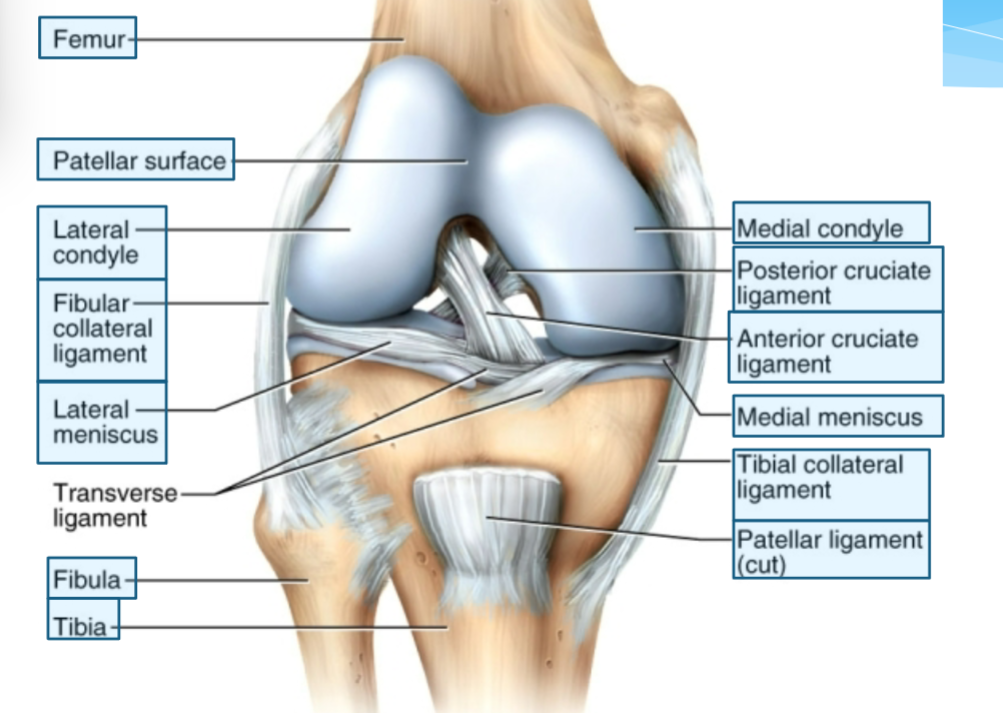

Posterior cruciate ligament
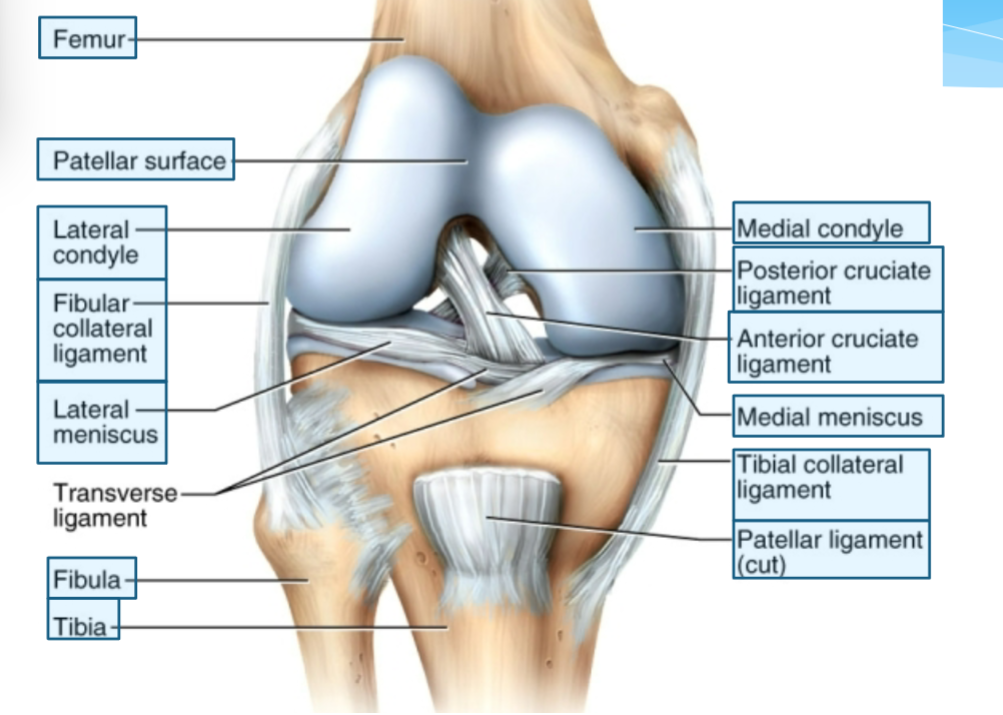

Tibial collateral ligament (MCL)


Fibular collateral ligament (LCL)


Patellar ligament
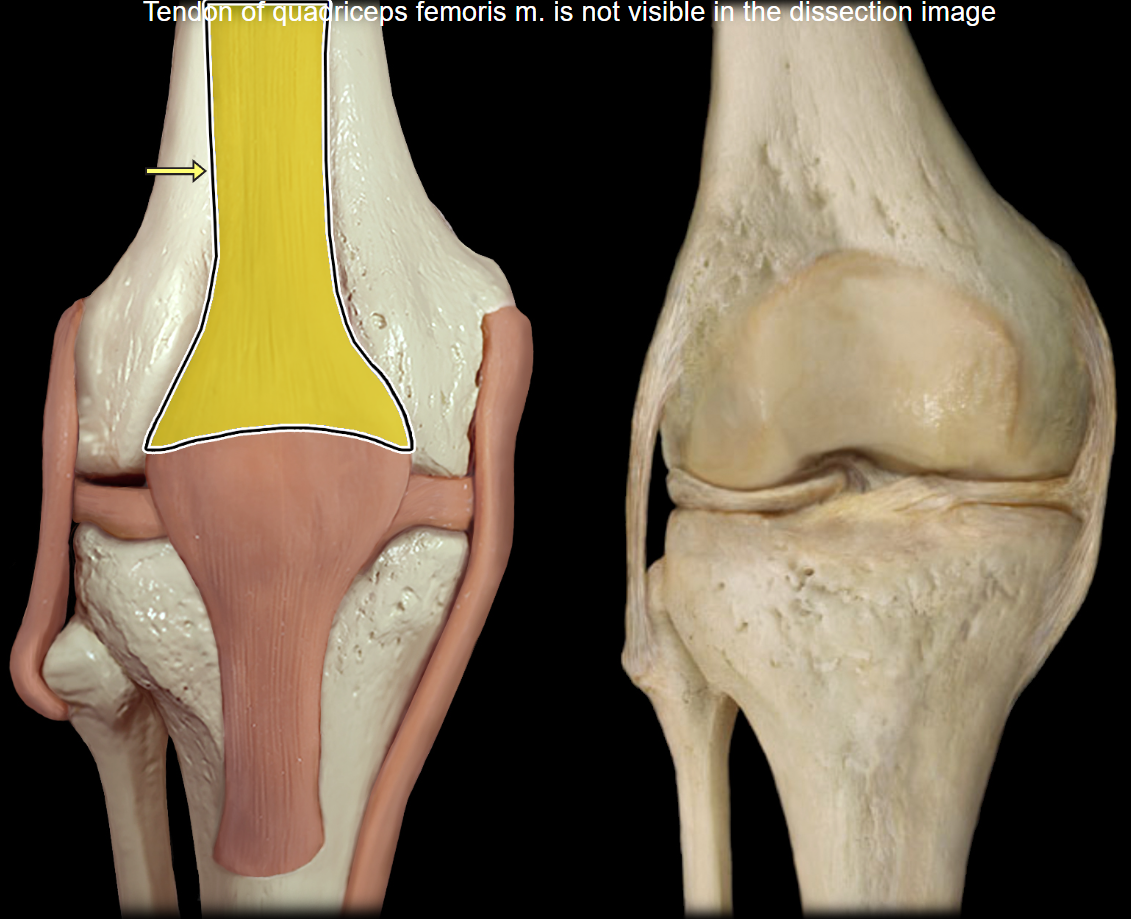
Quadriceps femoris tendon
ex. connects quadriceps muscles to patella

Medial meniscus

Lateral meniscus
Meniscus
pads of fibrocartilage cushioning joints and keeping bones aligned

Hips
What is the hips type of joint?
ball and socket joint
ball is head of femur
head is acetabulum of coxa
What are the three major ligaments of the hip?
iliofemoral
pubofemoral
ischiofemoral

Iliofemoral ligament
ilium to femur


Pubofemoral ligament
pubis to femur

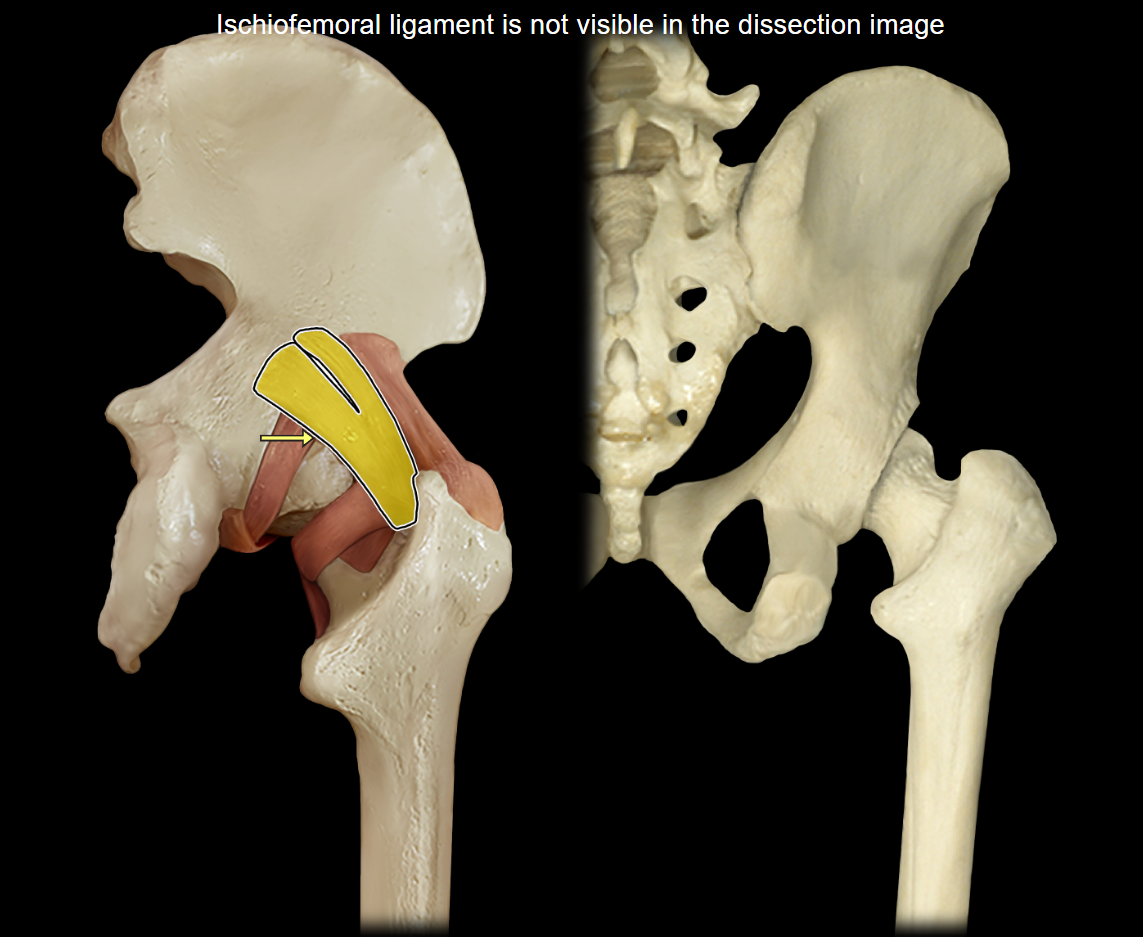
Ischiofemoral ligament
ischium to femur

Round ligament
part of hip joint
attaches acetabulum to head of femur
Flexion vs. extension
flexion decreases angle
extension maintains anatomical angle

Hyperextension
movement past or behind anatomical position

Abduction vs. adduction
abduction moves away from midline
adduction moves towards midline

Rotation vs. circumduction
rotation moves the joint
circumduction keeps joint stable and moves body part

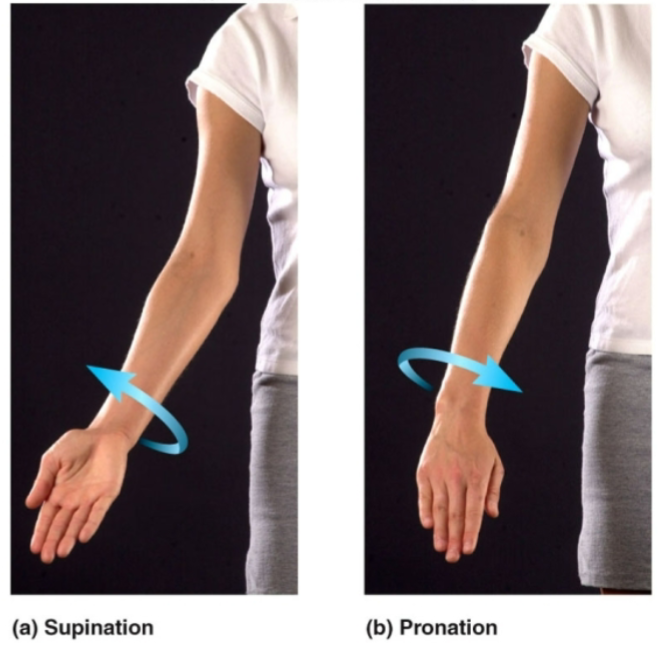
Supination vs. pronation
refers to hands and forearms
supination is anatomical position
pronation is reverse of anatomical position
Protraction vs. retraction
protraction brings body forward
retraction brings body backward

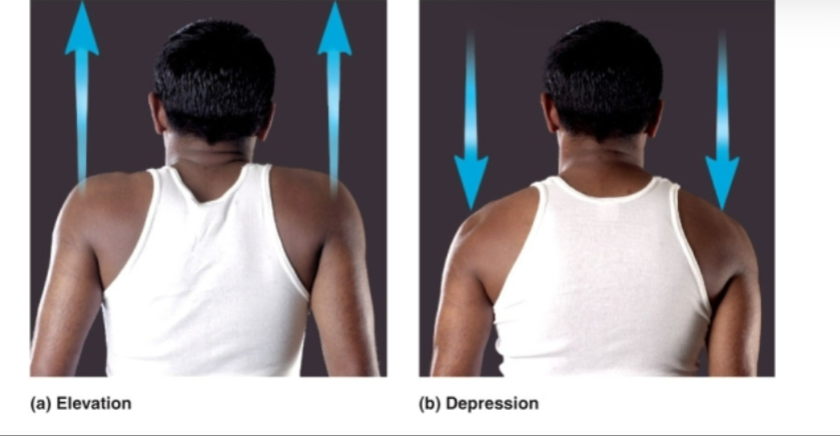
Elevation vs. depression
elevation moves body up
depression moves body downward
Inversion vs. eversion
refers to ankles and feet
inversion moves soles together
eversion moves soles apart

Dorsiflexion vs. plantar flexion
refers to ankles and feet
dorsiflexion moves toes upward
plantar flexion standing on tiptoes

How is the tendon of the biceps brachii located?
the tendon enters into the glenoid cavity and supports the joint anteriorly