Intro to Disaster Preparedness
 Call Kai
 Learn
 Practice Test
 Spaced Repetition
 Match
 Flashcards
 Knowt Play
1/13

There's no tags or description
Looks like no tags are added yet.
14 Terms

characteristics of a disaster
Natural or human-made incident causing disruption, destruction, or devastation
• Causes hardships for community
• Threaten health and safety
• Can overwhelm resources
Complex emergency – multifaceted humanitarian crisis with breakdown of authority → internal or external conflict requiring international response
Casualties
Number of human beings injured or killed by or as a direct result of an incident
Multiple-casualty incident: >2 but <100
Mass-casualty incident: >100
Scope
Range of its effect, either geographically or in terms of the number of victims
Intensity
The level of destruction and devastation it causes
Types of Disasters
Natural
• Hurricane
• Tornadoes
• Blizzards
• Mudslides
• Pandemics/Epidemics
• Tsunamis
• Blizzards
• Avalanches
• Drought
• Wildfire
• Heat Wave
• Volcanic Eruption
Human-Made
• Conventional Warfare
• Chemical Warfare
• Transportation Accidents
• Hazardous Material Spills
• Civil Unrest/Riots
• Terrorism/Bioterrorism
• Plane Crash
• Nuclear Plant Explosion
• Mass Transit Accidents
• Pollution
Disasters impact
Individual impact
Physical and Emotional Impact
Injury or loss of life
Trauma, anxiety, depression
Loss of home or belongings
Economic and Social Effects
Loss of income/employment
Displacement
Breakdown of social networks
Family Impact
Family Disruption
Separation due to evacuation or injury
Strain on relationships
Increased caregiving needs
Long-Term Recovery Challenges
Financial burden
Need for relocation or rebuilding
Education disruption for children
Community Impact
Infrastructure and Services
Damage to: Roads, hospitals, schools
Power, water, and communication systems
Slower emergency response times
Economic and Social Resilience
Business closures
Community displacement
Need for public health and aid support
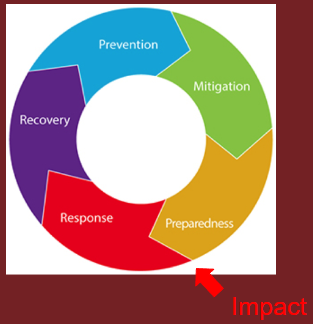
The disaster management cycle and nursing role
prevention
mitigation
preparedness
response
recovery

Prevention & Mitigation
Prevention
Identify risks
Risk and resource maps
Assess vulnerabilities
Educate public on actions to take during a disaster
Community disaster plan
Actions taken when a disaster cannot be prevented
Construction of dams and levees
Disaster drills and simulations
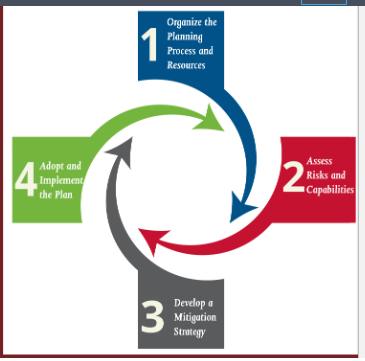
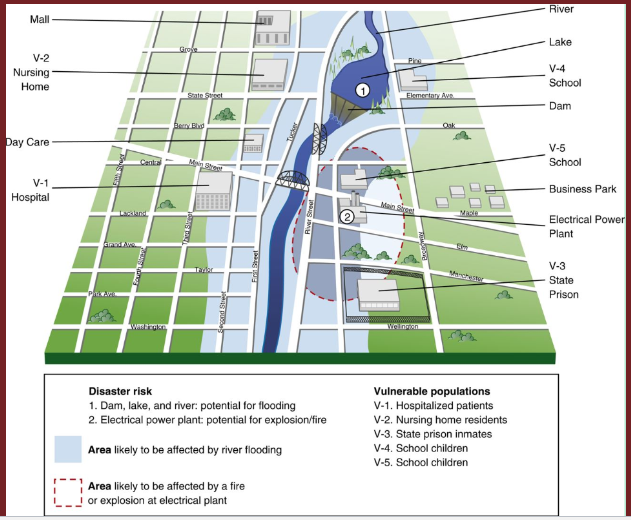
Prevention stage: risk & resources
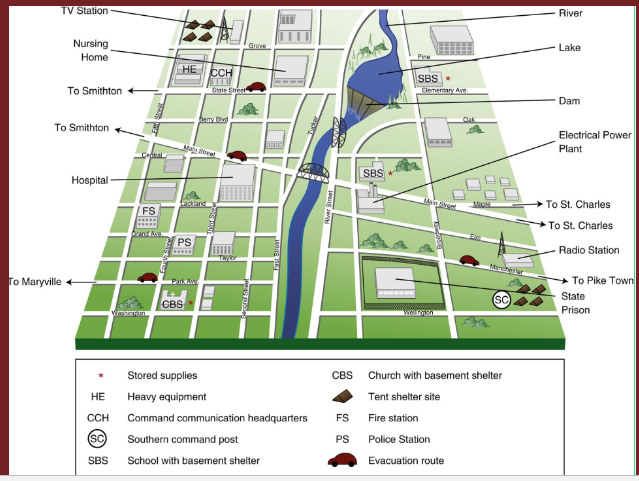

Preparedness
Developing personal, work, and family disaster plans
Identifying community evacuation routes
Identifying emergency shelter locations
Developing a communication chain
Performing regular drills
Stockpiling food, water, medication, and first-aid supplies
Making sure pet care is included (FEMA)
Response & recovery
Response
First steps
Determine whether state has sufficient resources to respond.
If not, request aid from federal government.
Activate disaster plan
Providing triage and ongoing care to victims
Establishing disease surveillance if an outbreak or bioterrorism is suspected
Evaluating any other public health needs that may arise
Recovery
Begins when threat no longer exists
Longest and most difficult stage
Reunification
Rebuilding structures
Resuming activities (if possible)
Establishing a “new normal”
Referring workers and victims to mental health services
Federal assistance, gradually back to local assistance

Triage
Utilitarian approach
“Do the greatest amount of good for the greatest amount of people while efficiently using resources” (Wagner et al., 2015 p. 305).
Two possible methods
Simple Triage and Rapid Treatment (START)
JumpSTART for pediatrics
Sort, Assess, Lifesaving Interventions, Treatment/Transport (SALT)
Role of PHN in disaster recovery
Role of PHN
Ongoing community assessment
Physiological and psychosocial care
Assist in reunification
Referrals to mental health services
Promote community resilience
Disaster prep coordination
Preparedness
risk assessment, planning, drillls, MOUs
Hospital, public health, EMS, NGOs
Response
ICS, surge capacity, HCCs, public messaging
EMS, emergency management, healthcare
Recovery
COOP, mental health, rebuilding, data sharing
social services, healthcare, CDC, FEMA
Nurse Firsthand Accounts
Crisis management: Rapid assessment and triage, evacuation coordination, and care in austere conditions
Emotional support
Bearing witness: Documenting and sharing the impact of disaster
F I R S T H A N D A C C O U N T S
Peterson Regional MC in Kerrville on night of July 3 got flash flood warning and called disaster preparedness team, prepped ER
Southwest Texas Regional Advisory Council mobilized and helped divert unnecessary ER traffic to prioritize flood victims, trauma sent to SA
Hospital EO activated at 6:30 am
Furnished medical supplies with Texas State EOC
Gave care kits, Hep A and Tdap to responders in contaminated water
Response & Recovery
SNAP benefit replacement foods and approval of Hot Foods
WIC and formula replacement
Texas HHS Emotional Support Line
FEMA housing, medical, dental, storage, child care, funeral expenses
Medicaid early prescription refill
Texas Emergency Medical Task Force
• Over 43,000 patient encounters
• Activated 0545 from San Antonio (ambulance, AMBUS, incident support team)
student nurse emergency backpack
