NRS 423 Lecture Exam 1
 Call Kai
 Learn
Learn Practice Test
 Spaced Repetition
 Match
Match Flashcards
 Knowt Play
1/83

There's no tags or description
Looks like no tags are added yet.
Name | Mastery | Learn | Test | Matching | Spaced | Call with Kai | Chat |
|---|
No analytics yet
Send a link to your students to track their progress
84 Terms
3 important characteristics of a wetland
hydrology (inundation/saturation), hydric soils, biota
hydric soils
soils formed under saturated conditions
wetland definition
Wetlands are lands where saturation
with water is the dominant factor
determining the nature of soil
development and the types of plant
and animal communities living in the
soil and on its surface (Cowardin 1979).
legal wetland definition
Those areas that are inundated or
saturated by surface or groundwater at a
frequency and duration sufficient to support,
and that under normal circumstances do
support, a prevalence of vegetation
typically adapted for life in saturated soil
conditions. Wetlands generally include
swamps, marshes, bogs and similar areas.
(US ACOE 2012)
freshwater marshes
dominated by non-woody vegetation, emergent plants, mineral soils
freshwater swamps
dominated by woody vegetation, mineral to mucky soils
forested swamps
acidic to neutral water
shrub swamps
short + tall shrubs, dense vegetation
vernal pools
ephemeral (<12 months) hydroperiod
wet meadows
step in wetland succession, maintained by animals or land use practices
bogs
peat accumulation, acidic conditions, sphagnum, no significant inflow or outflow of water
fens
peat accumulation, acidic conditions, emergent vegetation, drainage from mineral soils
coastal salt ponds
periodic breaching, sandy shoreline
tidal salt marsh
tidal flow, impacted by humans
factors responsible for wetlands
hydrology, climate, biota, physiological environment, geomorphology, time

main drivers of wetland ecology
climate: monthly and annual precip
geomorphology: duration of water storage, where water forms on landscape, quality + quantity of habitat for biota. steep=fewer wetlands
hydrology importance
influences biochemistry of soils, most important factor controlling formation and maintenance of wetland types and processes
hydroperiod
portion of the year a wetland is inundated or saturated
wetland water budget
hydroperiod results from balance of water inputs and outputs, topography, subsurface soil, geology, groundwater
precip+ surface inflows + groundwater inflows - evapotranspiration - surface outflows - groundwater outflows +_ tides
wetlands most common
in areas where precip exceeds evapotranspiration rates
recharge
wetland has connection at some point in year with groundwater
when surface water of wetland is higher than water table
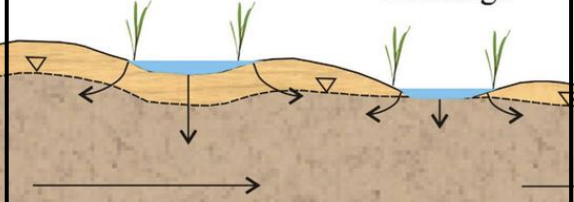
perched
wetland has no connection with groundwater
discharge
surface water of wetland is lower than water table

evapotranspiration
Water that evaporates from water/soil in
a wetland + moisture that is transpired
by vascular plants to atmosphere
hydrology impact on physiochemical environment
transport of sediments, nutrients, and toxins (in and out)
biotic controls on hydrology
plants: peat accretion, sediment storage, nutrient retention
animals: beavers, muskrats, geese, alligators
hydrophytic vegetation
plants that can survive and grow in wetlands
deficiency in soil oxygen
limited plant growth by respiration, water + mineral uptake, photosynthesis, unstable substrate for root attachment
morphological plant adaptations
buttressed stems, lenticels, hollow stems, shallow roots
buttressed stems
flared stems, improve gas exchange, mechanical support

hollow stems
increase aeration to roots
hypertrophied lenticels
enlarged lenticels, open pores that allow continuous gas exchange, improve gas exchange

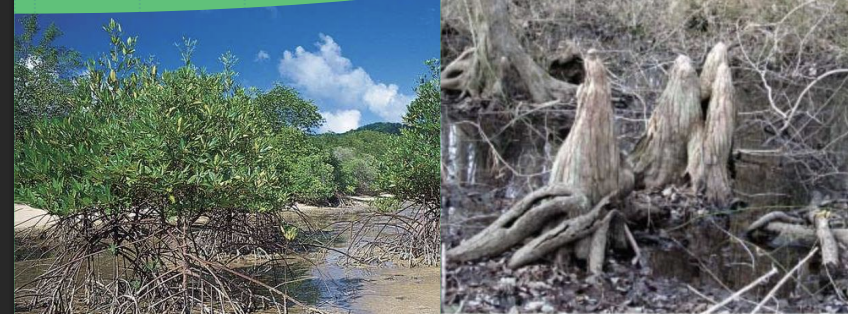
pneumatophores
aeration organs on roots extend out of water, “knees”
shallow root systems
low oxygen levels and high water tables influence root growth, roots cannot survive in anoxic conditions

marine
open ocean over continental shelf
estuarine
deepwater tidal habitats and tidal wetlands
rivertine
wetlands contained within a channel unless dominated by vegetation or deepwater with higher salinity
lacustrine
wetlands in topographic depression with less than 30% vegetative cover, greater than 8 hectares in size
palustrine
non-tidal wetlands with greater than 30% vegetation, less than 8 hectares in size, tidal wetlands with low salinity
common wetlands in US
Palustrine (104,274), estuarine (24,333), lactustrine (16,859)
subtidal, intertidalm tidal
substrate exposure, water velocity
lower perennial, upper perennial, intermittent
water velocity and hydroperiod
limnetic and littoral
water depth
classes
describe general appearance of wetland focusing on dominant vegetation and substrate type
class based on
aerial cover
subclasses
further definition to a class
common waterfowl in wetlands
mallard, american black duck, wood duck, mute swans, canada geese
wood duck
near extinction late 1800s, 1918 wood duck box installments increased popualations, found in variety of wetlands
mute swan
invasive, use phragmites, increase pollution and contamination
turtles in RI
diamondback terrapin, snapping turtle, eastern musk turtle
frogs and toads
american bullfrog, green frog, wood frog, american toad
eastern spadefoot toad
breed in vernal pools (short hydroperiod), dont breen in unfavorable conditions, endangered
nitrogen and wetlands
N converts NH4 via mineralization in soils
in anaerobic soils NH4 consumed by plants/microbes, immobilized by negatively charged soil particles, or diffuses into aerobic layer
nitrogen in aerobic soils
nitrification converts NH4 to NO3 which is mobile and lost as runoff
NO3 can move to anaerobic soils and denitrify
denitrification
significant path of nitrogen loss in wetlands (not peatlands)
runoff and water quality
nitrogen in runoff leads to negative impacts on human health and ecosystem function
wetlands help reduce nutrient loading
nutrient overload
heavy nutrient loads cause eutrophication: animal die offs, contaminate drinking water
maganese
aerobic soils: mn is oxidized
anaerobic soils: nm is reduced
bog iron
iron carried into peatlands by groundwater, when oxidized it precipitates, smelted for tools and weapons

sulfur
hydrogen sulfide accumulates in hydric soils
high concentrations toxic to plants
carbon
fermentation in anaerobic soils vs aerobic respiration
methanogenesis: pecialized microbes (called methanogens) create methane gas as they break down nutrients
inundation/saturation effect on soil properties
extended periods of inundation affect pedogenesis
inundation fills pore spaces with water instead of air
existing oxygen consumed by microbes creating anaerobic conditions
anaerobic bacteria and prolonged inundation leads to hydric soils
redox ladder

soils definition
A natural body comprised of solids
(minerals and organic matter),
liquids, and gases that occurs on
the land surface, occupies space,
and is characterized by one or
more of the following: horizons, or
layers, that are distinguishable
from the initial material as a result
of additions, losses, transfers,
and transformations of energy or
the ability to support rooted
plant growth
hydric soil definition
Soils that formed under
conditions of saturation,
flooding or ponding long
enough during the growing
season to develop
anaerobic conditions in the
upper part.
hyrdric soil development factors
organisms, topography, parent material, time, climate, human activity
parent material
bedrock or transported material (glacial till + outwash in RI)
climate
humid climates = more water
are climate = less water
topography
depressions retain
slopes drain
time
soil formation ongoing
longer inundation, more frequent inundation
biota
microbes, plants, insects, beavers, muskrats, alligators encourage/impede development
human activities
changes in impervious surface
land clearing and dam building
agriculture
organic soil
dominated by plant material
greasy
stains fingers
porous and squishy
mineral soil
<20-25% organic matter
gritty
no stain
resists compression
O
organic layer, with lots of undecayed organic materials, not usable by plants in soil
A
topsoil: most important layer for plants because of decomposed organic material
E
leached layer, not in some soils
B
subsoil rich in minerals
C
deposited sediments from parent material
R
bedrock level
texture
classified by % sand, silt, clay
hue
dominant color family
value
lightness or darkness
chroma
strength of color