CH 27: Medically Significant Fungi
 Call Kai
 Learn
 Practice Test
 Spaced Repetition
 Match
 Flashcards
 Knowt Play
1/18

There's no tags or description
Looks like no tags are added yet.
19 Terms
Into to fungi
EURKARYOTES
chitinous cell walls
true nucleus and mitochondria
chemoheterotrophs
obtain E and nutrients from environment
prefer moist environment w/ neutral pH
obligate aerobes
spores and conidia can survive for extended lengths time
great for distribution

Mycology terms
yeasts: UNIcellular fungi
molds: MULTIcellular fungi
dimorphic fungi: both yeast and mold stage
mycosis: fungal infx
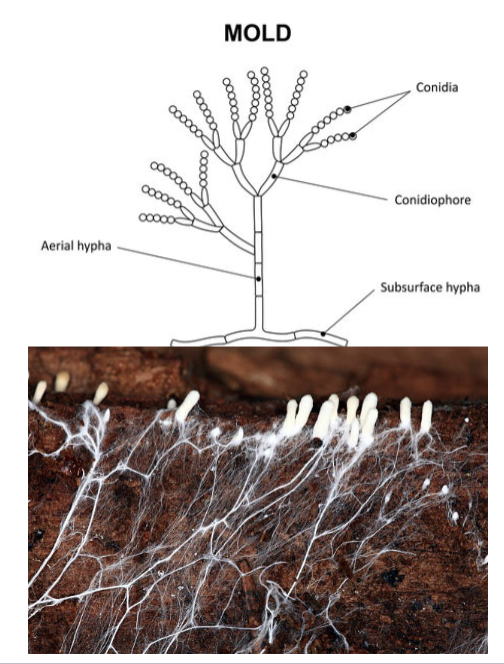
Mold structure
hyphae
long, branching structures that make up body
aerial or subsurface (vegetative)
reproduce asexually or sexually
asex = conidia
sex = spores
conidia, conidiophores, and other reproductive structures are important in identification
conidiophore (stalk) produces conidia (spore)
Mold culture
grow best around room temp (25-30 C)
below body temp → disadvantage
media
Sabouraud-brain heart infusion (SABHI) agar
supportive media for ALL fungi
selective by adding antibiotics
Dermatophyte test medium (DTM)
used to isolate dermatophytes
few days to wks to grow
human immune system kick out
spread easily during reproduction
Yeast structure
SINGE CELLED
no aerial structures
ASEXUAL reproduction
budding
direct contact for infx
pseudohyphae or true hyphae

Yeast culture
22-35 C growth
media
SABHI
Cornmeal agar w/ Tween 80
differentiate Candida species
grow on most standard bacteria media
usually grow more quickly than molds
24-48 hrs
Direct examination
wet preparations
UNSTAINED samples under 40x w/ NO oil
detecting presence of fungi, not ID
urine or vaginal specimens
KOH preparations
addition of KOH to wet preps
removes cellular debris and makes fungus more visible
nail scraping, skin flakes, hair, or thin slices of tissue
Direct examination w/ stains
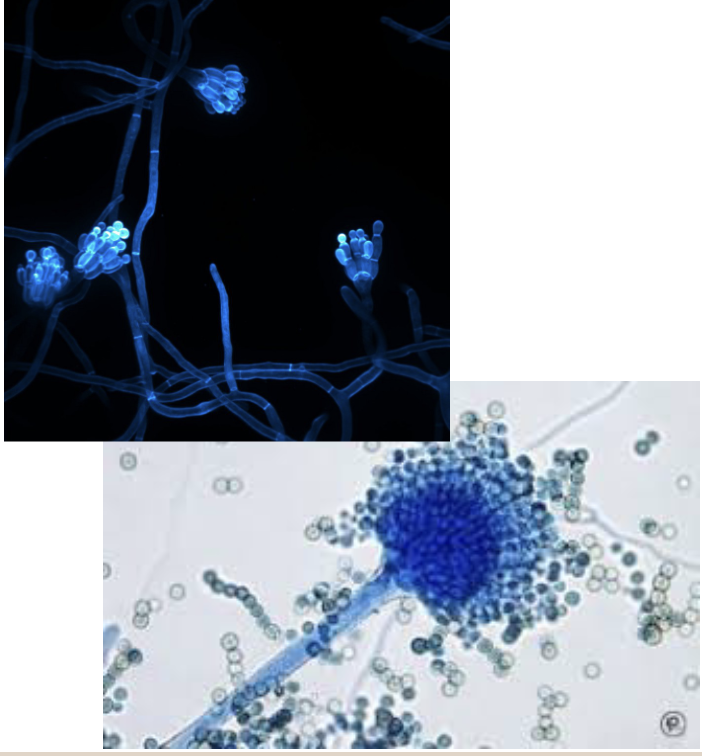
calcofluor white
fluorescent stain that binds chitin
lactophenol cotton blue (LPCB)
blue stain and mountin fluid for wet preps
100x w/ oil
Candida spp.
most common yeast genus isolated from humans
candidiasis
thrush - oral cavity
most common babies
vulvovaginitis - vaginal yeast infx
onychomycosis - nail infx
opportunistic
pneumonia, ear infx, sinus infx, UTIs, wound infx, septicemia
predispositions include antimicrobial therapy, diabetes mellituss, and anything that alters immune system/microbiome
pregnancy, illness, burns
Candida albicans
MOST COMMON isolated Candida organisms from humans
normal flora of mucous membranes
characteristics
only species that forms TRUE hyphae
(+) germ tube test
colonies on solid media produce star-like projections or ‘feet’

Cyrptococcus neoformans
pulmonary infx, meningitis, and septicemia in severely immunocompromised
HIV/AIDS
environmental pathogen
characteristics
encapsulated
mucoid colonies
view capsule using india ink
NO structures like pseudohyphae
brown colonies on bird seed agar

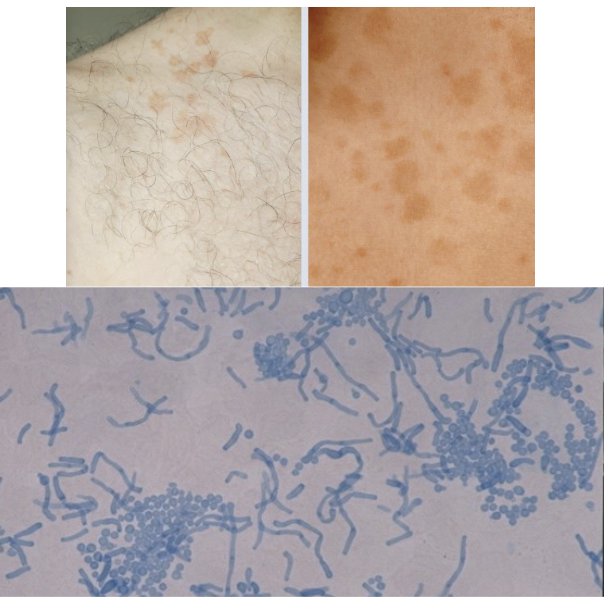
Malassezia furfur
causes tinea versicolor and possibly dandruff
characteristics
skin scrapings show ‘spaghetti and meatball's’ morphology
require lipids for growth and media must be supplemented
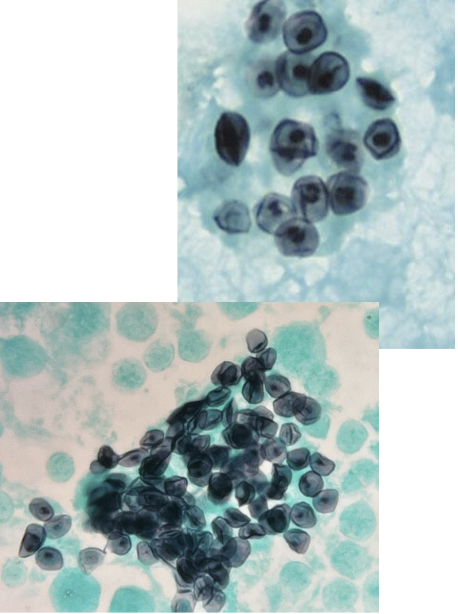
Pneumocystis jiroveci
major pulmonary pathogen in immnuoDEFICIENT hosts
especially pts w/ AIDS
characteristics
cannot be easily cultured
irregularly shaped singular yeast cells w/ central dot
Thermally dimorphic fungi
change from yeast to mold and BACK depending on temp
yeast = 37 C
mold = 25-30 C
important fungal pathogen
fungi that are capable of causing systemic infx
form change allows highly infective AND highly pathogenic
Histoplasma capsulatum
histoplasmosis - potentially fatal lung condition that can spread to spleen, liver, and kidneys
distribution
common in Ohio and MS River valleys
inhalation of spores from barns, chicken houses, and bat caves
identification
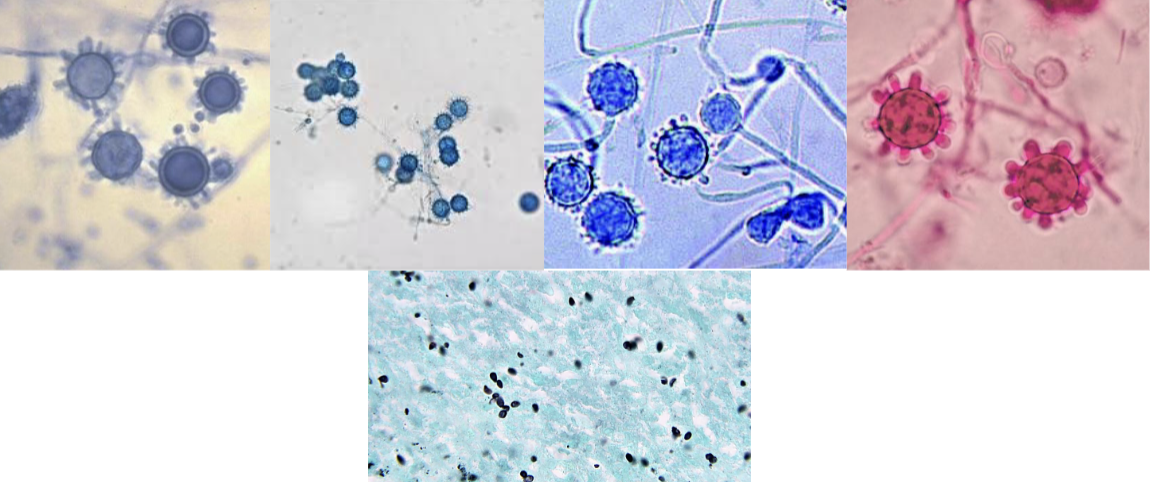
mold: small, tear-drop, microconidia; large, circular, spiny, macroconidia
yeast: unremarkable, single budding
Blastomyces dermatitidis
blastomycosis - pulmonary infx that can spread to skin and bones
distribution
moist environments
common in Ohio and MS River valleys
identification
mold: single, smooth-walled, round conidia
yeast: broad-based buds w/ double walls

Coccidiodes immitis
coccidiodomycosis - pulmonary infx that can spread to skin and bones
distribution
southern CA, southwestern US, Mexico, and South America
identification
tissue specimens show large spherules filled w/ spores
spherules are not yeasts
mold: septate hyphae w/ barrel-shaped conidia that alternate w/ empty cells

Paracoccidioides brasiliensis
paracoccidioidomycosis - pulmonary infx that can spread to skin, mucosa, and reticuloendothelial system
distribution
rainforests of central and south America
identification
mold: mostly hyphae, unremarkable
yeast: large, round yeasts w/ circumferential budding; mariner’s wheel

Sporothrix schenckii
sporotrichosis - cutaneous infx that can lead to lymph infx
ulcerative lesions
‘Rose-gardener’s dx’
puncture wounds from contaminated plants
identification
mold: delicate hyphae w/ conidiophores topped by clusters of microconidia
rosette morphology
yeast: oval or elongated, thin buds w/ narrow base
