ARCH 307 Exam #3 Slide IDs
0.0(0)
Studied by 1 person Call Kai
 Learn
 Practice Test
 Spaced Repetition
 Match
 Flashcards
 Knowt Play
Card Sorting
1/19

Earn XP
Description and Tags
20 Terms
1
New cards
\
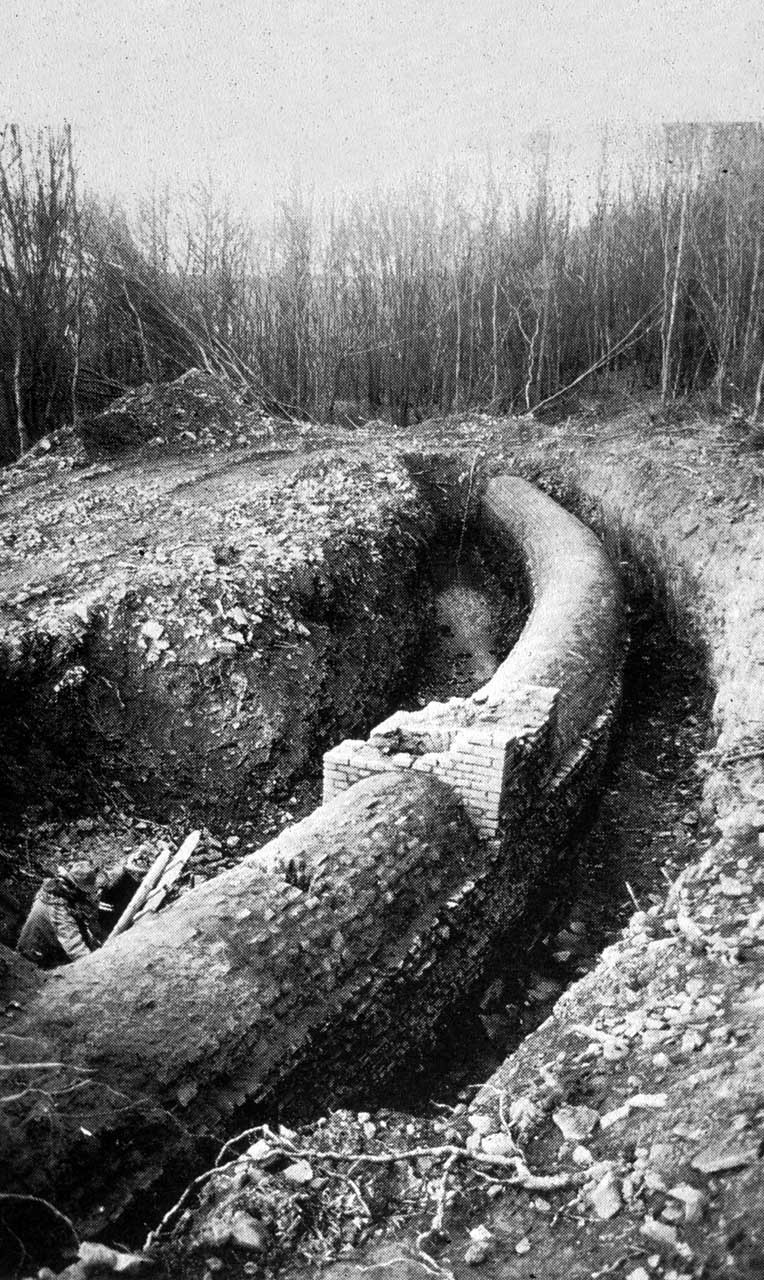
Underground Aqueduct
2nd century CE
Cologne
Contained intermittent access shafts
Construction began with access shafts; slaves then dug tunnels towards each other
Example of typical aqueduct
2nd century CE
Cologne
Contained intermittent access shafts
Construction began with access shafts; slaves then dug tunnels towards each other
Example of typical aqueduct
2
New cards
\
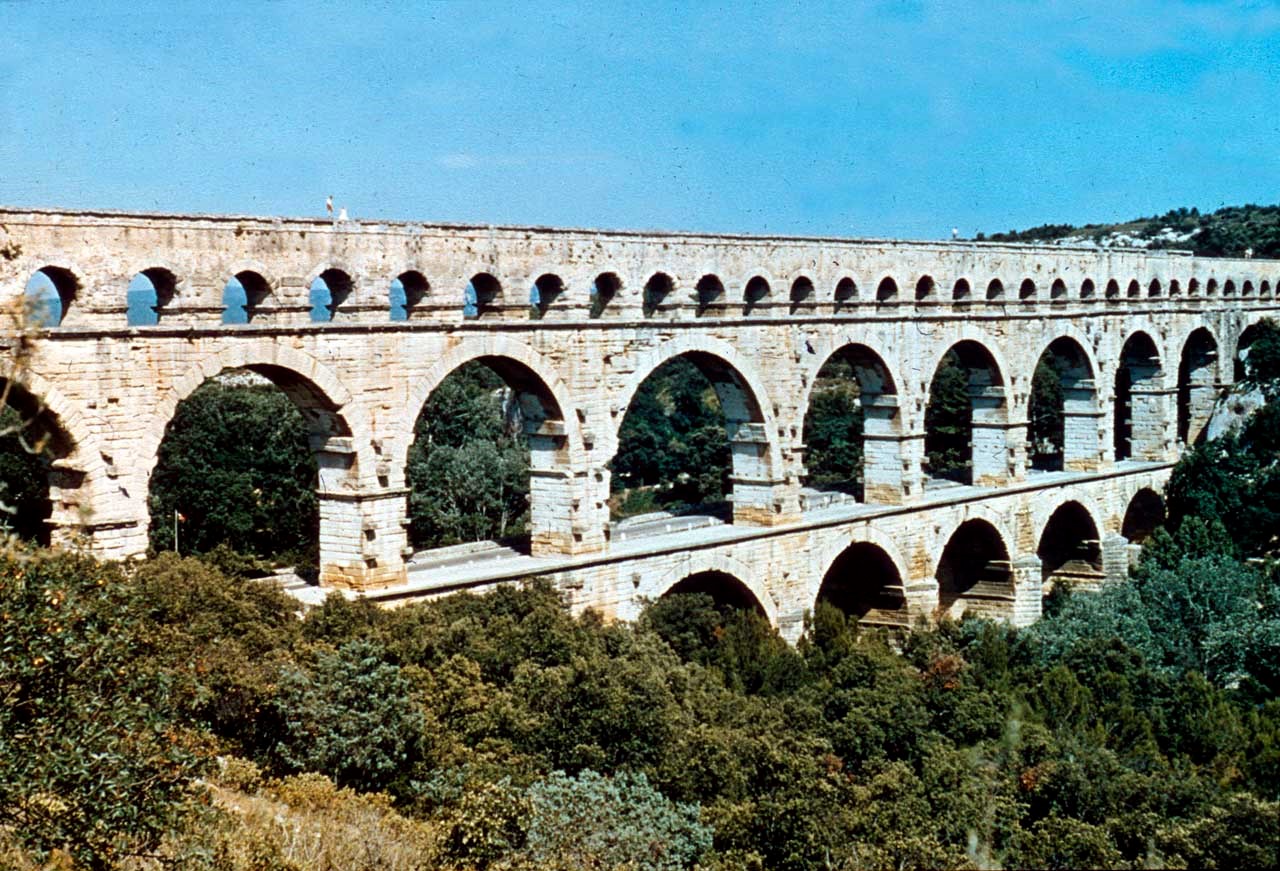
Pont du Gard
Late 1st century CE
Southern France
One of the best preserved and strongly constructed Roman aqueducts
Consists of a 3-tiered archway
Later purposed as a bridge
Late 1st century CE
Southern France
One of the best preserved and strongly constructed Roman aqueducts
Consists of a 3-tiered archway
Later purposed as a bridge
3
New cards
\
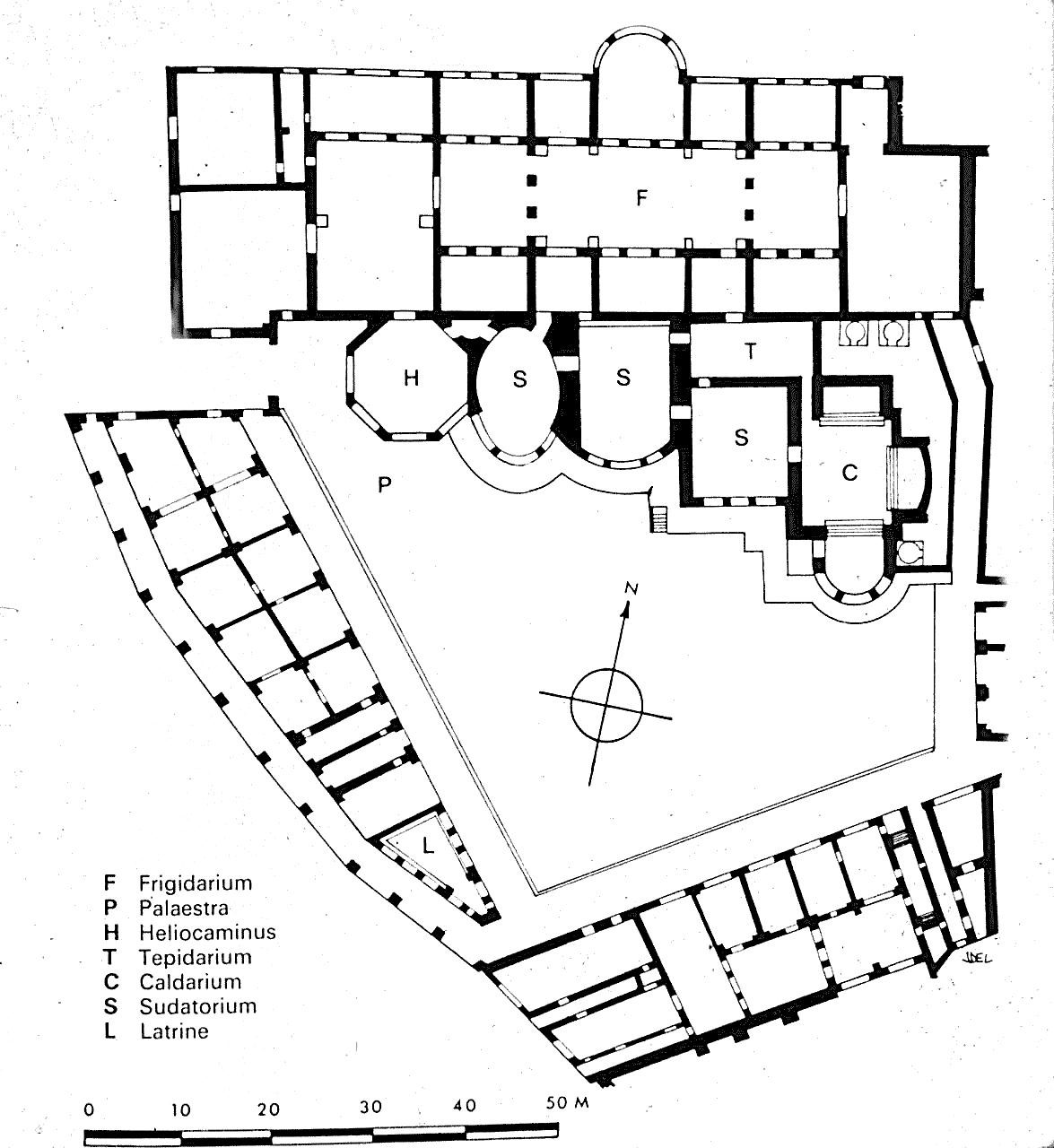
Forum Baths
Ostia
circa 160 CE
Non-symmetrical balnae bath adapted to the city’s form
Oriented saunas and sun room towards SW; utilized sunlight to reduce burning fuel for heat
Ostia
circa 160 CE
Non-symmetrical balnae bath adapted to the city’s form
Oriented saunas and sun room towards SW; utilized sunlight to reduce burning fuel for heat
4
New cards
\
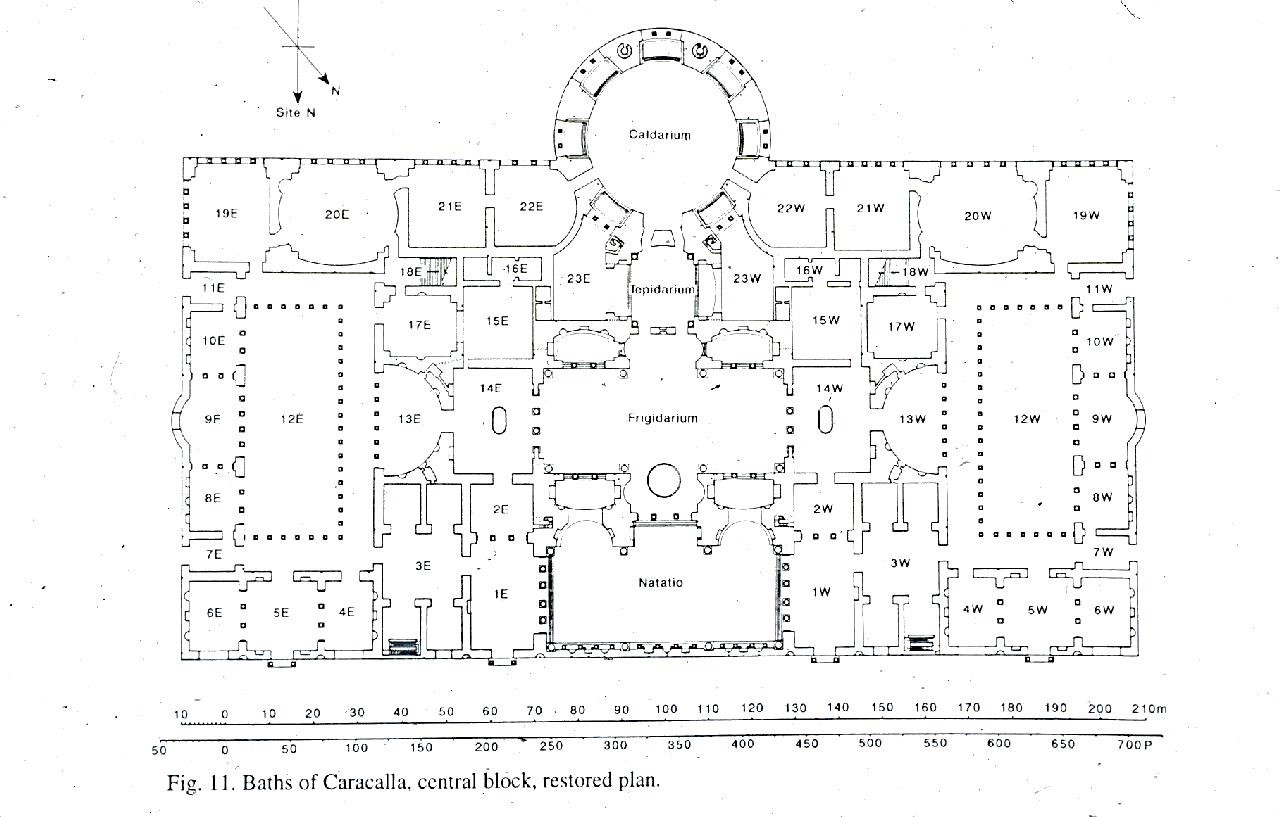
Baths of Caracalla
212-216 CE
Rome
One of the largest baths constructed during the Roman period
Contained a circular caldarium with windows
Heavily decorated in every possible aspect including grand lighting and large statuary
212-216 CE
Rome
One of the largest baths constructed during the Roman period
Contained a circular caldarium with windows
Heavily decorated in every possible aspect including grand lighting and large statuary
5
New cards
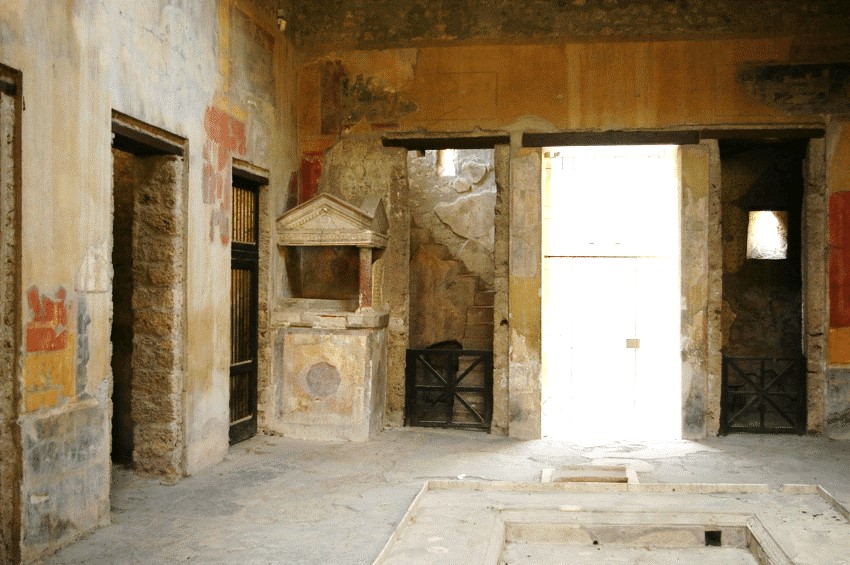
House of Menander
2nd century BCE - 1st century CE
Pompeii
Contains the Tuscan style atrium with column decorations around the impluvium
Other styles include Corinthian (many columns decorating the impluvium), Tetrastyle (4 columns decorating the impluvium), and Displuviate (no column decorations and compluvium directs water away from impluvium)
6
New cards
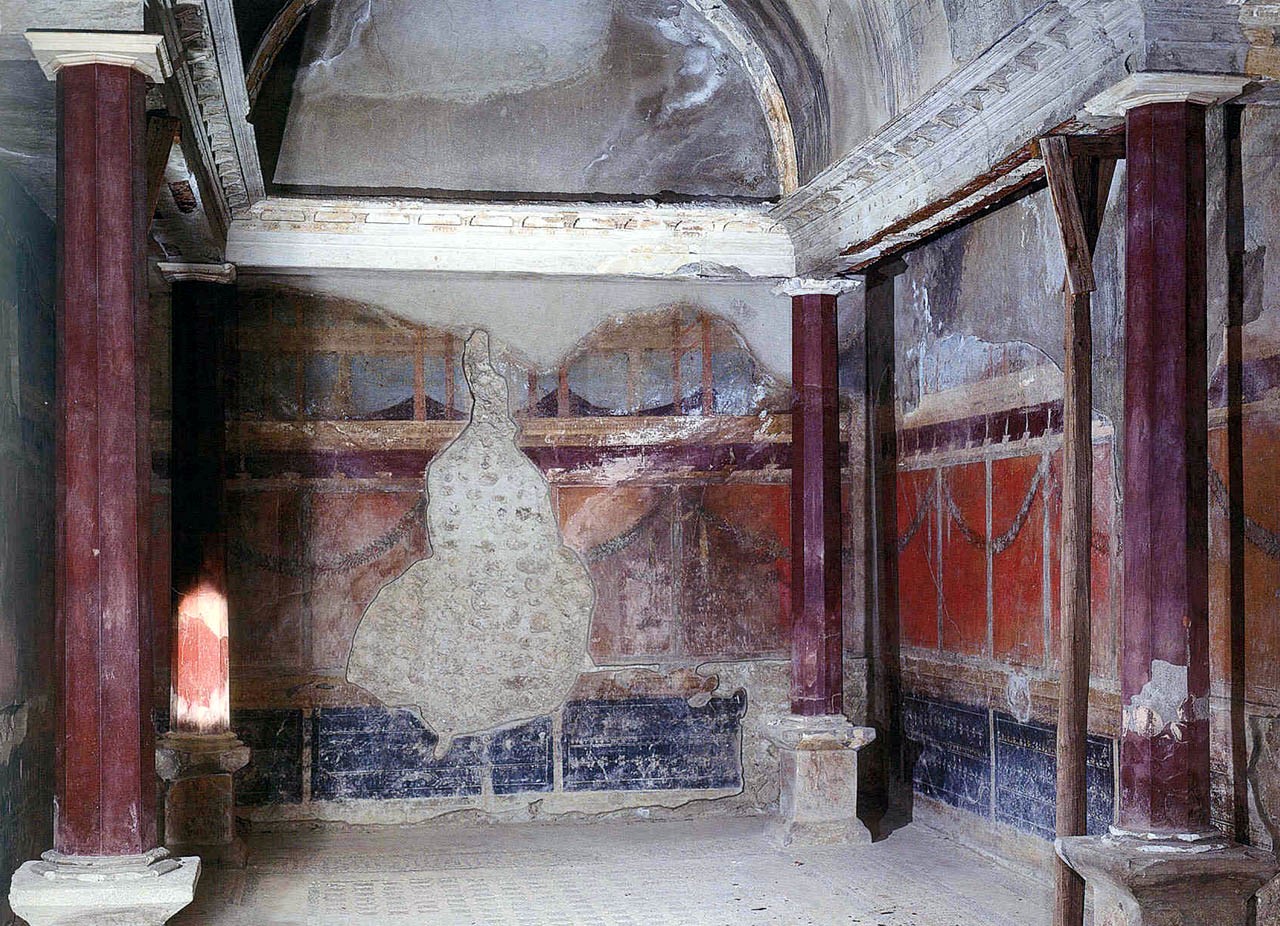
House of the Silver Wedding
1st century BCE
Pompeii
Contains an oecus, an ornate room with a false barrel vaulted ceiling and unknown purpose
Oecus possibly used as a parlor, tablinum, or fine-dining
1st century BCE
Pompeii
Contains an oecus, an ornate room with a false barrel vaulted ceiling and unknown purpose
Oecus possibly used as a parlor, tablinum, or fine-dining
7
New cards
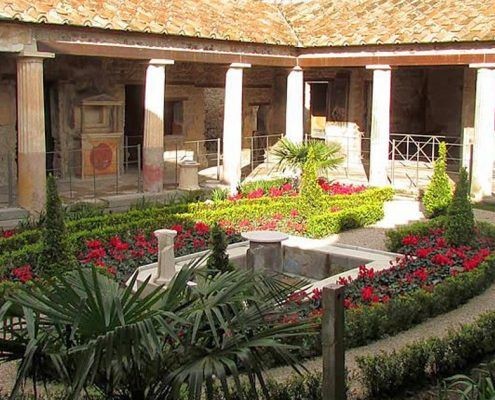
House of the Gilded Cupids
2nd century BCE
Pompeii
Contains a peristyle, a portico colonnade surrounding a green or garden space
Peristyles highly valued by Romans due to recreational space
Often included statues, water features, and plants
2nd century BCE
Pompeii
Contains a peristyle, a portico colonnade surrounding a green or garden space
Peristyles highly valued by Romans due to recreational space
Often included statues, water features, and plants
8
New cards
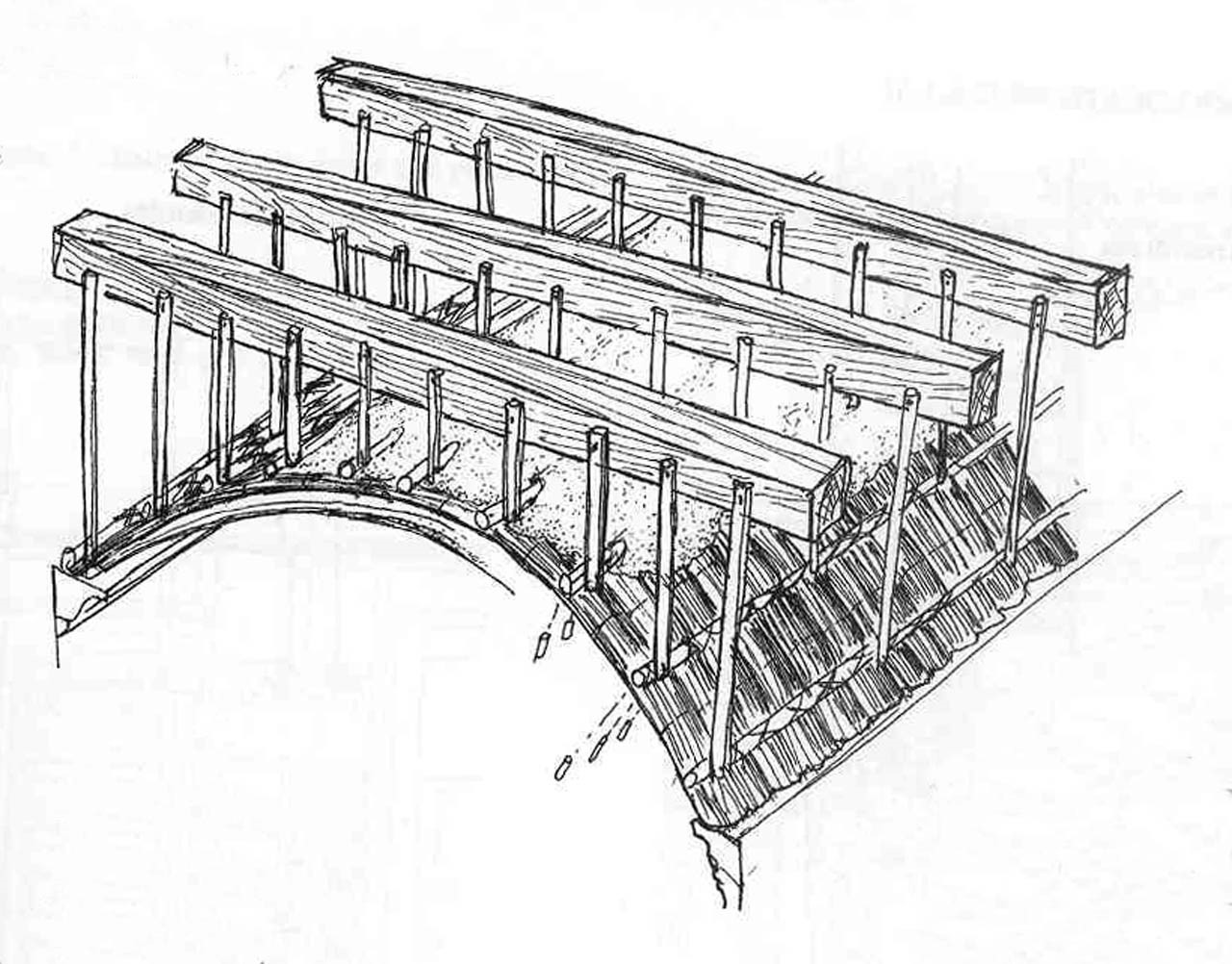
Suspended Ceiling
A series of wooden rods at different lengths holding up a plastered
Made to imitate barrel vaults (e.g. House of the Silver Wedding)
Often decorated with moldings and paint; rooms with very elaborate designs indicate no light or fires
A series of wooden rods at different lengths holding up a plastered
Made to imitate barrel vaults (e.g. House of the Silver Wedding)
Often decorated with moldings and paint; rooms with very elaborate designs indicate no light or fires
9
New cards
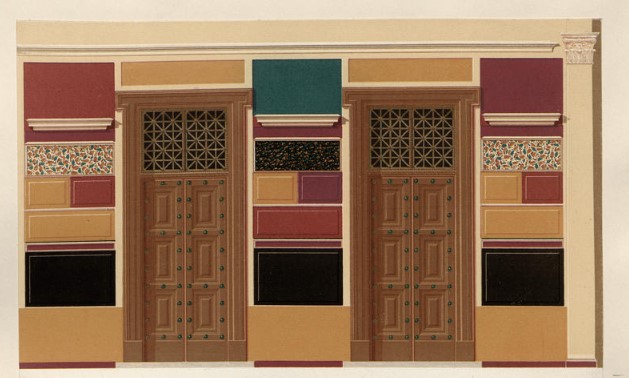
1st Pompeian Style
200-80 BCE
Imitated blocks of various marbles
Found in houses like House of Sallust (100 BCE)
200-80 BCE
Imitated blocks of various marbles
Found in houses like House of Sallust (100 BCE)
10
New cards
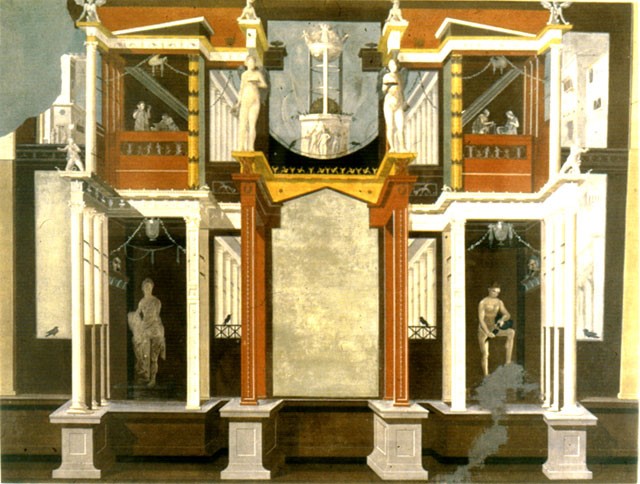
2nd Pompeian Style
80 BCE-14 CE
Imitates looking out of a window onto exterior architectural or landscape scenes
Possibly modeled off theaters
Appeared as hyper realistic to Romans, not so much to us due to multiple vanishing points
80 BCE-14 CE
Imitates looking out of a window onto exterior architectural or landscape scenes
Possibly modeled off theaters
Appeared as hyper realistic to Romans, not so much to us due to multiple vanishing points
11
New cards
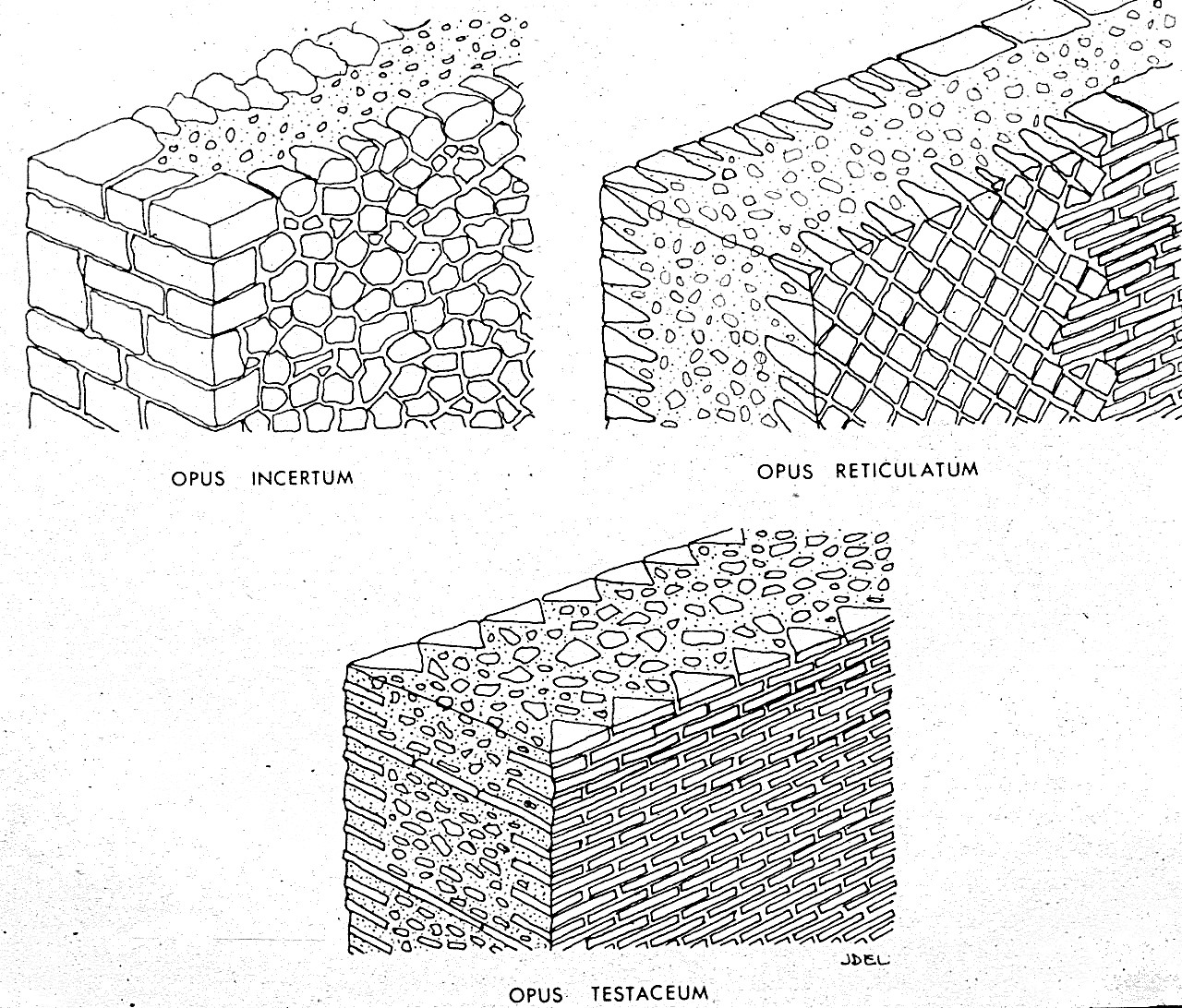
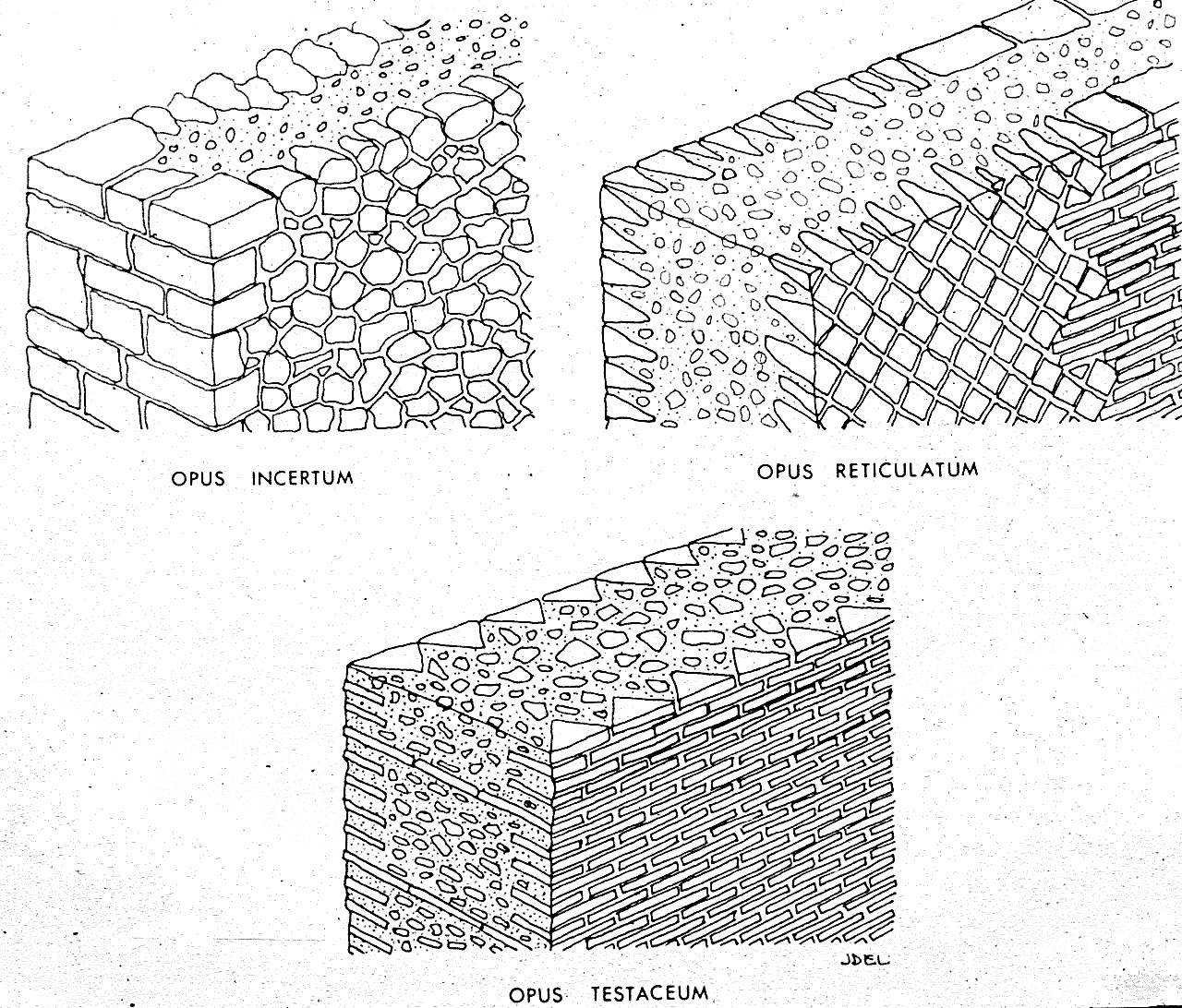
Opus Incertum
Irregular shaped stones placed into cement as decorative facing
First example found at the Porticus Aemelia
Began to appear around 2nd century BCE
Irregular shaped stones placed into cement as decorative facing
First example found at the Porticus Aemelia
Began to appear around 2nd century BCE
12
New cards
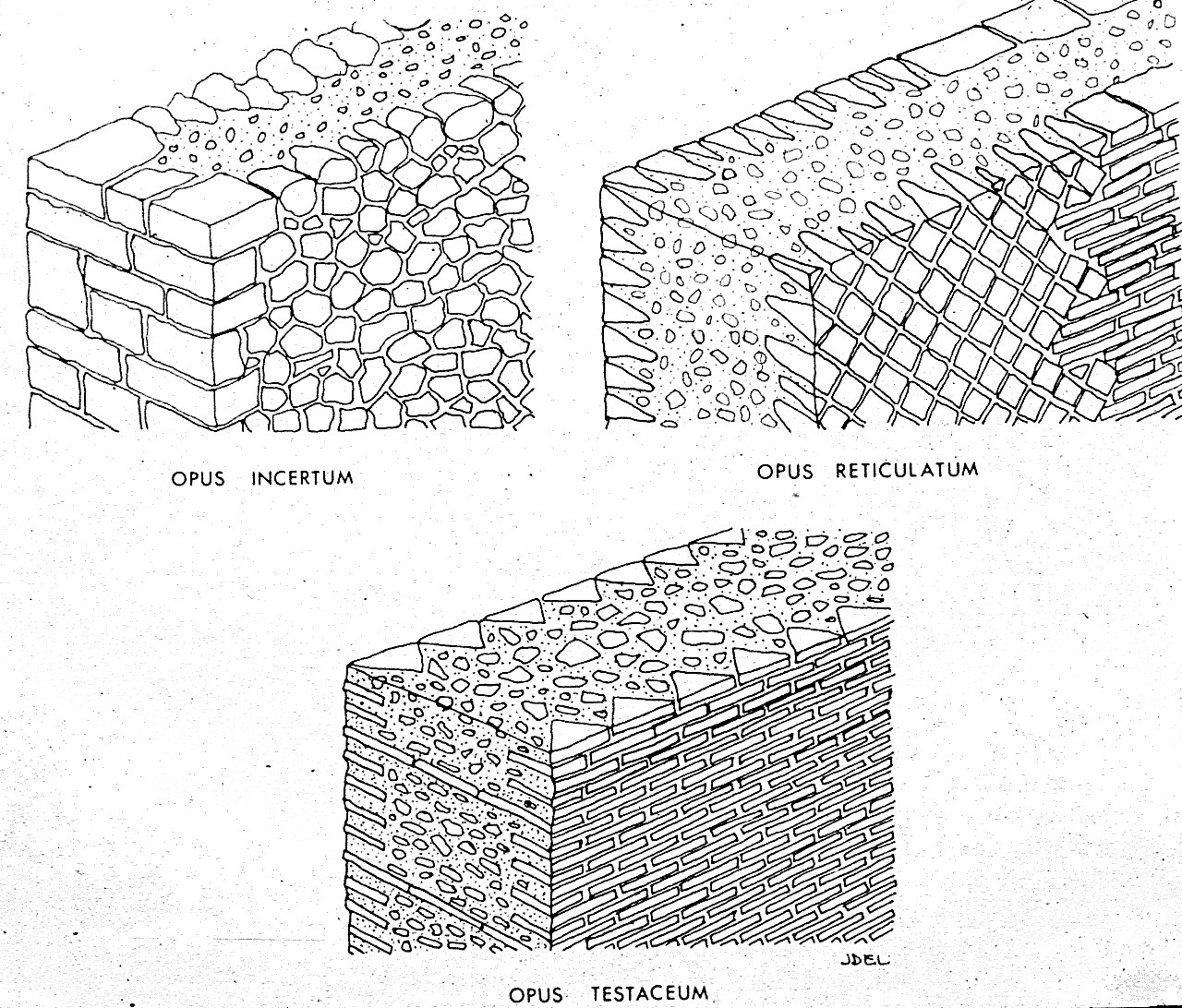
Opus Reticulatum
Regularly diamond shaped stones placed into cement as decorative facing
Began to appear around 1st century BCE
Regularly diamond shaped stones placed into cement as decorative facing
Began to appear around 1st century BCE
13
New cards
\
Opus Testaceum
Consists of two types of brick stone placed into cement for decorative facing
Thin, less porous brick roof tiles
Thick, triangularly shaped bricks for walls
Both kinds datable using brick stamps made by manufactures
Consists of two types of brick stone placed into cement for decorative facing
Thin, less porous brick roof tiles
Thick, triangularly shaped bricks for walls
Both kinds datable using brick stamps made by manufactures
14
New cards
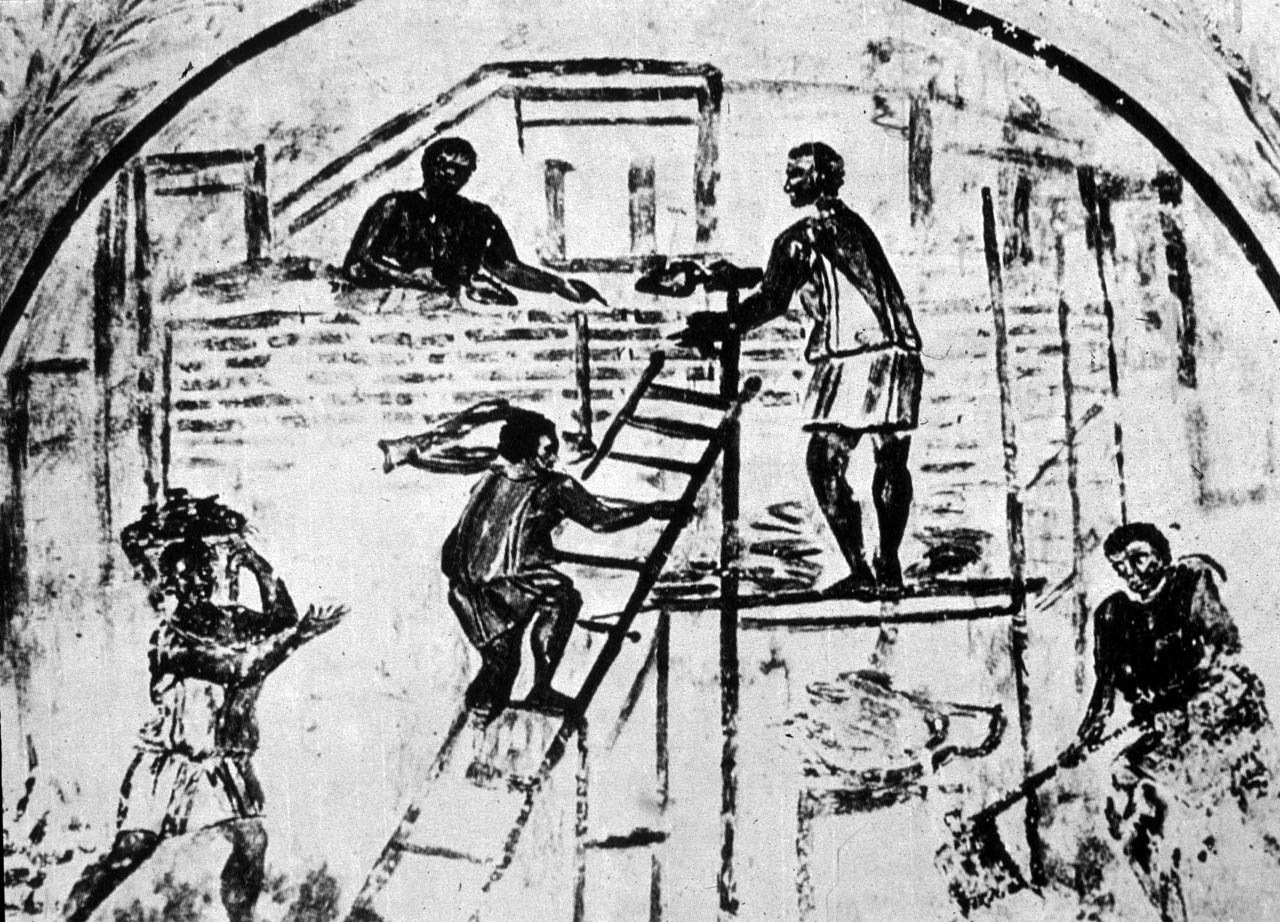
Tomb of Trebius Justus
2nd century CE
Rome
2nd century CE
Rome
15
New cards
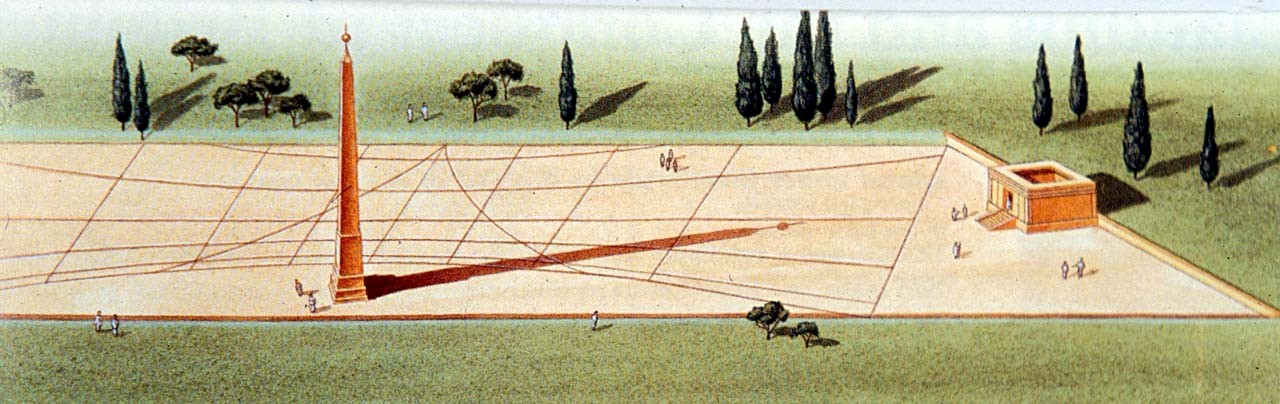
Horologium Augusti
9 BCE
Rome
Large sundial constructed by Augustus
Used a looted Egyptian obelisk as the gnomon and a courtyard as the analemma
Remnants of the analemma discovered by Edmund Buchner by using the obelisk’s height and base
9 BCE
Rome
Large sundial constructed by Augustus
Used a looted Egyptian obelisk as the gnomon and a courtyard as the analemma
Remnants of the analemma discovered by Edmund Buchner by using the obelisk’s height and base
16
New cards
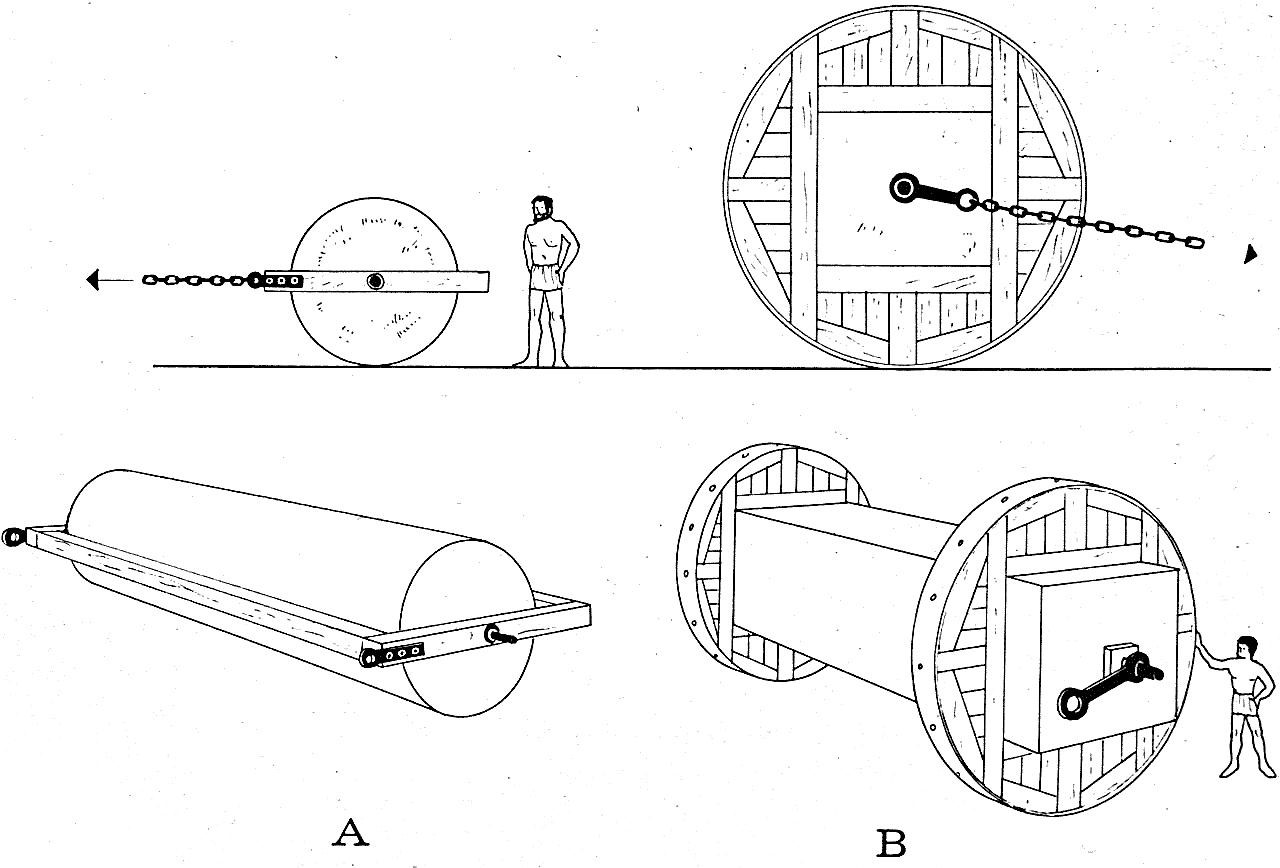
Cherisphron’s Machine
Capable of pulling cylindrical objects by fastening them into a frame pulled by oxen
Used to transport large objects like column shafts
Capable of pulling cylindrical objects by fastening them into a frame pulled by oxen
Used to transport large objects like column shafts
17
New cards
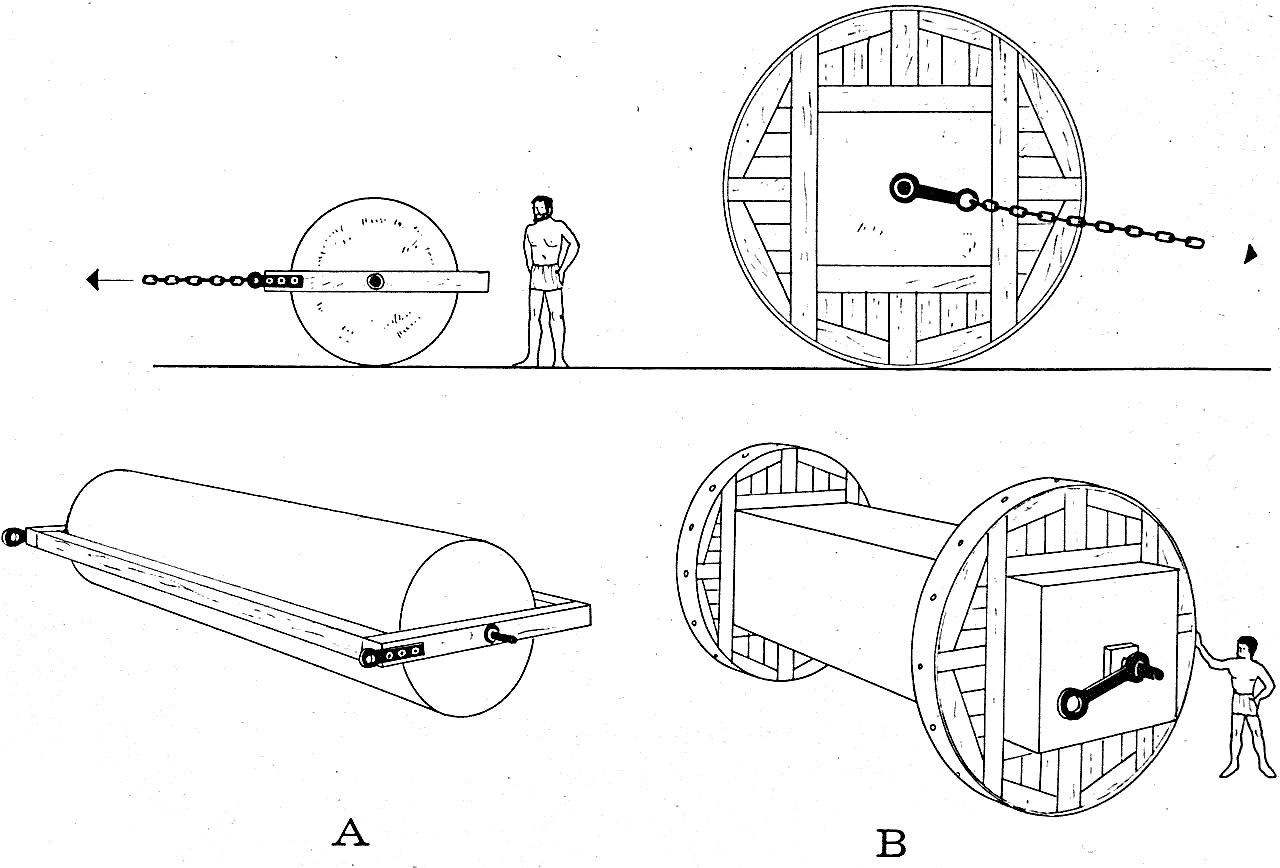
Metagnes’ Machine
Capable of pulling prismed objects by fastening the ends of the object into circular wooden wheels pulled by oxen
Used to transport large objects like architraves or blocks or marble
Capable of pulling prismed objects by fastening the ends of the object into circular wooden wheels pulled by oxen
Used to transport large objects like architraves or blocks or marble
18
New cards
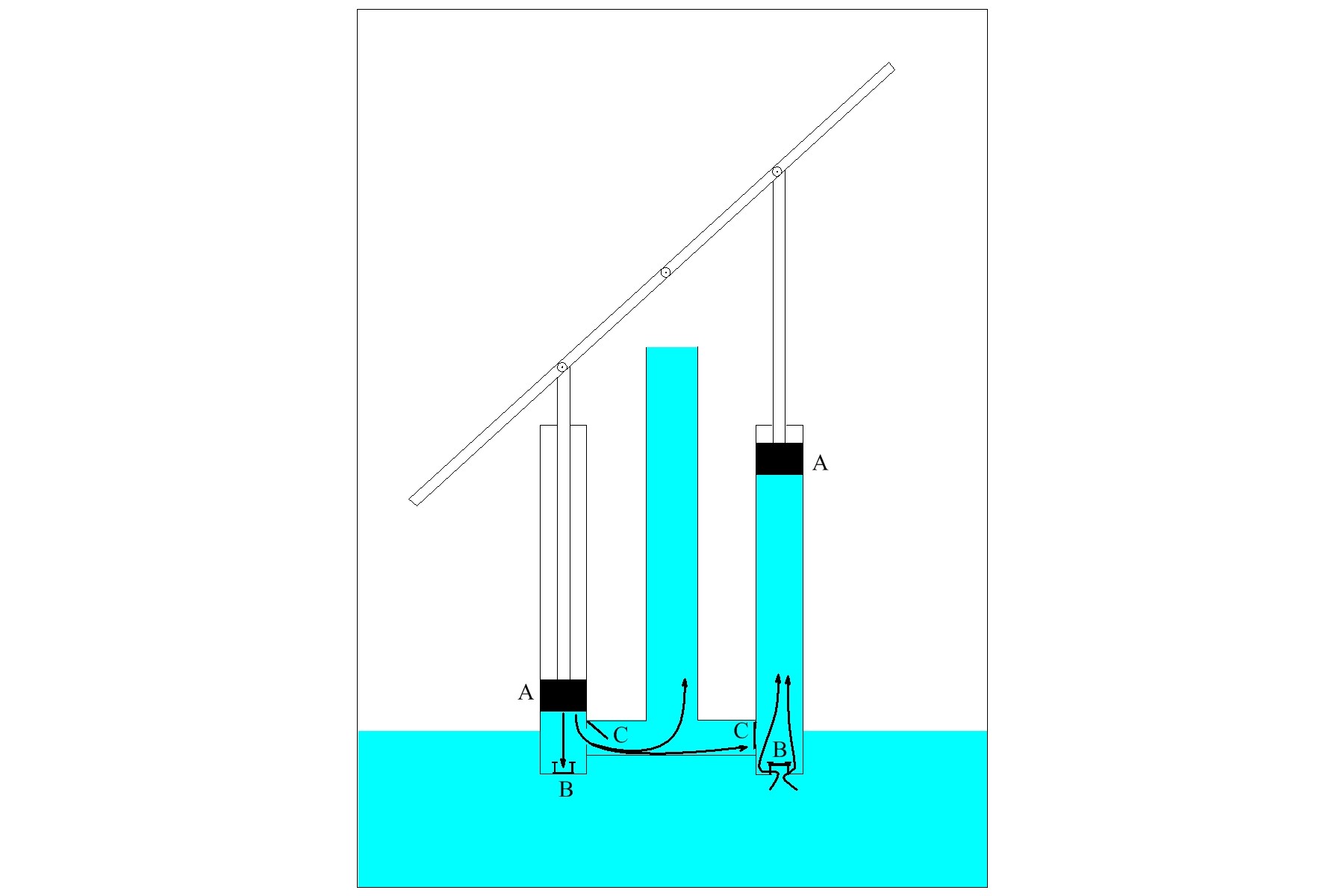
Ctesibius’ Water Pump
A piston pump with return valves that could provide fresh water from underground
Two pistons push water through a one way valve that pushes water to the surface
Doubled as a water organ
A piston pump with return valves that could provide fresh water from underground
Two pistons push water through a one way valve that pushes water to the surface
Doubled as a water organ
19
New cards
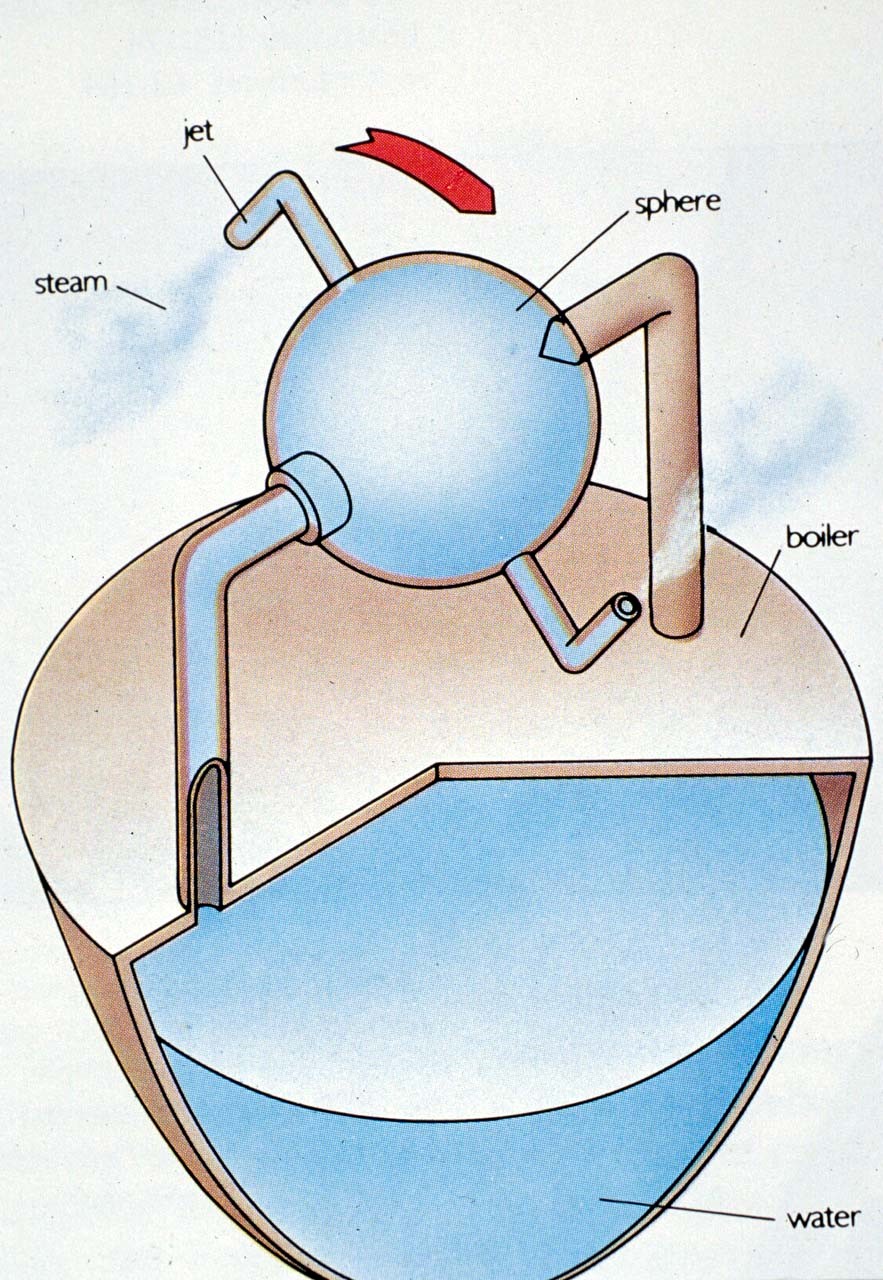
Aeolus Sphere
An apparatus where boiled water and steam spun a sphere as it leaked
Designated as a party trick to the Romans, but the very beginning of steam power
An apparatus where boiled water and steam spun a sphere as it leaked
Designated as a party trick to the Romans, but the very beginning of steam power
20
New cards

Blue Shield International
Non-profit organization that seeks to protect antiquities in active warzones
Educates global militaries about the Hague Convention, which are rules of engagement set to promote cultural heritage
Also used as a marker in active combat zones to identify cultural sites
Non-profit organization that seeks to protect antiquities in active warzones
Educates global militaries about the Hague Convention, which are rules of engagement set to promote cultural heritage
Also used as a marker in active combat zones to identify cultural sites