chp 10 emotional development (exam 2)
 Call Kai
 Learn
 Practice Test
 Spaced Repetition
 Match
 Flashcards
 Knowt Play
1/27

There's no tags or description
Looks like no tags are added yet.
28 Terms
contact comfort
overshadows all other factors
shown in Harlow’s monkey study
baby monkeys prefer the cloth robot to the wire one that gave them food
anti classical conditioning theory on emotional development (not attached because of food)
temperament profiles and defenition
how someone reacts to a situation, both genetic and biological basis
predictable style of reactivity influenced by inborn tendencies and experiences in environment
basic building blocks of emotions and personalities
easy
difficult
slow to warm up
attachment (def, perspectives, theorists)
lasting emotional tie between two people who each strive to maintain closeness to the other
THEORY: science of love
perspectives:
ethological perspective
behaviorist perspective
theorists:
Ainsworth (strange situation perceiver)
Bowlby (circle of security)
socioemotional selectivity theory
social experience is linked with social goals
social goals impacted by age → goals shift from future oriented to present oriented as we age
signaling behaviors
used by infants to bring varegiver into contact/ get their attention
ex: crying, smiling..
resilience
ability to respond/ perform positively in the face of adversity
goodness of fit
match between a child and parents temperament (their enivornment)
Theory of mind
process of starting to take into account other’s povs
awareness of one’s own mental process and the realization that others do not share their thoughts
HUGE impact on emotional development/ complexity
stops egocentrism
self-conscious emotion/ secondary emotions
emotions based on cognitive development and awareness of self
empathy, pride, embarrassment, shame, guilt
allowed to be felt through the development of self-awareness
develops around 18-24 months
social referencing
how infants learn what to do if they don’t know how they should interpret an event
Harry Harlow’s primate study (what was it? + what did it prove/disprove?)
study of monkeys in isolation
carry their blanket with them from their cage
disproves the behaviorist idea that attachment is not a learned behavior
contact comfort
monkeys prefer the cloth monkey not the wire even though the wire is feeding them
disproves behaviorist idea that they want attachment based on food/necessity
monkeys were not afraid of the monster after clinging to cloth mom for a second
disproves behaviorist idea that attachment makes a child weak or dependent
behaviorist theory on attachment
love is learned (classical)
caregiver is associated with food
attachment is a learned behavior
Watson- cautioned against too much parental love
“they’re just asking for attention”
it makes them weak and dependent
disproved ^^ by harlow’s study
Bowlby’s theory of attachment (3 systems)
innate, ethological perspective
care seeking system - seek closeness for comfort
exploratory system - follow curiosity for mastery (learning)
caregiving system - monitor person/ comfort persons feelings
^^ all felt through instinct
Circle of Security (OUTLINE/ parts)
TOP:
BOTTOM:
HANDS:
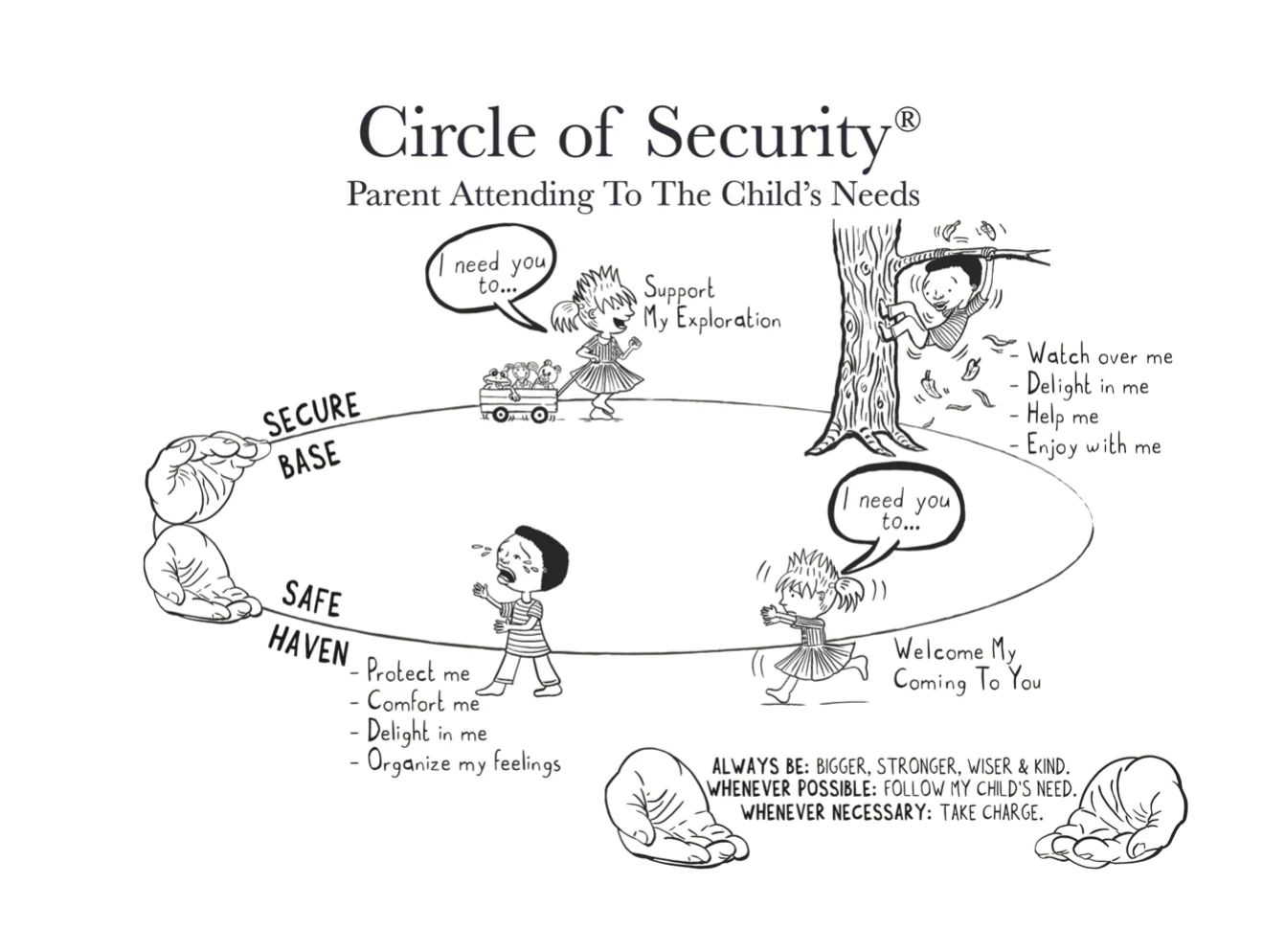
top of circle of security (what stage/ what do they need from caregiver)
children’s ability/desire to explore their world
security allows them to explore/ get away from parent
I need you (caregiver) to
watch over me
delight in me
help me
enjoy with me - engage and support what I’m doing
bottom of circle of security (what stage/ what do they need from caregiver)
care seeking
“Filling my cup”
running back to the parent for support
i need
protection, comfort
delight (in who they are) in me and coragnize my feelings
hands on circle of security (what are they/ what are the 4 requirements)
caregiver
secure base/ safe haven
should give kid security to explore, but come back when needing help
ALWAYS BE:
bigger
stronger
wiser
kind
secure attachment (benefits)
emotional
self- esteem
emotional regulation
cognitive
helps with school performance (when home life is safe)
social
social skills
less aggression
about 60% of kids get “good enough”
Mary Ainsworth’s Strange Situation Procedure
not all attachments are the same
some secure some not
caregivers provide a secure base
learned behavior/ strategy
Experiment (3 types of attachment):
secure attachment
insecure/avoidant attachment
insecure/ambivalent (anxious) attachment
^^ INTERNAL WORKING MODEL (IWM)
secure attachment (ainsowrth)
sad when parent leaves
quickly comforted when figure returns
can go back to exploring
parent is a safe place
parent is responsive
creates secure internal working model
insecure/ avoidant attachment (ainsworth)
appears calm when parent leaves
avoids/ignores figure when she returns
act like they didn’t “notice” parent leaving
strategy to protect from disappointment
hide need for closeness (out of fear and want for closeness)
parent doesn’t give connection
creates dismissing internal working model
insecure/ambivalent/anxious attachment (ainsworth)
extremely upset when parent leaves
seeks and rejects parent when they return
parent is inconsistent so child clings/ rejects
don’t calm down when parent comes back
parent might normally be anxious themselves
parent doesn’t give them autonomy or exploration
creates
creates preoccupied internal working model
Preoccupied internal working model
caused by anxious attachment
worried about rejection. abandonment
“are you ok?”/ “are you ok with me?”
dismissing internal working model
caused by avoidant attachment
parent dismisses their needs
so they dismiss others emotions/needs in future relationships
secure internal working model
created by secure attachment
“You’re here, I’m worth it”
affects relationship with others and self worth
earned security
take past, reflect and learn and change current and future relationships
necessary to fix inner working model
can be learned through therapy, positive relationships
need a safe place for self-exploration
primary emotions
in infants (inborn)
basic emotions
distress, attraction, disgust, anger, sadness, fear