CH109
 Call Kai
 Learn
 Practice Test
 Spaced Repetition
 Match
 Flashcards
 Knowt Play
1/93

There's no tags or description
Looks like no tags are added yet.
94 Terms
Organic Compounds
Contain one or more Carbon and Hydrogen atoms
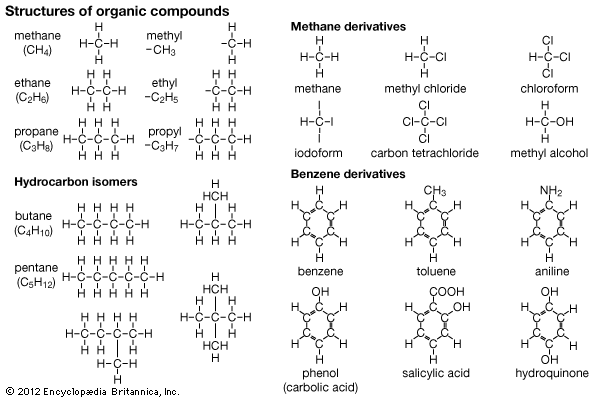
Biological organic compounds
Carbohydrates: Glucose, fructose, starch
Proteins: Insulin, collagen, enzymes
Nucleic acids: DNA, RNA
Fats and Oils
Fats are a lipid known as?
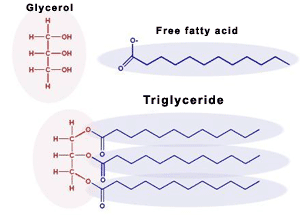
Triglycerides
Made up of one glycerol molecule attached to three fatty acids
Fatty acids are long chains of carboxylic acids
Hydrocarbons
Contain only C and H

Octet rule
Elements tend to bond in a way that each atom has a valency of 8

What is a polar bond?
Electrons are shared unequally between atoms

What is a nonpolar bond?
Electrons are shared equally between atoms

Linear
180 degrees
Atoms are arranged in a straight line

Trigonal planar
120 degrees
3 bonding groups
Flat triangle shape

Tetrahedral
109.5 degrees
Four bonds around the central atom

bent
2 bonded atoms + lone pair(s)
V-shaped
Usually <120 degrees

Trigonal bipyramidal
90 and 120 degrees
Two pyramids joined at their bases

Octahedral
90 and 180 degrees
Six bongs arranged around the central atom

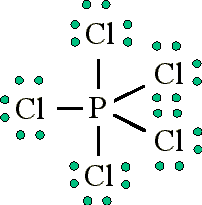
Expanded octet
Period 3 elements can have more than eight electrons in there valence energy level
Ex. Phosphorus
Alcohol
R-OH; OH is attached to carbon
Naming: -ol

primary alcohol
OH carbon is attached to 1 other carbon

Secondary alcohol
OH carbon is attached to 2 other carbons

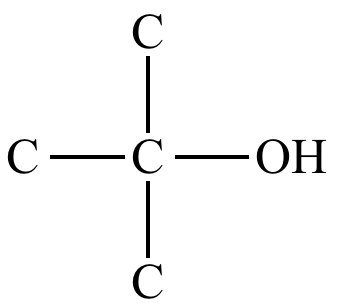
Tertiary alcohol
OH carbon is attached to 3 other carbons
Phenol
Ar-OH; OH directly on benzene
Naming: Phenol

Thiols
R-SH; S-H group
The sulfur version of AlcohOL
Naming: -thiol

Ether
R-O-R’; O between two carbon groups
Naming: ether

Aldehyde
R-CHO; C=O at end; carbonyl C has H
Naming: -al

Ketone
R-CO-R’; C=O within chain; carbonyl C has two carbon groups
Naming: -one

Carboxylic Acid
R-COOH; C=O and OH on same carbon
Naming: -oic acid

Ester
R-COO-R’; C=O-O-C
Naming: -oate

Amine
R-NH2/R2NH/R2N; N not directly attached to C=O
Naming: -amine

Amide
R-CONH2/CONHR/CONR2; N directly attached to C=O
Naming: -amide

London dispersion forces
All molecules
Always present; generally weakest for comparable molecules.
Number of electrons / molecular size - Larger molecules have more electrons, which are more easily polarized, producing stronger temporary dipoles
surface area / shape - Longer, straight-chain molecules have more surface contact with neighbors, increasing the number of attractive interactions
Dipole-dipole forces
Polar molecules; attraction between permanent partial charges

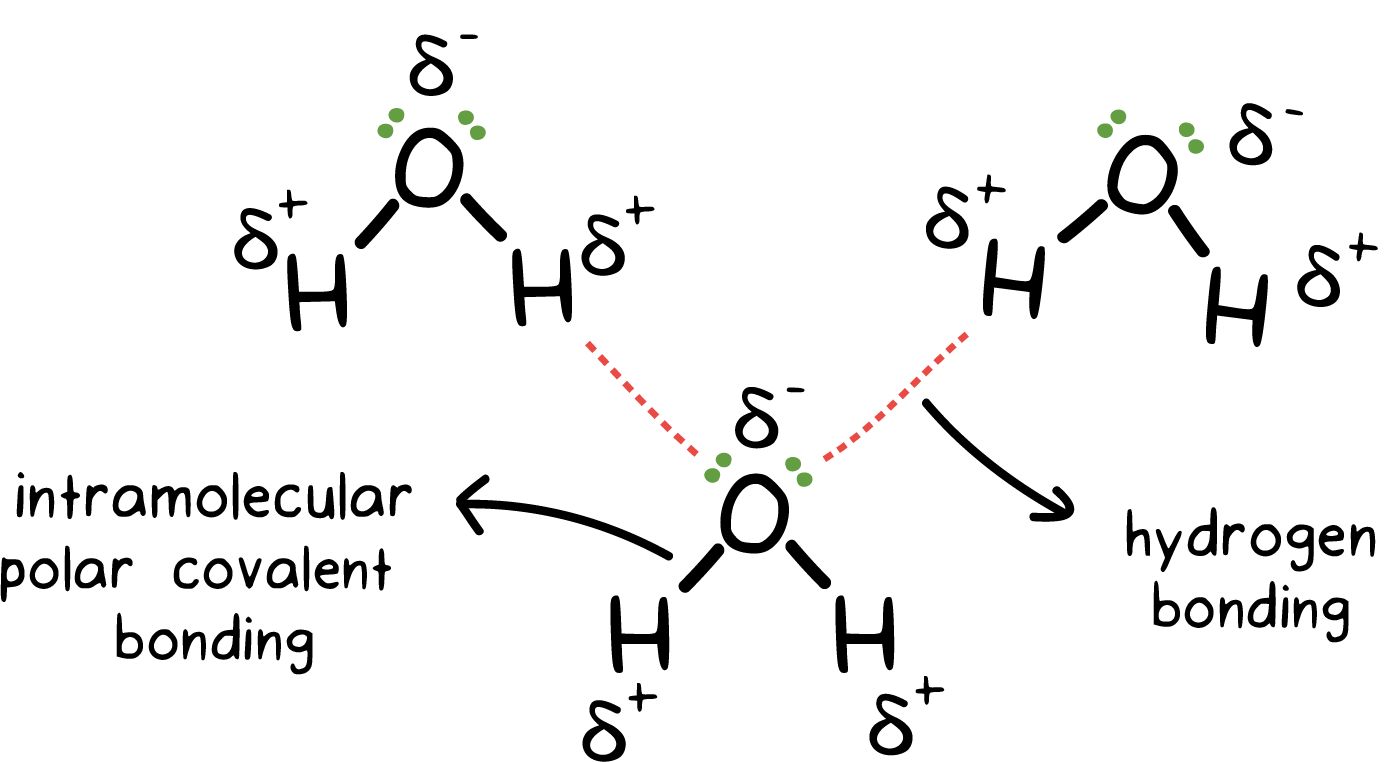
Hydrogen bonding forces
H directly bonded to N,O, or F; strong intermolecular attraction
Acid =
H+ donor

When a acid loses H+
It becomes its conjugate base
Base =
H+ acceptor

When a base gains a H+
It becomes its conjugate base
Define acid and base according to Arrhenius and Bronsted - Lowry theory
Acid
Arrhenius: produce H+ in water
Bronsted-Lowry: Donates H+ (proton)
Base
Arrhenius: Produce OH- in water
Bronsted-Lowry: Accept H+ (proton)
methyl
1
Ethyl
2
Propyl
3
Butyl
4
Pentyl
5
Hexyl
6
Heptyl
7
Octyl
8
Nonyl
9
Decyl
10
Di-
2
Tri-
3
Tetra-
4
Penta-
5
Hexa-
6
Organic
Carbon - based
Inorganic
Ionic/salt
Saturated
Only c-c (alkane)
Unsaturated
Only double (Alkene), triple(Alkyne), or aromatic ring
Electronegativity
Atoms ability to attract electrons towards itself in a chemical bond
Remember: Electronegativity = how strongly an atom “pulls” on electrons
Increases left to right
S-
More electronegative
S+
Less electronegative
Conformers
Same molecule = different rotation
Constitutional isomers
Same formula = different connections
Alkane formula
CnH2n+2
Think: single = +2
Alkene formula
CnH2n
Think: double = normal 2n
Alkyne
CnH2n-2
Think: triple = 2-
cycloalkanes formula
CnH2n-2
High water solubility
Small + Polar
Like dissolves like- water is polar, so polar and hydrogen bonding molecules are more soluble.
Acids according to Arrhenius
Acids are substances that dissolve in water to produce hydronium ions (H3O+)
Bases are substances that dissociate in water to produce hydroxide ions (OH-) in aqueous solution
bronsted-Lowry definition
Acids are proton (H+) donors, bases are proton acceptors
Oxidation definition
Increase in C-O dons or decrease in C-H bonds
Reduction definition
Increase in C-H bonds or decrease in C-O bonds
OIL RIG
Oxidation Is Loss of H/gain of O
Reduction Is Gain of H/loss of O
Primary alcohol → oxidation →
Aldehyde → oxidation → Carboxylic acid

Secondary Alcohol → oxidation →
Ketone

Tertiary alcohol → oxidation →
No reaction; not H on carbon = no easy way to oxidize
Aldehydes → oxidation →
Carboxylic acid
Redox reduction
Reduction + oxidation
one substance is oxidized
Another substance is reduced
They happen together because electrons are transferred
Reduction
Gain H / loses O
How to identify a redox reaction
Look at the changed carbon
Did the carbon gain more bonds to O
Did the carbon lose H
More C-H bonds or fewer C-O bonds
Oxidation
Loses H / gains O
Conjugate acid-base pairs
A conjugate pair differs by only ONE H+
Strong acid
Almost completely dissociates into ions in water
Ex. HCL → H+ + CL-
Weak acid
Partially dissociates
Ex. CH3COOH => H+ CH3COO-
Strong acid=
Concentrated
Weak acid =
Diluted
Strong/weak=
How completely it ionizes
Concentrated/diluted =
How much acid is present
Strong bases
Almost completely dissociate in water
Ex. NaOH, KOH, LIOH
Weak bases
Only partially react in water
Ex. NH3
NH3 + H2O = NH4+ + OH-
A strong acid mean =
A weak conjugate base
A weak acid means=
A strong conjugate acid
Le Châtelier’s principle
When you disturb a equilibrium, the system shifts to oppose the disturbance
Think: the reaction tries to undo whatever you added
What does Ph tell you
How acidic or basic a solution is
pOH
pOH = -log[OH-]
Measures hydroxide concentrate
Kw
Kw = [H3O+] [OH-]
Delta (Δ) notation in fatty acid nomenclature
A convention for specifying double-bond positions by numbering carbon atoms starting from the carboxyl carbon (C-1).