Exam 2 Geol 101
 Note
 Call Kai
 Learn
 Practice Test
 Spaced Repetition
 Match
 Flashcards
 Knowt Play
1/40

Earn XP
Description and Tags
Focuses on volcanic types, products, sedimentary rocks, weathering processes, and metamorphic rocks
41 Terms
Felsic
Magma type with over 70% silica content, high viscosity, and high gas content, leading to dangerous eruptions.
Intermediate
Magma type that is a middle ground between mafic and felsic lavas.
Mafic
Magma type with over 40% silica content, low viscosity, and low gas content, resulting in more frequent eruptions.
Pyroclastic material
Fragmented volcanic material, categorized by size into ash, lapilli, and blocks/bombs.
Ash
Pyroclastic material less than 2mm in size.
Lapilli
Pyroclastic material ranging from 2 to 64mm in size, comparable to marbles or golf balls.
Blocks/Bombs
Pyroclastic material larger than 64mm, typically found close to the vent.
Spindle bombs
A type of pyroclastic material that flies through the air, creating a football shape with a tail.
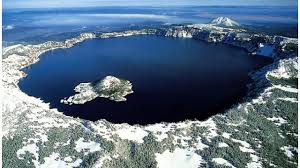
Calderas
Large depressions (up to 1 mile) formed by explosive eruptions of thick rhyolitic lava.
Stratovolcanoes
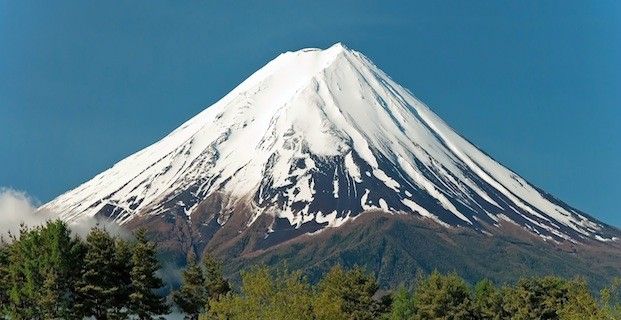
Cone-shaped mountains composed of alternating layers of ash and lava, associated with andesite rock.
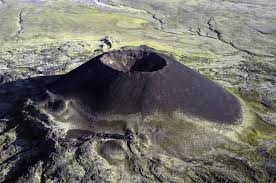
Cinder cones
Volcanoes made of cinders, characterized by explosive basaltic eruptions and lacking structural integrity.
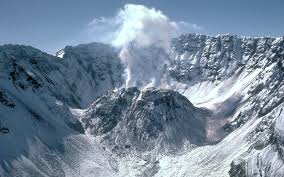
Lava domes
Unstable mounds of viscous rhyolitic lava, often hundreds of feet tall.
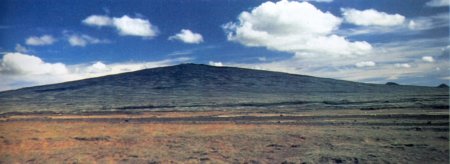
Shield volcanoes
Volcanoes with gentle slopes, primarily formed by non-explosive lava flows.
Fissure
Large volume eruptions of basaltic lava that ooze out of cracks.
Volcanic hazards
Dangers associated with different volcano types, including pyroclastic flows, tephra, and gases.
A’a
A type of basaltic lava flow with a rough, jagged surface.
Pahoehoe
A type of basaltic lava flow with a smooth, ropy surface.
Frost wedging
A physical weathering process where water freezes in cracks, causing rocks to break apart.
Unloading (pressure release)
A physical weathering process where overlying rock is removed, allowing underlying rock to expand.
Oxidation
A chemical weathering process involving the reaction between iron-rich minerals and oxygen, similar to rust.
Dissolution
A chemical weathering process where minerals are dissolved by carbonic acid, forming caves.
volcanic dome
cinder cone
cinder cone butte
caldera
Crater Lake
shield
mauna Loa
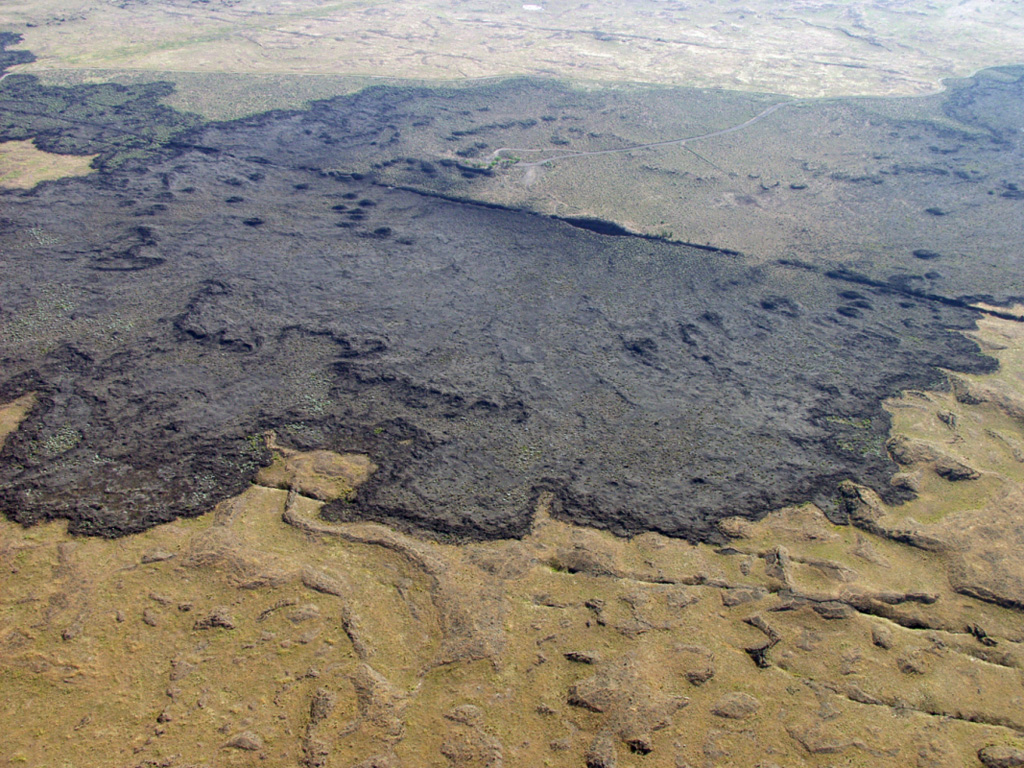
fissure
Kings Bowl
stratovolcano
Mount S. Helens
Lithification
The process by which sediment turns into rock through deposition, compaction, and cementation.
Depositional environment
Locations where clasts are dropped or settled, such as rivers, lakes, and beaches.
Conglomerate
A clastic sedimentary rock composed of large rounded clasts with poor sorting.
Breccia
A clastic sedimentary rock made of angular clasts, similar to conglomerate.
Sandstone
A clastic sedimentary rock made of sand-sized particles, typically well sorted.
Shale
A clastic sedimentary rock primarily composed of clay and fine silt, known for splitting into layers.
Coal
A biochemical sedimentary rock formed from compacted organic material, with peat as its initial stage.
Metamorphism
A solid-state change in rocks due to heat and pressure, without melting.
Parent Rock (Protolith)
The original rock that undergoes metamorphism, such as limestone transforming into marble.
Foliated metamorphic rocks
Rocks that exhibit a layered or banded appearance due to differential pressure.
Nonfoliated metamorphic rocks
Rocks that do not show layering, such as marble and quartzite.
Contact metamorphism
Occurs when rocks are heated by nearby magma, resulting in high temperature and low pressure.
Regional metamorphism
Associated with mountain building, involving low to medium temperature and high pressure.
Impact metamorphism
High temperature and pressure metamorphism caused by meteorite or asteroid impacts.