FLIGHT AND AIRPORT OPERATIONS
 Call Kai
 Learn
Learn Practice Test
 Spaced Repetition
 Match
Match Flashcards
 Knowt Play
1/38

There's no tags or description
Looks like no tags are added yet.
Name | Mastery | Learn | Test | Matching | Spaced | Call with Kai | Chat |
|---|
No analytics yet
Send a link to your students to track their progress
39 Terms
List the appropriate altitudes to complete all flight maneuver
No lower than 1,500ft AGL for upper air manuvers, for ground Ref: 600-1,000ft AGL (standard rec is 800-900ft AGL) Emergency and spin: no lower then 3,000ft AGL
what are High-Altitude Air work (Upper-Air Maneuvers)? and what altitude?
Maneuvering During Slow Flight
Power-Off Stalls
Power-On Stalls
Steep Turns
No lower then 1,500ft AGL
What are Ground Reference Maneuvers (Low-Altitude Maneuvers)? and what altitude?
Rectangular Course
S-Turns Across a Road
Turns Around a Point
600-1,000ft AGL
What are Emergency and Spin Maneuvers and what altitude?
Emergency descents
Spins
No lower than 3,000ft AGL
List the legs of the traffic pattern
Departure leg, Crosswind, downwind, base leg, final approach
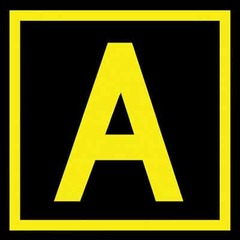
What does this sign mean
Location sign, identifies specific taxiway or runway you are on

What does this sign mean?
Mandatory Instruction sign, Indicate a mandatory stop before entering the area, must have ATC clearence to pass at towered airports

What does this sign mean?
Direction sign, These identify the directions of intersecting taxiways leading out of your current intersection

What does this sign indicate?
Destination Signs, pointing the way toward specific airport regions like TERM (Terminal) RAMP or specific runway ends

what does this sign indicate?
These display a single large number indicating the remaining runway distance in thousands of feet

What doe all of these markings represent?
Designation Numbers: Numbers corresponding to the magnetic heading of the runway rounded to the nearest 10 degrees
Centerline: A dashed white line providing alignment guidance during takeoff and landing.
Threshold Markings: Parallel vertical bars marking the beginning of the runway layout available for landing.
Aiming Point: Two thick solid white rectangles located 1,000 feet past the threshold to serve as a visual target for landing.

What is this?
Blast Pad / Stopway: Marked by yellow chevrons. This pavement cannot be used for any normal flight operations; it is structurally designed only to catch overrunning aircraft or dissipate jet blast.

What is this?
Displaced Threshold: Marked by solid white arrows pointing toward the runway surface. You cannot land on a displaced threshold, but you may use it for taxiing, takeoffs, and landing rollout tracking.
Taxiway Vs runway colors
Taxi=yellow
Runway=white

What is this?
Taxiway Centerline: A solid yellow line guiding the center track of the aircraft. Prior to approaching a runway entrance

What is this?
Runway Holding Position: You must stop on the solid side until cleared by ATC to cross onto the dashed side.

What is this?
ILS Critical Area Boundary: Pilots hold here during low-visibility precision approaches to ensure they do not block navigation signals.

What doe these lights represent?
Edge lights: White lights framing the runway borders. On instrument runways, the last 2,000 feet of edge lights transition to yellow then to red to warn pilots that the runway end is approaching.

What do the lights represent
Centerline Lights: Embedded white lights down the exact center. In the final 3,000 feet, they alternate red and white, and they turn solid red for the final 1,000 feet of runway.

What do these lights represent?
Threshold & End Lights: light bars crossing the runway tips. Arriving aircraft see them as green, while departing aircraft looking from the opposite direction see them as red

What are these lights?
Runway end identifier lights: Two synchronized, high-intensity white flashing strobe lights placed on either side of the runway approach threshold

What do these lights represent
Edge Lights: blue lights outlining taxiway boundaries
Centerline Lights: green lights guiding pilots down the center path.

What are the lights on the side indicating?
PAPI lights: They utilize color differentiation to guide a safe landing path
Explain how to use the controls to correct for wind during taxi
Headwind turn ailerons towards the wind
Tailwind turn ailerons away form the wind
Explain the information presented on an airport diagram
Airport Identifiers
Frequencies
Magnetic variation
Main runway and taxiway layout
Airport elevation
Ramps
Buildings and Visual Structures
Beacons and Hangers

What does this light gun signal mean?
Cleared for takeoff and landing

What would a flashing green represent?
Cleared to taxi, or return for landing

What does steady red mean?
STOP and give way to other aircraft

Flashing red means what?
Airport Unsafe- do not land

Alternating red and green means?
Extreme caution
How do you avoid wake turbulence when Landing Behind a Large Aircraft
Observe where the large aircraft touches down on the runway. Ensure your approach path stays above their glide path, and touch down past their touchdown point.
Landing Behind a Departing Large Aircraft
Note where the large aircraft rotates and lifts off the runway. Plan your approach to land and touch down well before their rotation point.
Departing Behind a Large Aircraft
Once airborne, climb above their climb path and steer slightly upwind to ensure the crosswind blows the sinking vortices away from your flight path.
Explain the purpose of the mixture control
To adjust the ratio of fuel to air entering the pistons engine's cylinders
Manufacturer recommended aircraft leaning procedure
Lean to 25°F Rich of Peak EGT
NOTAMS are
Notices to air missions: The purpose is to alert pilots of temporary, unexpected, or newly established hazards or operational changes along a route or at a specific location
TFRs are
Temporary flight restrictions: temporary zone of restricted airspace to protect individuals on the ground or in the air, or to provide a safe environment for emergency operations.
List the transponder codes and their purpose
7500: Highjacked
7600: Com failure
7700: engine failure and all other emergencies
1200: regular code
Describe lost communication procedures
Test to make sure volume isn't down, check different frequencies, ect
Transponder set to 7600
observe and fly traffic pattern
Look for light gun signals
Acknowledge signals