HOSA Biotechnology
 Call Kai
 Learn
 Practice Test
 Spaced Repetition
 Match
 Flashcards
 Knowt Play
1/204

There's no tags or description
Looks like no tags are added yet.
205 Terms
Biotechnology
is the merging of technology and biology
Biotechnology
use of modern molecular and microbial techniques to make useful products or processes.

PPE (personal protective equipment)
a barrier between a person and pathogens; includes gloves, gowns, masks, goggles, and face shields

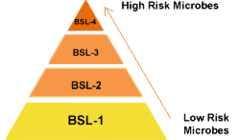
Biosafety levels
BSL-1
BSL-2
BSL-3
BSL-4
Material Data Safety Sheet (MSDS)
material safety data sheet; safety information about products compiled by manufacturer.

Genetic Engineering
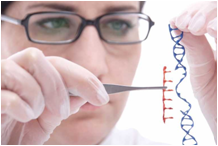
Process of making changes in the DNA code of living organisms. Process of manipulating genes.
Recombinant Proteins
Proteins that are formed from genes that are inserted into cells that are different from the original cells that coded for and made the protein
New combinations of Proteins
Novel Proteins
Chromatography
Process of separation
Genomics
investigates the whole genome
Proteomics
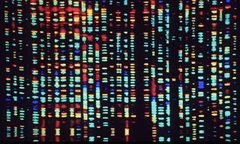
the study of sets of proteins and their properties

Transcriptomics
study of RNA patterns / transcription
Metabolomics
investigates metabolism
Microbiomics
investigates microbiomes / microorganisms
Enzymes
Biological tools that cut & reattach DNA

spectrophotometer
An instrument that measures the proportions of light of different wavelengths absorbed and transmitted

PCR
(polymerase chain reaction) multiple copies of a specific segment of DNA

Microarray
a grid of DNA segments of known sequence that is used to test and map DNA fragments, antibodies, or proteins.

transgenic animals
made by introducing genes from one species into the genome of another animal

Nanotechnology
the branch of engineering that deals with things smaller than 100 nanometers

Pharmacogenomics / Personalized Medicine
Use of DNA information to choose medications and make prescribing decisions.
or
prescribing medications based on race, gender or family history.
Pharming
Manufacturing drugs using animals

Genetically Modified Crops / GM crops
food crops with pest-resistance, herbicide-resistance, and extra nutritional contents.

bioremediaton
use of organisms to convert hazardous waste into a less hazardous form.

Phytoremediation
A method employed to clean up a hazardous waste site that uses plants to absorb and accumulate toxic materials

DNA profiling
A procedure that analyzes DNA fragments to determine whether they come from a specific individual.

Biodefense
all the methods used to protect a population from exposure to biological agents
DNA barcode
short DNA sequences that can be used to tell how species are related.

FDA
Food and Drug Administration. The agency that is responsible for determining if a food or drug is safe and effective enough to be sold to the public.

EPA
Environmental Protection Agency

USDA
United States Department of Agriculture

GLP
Good Laboratory Practices

GCP
Good Clinical Practice
GMP
Good Manufacturing Practices (for devices, see Quality stem Regulation).

QA
Quality Assurance
SOP
Standard Operating Procedure
OSHA
Occupational Safety and Health Administration

Clone
An organism that is genetically identical to the organism from which it was produced

Transformation
(genetics) modification of a cell or bacterium by the uptake and incorporation of exogenous DNA
Transferring DNA
Conjugation
A temporary union of two organisms for the purpose of DNA transfer.

Transduction
transfer of DNA from one cell to another by a bacteriophage

recombinant protein
protein product of a gene derived by molecular cloning
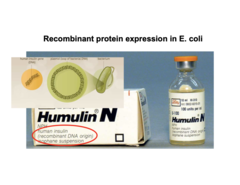
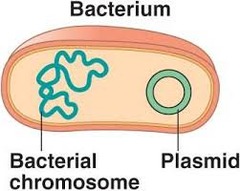
Plasmids
Circular DNA molecules that can replicate independently of the main chromosomes of bacteria

pGLO
Name for the plasmid that contains the jellyfish gene and the ampicillin resistant gene

GFP gene
green fluorescent protein (from jellyfish)

F+
stands for transfer of DNA, Fertility Factor, and Functional Protein Group
What do the letters PCR stand for?
polymerase chain reaction

PCR (polymerase chain reaction)
is used to copy and amplify minute quantities of DNA/

Promotor
A region of DNA with a specific sequence that tells RNA polymerase where to begin transcription.

What do the letters GMO stand for?
genetically modified organism

GMOs
crops that carry new traits that have been inserted through advanced genetic engineering methods

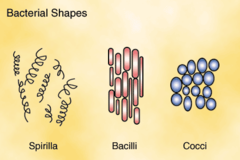
Bacteria
single-celled organisms that lack a nucleus; prokaryotes
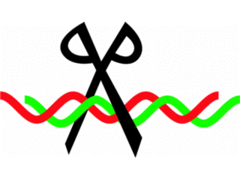
restriction enzymes
Enzyme that cuts DNA at a specific sequence of nucleotides
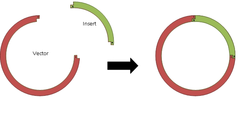
plasmid origin
allows plasmid to replicate independently form the bacterial chromosome

cloned genes
useful for making many copies of a particular gene and for producing gene products (protein or RNA)
Dolly the sheep
first cloned mammal

Insulin
A hormone produced by the pancreas or taken as a medication by many diabetics
Was one of the first recombinant proteins used for pharmaceutical application.
extrachromosomal DNA
plasmid
antibiotic
A chemical secreted by a living organism that kills or reduces the reproduction rate of other organisms

antibiotic resistance
the ability of bacteria to withstand the effects of an antibiotic

Enzyme
A type of protein that speeds up a chemical reaction in a living thing

transformation efficiency
number of colonies that were successfully transformed with the plasmid
Supernatant
The liquid on top of material deposited by settling or centrifugation.

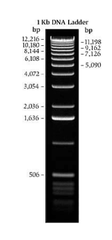
DNA marker/ladder
Size standard or DNA ladder
acid
a solution that has a PH less than 7
aqueous
describing a solution in which the solvent is water
balance
an instrument that measures mass
base
a solution that has a PH higher than 7
buffer
a solution that acts to resist a change in pH when the hydrogen ion concentration is changed
dilution
the process in which solvent is added to make a solution less concentrated
graduated cylinder
a plastic or glass tube with marks (or graduations) equally spaced to show volumes; measurements are made at the bottom of the meniscus, the lowest part of the concave surface of the liquid in the cylinder
micropipet
an instrument used to measure very tiny volumes, usually less than a milliliter
molarity
a measure of concentration that represents the number of moles of a solute in a liter of solution (or some fraction of that unit)
mole
the mass, in grams, of 6X10^23 atoms or molecules of a given substance; one mole is equivalent to the molecular weight of a given substance, reported as grams.
molecular weight
the sum of all the atomic weights of the atoms in a given molecule
PH meter
an instrument that uses an electrode to detect the pH of a solution
PH paper
a piece of paper that has one or more chemical indicators on it and that changes colors depending on the amount of H+ ions in a solution
pipet
an instrument usually used to measure volumes between 0.1 mL and 50 mL
solute
the substance in a solution that is being dissolved
solution
a mixture of two or more substances where one (solute) completely dissolves in the other (solvent)
solvent
the substance that dissolves the solute
stock solution
a concentrated form of a reagent that is often diluted to form a "working solution"
Mass/Volume Concentration Equation
________ g/ml concentration desired x ________ mL volume desired = ________ g of solute to be weighed out, dissolved in the solvent
Column Chromatography
A separation technique in which a sample is passed through a column packed with resin (beads); the resin beads are selected based on their ability to separate molecules based on size, shape, charge, or chemical nature.
Gravity-flow Columns
Column chromatography that uses gravity to force a sample through resin beads.
Pressure-pumped Columns
A column chromatography apparatus that uses pressure to force a sample through the resin beads.
Ultrafiltration
A type of filtration that separates proteins or other large organic molecules from low molecular weight solutes.
Harvesting
Extracting protein from a cell culture.
Recovery
The retrieval of a protein from broth, cells, or fragments.
Extracellular
Outside the cell.
Intracellular
Within the cell.
Sonication
The use of high frequency sound waves to break open cells.
Purification
The process of eliminating impurities from a sample; in protein purification, it is the separation of other proteins from the desired protein.
Tangential Flow
A type of ultrafiltration where small molecules diffuse out of a concentration of the molecule of interest.
Gel-filtration Chromatography
A type of column chromatography that separates proteins based on their size using size-exclusion beads.
Hydrophobic-interaction Chromatography
column chromatography that separates molecules based on their hydrophobicity (aversion to water)
Open-column Chromatography
A form of column chromatography that operates by gravity flow.
Elution
When a protein or nucleic acid is released form column chromatography resin.
Affinity Chromatography
A type of column chromatography that separates proteins based on their shape or attraction to certain types of chromatography resin.
Anion Exchange
A form of ion-exchange chromatography in which negatively charged ions (anions) are bound by a positively charged resin.
Ion-exchange Chromatograph
A separation technique that separates molecules based on their overall charge at a given pH.