B1- response to internal and external stimuli ✅
 Call Kai
 Learn
Learn Practice Test
 Spaced Repetition
 Match
Match Flashcards
 Knowt Play
1/13

There's no tags or description
Looks like no tags are added yet.
Name | Mastery | Learn | Test | Matching | Spaced | Call with Kai | Chat |
|---|
No analytics yet
Send a link to your students to track their progress
14 Terms
what is a stimulus?
a change in an organisms internal or external environment
why is it important that organisms can respond to stimuli?
organisms increase their chance of survival by responding to stimuli
what is a tropism?
growth of a plant in response to a directional stimulus
positive tropism = towards a stimulus; negative tropism = away from stimulus
summarise the role of growth factors in flowering plants
specific growth factors e.g. auxins (such as IAA) move via phloem/ diffusion from growing regions e.g. tips where they’re produced
to other tissues where they regulate growth in response to directional stimuli (tropisms)
describe how IAA affects cells in roots and shoots
in shoots, high concentrations of IAA stimulates cell elongation
in roots, high concentrations of IAA inhibits cell elongation
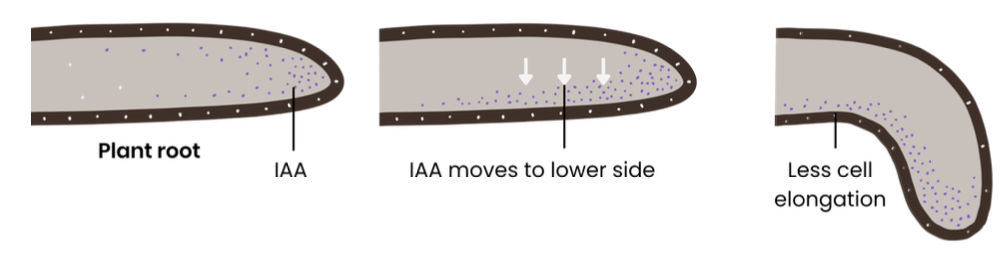
explain gravitropism in roots of flowering plants
cells in tip of root produce IAA
IAA diffuses down root
IAA moves to lower side of root so concentration increases
high concentration of IAA inhibits cell elongation on lower side
cells on upper side elongate faster and so root bends towards gravity, downwards
WORDING : refer to “upper and lower side”
explain gravitropism in shoots of flowering plants
cells in tip of root produce IAA
IAA diffuses down root
IAA moves to lower side of shoot so concentration increases
high concentration of IAA stimulates cell elongation on lower side
cells on lower side elongate faster and so shoot bends away from gravity, upwards
WORDING : refer to “upper and lower side”
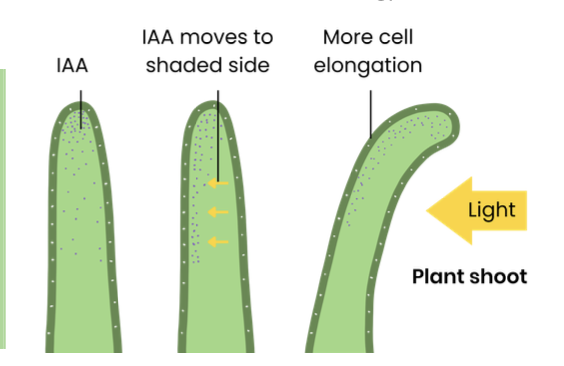
explain phototropism in shoots of flowering plants
cells in tip of shoot produce IAA
IAA diffuses down shoot
IAA moves to shaded side of shoot so concentration increases
stimulates cell elongation on shaded side
so shoot bends towards light
WORDING : refer to “light and shaded side”
explain phototropism in roots of flowering plants
cells in tip of root produce IAA
IAA diffuses down shoot
IAA moves to shaded side of root so concentration increases
inhibits cell elongation on shaded side of root
so root bends away from light
WORDING : refer to “light and shaded side”
describe the simple response that can maintain a mobile organism in a favourable environment
Taxes
directional response
movement towards or away from a directional stimulus
Kinesis
non directional response
speed of movement and rate of directional change in response to a non direction stimulus
depending on intensity of stimulus

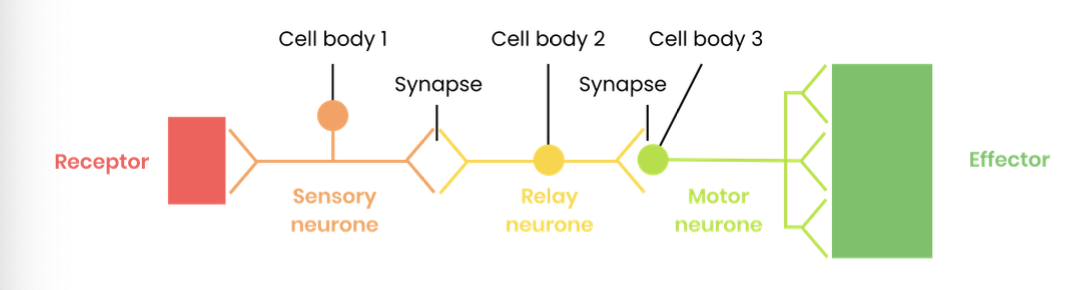
explain the protective effect of a simple (eg. 3 neurone ) reflex
rapid as only 3 neurones and few synapses
autonomic ( doens’t involve conscious regions of the brain ) so doesn’t have to be learnt
protects from harmful stimuli eg. escape predators / prevents damage to body tissues
give 3 examples of advantages of taxis for an animal
avoid competition
find a mate
avoid predators
why is the lid kept on the agar plate when measuring the growth of shoot tip on agar plate in IAA solutions of different concentrations
prevent evaporation
which alters IAA concentration
why are plant growth factors not classified as hormones
Not made in glands or transported in blood to target organs — instead made in growing tips and act locally by diffusion/active transport.