HAA 01- Quiz 3
 Call Kai
 Learn
 Practice Test
 Spaced Repetition
 Match
 Flashcards
 Knowt Play
1/32

There's no tags or description
Looks like no tags are added yet.
33 Terms

The necropolis of Cerveteri, 7th -2nd century BCE. Includes tumuli (mounds) and dromoi (passageways) which were made with corbeled vaults, as well as rectangular tombs made with tuff (soft volcanic rock) They were grouped together outside the living spaces of Etruscan towns to create a city of the dead. Filled with man ygrave goods

Tomb of the reliefs, Cerveteri, c.250 BCE. At the necropolis of Cerveteri. Painted and carved decorative replicas of daily objects found in the tomb, applied onto the walls in stucco. The concept of burying items that would be of service in the afterlife is reminiscent of Egyptian funerary practice, though replicas of actual items differ markedly between the two cultures.

Sarcophagi from Cerveteri, c. 520 BCE, terra cotta. Depicts a couple resting on a day bed, they are in a warm embrace rather than the rigidity seen in Egyptian sculpture like King Menkaure and queen. The sarcophagus is made from two pieces that open. The man and woman have the classic archaic smile, hands outstretched they appear to have been holding something.

Revetment plaques from Acquarossa, showing banqueting scenes, painted terra cotta c. 575-c.550. Etruscans built their homes out of wood. Plaques nailed onto the wood of their buildings to protect exposed beams. In these revetment plaques, we see a banquet scene, with diners on couches amid musicians and the other depicting Herakles accomplishing his labors. These plaques depict interesting stories.
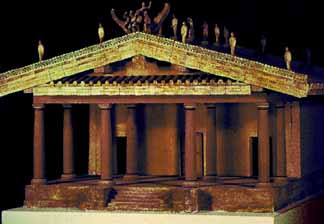
Reconstruction of the Portonaccio Temple at Veii (after Vitruvis), c.500 BCE. The temple was built out of perishable materials like mud brick and wood. They loveddd acroterions. Their cells were situated to one side, had directionality.

Aplu (Apollo) from the Portonaccio Temple at Veii, 510 BCE, terra cotta. Sculpted by Vulca of veii. One of many acroterions from the temple that depict the contest of Hercules and Apollo for the sacred hind in the presence of other deities. The best-preserved of the figures is Aplu. Aplu wearing a garment similar to Roman toga, has the archaic smile and a dynamic stance.
Sculptor of the Portonaccio Temple
Vulca of Veii

She-Wolf, c.500 BCE, bronze, later additions by Antonio Pollaiuolo. She-wolf very important to roman culture. The twins under the wolf that were added later are Romulus and Remus. Bronze cast sculpture.

L’Arringatore (the Orator) Aulus Metellus, 1st century BCE, bronze.
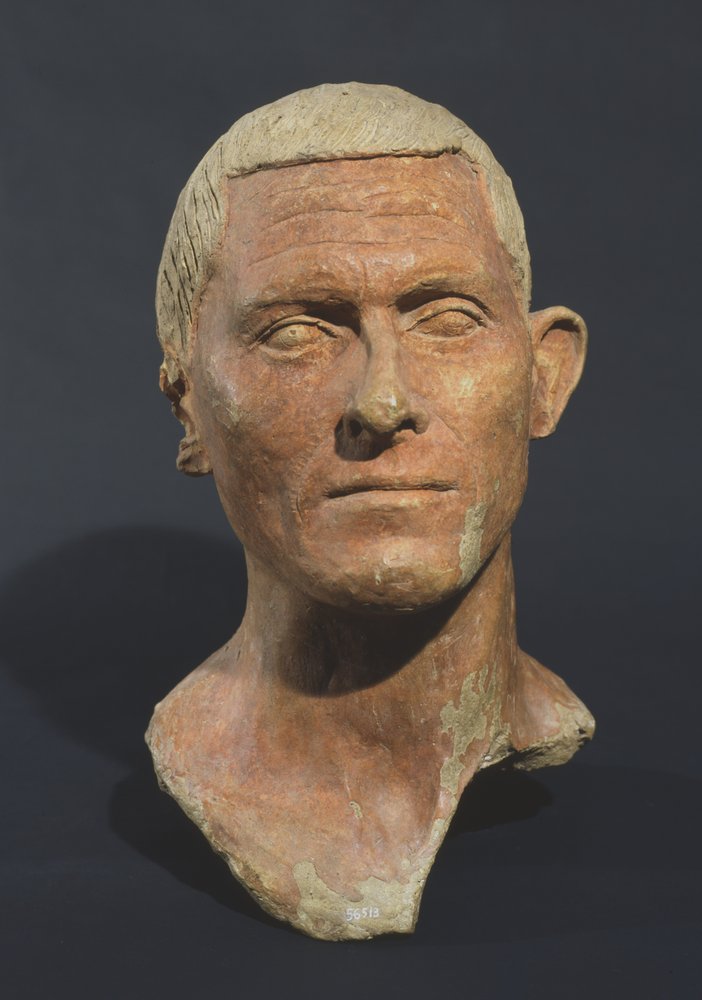
portrait of a man from Manganello, 1st century BCE, terra cotta

Temple of Portunus, Rome, c. 80-70 BCE. This temple demonstrates how Romans adopted Etruscan temple building techniques. They used a podium, directionality, a single entryway with a columned porch, engaged columns, enclosed cella.

Roman Forum, the bustling center of civic life in Roman towns

The Roman Colosseum, c.75-80 CE. The first permanent amphitheater in Rome for the gladiatorial games and mock sea battles. Uses engaged columns and pilasters in the tuscan order (Roman version of Greek doric order). Had a velarium (a canvas awning that protected the spectators from the sun). The colosseum began under Vespasian and was completed under his son Titus and later by Domitian. It

The Pantheon, Rome, Concrete 118-125 CE. One of the best preserved temples in Rome. Temple front + rectangular block + oculus. It has an octastyle front and has a 3-part interior elevation with semicircular exedrae, coffers (recessed panels in ceiling), and an oculus. It looks like the dome hovers over the space. The temple was built as a temple to all gods.

The Arch of Titus, Rome, 81 CE, marble. The earliest surviving free-standing arch in Rome. This is also the first use of composite order column style. It was at the eastern end of the Roman Forum, it is carved with narrative reliefs depicting the divinization of Titus after his death. The inner relief shows the triumph after the destruction of the Second Temple in Jerusalem in 70 CE. Spacial illusionism in action, shallow relief allows the background figures to fade into the back.
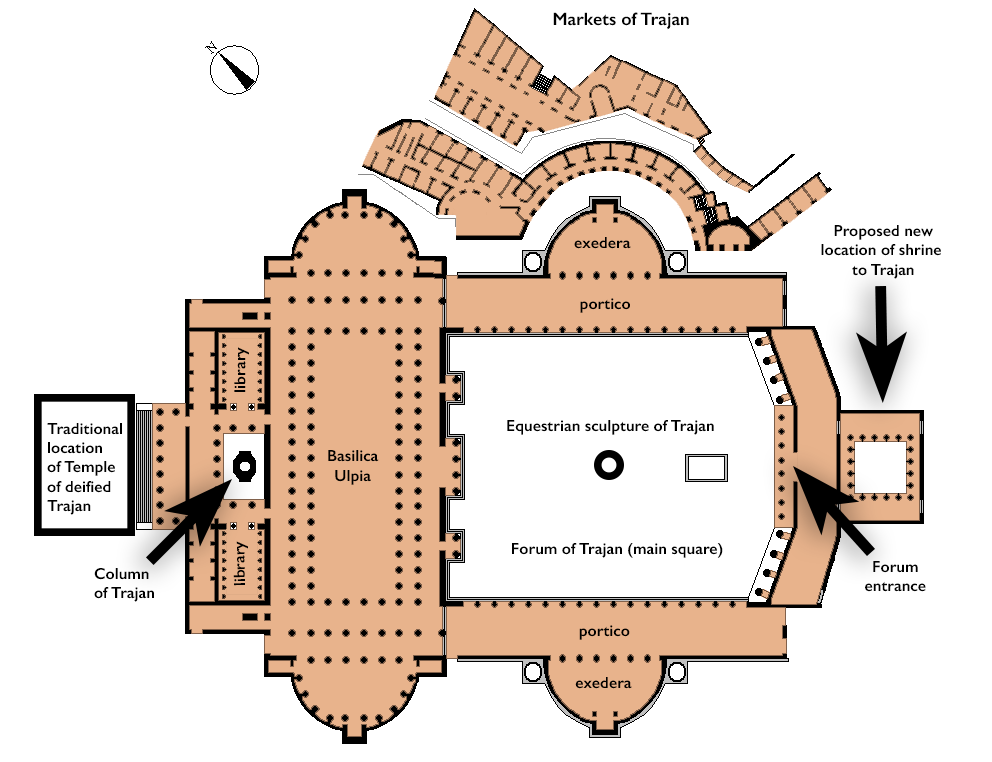
Forum of Trajan, 113 CE, the largest and fina imperial forum of ancient Rome. Celebrated Rome’s military dominance. narrative relief on trajan’s column

Basilica Ulpia, 112 AD (CE), marble, granite, concrete, and bronze, a non-religious hall in Trajan’s forum used for law courts, businesses, public gatherings. The prototype for Constantine’s early christian basilicas.
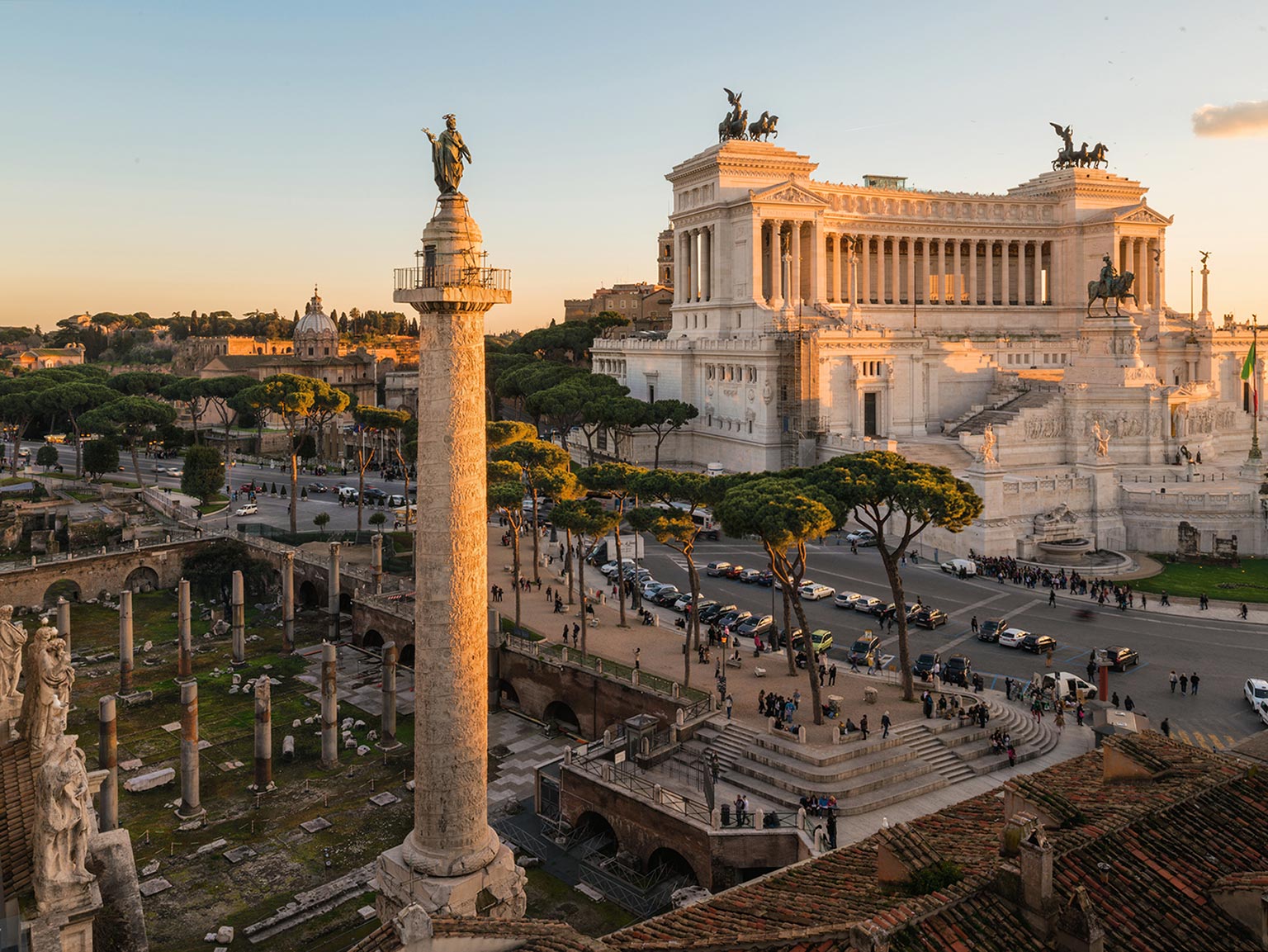
Column of Trajan, May 113 AD, located in the forum of trajan. Narrative relief spirals the column 23 times depicting campaigns against Dacia. Column’s base is a burial chamber for Trajan’s ashes, circumambulating the column may have served burial ritual purpose.

The baths of Caracalla, 212-216 CE, the baths contained bathing facilities and also lecutre halls, libraries and array of temples. Baths were an important place of social interaction. Impressive engineering was done to warm the hot room by directing hot air from furnace below the floors. Example of ambitious and sophisticated large-scale planning from classical antiquity. Rationally conceived plan with integration of structure and volume.
Tesserae
small pieces of colored stone, marble, glass or gold-backed glass used in a mosaic

Basilica of Maxentius and Constantine, c. 307 CE, the last great building project in imperial Rome, when it was completed it was the largest roofed interior in Rome. It was inspired by the construction of bath buildings. Large portrait of Constantine added when he took over from Maxentius.

“Brutus”, bronze, bust modern, 1 c BCE. Example of verism in portraiture unlike greek style

veristic male portrait, perhaps a philosopher or statesman, marble. Example of verism in portraiture.
veristic
true, refers to hyperrealistic style of portraiture emphasizing individual characteristics. Depicts the roman ideal that wisdom, responsibility, and experience came with seniority.

Augustus of Primaporta, Marble, c. 20 CE. Emperor Augustus never aged in his portraits, unlike previous veristic style. This sculpture is reminiscent of Polykleitos Doryphoros. The Classical Greek style evoked the apogee of Athenian culture, casting Augustan Rome as Greece’s successor (and conqueror) in cultural supremacy.

Equestrian statue of Marcus Aurelius, 161-180 CE, bronze. Beginning in the second half of the second century ce, Roman portraits gradually take on a more abstract quality. With one arm out stretched in a gesture of mercy, the emperor sits calmly astride a spirited horse, whose raised front leg once rested on a conquered barbarian. He has a beard which imitates greek culture. His eyelids are half shut giving him a distant look.
Encaustic technique
hot wax painting

Portrait of a Woman from Hawara in Fayum, Lower Egypt c 110-30 CE, encaustic on wood panel. She has a roman appearance but the portrait is on her mummy because she was buried in the egyptian way. This depicts the blending of cultures seen in the roman era.

Pompeii, Italian town buried in ash after eruption of Mount Vesuvius in 79 CE. The city was designed using the standardized cart axle lengths. Insight into the architecture and city planning of the time.
Pompeii houses
Domus- the elite roman hoses, atrium - the main central hall, impluvium - the shallow pool in the atrium that collected rainwater, cubicula - bedrooms, tablinum - reception roof, peristyle - colonnade.

Rock-cut tombs from 1st and 2nd CE, including the so-called treasury (El Khasneh). Located in Petra, Jordan. Employs elements of Greco-Roman temple and funerary architecture BUT it’s all carved in stone!! Nabateans buried their dead in tombs cut out from cliffs, and they combined that concept with Roman decorative features.

Gravestone with Funerary Banquet, c. 2nd-3rd century, Syria probably from Palmyra. Depicts people in regional attire performing a funeral banquet. The high relief carving and positioning is very Roman style.

Funerary bust from Palmyra, 150-200 CE, Limestone, life-size. Inscription: “Aqmat, daughter of Agago”. Sealed the burial to a tower tomb, which was a palmyrene monument. Her garments are unique to her culture but she has roman elements such as her right hand, which is raised to hold her vail and was a roman gesture. she is a palmyrene and roman woman (dual identity)