Salivary Gland Pathology
 Call Kai
 Learn
 Practice Test
 Spaced Repetition
 Match
 Flashcards
 Knowt Play
1/71

There's no tags or description
Looks like no tags are added yet.
72 Terms
major salivary glands
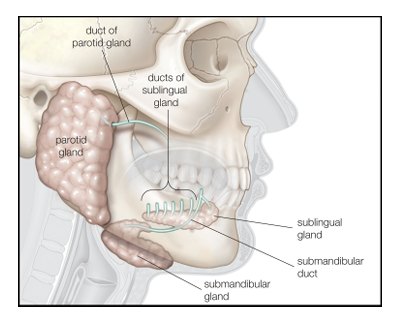
-parotid glands: parotid duct = Stensen’s duct, exits at parotid papilla (2nd maxillary molars), serous saliva
-sublingual glands: 8-20 ducts, smaller - ducts of Rivinus (exit on floor of mouth), larger - duct of Bartholin (merges with Wharton’s duct), mucous saliva
-submandibular glands: submandibular duct = Wharton’s duct, exits at sublingual caruncles on either side of lingual frenum, mixed serous and mucous saliva

minor salivary glands
-600+
-locations: anterior and posterior tongue, buccal and labial mucosa, mid- to posterior palate, also nasal cavity/paranasal sinuses, pharynx, larynx, lungs
-NO MINOR SALIVARY GLANDS on anterior hard palate and gingiva (except retromolar pad)
-primarily mucous saliva- exception = von Ebner’s glands, around circumvallate papillae of the tongue, serous saliva

parotid papilla
-flap of tissue overlying communication of Stensen (parotid) duct with oral cavity

sublingual caruncles, plicae (folds)
-caruncles: opening of submandibular (Wharton) ducts
-plicae/folds: opening of sublingual ducts (ducts of Rivini)

functions of saliva
-hydration
-cleansing
-lubrication
-digestion: starch, carbohydrates
-antimicrobial: salivary proteins, lysozymes, lactoferrin, lactoperoxidase, cystatins, histatins, secretory IgA
-remineralization
-taste: enhances taste perception
salivary gland histology


palatal cysts of the newborn
-50-75% of neonates
-1-3mm yellow/white papules
-self-healing- resolve within several weeks
-scattered over hard/soft palatal mucosa
-probably derived from epithelium associated with developing minor salivary glands
-epstein pearls- same or different? → midline of palate, may be derived from fusion of palatal processes during embryonic development
-no consistent eponyms^
-compare with gingival cysts of newborn- scattered over alveolar ridge and derived from dental lamina

major salivary gland disease
-hyposalivation and xerostomia
-Sjogren syndrome
-IgG4-related disease
-sialadenosis (sialosis)
-mumps (epidemic parotitis)*
-acute transient parotitis (anesthesia mumps)
-HIV salivary gland disease
hyposalivation and xerostomia
-hyposalivation: objective decrease in salivary flow, may or may not be associated with xerostomia
-xerostomia: subjective complaint of dryness, may or may not be associated with hyposalivation
hyposalivation- most common causes
-dehydration- not enough water, too much coffee/tea/alcohol
-polypharmacy
-anxiety/depression- chronic stimulation of sympathetic nervous system → inhibition of serous saliva
-mouth breathing
-smoking
-radiation therapy
-Sjogren syndrome
-any disease that can affect the salivary glands
hyposalivation clinical features
-difficulty eating, swallowing, speaking
-dental instruments stick to mucosa
-coated (hairy) tongue
-taste changes
-oral burning
-candidiasis
-cervical/interproximal caries

hyposalivation scoring
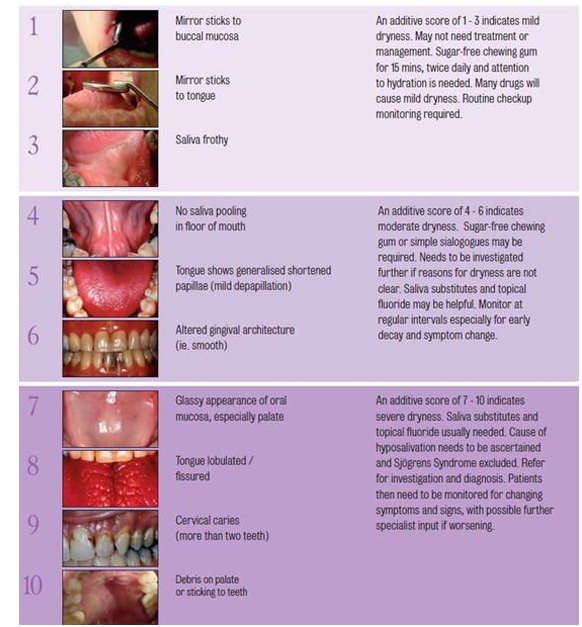
hyposalivation management
-symptoms difficult to manage
-constant hydration
-avoid caffeinated beverages (mildly diuretic)- coffee, tea, soda
-saliva substitutes (biotene)- spray, gel seem to be superior to rinse
-xylitol chewing gum
-sialogogues- pilocarpine 5mg TID, cevimeline 30mg TID
-caries prevention: brushing, flossing, diet, fluoride trays/varnish, SDF? (not FDA approved yet), routine dental visits and radiographs, glass ionomer better for cervical decay, avoid acidic beverages- coffee, tea, soda, energy drinks, wine
Sjogren syndrome
-systemic autoimmune disease primarily targeting exocrine glands, particularly of eyes and mouth
-lacrimal gland dysfunction: keratoconjunctivitis sicca (dry eyes), salivary gland dysfunction: dry mouth
-other organs may be affected in 25% of cases: skin, joints, lungs, heart, GI tract
-striking (9:1) female ratio
-may present secondary to another autoimmune disease (rheumatoid arthritis most commonly)
-signs/symptoms of ocular and oral discomfort
-30-50% of patients: firm enlargement of salivary glands, usually bilateral

Sjogren syndrome diagnostic criteria
-2 out of the following 3 criteria must be met:
1) positive serum: Anti-SSA or Anti-SSB or RF + ANA (ANA >/= 1:320)
2) ocular staining score >/=3 (fluorescein, lissamine, rose bengal eye stain)
3) focal lymphocytic sialadenitis (FLS) with focus score >/= 1 focus/4mm² in labial salivary gland biopsy
-^1 = single most important criterion
-dry eyes/mouth may be seen in absence of evidence of autoimmune disease, known as sicca complex
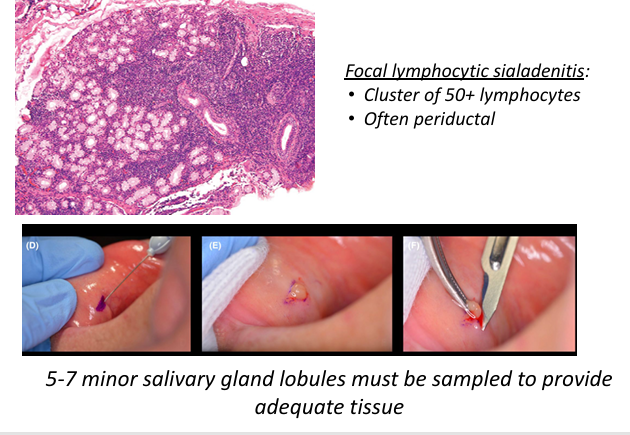
focal lymphocytic sialadenitis
-cluster of 50+ lymphocytes
-often periductal
Sjogren syndrome management
-dry mouth: basic self-care measures, regular preventive dental care, artificial saliva, sialogogues
-dry eyes: artificial tears, topical cyclosporine, steroids, others
-severe/persistent sicca manifestations or extraglandular manifestations: systemic therapy such as hydroxychloroquine, rituximab
-5-10% of pts: MALT lymphoma, usually in parotid
IgG4-related disease
-fibro-inflammatory condition characterized by: tendency to form tumefactive lesions at multiple sites/organs, common microscopic features regardless of organ involved, elevated serum IgG4 concentrations
-unifies many conditions previously considered organ-specific or idiopathic: autoimmune pancreatitis (type 1), mikulicz syndrome (salivary/lacrimal swelling), Kuttner tumor (submandibular gland), riedel thyroiditis, eosinophilic angiocentric fibrosis, patients may be treated with systemic steroids, rituximab

Mikulicz syndrome
-historical term referring to swelling of lacrimal and parotid/submandibular glands
-non-specific clinical presentation that may be seen in IgG4-related disease, Sjogren syndrome, sarcoidosis, others

Kuttner tumor
-chronic sclerosing sialadenitis
-firm enlargement of submandibular gland
-typically bilateral


-Kuttner tumor
sialadenosis (sialosis)
-chronic, bilateral, diffuse, non-inflammatory, non-neoplastic swelling of major salivary glands
-acinar hypertrophy and ductal atrophy
-primarily affects parotid glands, but occasionally involves the submandibular glands
-usually painless, may be tender
-may be idiopathic or may be associated with: chronic malnutrition, obesity, diabetes mellitus, alcoholism, liver disease, eating disorders, meds
-management ranges from surgery to pilocarpine to observation

mumps (epidemic parotitis)
-caused by paramyxovirus gene
-highly infectious, spread by respiratory droplets, most common viral cause of sialadenitis^^
-acute, self-limited viral syndrome, approximately 2 week duration, sporadic outbreaks still occasionally occur despite routine MMR vaccination
-treatment symptomatic/palliative

mumps clinical features
-last approximately 2 weeks
-low-grade fever, malaise, headache, myalgia
-parotitis: 95% of cases, bilateral in 90%, lasts approximately 10 days, increased serum amylase
-epididymoorchitis with testicular pain and swelling, 40% of males, may result in impaired fertility, complete sterility rare
-oophoritis, pancreatitis
-aseptic meningitis
acute transient parotitis (surgical mumps)
-transient inflammation and enlargement of salivary glands after general anesthesia
-usually subsides within few hours
-very rarely causing serious symptoms warranting urgent intervention, patient kept NPO and administered atropine, combination of factors (trauma, infection, hypersensitivity reactions, dehydration, excretory duct obstruction by position, calculi, thickened secretions)
-dry oral cavity/parotid susceptible to ascending infection (frequently S. aureus)
-increasingly uncommon surgical complication- pre- and peri-operative antibiotics/IV fluid routinely administered
-currently most commonly seen in elderly patients taking many medications
HIV salivary gland disease
-approximately 5% of HIV-infected individuals affected
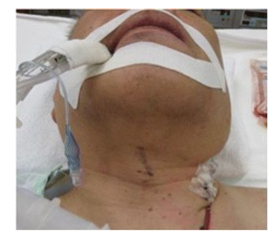
-enlargement of one or more salivary glands- typically parotid, frequently accompanied by cystic degeneration (lymphoepithelial cyst, cystic lymphoid hyperplasia)
-manifestation of diffuse infiltrative lymphocytosis syndrome

HIV salivary gland disease- diffuse infiltrative lymphocytosis syndrome (DILS)
-rare oligoclonal expansion of CD8+ T cells in peripheral blood of HIV-infected patients
-diffuse lymphocytic infiltration of various organs (lungs, peripheral nerves, salivary glands, lacrimal glands
-Sjogren-like clinical picture
-pts with DILS have very high levels of HIV proviral DNA in peripheral nerves- lymphocytic infiltration is driven by HIV antigens
HIV salivary gland disease management
-reduction of size with antiretroviral therapy
-surgical excision
traumatic and obstructive salivary gland diseases
-mucocele and ranula
-salivary duct cyst
-sialolithiasis
mucocele
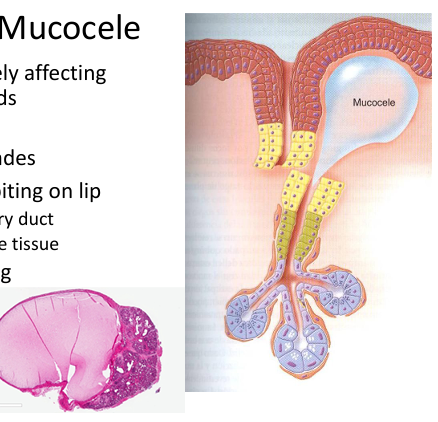
-common condition exclusively affecting intraoral minor salivary glands: lower lip = 80%
-most common in 1st-3rd decades
-traumatic etiology, usually biting on lip = laceration of excretory salivary duct, mucin spillage into connective tissue
-not a cyst: no epithelial lining
mucocele clinical presentation and tx
-dome-shaped, translucent/bluish nodule
-fluctuant
-often increasing and decreasing in size, especially around mealtimes
-treated with surgical excision of swelling and damaged salivary gland (to prevent recurrence)
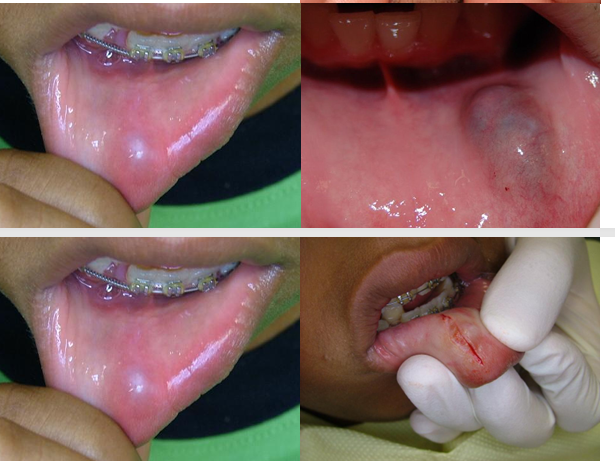
mucoceles of ventral tongue affect
-glands of Blandin-Nuhn

mucoceles of the retromolar pad
-very rare
-mucocele-like presentation should raise suspicion for a neoplasm, especially mucoepidermoid carcinoma

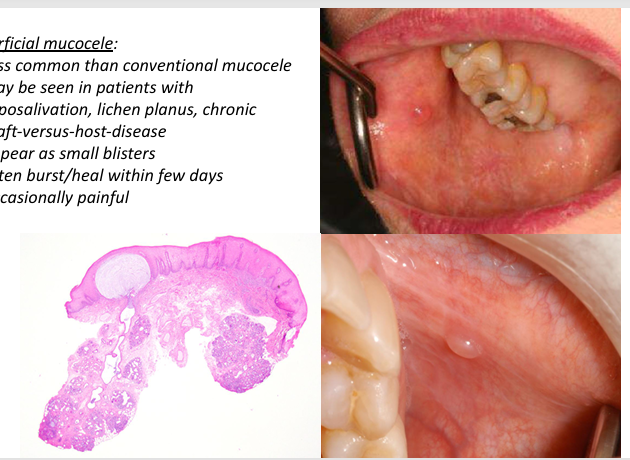
superficial mucocele
-less common than conventional mucocele
-may be seen in pts with hyposalivation, lichen planus, chronic GvHD
-appear as small blisters
-often burst/heal within few days
-occasionally painful
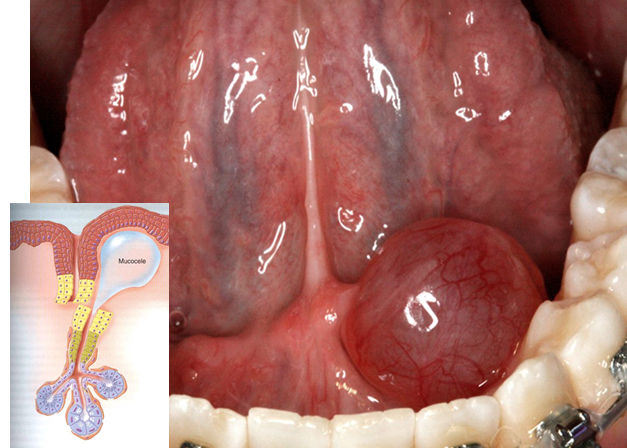
ranula
-mucocele of sublingual gland
-may elevate tongue, resulting in dyspnea
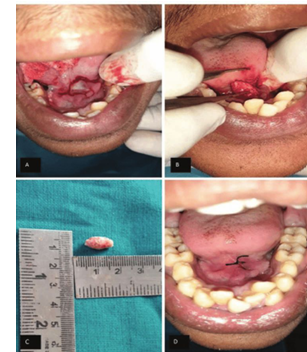
-treated by excision of mass and associated sublingual gland
-occasionally treated by marsupialization
ranula and “plunging” ranula
-sublingual gland sits above mylohyoid, in sublingual space
-many ranulas present as intraoral swellings involving sublingual space
-occasionally, ranula may involve submylohoid space → known as plunging ranula, presents as extraoral swelling, ± intraoral swelling
-mylohyoid separates sublingual (intraoral) from submylohyoid (extraoral) space
-spaces communicate at posterior margin of mylohyoid
-35-50% of people have defect in midportion of mylohyoid

____ may be seen in plunging ranula imaging
-tail sign
-represents escape of lesion from sublingual space

salivary duct cyst (mucus retention cyst)
-reactive, balloon-like dilation of excretory salivary duct
-secondary to mucus plugging
-usually <1cm, translucent to yellow
-common sites of occurrence: parotid, mandibular vestibule/lower lip/buccal mucosa, floor of mouth, paranasal sinuses (mucous retention cyst)
-asymptomatic and conservatively excised

sialolithiasis
-sialolith: calcification within salivary gland or duct
-begins around nidus of debris: mucus, bacteria, etc.
-localized process: no relation to hypercalcemia, nephrolithiasis, cholelithiasis
-clinically symptomatic sialoliths affect 0.5% of population at some point in lifetime
-location; submandibular gland 70-90%, parotid, upper lip
submandibular gland
-longest excretory duct of all glands, upward flow against gravity
-viscous saliva due to high mucous content
-saliva has higher pH and contains twice as much calcium (compared to parotid), favoring mineralization
major salivary sialoliths present with pain/swelling at ____
-mealtime
-due to obstruction of salivary flow
minor salivary sialoliths
-usually asymptomatic and firm
-may cause local tenderness/swelling
diagnosis of submandibular stones
-plain films (occlusal)
-not all stones sufficiently calcified to be visible
-other imaging techniques (sialogram, MRI, CT) may be necessary

sialolith on panoramic radiograph
-may appear superimposed over angle/body of mandible on panoramic radiographs

bacterial sialadenitis
-often a consequence of obstruction
-pain, swelling, erythema, ± fever
-purulent drainage from duct

bacterial sialadenitis management
-non-invasive removal: gland massage, sialogogue prescription, antibiotic prescription when infection/purulent discharge present (associated with longstanding cases)
-surgical excision: intraoral approach under local anesthesia (sialendoscopy, followed by salivary gland massage, sour diet, sialogogues to stimulate salivary glow/prevent scarring over duct orifice)

necrotizing sialometaplasia
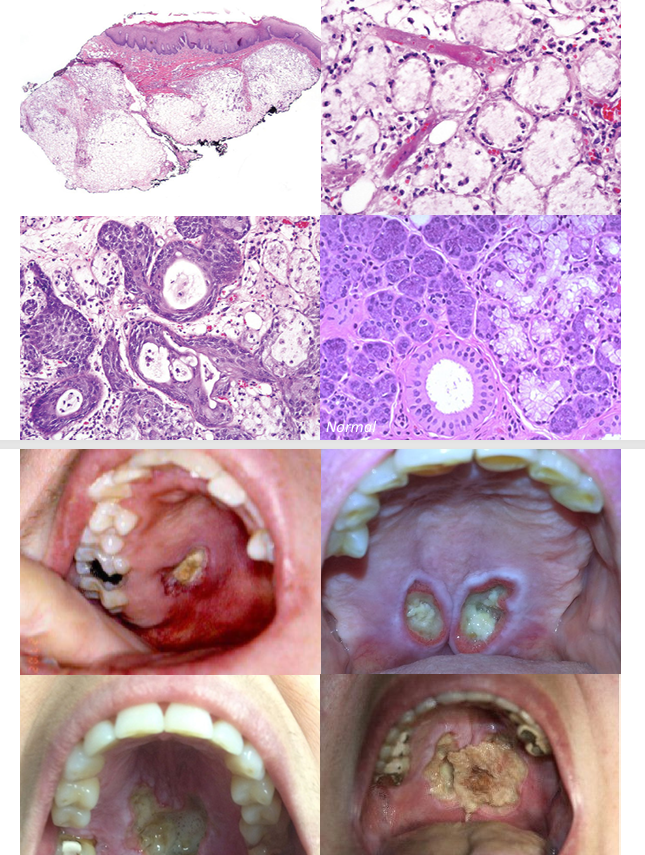
-unusual condition resulting from salivary gland infarction/necrosis- necrosis ischemic in origin but cause usually unknown (HIF-1alpha, VEGF, EGFR upregulated)
-alarming clinical presentation mimics malignancy- rapidly developing ulceration, may be painful
-typically occurs on palatal mucosa unilaterally- most common location for benign and malignant salivary gland neoplasms as well, 30% of cases bilateral or involve midline area
-3:1 male predilection
necrotizing sialometaplasia healing and diagnosis
-self-healing over 1-6 months
-biopsy (most often) necessary for diagnosis- clinical presentation non-specific and suggestive of malignancy
neoplasms of the salivary glands
-uncommon and very heterogeneous group of neoplasms- 2-5% of head and neck malignancies
-parotid gland: 60-75% of salivary gland tumors
-parotid >> minor salivary glands > submandibular gland > sublingual gland
-pleomorphic adenoma comprises approximately half of all (benign and malignant) salivary gland tumors
-most salivary gland malignancies have low-grade biologic behavior
-peak incidence 5th-7th decades, slight female predilection- generally few known risk factors
salivary gland tumors- benign and malignant
-parotid gland: 75% benign (site of predilection for pleomorphic adenoma), 25% malignant
-minor salivary glands/submandibular gland: 40-60% benign, 40-60% malignant
-sublingual gland: 10-30% benign, 70-90% malignant
salivary gland tumors by age
-most common salivary gland tumor in infants: hemangioma
-most common salivary gland tumor in children, adolescents, and adults: pleomorphic adenoma
-most common salivary gland malignancy in children, adolescents, and adults: mucoepidermoid carcinoma
primary salivary gland tumors by location- minor salivary glands (exclusively or predominantly)
-canalicular adenoma
-polymorphous (low-grade) adenocarcinoma
-cribriform adenocarcinoma of minor salivary glands
-hyalinizing clear cell carcinoma
-sialadenoma papilliferum
-inverted ductal papilloma
-intraductal papilloma
primary salivary gland tumors by location- major and minor salivary glands
-pleomorphic adenoma
-basal cell adenoma
-myoepithelioma
-cystadenoma
-cystadenocarcinoma
-mucoepidermoid carcinoma
-secretory carcinoma
-adenoid cystic carcinoma
-adenocarcinoma, not otherwise specified
primary salivary gland tumors by location- major salivary glands (exclusively or predominantly)
-warthin tumor
-oncocytoma
-sclerosing polycystic adenosis
-lymphadenoma
-sebaceous lymphadenoma
-acinic cell carcinoma
-carcinoma ex pleomorphic adenoma
-metastasizing pleomorphic adenoma
-basal cell adenocarcinoma
-epithelial-myoepithelial carcinoma
-myoepithelial carcinoma
-salivary duct carcinoma
-intraductal carcinoma
-squamous cell carcionma
-lymphoepithelial carcinoma
-neuroendocrine carcinoma
-neuroendocrine carcinoma
-oncocytic carcinoma
-mucinous adenocarcinoma
-sebaceous carcinoma
-sialoblastoma
clinical presentation of salivary gland neoplasms
-generally similar presentation regardless of specific disease
-benign/malignant tumors usually present as painless mass/swelling- frequently mobile, unless on hard palatal mucosa, may be covered by normal or ulcerated mucosa/skin
-pain/paresthesia/paralysis suggestive or perineural invasion- parotid malignancies may invade facial nerve
-most common intraoral lesions: palate, upper lip, buccal mucosa

differential diagnosis of palatal masses
1) salivary gland neoplasm (1. pleomorphic adenoma, 2. mucoepidermoid carcinoma, 3. adenoid cystic carcinoma, 4. polymorphous (low-grade) adenocarcinoma)
2) lymphoma
3) soft tissue neoplasm
4) if ulcerated, may consider SCC, necrotizing sialometaplasia, infectious
5) common things are common- dental abscess

diagnosis of salivary gland neoplasms
-imaging to localize disease (particularly for major salivary gland swellings)- CT, MRI, ultrasound
-biopsy necessary for diagnosis
-ultrasound-guided FNA or core needle biopsy (particularly for major salivary gland swellings) or incisional biopsy (often for minor salivary gland swellings)

pleomorphic adenoma (benign mixed tumor)
-pleomorphic- marked microscopic heterogeneity between PAs and within the same PA
-mixed- contains mixture of epithelial/myoepithelial cells, and mesenchymal elements (bone, cartilage, fat)
-most common salivary gland tumor of major and minor salivary glands
-80% occur in parotid
-characterized by PLAG1 and HMGA2 gene rearrangements

pleomorphic adenoma management
-parotid tumors: superficial parotidectomy (increased risk of recurrence if treated by enucleation alone)
-submandibular/sublingual tumors: removal of gland
-minor salivary gland tumors: conservative excision
carcinoma ex pleomorphic adenoma
-malignancy occurs within 5-10% of PAs
-1.6% of PAs present less than 5 years
-9.5% of PAs present more than 15 years
-time period for malignant transformation approximately 20 years
-parotid > submandibular >> minor salivary glands
-oral cavity PAs come to clinical attention early
-presents as sudden or rapid enlargement of long-standing/painless/slowly-enlarging mass
-pain, facial nerve paresis, soft tissue fixation may occur

mucoepidermoid carcinoma
-most common: salivary gland malignancy, intraoral salivary gland malignancy, pediatric salivary gland malignancy, intraosseous salivary gland malignancy
-2nd most common salivary gland neoplasm: 10-15% of all salivary gland neoplasms, 30% of all salivary gland malignancies
-just over 50% occur in major salivary glands (90% in parotid)
-minor salivary glands: palatal mucosa most common site, retromolar pad MEC may look like mucocele

mucoepidermoid carcinoma- histology and biologic behavior
-consists of mucous, epidermoid, and intermediate cells
-characterized by CRTC1-MAML2 t(11;19)(q21;p13) translocation
-classified as low, intermediate, or high grade: low, intermediate MEC → 5 year DSS >95%; high grade → 5 year DSS 67%
-major salivary gland MEC: roughly equal incidence of low, intermediate, high grade
-minor salivary gland MEC: 90-95% low or intermediate grade
warthin tumor
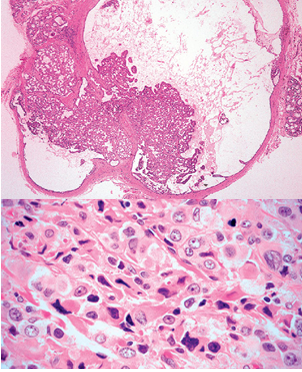
-unusual salivary tumor arising from salivary epithelium arising within periparotid lymph nodes- likely a reactive process and not a true neoplasm
-well-established association with smoking
-strong male predilection due to historical smoking habits- male predilection less strong today
-second most common benign salivary gland “tumor”
-indolent course: if diagnosed by FNA, excision may not be necessary
-10% of Warthin tumors bilateral
-may present synchronously or metachronously

warthin tumor histology

acinic cell carcinoma
-low-grade carcinoma with a tendency to recapitulate normal serous acini
-91% 5 year survival
-most common in parotid
-second most common pediatric salivary malignancy

adenoid cystic carcinoma
-salivary malignancy characterized by striking tendency for perineural invasion
-pain, facial nerve paralysis in many parotid carcinomas
-equally distributed between major and minor salivary glands
-characterized by MYB-NFIB t(6;9) translocation

adenoid cystic carcinoma biologic behavior
-perineural invasion accounts for relentless clinical course with distant metastases late in disease course
-5 year OS: 60-90%
-10 year OS: 29-80%
-15 year OS: 29-55%
-several microscopic growth patterns: cribriform (“swiss cheese”), tubular, solid (negative prognostic factor), trabecular

canalicular adenoma
-striking predilection for: upper lip (rare cases may occur on buccal mucosa), females (4:1), elderly (7th decade)
-pattern of tumor cell growth resembles tubules/canaliculi

polymorphous (low-grade) adenocarcinoma
-salivary gland malignancy occurring near exclusively in minor salivary glands
-variable (polymorphous) microscopic appearance
-generally indolent clinical behavior, metastasis exceptional (>95% DSS at 10 years)
-PRKD1 mutations in over 70% of cases
-for unknown reasons, may induce changes to overlying epithelium- may appear rough, orange peel-like
-treated with wide local excision; neck dissection only if clinically evident nodes

secretory carcinoma of salivary gland
-secretory carcinoma exhibits ETV6-NTRK3 t(12;15) translocation and characteristic microscopic findings regardless of site involved
-secretory carcinoma of breast, salivary glands, thyroid, skin
-slight male predilection
-may occur in major or minor salivary glands

salivary duct carcinoma
-high-grade salivary malignancy with distinct male predilection
-rapid enlargement with or without pain
-radical neck dissection and postoperative radiotherapy preferred treatment
-distant metastases in 50-70% of pts
-60-80% of patients die from disease within 5 years
-microscopically resembles ductal carcinoma of breast
-parotid most common site
