Freshwater Ecology Quiz #3
 Call Kai
 Learn
 Practice Test
 Spaced Repetition
 Match
 Flashcards
 Knowt Play
1/61

Earn XP
Description and Tags
Chapters 14-17
62 Terms
What are the two forms of dissolved inorganic nitrogen in water?
Nitrate and ammonium
When pH is high (8-9) ___ is converted into NH3 gas
Ammonium
What are some other forms of nitrogen?
Amino acids, nucleic acids, proteins, and urea
Nitrogen fixation is done by ___
Cyanobacteria, and other archaea bacteria, which have the nitrogenase enzyme
Nitrogenase is highly sensitive to __
O2
The process of nitrogen fixation is highly energy consuming, requiring ___
6 ATPs and 3 electrons
True or false: Sulfur is a limiting nutrient for plants
False
When present as ___, sulfur can be toxic and have strong doors
Hydrogen sulphide
What is the key element in the growth of plants?
Phosphorous
Phosphorous can be divided into ___
Dissolved organic
Particulate
Phosphates
These together give total phosphorous
What are iron plaques?
Ferric oxyhyoxides precipitates around the roots of rice plants, increasing P absorption
___, produced by cyanobacteria, can inhibit phosphatase enzymes and is therefore toxic to many organisms
Microcystin
What is the most abundant element in the earth’s crust?
Silica
Why do diatoms use silicate?
To form their “shell” / frustule
___ in sediments are used as paleolimnological tool to understand the history of diatom blooms and thereby the eutrophication history
Frustules
Iron is important in many biological molecules, such as ___
Electron transport systems
Hemoglobin
Enzymes
Synthetic pathways
What are some examples of extreme conditions that an organism may adapt to?
High or low temperatures
Periodic drying
High salinity
Ultraoligotrophic conditions
High-UV surface waters
What does Shelford’s law of tolerance state?
That each organism has an optimal range for maximum fitness
Applies to parameters such as temperature, pH, salinity, rainfall, food availability
Do all physical/chemical parameters follow Shelford’s law?
No (Ex. there is no optimal range of ionizing radiation)
Proteins such as __ are extremely susceptible to temperature variation
Enzymes
RNA molecules in high temperatures will have more __ bonds, because the former has 3 hydrogen bonds compared to 2, and is therefore stronger
C-G, rather than A-U
Organisms adapted to higher temperature will have extended ____ to stabilize the secondary and tertiary structures of protein molecules
Base pairing
How might organisms deal with freezing temperatures?
By producing antifreeze compounds, such as glucose or glycogen
By entering diapause, a state of delayed development and reduced metabolic activity
Hyper saline organisms have high amounts of ________ on their external surface to counteract ion effects
negatively charged amino acids
Acidophilic organisms have ____ that are impermeable to hydrogen ions to maintain internal pH
Membranes
How might organisms deal with desiccation?
Producing resting eggs that can survive many decades
Accumulating sucrose to maintain biological molecules during drying
Nostoc, a common genus of cyanobacteria, has been documented to withstand ___ years of complete desiccation
107
What are some different compounds produced by organisms to absorb UV?
Carotenoids
Mycosporine-like amino acids
Flavenoids
Scytonemin
What are tufa columns/pillars
Tower-like rock formations made of calcium carbonate, formed when iron-rich water is drawn up through elevated columns of salts via capillary action
What is the relationship between O2 concentrations and salinity?
Lower O2 concentrations with increases in salinity
Give some examples of organisms growing in highly saline waters
Bacteria, archaea, and brine shri,p
Define: Psychrophillic
Organisms that prefer to live in cold (<5C) water
Was is the most common primary producer found in arctic habitats?
Nostoc communities
Give an example of an ultraoligotrophic environment
Lake Tahoe, or Crater Lake
Why are ultraoligotrophic considered extreme?
Because they are incredibly low nutrient
Where do organisms in deep subsurface habitats derive their energy?
From chemoautotrophic activities, using H2, CO2, and methane
Define: Neustonic, epineustonic, pleustonic, hyponeustonic
Neustonic: Microorganisms on the surface of water
Epineustonic: Living above the surface
Pleustonic: Macroorganisms on the surface of the water
Hyponeustonic: Living below the surface
Data suggests ___ % of rivers and streams and ___ % of lakes were impaired in the past decade (having evidence of damage to aquatic life, unsuitable for drinking and safe production of fishes)
36%, 37%
Only __% of the chemicals used are tested for their toxicity, _% is only screened for their carcinogenic impacts
10, 2
Exposure to a toxin can be one of two types;
Acute: more exposure in a shorter time
Chronic: less exposure over a longer time
Explain: LD50 vs LC50
LD50: Lethal dose for 50% of animals tested
LC50: Lethal concentration (absorbed & built up in the body) for 50% of animals tested
Define: Effective concentration (EC)
A concentration of a toxin that causes some effect other than death
Explain: Bioaccumulation, bioconcentration, and biomagnification
Bioconcentration: concentrating toxicants from water (absorbance via cell surface, gills etc.)
Bioaccumulation: bioconcentration plus absorption and accumulation from food
Biomagnification: increase in concentration from bottom to the top of the food web
Define: Bioassessment
Using organisms to assess environmental determinants (Ex. pH, DO, pollution concentrations)
What does a community level based water health index measure?
The total number of insect taxa present in water belonging to Ephemeroptera (mayflies), Plecoptera (stoneflies) and Trichoptera (caddisflies) groups (EPT)
What are some examples of pollutants in freshwater
Pesticides, petroleum and gasoline, oil and gases, chlorinated hydrocarbons, polychlorinated biphenyls (PCBs)
Define: Bioremediation
Using living organisms or their products to clean-up pollutants
Define: Ecostrogen
Also called environmental estrogens, these compounds mimic natural hormone activities, and can result in sex reversals of organisms
Acid precipitation mostly occurs in areas with ___
High human density
What kinds of acids cause acid precipitation in water?
Sulfuric and nutric acids, from the burning of coal and oil
How does acid rain influence microbial activities
By lowering the microbial degradation of organic wastes
How do high-sulphide sediments effect certain heavy metals (Ex. Cd, Ag, Ni, Zn)
High sulfides bind the metals, rendering them less toxic
What are the most studied nutrients?
N, P, Si, Fe
Autotrophs require nutrients as __
Nitrate, ammonium, or phosphates
Heterotrophs require nutrients as __
Proteins, lipids, carbs, etc.
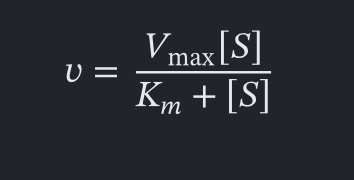
What is the name of the equation used to describe the effects of nutrient concentration on uptake rate?
The Michaelis-Menten equation
What is the formula for the Michaelis-Menten equation?
Where;
Where, V = uptake rate of substrate
Vmax = maximum uptake rate
S = concentration of substrate (nutrient), and
K = is the concentration of S when V = ½ Vmax
When nutrient concentration is plenty, high uptake results and is called
_______
luxury consumption
The relationship between internal nutrient concentration and growth is called the ___
Droop equation
At a balanced growth, the ratio of C:N:P by atoms/molecules is _____. This is called the
___ ratio
106:16:1, Redfield
What does Leibig’s Law of the minimum state?
The rate of a process (Ex. growth) is limited by the rate of its slowest subprocess (ex. acquisition of a limiting nutrient)
__ and __ are usually the limiting nutrients in aquatic ecosystems
Phosphorous and nitrogen