HLCR 100 Unit
 Call Kai
 Learn
 Practice Test
 Spaced Repetition
 Match
 Flashcards
 Knowt Play
1/112

There's no tags or description
Looks like no tags are added yet.
113 Terms
Primary functions of the skeletal system
Structural framework, lever system for movement, soft-tissue protection, mineral storage (calcium and phosphorus), and hematopoiesis
What is hematopoiesis?
Blood cell generation within red marrow
Part of the axial skeleton
Skull, hyoid, vertebral column, ribs, sternum, frontal, pariental, temporal, occipital, sphenoid, ethmoid, zygomatic, maxilla, nasal, lacrimal, and mandible
Part of the appendicular skeleton
Clavicle, scapula, humerus, radius, ulna, carpals, metacarpals, phalanges, Ilium, Ischium, pubis, femur, tibia, fibula, tarsals, metatarsals
Synovial joints
feature hyaline articular cartilage, a synovial membrane producing lubricating fluid, ligaments (connecting bone to bone), and bursae (fluid-filled friction-reducing sacs)
Arthritis
Joint inflammation (osteoarthritis - A degenerative "wear and tear" disease where the protective cartilage cushioning the ends of the bones gradually breaks down over time. vs. rheumatoid arthritis An autoimmune disease where the immune system mistakenly attacks the synovium (the lining of the joints), causing chronic inflammation and joint damage.)
Fractures
Disruption in bone continuity.
Scoliosis
Lateral curvature
Kyphosis
Excessive thoracic curvature, hunchback
Lordosis
Excessive lumbar curvature, swayback

Masseter and Temporalis
Mandibular elevation

Sternocleidomastoid
Head rotation, flexion

Pectoralis Major
Arm adduction, medial rotation

Pectoralis Minor
Scapular protraction

Trapezius
Scapular elevation, depression, retraction

Rhomboids
Scapular retraction

Latissimus Dorsi
Arm extension, adduction

Erector Spinae
Spinal extension

Rectus Abdominis
Longitudinal muscles in the abdomen, flexion of the trunk

External obliques
Fibers run medially, flexion, rotation of the trunk

Internal Obliques
Fibers run laterally, flexion, rotation of the trunk

Transversus Abdominis
Fibers run straight across, compression of the abdomen

Deltoid
Arm abduction, flexion, extension

Biceps Brachii
Elbow flexion, forearm supination

Triceps Brachii
Elbow extension
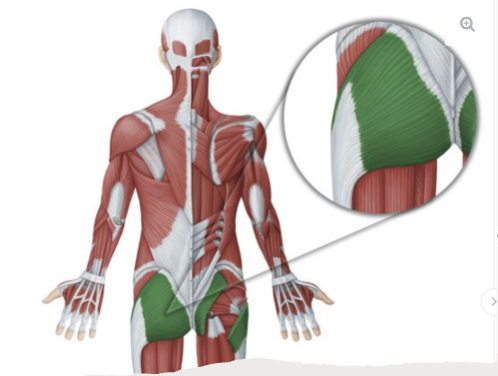
Gluteus Maximus
Hip extension
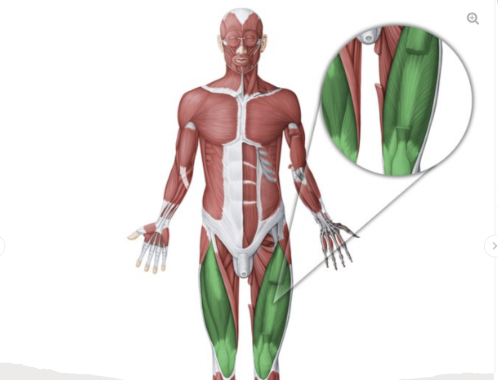
Quadriceps
Knee extension

Hamstrings
Knee flexion

Adductors
Hip adduction

Gastrocnemius/Soleus
Ankle plantarflexion
Contractures
Permanent muscle shortening
Fibromyalgia
Widespread musculoskeletal pain
Gangrene
Bacterial necrosis via Clostridium
Muscular Dystrophy
Progressive genetic muscle loss
Sprains
Ligament damage
Strains
Muscle/tendon injury
Central Nervous System (CNS)
Brain and spinal cord, Protected by the cranium and vertebral column, meninges (dura mater, arachnoid mater, pia mater), and circulating cerebrospinal fluid (CSF)
Peripheral Nervous System (PNS)
12 pairs of cranial nerves and 31 pairs of spinal nerves.
Somatic Nervous System
Controls voluntary skeletal muscle movements and sensory transmission.
Autonomic Nervous System (ANS)
Involuntary visceral regulation.
Sympathetic Division
“Flight-or-fight” response (elevates heart rate, dilates bronchioles, redistributes blood flow to skeletal muscle, suppresses peristalsis)
Parasympathetic Division
“Rest-and-digest” response (lowers heart rate, constricts bronchioles, stimulates digestive motility and secretions)
Frontal Lobe
Executive function
Parietal Lobe
Sensation
Temporal Lobe
Auditory processing
Occipital Lobe
Visual processing
Cerebellum
Motor coordination/learning
Brainstem
Vital functions like breathing and heart rate
Dendrites
Receive incoming signals
Cell Body (soma)
Central, bulbous part of a neuron that contains the cell nucleus and powers the cells life support and function
Axon
Transmits action potentials away
Myelin sheath
Accelerates conduction along white matter.
Synaptic gaps
These are crossed by neurotransmitters.
Cerebrovascular Accident (CVA/Stroke)
Ischemic or hemorrhagic disruption of cerebral blood supply causing hemiplegia and aphasia.
Transient Ischemic Attack (TIA)
Brief focal neurological deficit serving as a stroke warning.
Amyotrophic Lateral Sclerosis (ALS)
Progressive degeneration of motor neurons leading to paralysis.
Parkinson’s Disease
Loss of dopamine-producing neurons in the substantia nigra causing tremors, rigidity, and a shuffling gait.
Multiple Sclerosis (MS)
Autoimmune demyelination of CNS nerve fibers.
Epilepsy
Recurrent seizure activity caused by abnormal electrical discharges.
Endocrine System
Chemical messengers (hormones) are released into bloodstream to act on target organs.
Hypothalamus and Pituitary Gland
Master regulatory center controlling Growth Hormone (GH), TSH, ACTH, FSH, LH, Prolactin, ADH and Oxytocin via feedback loops.
Thyroid Gland
Secretes T3, T4 (metabolic rate), and Calcitonin. Regulates metabolic rate and energy levels.
Pancreas
Produce insulin (lowers blood glucose), and glucagon (elevates blood glucose).
Adrenal Cortex
Secretes cortisol and aldosterone
Adrenal Medulla
Secretes epinephrine and norepinephrine
Gonads
Ovaries (estrogen, progesterone) and Testes (testosterone)
Addison’s disease
Hyposecretion of cortisol
Cushing’s syndrome
Hypersecretion of cortisol causing moon face and buffalo hump
Diabetes Mellitus
Impaired insulin production/sensitivity leading to hyperglycemia, polyuria, polydipsia, and polyphagia
Gigantism and Acromegaly
Excessive growth hormone
Urinary System
Two kidneys, two ureters, urinary bladder, and urethra
Nephron Function
The structural and functional unit of the kidney. Filters blood and the glomerulus inside Bowman’s capsule, reabsorbs essential nutrients, and excretes metabolic wastes to regulate fluid balance, blood pressure, and pH.
Pathologies of the Urinary System
Polycystic Kidney Disease (PKD), Urinary Tract Infections (UTIs)
Lymphatic System
Drains excess fluid from capillary beds, filters pathogens, maintains fluid volume, and coordinates immune responses.
Anatomical Components of the Lymphatic System
Lymphatic vessels, lymph nodes, spleen, and thymus gland
Pathologies of the Lymphatic System
Lymphedema (fluid accumulation secondary to lymphatic obstruction) and Tonsillitis.
P Wave
Atrial depolarization
QRS Complex
Ventricular depolarization (masks atrial repolarization)
T Wave
Ventricular repolarization
Atrial Fibrillation
Chaotic atrial activity; generally non-lethal immediately
Ventricular Fibrillation
V-fib; fatal emergency requiring immediate defibrillation
Median Cubital
Standard venipuncture site
Saphenous
Great Saphenous is the longest vein in the human body
Nasal Cavity
Warms, filters, humidifies air
Pharynx
Nasopharynx, oropharynx, and laryngopharynx
Epiglottis
Prevents aspiration
Larynx
Vocal folds
Inhalation
Diaphragm contracts and moves downward, expanding thoracic volume and decreasing intrapulmonary pressure below atmospheric levels
Exhalation
Diaphragm relaxes and move upward, decreasing thoracic volume and elevating intrapulmonary pressure to expel air
Atelectasis
Alveolar collapse
Chronic Obstructive Pulmonary Disease
COPD; includes chronic bronchitis and emphysema
Pneumothorax
Air in the pleural cavity causing lung collapse
Mouth
Salivary amylase breakdown
Esophagus
Peristaltic propulsive movements
Stomach
Hydrochloric acid and pepsin digestion
Small Intestine
Duodenum, Jejunum, Ileum; nutrient absorption via microvilli
Large Intestine
Water/electrolyte absorption. Vitamin K synthesis by gut microbiota
Liver
Produces bile (emulsifies fats), neutralizes toxins, stores glycogen, and synthesizes clotting factors (prothrombin)
Gallbladder
Stores and concentrates bile
Pancreas
Secretes digestive enzymes (lipases, proteases, amylases) and bicarbonate into the duodenum