Head Neck and Trunk: Part 1
 Call Kai
 Learn
 Practice Test
 Spaced Repetition
 Match
 Flashcards
 Knowt Play
1/72

There's no tags or description
Looks like no tags are added yet.
73 Terms
Head position influences
the position of the entire spine
What influences the spinal position?
The head
What is the included in the axial skeleton?
Head
Vertebral column
Sternum
Ribs
What is the function of the axial skeleton?
to transfer and absorb forces of UE and LE
Functional purposes of vertebrae, ribs, and jaw
Protect organs and viscera
Provide vital functions of breathing, chewing, and swallowing
Support head, arms, and trunk
Transmit forces of upper and lower extremities
Provide stability and mobility
where the spinal cord passes through in the skull
Foreman Magnum
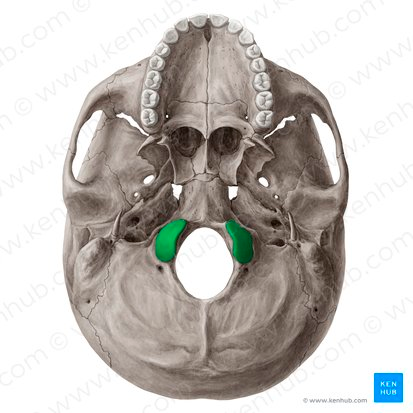
The convex component of the atlanto-occipital joint
Occipital condyles
Kyphosis
thoracic and sacral
primary curve that is present at birth
think fetal position, babies are born with it.
Lordosis
secondary curve, not born with it , developed through milestones
1. Kyphosis
Cervical curves develop with head rising against gravity while prone and seated.
Lumbar curves develop with standing and walking
By age 10, spinal curves are similar to that of an adult.
POSTERIOR Typical Adult Vertebral Column
starts with _____
Posterior - starts with concave cervical
Cervical- concave
Thoracic- convex
Lumbar- concave
Sacrum- convex
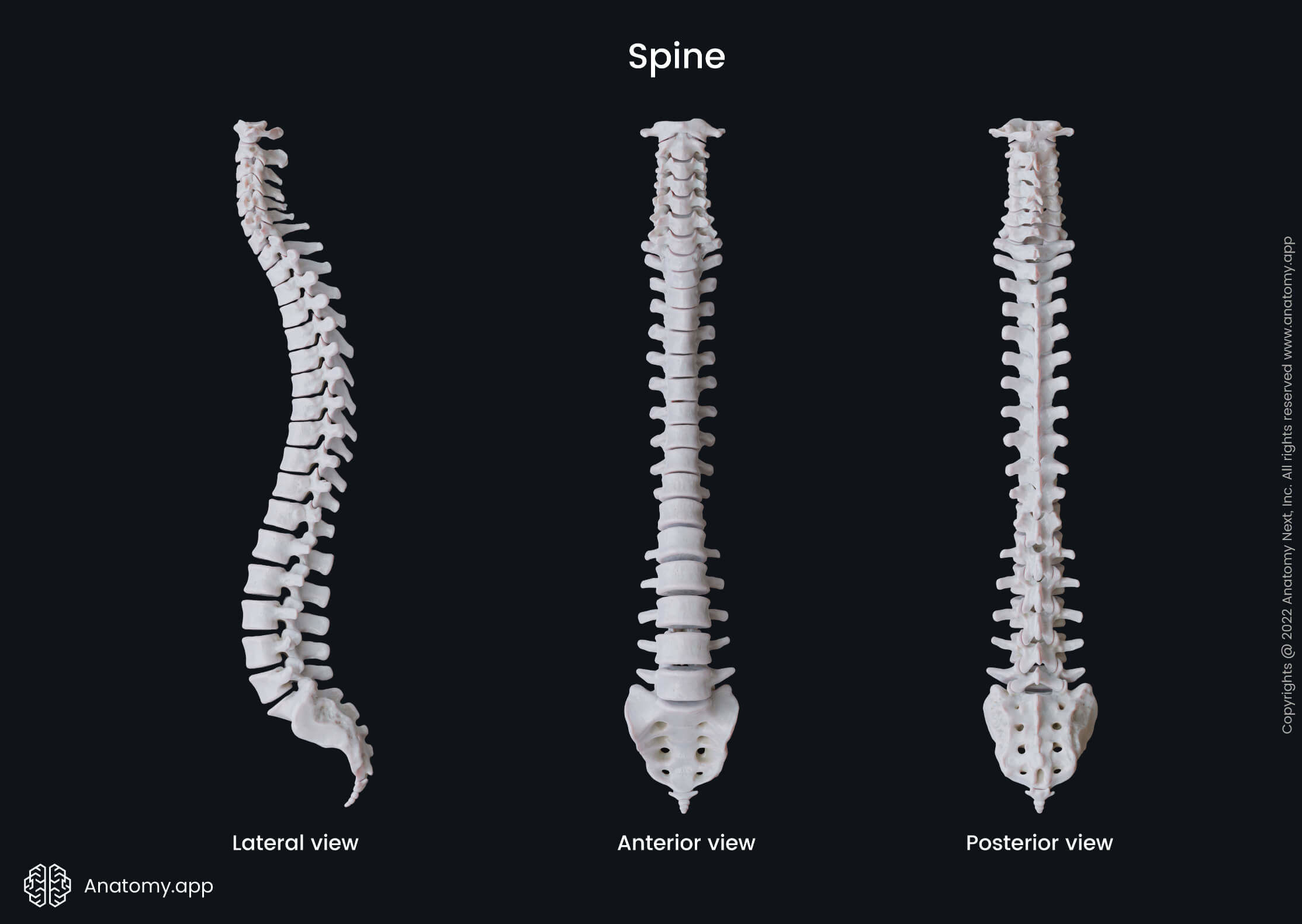
ANTERIOR Typical Adult Vertebral Column
starts with _____
Anterior- starts with convex cervical
Cervical- convex
Thoracic- concave
Lumbar- convex
Sacrum- concave
Purpose of the normal curves in vertebral column
Enhances spine’s ability to absorb forces
Where does center of gravity fall in terms of the vertebral column?
concave side
4 saggital plane curves
2 Lordotic: cervical and lumbar
2 kyphotic: thoracic and sacral
How many cervical vertebrae?
7
How many thoracic vertebrae?
12
How many lumbar vertebrae?
5
How many sacral vertebrae?
5 fused
How many vertebrae in the coccyx?
3-5 fused
Where does the scapula end?
T7
Motion segment includes
Motion segment
- 2 adjacent vertebra
- 3 intervertebral joints
- Intervertebral disc
- Longitudinal and Intersegmental ligaments
- Facet joint capsules
Primary weight bearing structure of the vertebral column
Vertebral Body
Main shock absorber
Intervertebral disc
Where the spinal cord goes through
Vertebral Foramen/Canal
Spinous and Transverse processes function
muscle and ligament attachments
Articular processes/Facets
guide direction and movement, attachment of adjacent vertebral bodies
What type of joint are the articular facets/processes considered?
synovial
Apophyseal joint
superior and inferior articular processes, where the vertebrae join with one another

Where do the vertebrae join with one another?
At the apophyseal joint
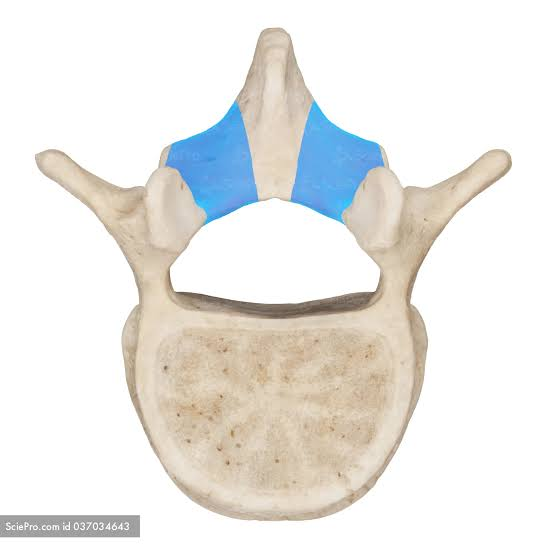
Laminae
Protects the posterior aspect of spinal cord
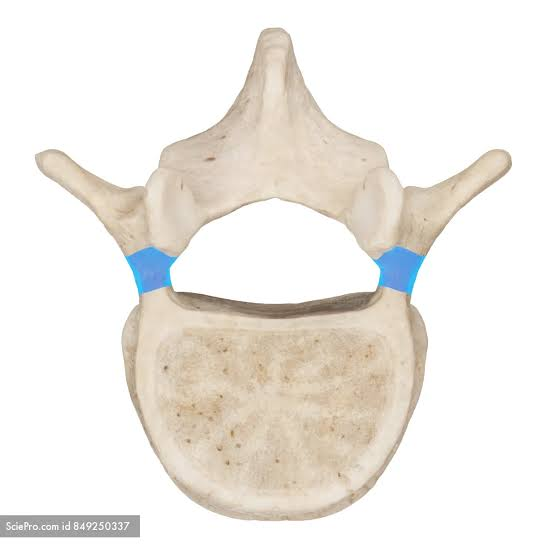
Pedicle
connects the vertebral body to the posterior parts of the vertebrae

Anterior Portion functions
weight-bearing
shock absorption
mobility in all directions
Posterior Portion functions
protects spinal cord
guides and limits movement
increases leverage of muscles of trunk
the lever system- along with attachment of ligaments and muscles, extension of vertebral column works best if it has a longer moving arm. Helps it stabilize.

C1 - Atlas
does not have a spinous process but has a transverse process

C2 - Axis
has dens,
attaches to the atlas,
where neck rotation occurs (50%)
has a strong and prominent spinous process
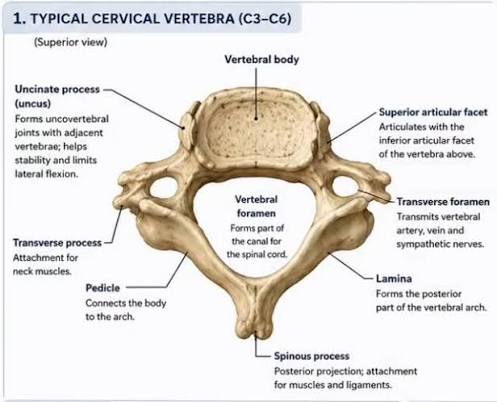
C3-C6
short and perforated spores in transverse process, where vertebral arteries pass through.
C7
easily identified because of its spinous process. Longer and sturdier than other cervical vertebrae.
Function of the articular facets in thoracic vertebrae
connection to the 12 ribs
Lumbar vertebrae are _____ than cervical and transverse.
thicker
Sacrum
fuses in adult life
transfers the weight of the vertebral column to the pelvis
sacrum is smooth anteriorly, posterior is sharp and bulky
has four pairs of ventral sacral foramina- transmits spinal nerves that from sacral plexus
Coccyx
continuos with sacrum
3-5 vertebrae fused together depending on person
first is the largest, resembles sacrum.
Anterior vertebral joint segments
consists of weight bearing bodies of vertebrae, intervertebral discs, longitudinal ligaments.
Biomechanical function is to resist compressive forces
Compressive forces
super incumbent weight- what keeps you upright. being able to handle your own body weight.
external loading (pushing, pulling, lifting)
Symptoms of vertebrae damage
Tingling
Numbness
Hypersensitivity/ no sensitivity
Pain
Purpose of intervertebral discs
protects the facet joints from compression injury, permit as well as limit the motions of the vertebrae
What composes the intervertebral discs
Annulus fibrosus
Nucleus Pulposus
Vertebral end plates- top and bottom
Annulus fibrosus
o Fibroelasticartilagenious rings.
o Function to enclose the nucleus.
Nucleus pulposus
o Center of intervertebral disc
o Pulp like Gel material with 80% or more of water content
Vertebral end plates- top and bottom
o Separate the nucleus and annulus fibrosus from the vertebral bodies
Loading of intervertebral discs
Increased compression on loaded side, increased tension on unloaded side.
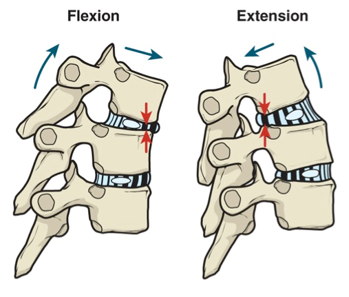
Anterior longitudinal ligaments (limits ____)
Covers front of vertebral bodies
Limits extension
Posterior longitudinal ligmanets (limits _____)
covers back of vertebral bodies
limits flexion
What results in tearing of annular fibers
compressed and twisted discs
Posterior Vertebral Ligaments
Ligamentum flava
interspinous ligaments
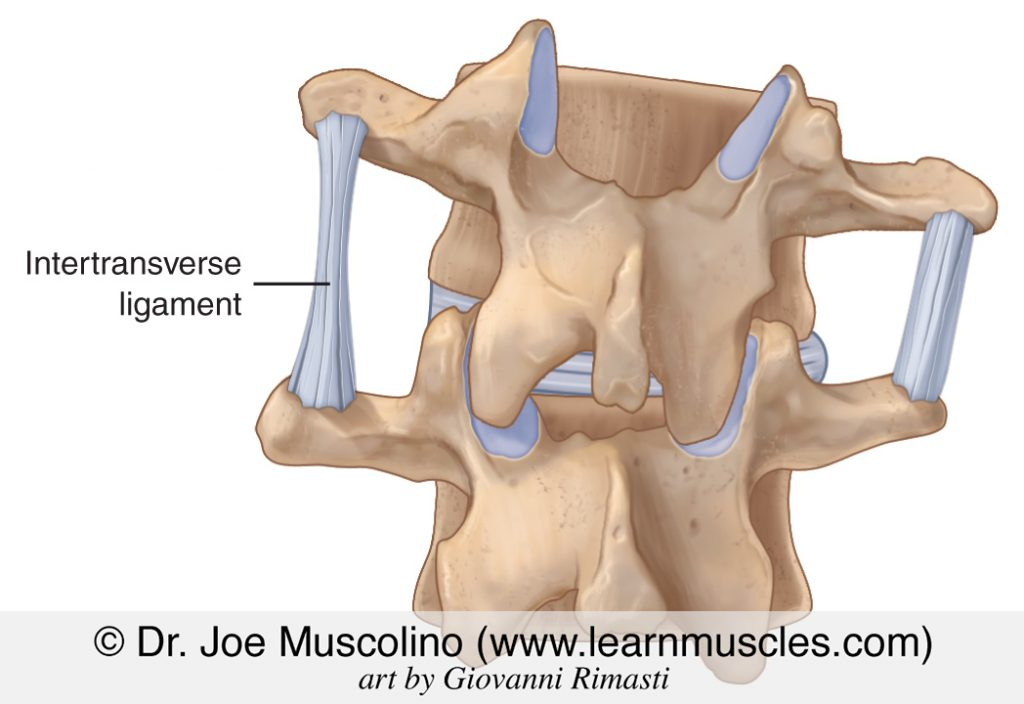
intertransverse ligaments


Interspinous ligaments attach
adjacent spinous processes


Intertransverse ligaments attach
adjacent tranverse processes

Ligamentum nuchae
aka Scruff of the neck. (think cat) grabbing extra skin of the neck
Purpose: Extra support, an attachment of the traps and 2 cervical muscles we will talk about (splenius capitus, spenius cervices)
Ligaments of the spine
Limits Extension
Anterior Longitudinal Ligament
Limits Flexion
Posterior Longitudinal Ligament
Ligamentum flava
Interspinous
Supraspinous
Limits Lateral Flexion
Intertranverse
Joints of the vertebrae
atlanto occipital
atlanto axial
vertebrae
costal
sacroiliac
Atlanto-occipital joint
occipital bone + atlas (C1)
head nodding
2 degrees of freedom
At which joint does head nodding occur?
Atlanto-occipital
What are the two degrees of freedom for the Atlanto- occipital joint?
flexion/ extension
SLIGHT lateral flexion
Altanto- axial
- Dens of the axis (C2) + anterior arch of the atlas = atlanto- axial joint
- Atlas pivots around dens
- 50% of cervical rotation occurs here
- Superior/ inferior axis
Craniocervical Flexion/Extension
Cranium involved with cervical spine, combination of cranium and cervical spine
Cervical spine has lordosis in upright posture
Flexion and extension occur in sagittal plane
Only time cervical gets a break is in supine position.
Craniocervical rotation
Chin to acromion process
Craniocervical lateral flexion
Average of 40 degrees moving to the side

Intervertebral junction
SAI
- Spinous and transverse process
- Apophyseal joint
- Interbody joint
Costal Joints
costovertebral
costotransverse

Costovertebral joint
articulation of head of rib with costal facets on thoracic vertebrae

Costotransverse joint
articulation of tubercle of rib attaches to the transverse process of thoracic
Sacroiliac joint
sacrum attaches to pelvis
Sacrum is link between axial skeleton and lower extremities, sacrum has intimate connection with pelvis.
2 sacroiliac joints, left and right.
Flexion/ extension of spine
Combination of both thoracic and lumbar
More flexion than extension
Limited extension- spinous process and thick ligament

Functional unit
Vertebrae and intervertebral disc
Disc is a hydraulic system that is found between vertebrae
Acts as a shock absorber
Allows bending but can tear when twisted
Unit contains sensitive tissue that can cause pain when irritated