stats midterm 2 review
 Call Kai
 Learn
 Practice Test
 Spaced Repetition
 Match
 Flashcards
 Knowt Play
1/175

There's no tags or description
Looks like no tags are added yet.
176 Terms
call lower bound portfolios A and B
A - buy call and lend E’s current value
B - buy 1 share stock
put lower bound portfolios A and B
A - buy put, 1 share stock
B - lend E’s current value
lower bound for european call premium if 1 time period

explain how you can make riskless profit with

current value E
1 period, interest rate r for that period,
E/(1+r)
current value E
Annual compounding over tyears
E/(1+r)t
current value E
continuously compoundingq
Ee-rt
lower bound table for price European put
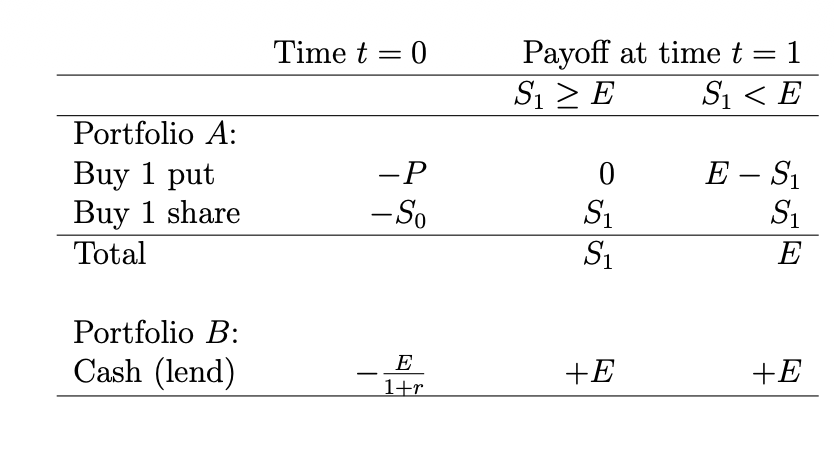
lower bound price European put

T08
SIM var(Ri)

SIM cov(Ri)

x=lambda*z or z=lambda*x
z = lambda x
derive lambda

SIM C* in terms of zj

SIM C* without z

explain steps to deriving C*

SIM C* in terms of Bip
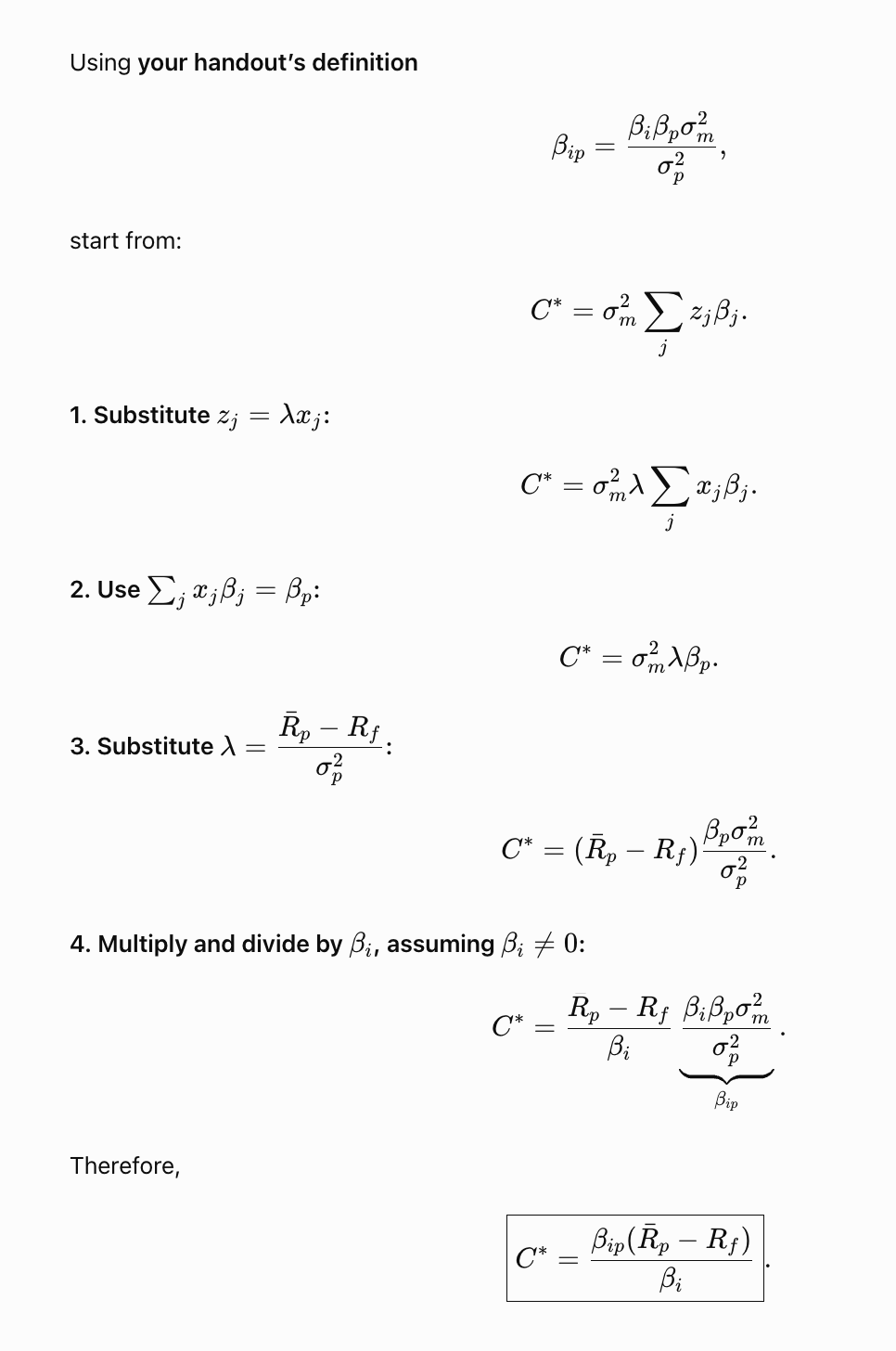
know excess return to beta ratio for all stocks, when to hold long/short
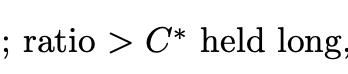
SIM Ci formula

SIM C* procedure what if negative betas
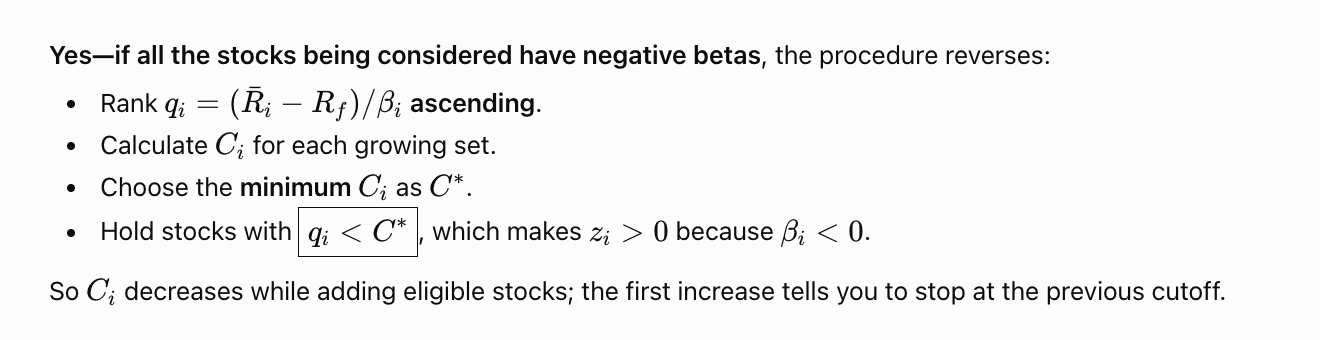
SIM C* what is zi when zero betas

CCM sort by
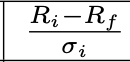
CCM C*

CCM C* with large N to inf
so cutoff compares to avg ratio

when checking which stocks held long/short do you compare ratio with final C* or each row’s Ci
final C* so excluded stocks without short sales may be diff from stocks held long
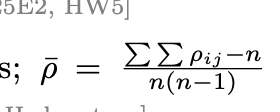
avg corr formula
T/F: forall models, with shorts zk is always linear in Rf
true, without shorts the zk for segments where stocks held are the same are linear in Rf
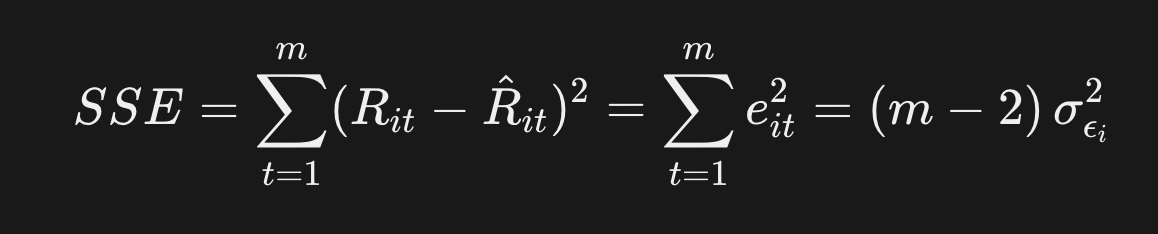
SST formula

SSR formula

SSE formula

SIM SST

SIM SSR

SIM SSE
multigroup vs multiindex
both _____
multigroup generalizes _____ hwhile multi-index generalizes ______
multigroup assumes each Industry pair has ____
multiindex assumes each stock linearly related to _____ which is linearly related to _____
group by industry
CCM, SIM
constant correlation
industry; market
multiindex - stock, industry equations

multi-index assumptions

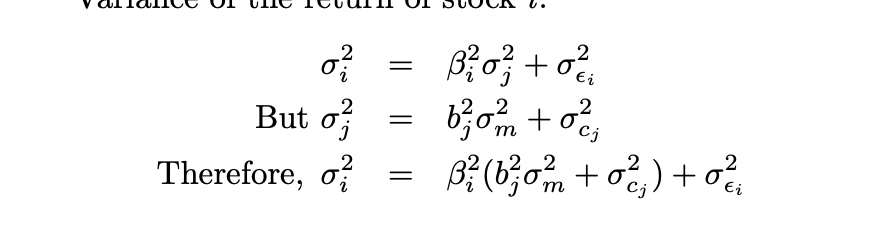
multi-index stock variance
multi-index cov btw stocks in same industry

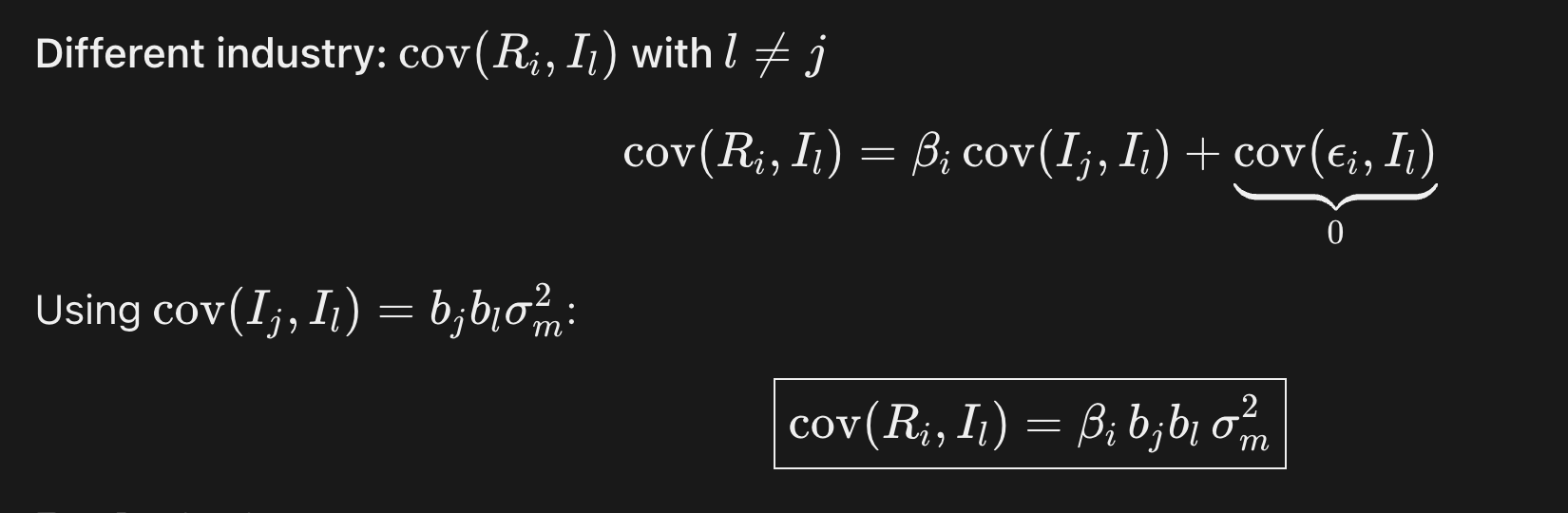
multi-index cov btw stocks in diff industry

cov btw diff industries multiindex

multi-index cov(Ri, same Ij)
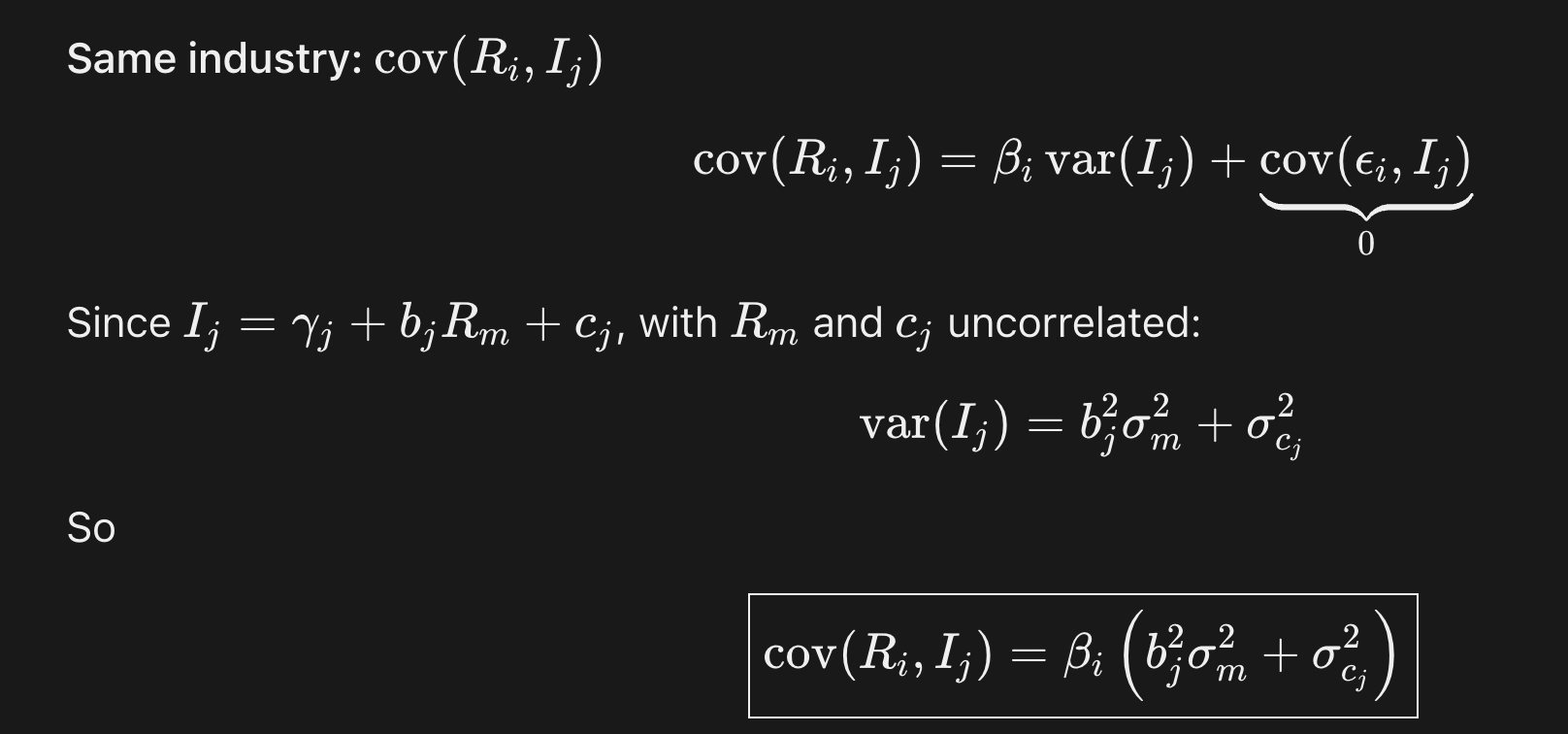
multi-index cov(Ri, diff Ij)
Multi-index - C* with no short sales

3 sources of risk in multiindex model
ei
ci
Rm
how is the multiindex model diagonal?
covariance matrix with 3 sources of risk form

regression y-hat = XB, residuals are orthogonal to what
eTX = 0
solve for optimal B y-hat = XB

what is HAT H

Hy =
y-hat
residual in terms of H, y

I-H called
residual maker matrix
rules to know about H, I-H

prove eTX = 0 in regression

eTX implies for individual elements

how does regression multi index method get rid of many cov terms
replaces the correlated indexes (using fact that residuals orthogonal to predictors) with new versions that are uncorrelated b
regression multi-index
how to choose first index
highest squared correlation with R

regression multi-index
how to choose I2 (given I1 already included)
regress all candidates on I1 → residuals = I2*
regress Ri on I1 → residuals = Ri*
choose candidate I with highest squared corr (I2*, Ri*)

regression multi-index
if candidate I2* is chosen, how do we know what B2 is
slope when regressing Ri* on I2*
regression multi-index
does alpha, existing beta terms change when adding each I*
nope

var(Ri)?


cov(Ri, Rk)

3 ways to do partial corr btw Ri, I4 given I1,I2,I3
calc squared corr w/ residuals
SSE way
hypothesis test
calc partial corr btw Ri, I4 given I1,I2,I3 - regression/residual way
works bc

partial corr sse

partial corr t stat

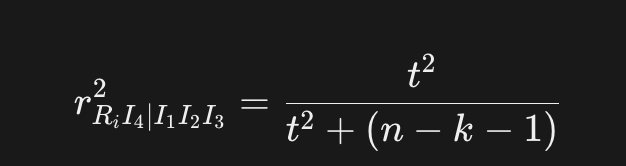
what’s t, k , n

partial corr for I4 given I1,I2,I3 t stat way

growth of 1 dollar with interest rate r1/r2/r3, after 3 time periods
(1+Rp1)(1+Rp2)(1+Rp3)
what constant monthly rate r_G gives the same final value (avg growth with geometric measure)

why not arithmetic mean for growth instead of geometric mean?
arithmetic mean overestimate
jenson’s inequality for convex func says

jenson’s inequality for concave func says

proof rG ≤ rA

sharpe ratio formula
excess return to sd ratio

treynor measure

excess differential return when risk measured by SD
RA - RA’’
excess differential return when risk measured by beta called
jenson’s differential performance index
excess differential return when risk measured by beta
RA - RA’
fama decomp what’s RT
investor chooses market risk BT
combo of market and Rf with investor’s risk BT
how can sharpe ratio and differential excess return (SD) return different portfolio rankings

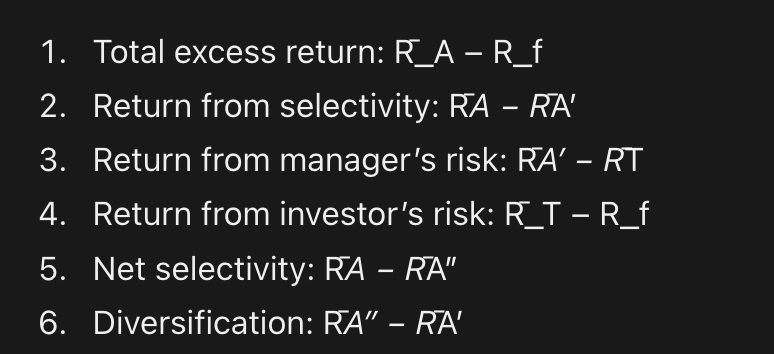
fama total excess return

fama return from selectivity

fama return from manager’s risk

fama return from investor’s risk

fama net selectivity

fama diversification


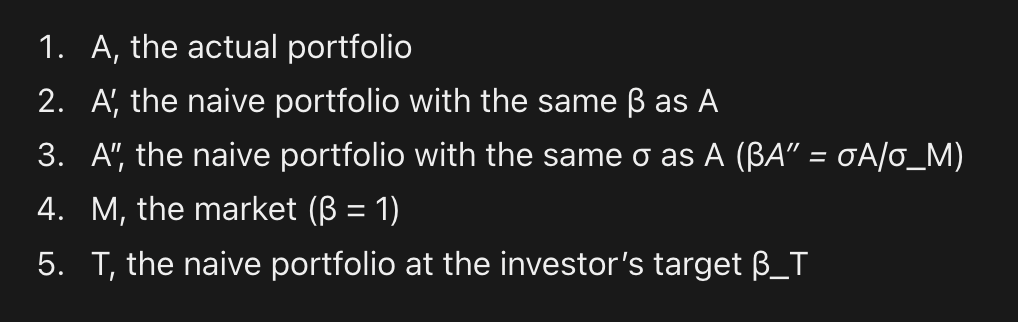

formula for RA”


what is the line
portfolios formed with combo of Rf, Rm
fama decomposition, given portfolio A, what is A’
naive portfolio on market Rf line with same market risk beta
fama decomposition, given portfolio A, what is A’’
naive portfolio on market Rf line with same total risk SD
any market and R_f mix has β =
w → weight of portfolio invested in market
what is variance of portfolio A’ from fama decomp
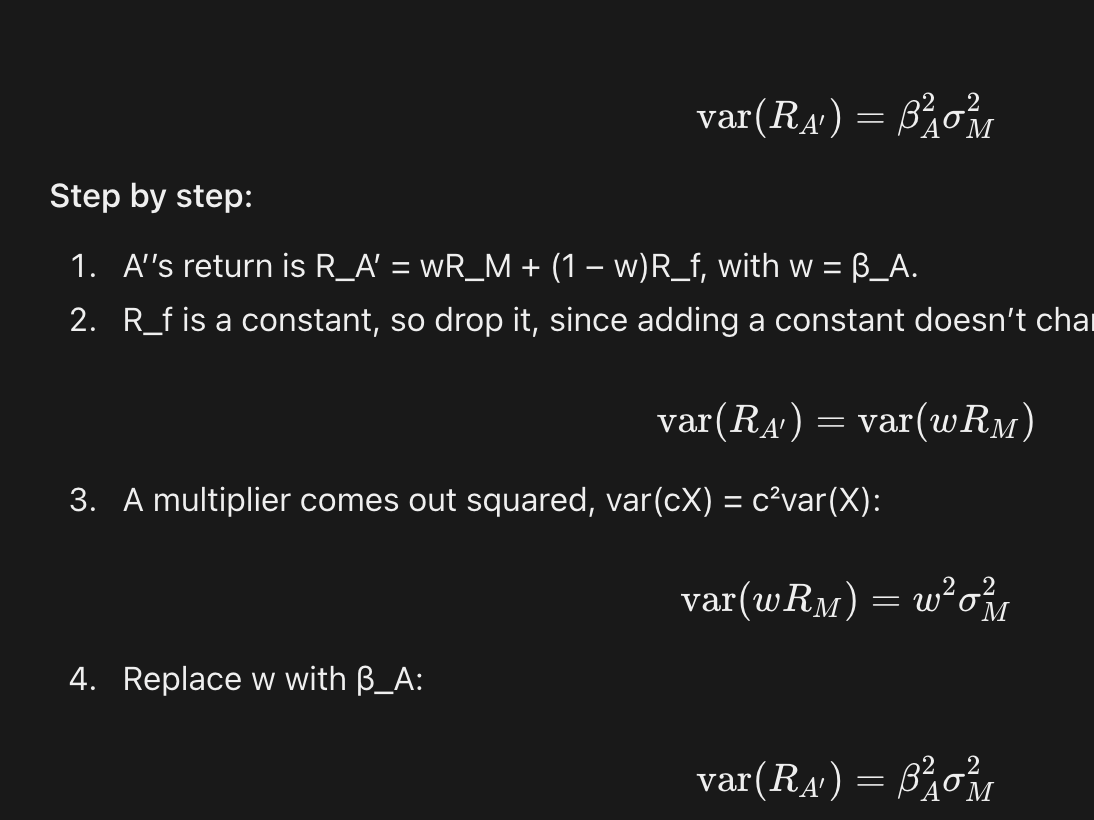
proof formula for beta A’’ from fama decomp

if you regress R2 on R1 → residual R2* then what is dot product R2*, R1 in summation


