WK 8: Acute Care
 Call Kai
 Learn
 Practice Test
 Spaced Repetition
 Match
 Flashcards
 Knowt Play
1/74

There's no tags or description
Looks like no tags are added yet.
75 Terms
What does it mean for an item or area to be 'clean' in a clinical healthcare setting? How is ‘clean’ achieved?
A state where disease-causing germs (infectious organisms) have been reduced as much as possible
achieved using good hand hygiene, proper cleaning chemicals, and correct disposal of contaminated materials
What is the clinical definition of 'soiled'?
Disease-causing germs (pathogens) are present, or there is a likely chance of exposure to them
*whether an item is 'dirty' cannot be judged purely by looking at it with the naked eye
What 2 factors determine the required standards of cleanliness in a medical setting?
how harmful the germ (pathogen) is and how vulnerable or sick the people involved are
hospital patients are often weak or immunocompromised so cleanliness standards are much higher in healthcare settings than in everyday public environments
What is the difference between Clean Technique and Sterile Technique?
Clean Technique = routine efforts (like washing hands and wiping down equipment) to lower the total number of germs in a clinical area
Sterile Technique = strict, specialized process designed to completely destroy or eliminate all germs from medical equipment and surgical environments
What are Standard Precautions in healthcare?
Baseline infection prevention practices that must be used when caring for ALL patients in a healthcare setting, regardless of whether they are known to have an infection or not
What is a Healthcare-Associated Infection (HAI), and what is its alternative medical name?
An infection a patient catches while receiving treatment in a medical facility
*aka a nosocomial infection
How common are Healthcare-Associated Infections (HAIs), and what factors increase a patient's risk?
About 1 in 31 hospital patients develop a Healthcare-Associated Infection (HAI)
Risk factors include receiving invasive or intensive medical procedures, having a weakened immune system, and frequent physical contact with healthcare workers
What three basic elements are necessary for an infection to spread?
Source = A place or organism where the germ lives (infectious agent)
Susceptible Host = A person whose body cannot fight off the germ
Transmission Route = A path or way for the germ to travel from the source to the host
What are the five main categories of disease-causing microorganisms (pathogens)?
Bacteria
Viruses
Fungi
Parasites
Prions
What are prions, and why are they uniquely dangerous?
Abnormal, misfolded proteins that force normal brain proteins to fold incorrectly; can cause untreatable and fatal neurodegenerative brain diseases in humans and animals, such as mad cow disease
Are all bacteria harmful to humans?
No, many bacteria make up our normal flora (beneficial micro-organisms living on skin and inside the body) which actually shield us from harmful germs.
Wiping out all bacteria can weaken natural defenses and make a person more vulnerable to infection
What 2 key clinical features characterize viral infections (viruses)?
Extremely contagious and cause major outbreaks or pandemics (like Ebola, H1N1, or COVID-19)
They can stay hidden or inactive (dormant, like herpes simplex) inside a host, allowing people to act as symptomless carriers who spread the virus without knowing it
What are pathogenic fungi called, and which body parts do they most commonly infect?
Most are harmless;
disease-causing fungi are known as fungi imperfecti
They typically target outer body tissues including the skin, hair, nails, and mucous membranes
What are parasites, and how do they transmit disease?
Organisms that live on or inside a host organism
can be internal (intestinal worms) or external (ticks, mosquitoes)
some parasites act as vectors (carriers that pass dangerous diseases, like malaria spread by mosquitoes) directly into a host
Name the six linked stages in the Chain of Infection
Infectious Agent (germ)
Reservoir (where germ lives)
Portal of Exit (how germ leaves source)
Means of Transmission (how germ travels)
Portal of Entry (how germ enters host)
Susceptible Host (vulnerable target)
*Break any link in this chain to prevent infection!

Amongst all the linked stages in the Chain of Infection, what is the most common “break the link” strategy?
Hand hygiene
What are pathogen reservoirs, and why are artificial nails restricted in clinical settings?
Any person, animal, or object where germs live and multiply
In hospitals, common reservoirs include patients, healthcare workers, visitors, skin, hair, clothing, jewelry, door handles, and food/water
Artificial nails and extenders harbor high levels of bacteria underneath, leading health agencies (like the CDC and NHS) to ban them for clinicians involved in direct patient care
What is a Multidrug-Resistant Organism (MDRO)?
A strain of bacteria that has evolved resistance to one or multiple standard antibiotics, making infections much harder to treat
What do the medical abbreviations MRSA, VRE, VRES, and C. diff stand for?
MRSA = Methicillin-resistant Staphylococcus aureus
VRE = Vancomycin-resistant enterococci
VRES: Vancomycin-resistant S. aureus
C. diff = Clostridium difficile (a spore-forming bacterium causing severe diarrhea, often triggered when heavy antibiotic use killing off normal gut flora)
What precautions must a clinician take if they develop respiratory symptoms (like a cold, cough, or congestion)?
avoid direct contact with patients (especially high-risk or immunocompromised individuals)
If contact is unavoidable, the clinician MUST wear a face mask and maintain strict hand and respiratory hygiene
What is the difference between direct contact transmission and indirect contact transmission?
Direct Contact = Physical body-to-body transfer of germs directly from an infected person to another person (ex. during patient turning, bathing, or physical transfers)
Indirect Contact = Germs are transferred through an intermediate object or surface (aka fomite, like a door handle or uncleaned gait belt) that an uninfected person ends up touching
How are bloodborne pathogens transmitted to a healthcare clinician?
Spread when infected blood or body fluids enter a clinician's system, such as through an open cut on their hand
How do droplet transmission and airborne transmission differ in particle size and distance traveled?
Droplets = Larger moist spray particles produced by coughing, sneezing, or talking; They travel short distances and infect host mucous membranes (nose/mouth)
Airborne = Tiny dried residues containing germs that remain suspended in the air for long periods and float over long distances, allowing inhalation from across a room
What 4 Personal Protective Equipment (PPE) is required when taking vital signs on a patient showing signs of a contagious respiratory illness?
Hand hygiene
Gloves
Face mask
Eye protection (if splashing or coughing spray is anticipated)
What protective gear should be worn when assisting a patient with bed mobility under Standard Precautions?
Perform hand hygiene, wear gloves, and put on a protective gown if close physical contact might contaminate your uniform or skin
What PPE is mandatory during a wound irrigation procedure in a home health setting?
Perform hand hygiene & wear gloves
Protective gown
Face mask & goggles (to shield eyes and clothing against fluid splashes)
How must treatment tables and plinths be cleaned between patient visits?
MUST be thoroughly wiped down with proper hospital disinfectant cleaning agents between every patient, even if paper or clean linen sheets were covering the surface
What are Contact Precautions, and what 5 key protocols must clinicians follow?
Contact Precautions = guidelines used for patients known or suspected to have germs spread by direct or indirect touching
private room preferred
Don gloves before entering the room
Wear a gown if direct physical contact with patient or surfaces is likely
Dedicate medical equipment (stethoscopes, gait belts, walkers) to that single patient
Notify receiving departments prior to transporting the patient for testing

What are the 6 key steps to prevent self-contamination when removing gloves?
Grasp the outside edge near the wrist without touching bare skin
Peel off turning inside out
wad into a ball in the gloved hand
Slide bare fingers inside the remaining cuff
Peel off turning inside out over the first glove
Wash hands immediately afterwards!
Is clean technique or sterile technique typically used during routine wound care?
Most is performed using clean technique in a clean setting
Even if sterile tools or bandages are used, the overall patient care procedure itself is considered clean technique, not sterile
What 4 things does clinical research show regarding early physical rehabilitation for mechanically ventilated patients in the ICU?
PT & OT initiated early during mechanical ventilation is:
safe
reduces hospital delirium
improves overall physical recovery function
increases ventilator-free days alive without assistance
What 3 precautions and verification checks must a therapist complete before entering an acute care patient room?
Check door signs for isolation precautions, vision/hearing deficits, fall risk, or behavioral concerns
Review the medical chart for status changes
Verify patient identity using at least two identifiers: ask for full name and Date of Birth (DOB), or read the ID wristband if the patient is confused or non-verbal
What 5 systematic steps should a therapist take to manage lines and tubes during patient mobility?
Scan the room systematically starting from doorway to patient
Visually/tactilely trace all lines and tubes to their insertion points so they do not become pulled taut or dislodged
Plan the movement path and organize tubes BEFORE moving the patient
Get extra staff assistance if needed
Re-inspect all lines, monitors, and bed rails before leaving the room

What is an Intravenous (IV) line, and where is it usually inserted?
A thin, flexible plastic catheter inserted into a peripheral vein to give fluids or medications
The guide needle is pulled out after catheter placement.
It is most frequently placed in the forearm or back of the hand
What 4 safety rules must be followed when moving a patient with a standard peripheral IV line?
Keep the fluid drip bag ABOVE the insertion level
Avoid twisting, kinking, or flattening the tubing
NEVER place a blood pressure cuff on the arm with the IV
Notify nursing if you notice redness, pain, or swelling around insertion

What is Intraosseous (IO) venous access, and when is it utilized?
Delivers emergency medication or fluids directly into the bone marrow cavity (commonly in the upper tibia bone)
used during critical emergencies when regular peripheral vein access cannot be quickly established
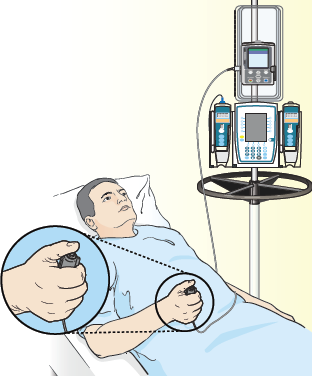
What is a Patient-Controlled Analgesia (PCA) device, and how does it benefit therapy sessions?
A computerized pump that allows the patient to self-administer small doses of pain medication through an IV by pushing a button
Built-in lockouts prevent overdosing
Therapists should time physical mobility activities to coincide with optimal pain control
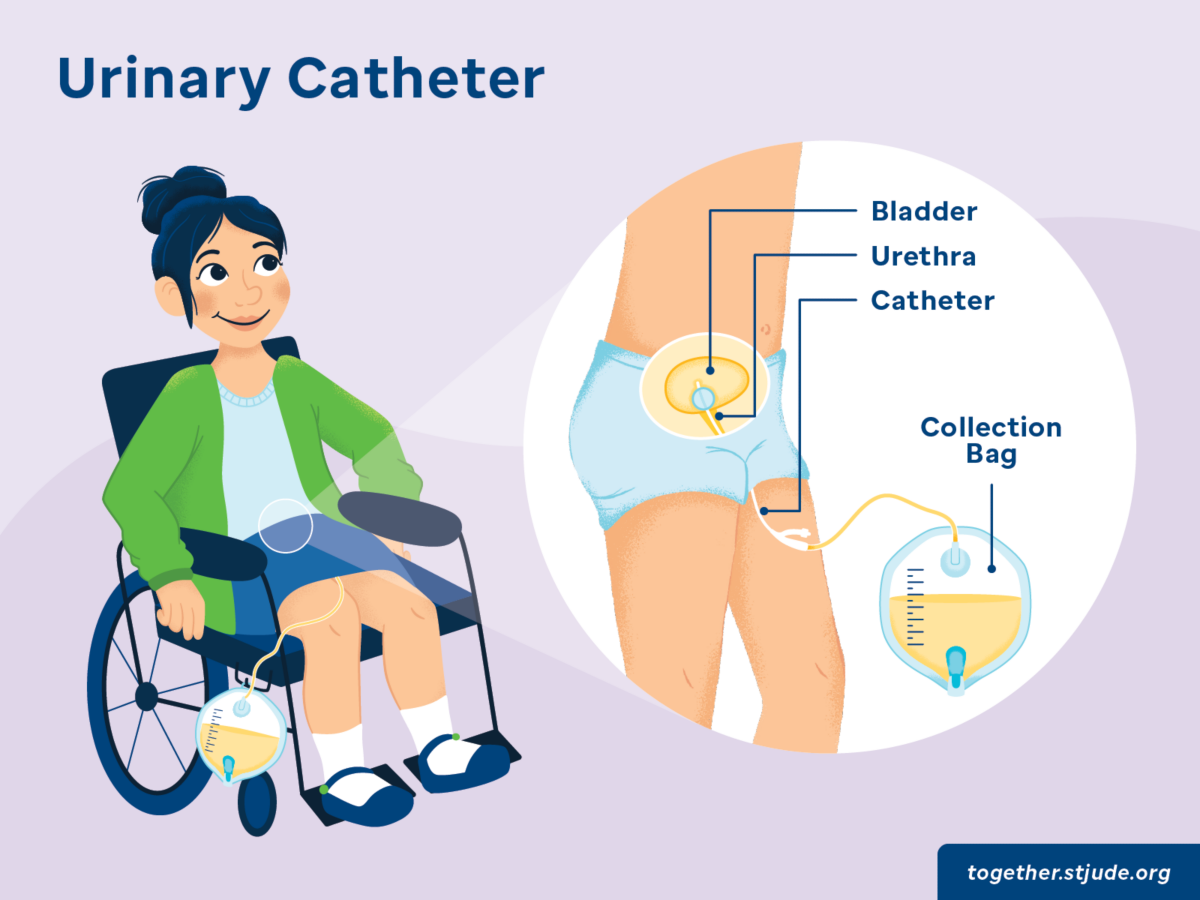
What are the 4 rules for managing an indwelling urinary catheter (Foley catheter) during patient mobility?
Drain fluid from tube into bag before moving
ALWAYS keep the collection bag BELOW bladder level to prevent urine backflow and infection
Hang bag on bed frame (never on bed rails)
Prevent pulling or stepping on tubing
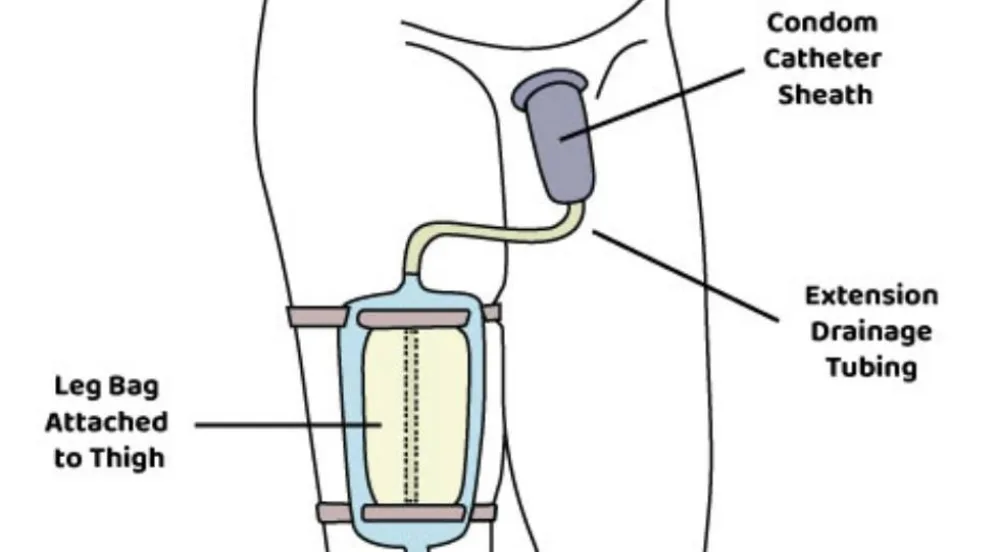
What is a condom catheter (Texas catheter), and what caution is required during therapy?
An external drainage sheath placed over the penis for male patients
It slips off very easily during transfers or bed mobility, so take care not to pull on it
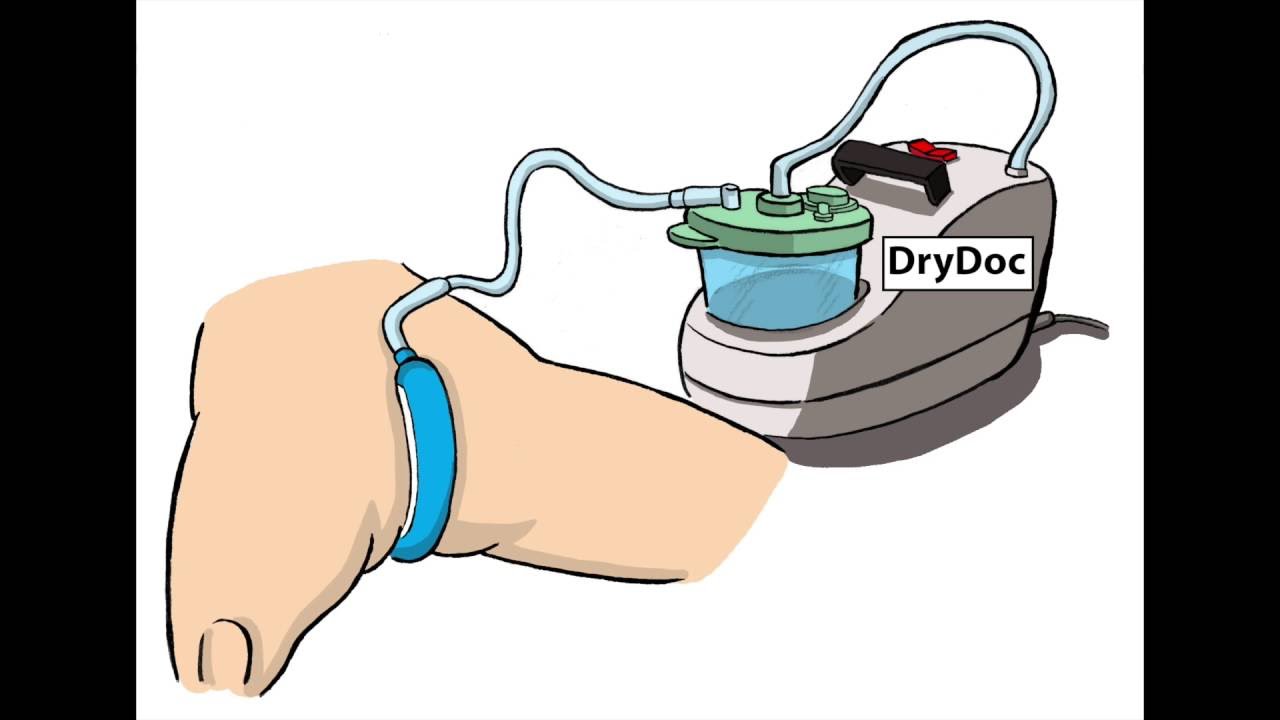
What is a PureWick device, and what precautions must be taken during mobility?
An external soft-wicking suction catheter placed between the labia for female urinary management
You MUST remove the PureWick device before turning, rolling, or transferring the patient out of bed to prevent tissue friction, skin damage, or dislodgement
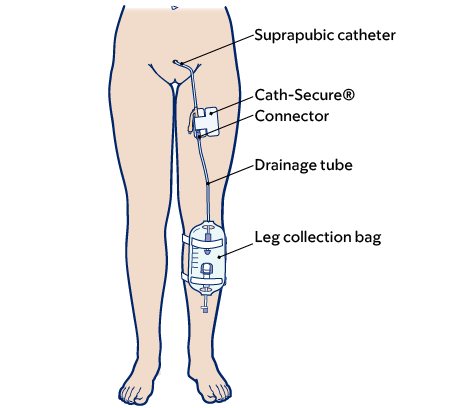
What is a suprapubic catheter, and what 2 precautions must be taken during mobility?
A thin, flexible tube inserted through a small cut in the lower abdomen directly into the urinary bladder to drain urine
insertion site must be kept dry
avoid placing gait belt over insertion site

What are Hemovac and Jackson-Pratt (JP) drains, and when should nursing empty them?
Self-contained post-surgical suction drains that remove fluid from a surgical site into a bulb (Jackson-Pratt) or accordian spring canister (Hemovac)
If a drain is over half full, ask nursing staff to measure and empty it before starting physical exercise or walking


What is a Wound VAC (Negative Pressure Wound Therapy), and what precautions are needed during mobility?
Uses a sealed foam dressing connected to a portable vacuum pump that applies negative pressure to pull out fluid and accelerate healing
Keep pump unit portable during walking
Avoid breaking the airtight adhesive seal
Position gait belts carefully away from abdominal/back wound sites

What is a Nasogastric (NG) suction tube, and how is it handled during physical therapy session?
Passes through the nose into the stomach to vacuum out stomach fluids/contents
In some clinical situations, nursing can temporarily disconnect it from wall suction and cap the tube so the patient can move around
Notify nursing once mobility is finished

What is the clinical purpose of a Sequential Compression Device (SCD)?
Inflatable sleeves wrapped around lower legs connected to a pump; they apply wave-like compression to push venous blood back toward the heart, preventing dangerous blood clots
Unplug or unwrap sleeves during walking exercises
Discontinue when patient ambulates routinely
What fundamental rule applies to cardiovascular central lines versus peripheral lines?
'The more central a line is, the more critical its disturbance’
Central lines enter major blood vessels close to the heart
are designed for long-term treatment (months to years)
accidental dislodgement can cause severe life-threatening complications
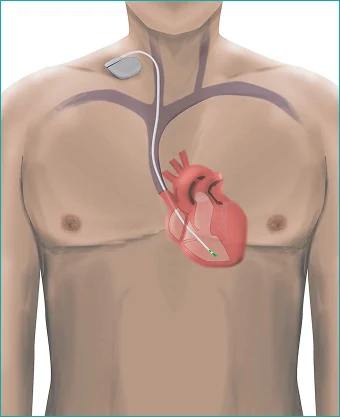
What is a temporary cardiac pacemaker, and why is its disconnection dangerous?
Regulates heartbeat via wire electrodes threaded into the right heart ventricle connected to an external pulse generator
Patients require strict physician clearance for minimal movement
Disconnecting a pacemaker can cause immediate life-threatening cardiac failure

What is a PICC line, and why are axillary crutches contraindicated for patients with one?
Peripherally Inserted Central Catheter (PICC) = a central line inserted into an arm vein that extends all the way into the superior vena cava of the heart
Axillary crutches are forbidden (contraindicated) because pressure in the armpit (axilla) can pinch off vein blood flow, triggering a dangerous blood clot (thrombus)

What is an Intracranial Pressure (ICP) monitor, and what is normal adult ICP?
Measures brain fluid pressure via a catheter inserted into skull cavities or brain ventricles
Normal adult ICP ranges between 5-16 mmHg (lower in children)
What physical movements and head positions MUST be avoided in patients with an ICP monitor?
Lowering the head below the feet
Coughing or Valsalva strain (holding breath during exertion)
Extreme side neck bending (lateral neck flexion)
Extreme hip bending (hip flexion)
*All of these spike intracranial pressure! Always keep the bed/patient in Reverse Trendelenburg position (head elevated above feet). Notify nursing before changing bed height so transducers can be re-leveled.
What are the 2 methods for oxygen delivery?
O2 masks
Nebulizer

What are O2 masks for oxygen delivery?
Masks/nasal canula attached to an oxygen source with 1-2 L O2
*A nonrebreathing mask is used for higher flow. It is also important to check the charge on a portable O2 container prior to use

What are nebulizers for oxygen delivery?
Oxygen masks that are either handheld or attached to respiratory tubing; used to administer medications
*Pts responses to nebulizer treatments may vary
What are 2 devices used for respiration?
Endotrachial tube
Tracheostomy tube

What is an endotracheal tube & what 2 precautions are needed during physical therapy?
A flexible plastic tube attached to a ventilator & placed through the mouth or nose into the trachea to keep the airway open and deliver oxygen
Some functional mobility is possible
Avoid excess head & neck movement

What is a tracheostomy tube and what should be noted for physical therapy?
A curved, hollow plastic or metal tube attached to a ventilator that is inserted through a surgically created opening in the front of the neck and directly into the trachea
Some functional mobility may be possible

What is a ventilator & what 3 precautions must be taken for physical therapy?
A machine that assists with your breathing connected to tracheal tubing & can have different ventilation modes for different pt needs
Some out-of-bed activity is possible depending on the length of tubing
Activity may cause alarms to sound
Check for changes in insertion level of tube before & after activity
What is Total parenteral nutrition (TPN) & what are the 3 indications for its use?
AKA intravenous nutrition; a method of delivering all essential nutrients directly into the bloodstream through an intravenous (IV) line, completely bypassing the digestive system
Indications:
fluid contraindications
malabsorption in the small intensities
bowel obstructions
What are the 2 types of feeding tubes?
Nasogastric tube (NG tube)
Percutaneous endoscopic gastronomy (PEG tube)
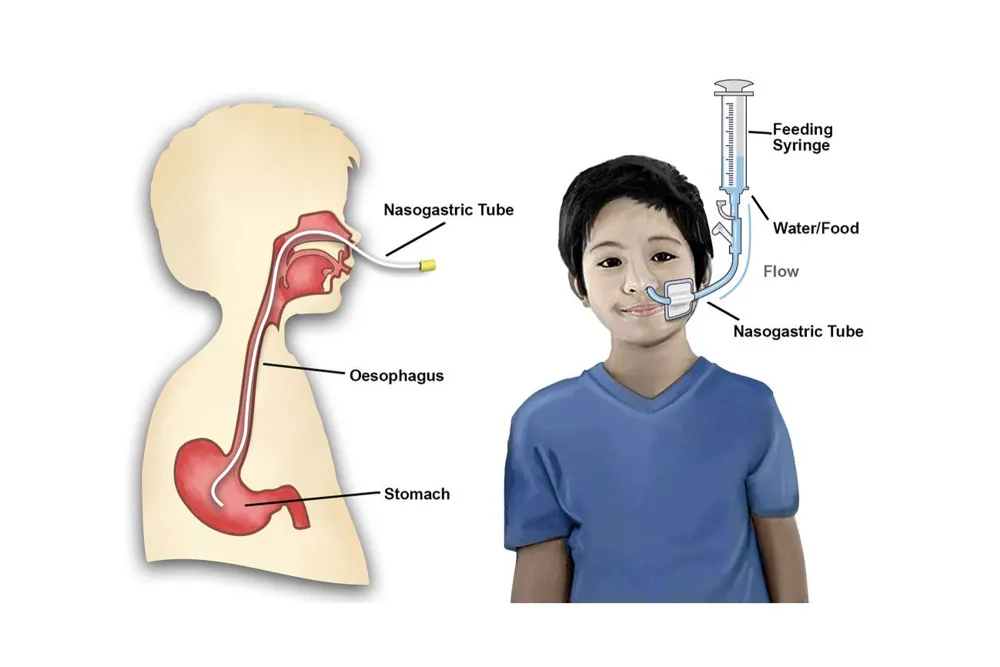
What is a nasogastric (NG) tube?
A thin, flexible plastic tube that passes through the nasal canal and into the stomach; has 2 parts:
Nasoduodenal (ND) tube = ends in duodenum (1st part of small intestine)
Nasojejunal (NJ) tube = travels further into jejunum (middle portion of small intestine)

What is a percutaneous endoscopic gastronomy (PEG tube)? What 2 precautions need to be taken for therapy?
A flexible feeding tube inserted through the abdomen used to deliver nutrition, fluids, and medications directly into the stomach
May need to avoid prone/modify prone position
Be careful with placement of gait belt
What are 2 waste excretion (fecal matter) tubes?
Colostomy/ileostomy bag
Rectal tube

What is a colostomy/ileostomy bag? What 5 precautions should be taken for therapy?
Attached directly over surgically created opening in abdomen to collect stool and gas
maintain secure attachment of the bag
keep bag attachment dry
avoid motions that may place tension on the bag & break the seal
empty full bags prior to mobility activities
be cautious with use of gait belt
What is a rectal tube? What precautions should be taken for therapy?
A soft, flexible tube that inserts into the rectum w/ a collection bag to release trapped gas, drain liquid stool, or reduce bowel pressure
can become easily dislodged
keep bag below level of tube
use “slippery sheet” for mobility activities

What is a chest tube (CT) / Pleurovac? What precautions should be taken for therapy?
A tube inserted into chest cavity to drain abnormal collections of air, blood, pus, or fluid to maintain pulmonary inflation; tube attached to wall suction unit or water-sealed beside container
nursing staff may be able to disconnect, in some cases
keep drainage container upright & below insertion site
accidental removal is a life-threatening emergency!

What is a Yankauer suction? What precaution needs to be taken before therapy?
A rigid, curved oral suction device used to clear secretions from the mouth
Secretions may need to be cleared prior to initiation of activity
What are the 4 cardiovascular system lines?
pulmonary artery catheter (PA line / Swan-Ganz catheter)
Arterial line
Hickman/Broviac
Port-A-Cath, Mediport
What is a Pulmonary artery catheter (PA line)? What precautions must be taken for therapy?
AKA Swan-Ganz catheter; a long, flexible, balloon-tipped tube inserted through a large vein through the right side of the heart and positioned into the pulmonary artery; monitors heart function
avoid ROM that causes movement at the insertion site
subclavian placement = limits shoulder flexion to 90
femoral placement = limits hip flexion to 90
dislodgment is life-threatening! apply pressure to insertion site & call for help!

What is an arterial line? What precautions must be taken for therapy?
A thin, flexible tube (catheter) placed directly into an artery & connected to a transducer; provides continuous, real-time BP monitoring and easy access for blood draws & delivering medications; commonly in brachial, radial, or femoral arteries
changes in bed height will alter transducer readings
femoral insertion requires hip flexion ROM restricted to 60-80°
displacement is a life-threatening emergency! apply pressure to the insertion site & call for help!

What is a Hickman/Broviac line? What precaution must be taken for therapy?
a soft, flexible, thin hollow tube (a central venous catheter) placed surgically into the jugular vein and threaded through vena cava to R atrium
can have a cuff around the catheter under the skin to prevent slippage & entrance of bacteria
may have 2 lumens
provides long-term access for administering meds, dialysis, & blood sampling w/o repeated needle sticks
no manual techniques should be done around access point
What is a Port-a-Cath?
Placed completely under the skin to provide direct, long-term access to a large vein to the heart; located under the collarbone
port has a reservoir with an injectable septum
port’s attached to catheter
port is accessed with a special needle
able to be submerged & participate in aquatic PT

What are cardiac leads? What 3 precautions should be taken for therapy?
Monitor heart activity through an ECG (electrocardiogram)
alarm may sound if lead is dislodged
should be reattached by nursing staff
situation not generally considered an emergency
What are the 2 types of ventricular shunts?
ventriculoperitoneal (VP shunt)
ventriculoatrial (VA shunt)

What is a VP (ventriculoperitoneal) shunt? What 3 precautions must be taken for therapy?
a tube surgically implanted to drain excess cerebrospinal fluid (CSF) away from the brain and into the abdominal cavity; tubing contains valves set at specific pressures for control of CSF flow
bed rest for 24 hrs after shunt placement
avoid pressure over shunt
watch for severe headache or nausea upon sitting or standing (may indicate low CSF levels)

What is a VA (ventriculoatrial) shunt? What 3 precautions must be taken for therapy?
a tube surgically implanted to drain excess cerebrospinal fluid (CSF) from the brain's ventricles directly into the bloodstream via jugular vein → the heart's right atrium; tubing contains valves set at specific pressures for control of CSF flow
bed rest for 24 hrs after shunt placement
avoid pressure over shunt
watch for severe headache or nausea upon sitting or standing (may indicate low CSF levels)