Classics 10 Midterm
 Call Kai
 Learn
 Practice Test
 Spaced Repetition
 Match
 Flashcards
 Knowt Play
1/20

There's no tags or description
Looks like no tags are added yet.
21 Terms

Period: Late Neolithic
Place: it is an artifact from Dimini featuring geometric designs and spiral motifs.
Describe: The vessel is made of clay and displays dark painted bands, parallel lines, triangular shapes, and reddish-brown decorative panels, with handles on either side.
Value: The vessel’s value is shown in its careful craftsmanship, elaborate decoration, and potential use for storing or serving liquids in domestic or ceremonial contexts.
Cultural suggestions: Its distinctive geometric patterns and spiral designs reflect the artistic traditions and cultural practices of Bronze Age Aegean societies, suggesting shared artistic influences and cultural exchange through trade.

Period: Late Neolithic
Place: settlement map from Dimini, it is a megaron with multiple circular stone walls and clusters of thatched-roof buildings.
Describe: The settlement is composed of small structures made from wood and thatch, surrounded by protective stone barriers arranged in concentric rings.
Value: The settlement’s importance is shown in its defensive walls, organized layout, and communal living spaces.
Cultural suggestions: The use of local stone, timber, and thatch suggests the community relied on nearby natural resources, while the fortified design indicates a need for protection and cooperation among inhabitants.

Period: The Bronze Age
Place: Cycladic figuring from the Island of Naxos
Describe: The figurine is carved from marble and shows a stylized female body with folded arms, a triangular nose, minimal facial features, and simplified anatomical proportions.
Value: The figurine’s value is shown in its careful craftsmanship, smooth surface, and possible ritual placement in graves.
Cultural suggestions: Since the Cycladic islands were rich in marble, the material was locally available, while the discovery of similar figurines throughout the Aegean suggests cultural exchange, trade, and shared religious traditions.

Period: The Bronze Age
Place: Palace of Knossos on the island of Crete, center of Minoan society
Describe: The palace consists of numerous interconnected rooms, narrow corridors, storage areas, and a central courtyard, with a throne room located near the center.
Value: The palace’s importance is shown in its complex architecture, large size, and specialized spaces for political, economic, and religious activities.
Cultural suggestions: Since the Minoans relied heavily on maritime trade, the palace likely served as a center for managing resources, distributing goods, and exercising political authority, demonstrating the wealth and organization of Minoan society.

Period: The Bronze Age
Place: Palace of Knossos on the island of Crete, center of Minoan society
Describe: The vessel is carved from black steatite and features large gilded wooden horns, detailed facial features, and realistically shaped ears.
Value: The rhyton’s value is shown in its intricate craftsmanship, precious decorative materials, and ceremonial purpose.
Cultural suggestions: Since bulls held significant religious importance in Minoan society, the vessel reflects the connection between animals, religious rituals, and political authority, while its sophisticated construction demonstrates the wealth and artistic skill of Minoan civilization.

Period: The Bronze Age
Place: Palace of Knossos on the island of Crete, center of Minoan society
Describe: The figurine is made of glazed faience and depicts a woman with exposed breasts, a layered skirt, raised arms holding snakes, and a feline figure resting on her head.
Value: The figurine’s value is shown in its detailed craftsmanship, elaborate clothing, and possible religious significance.
Cultural suggestions: Since snakes were associated with fertility, protection, and renewal in Minoan culture, the figurine suggests the importance of female deities and nature worship, while its intricate design demonstrates the artistic sophistication and religious traditions of Minoan civilization.

Period: The Late Bronze Age
Place: Akrotiri on the Island of Thera
Describe: The fresco is painted on plaster and shows a stylized figure with blue skin, reddish-brown clothing-like markings, and surrounding plants, using vibrant colors and curved lines to create movement.
Value: The fresco’s value is shown in its detailed craftsmanship, naturalistic subject matter, and decorative placement within a palace.
Cultural suggestions: Since monkeys were not native to Crete, their depiction suggests contact with foreign cultures through trade, while the saffron flowers reflect the economic and possible religious importance of valuable natural resources in Minoan society.

Period: The Late Bronze Age
Place: Akrotiri on the Island of Thera
Describe: The fresco is painted on plaster and shows a slender, reddish-brown male figure holding blue and yellow fish in both hands, with minimal background decoration and a naturalistic pose.
Value: The fresco’s value is shown in its detailed craftsmanship, vibrant colors, and preservation within a Bronze Age settlement.
Cultural Suggestions: Since the inhabitants of Thera relied heavily on the Aegean Sea for food and trade, the fresco reflects the importance of fishing and maritime resources, while its artistic style demonstrates the cultural connections between Thera and Minoan civilization.

Period: The Late Bronze Age
Place: Akrotiri on the Island of Thera
Describe: The fresco is painted on plaster and shows numerous small figures, buildings, animals, and boats in vibrant red, blue, black, and yellow colors, with detailed scenes of movement and interaction.
Value: The fresco’s value is shown in its intricate craftsmanship, complex storytelling, and preservation within a wealthy Bronze Age settlement.
Cultural Suggestions: Since the inhabitants of Thera maintained strong maritime connections throughout the Aegean, the fresco reflects the importance of seafaring, trade, and possible military expeditions, while its detailed imagery demonstrates the cultural sophistication and artistic traditions of Minoan-influenced society.

Period: The Late Bronze Age
Place: Mycenaean Burial Site - Circle Grave A
Describe: The dagger is made of bronze with intricate gold, silver, and dark metal inlays depicting armed hunters confronting lions, with decorative gold rivets near the handle.
Value: The dagger’s value is shown in its precious materials, detailed craftsmanship, and ritual placement within a wealthy grave.
Cultural Suggestions: Since Mycenaean society valued warfare, hunting, and displays of elite status, the dagger reflects the power and prestige of its owner, while its sophisticated metalworking and artistic influences suggest cultural exchange with other Bronze Age civilizations.

Period: The Late Bronze Age
Place: Mycenaean Burial Site - Circle Grave A
Describe: The burial site is constructed from large stone blocks arranged in a circular enclosure, with deep graves originally containing gold jewelry, weapons, pottery, and other valuable objects.
Value: The site’s importance is shown in its monumental stone construction, rich burial offerings, and prominent placement within the fortified citadel.
Cultural Suggestions: Since Mycenaean society was highly hierarchical, the elaborate graves and valuable objects demonstrate the wealth and authority of the ruling elite, while the presence of imported materials suggests extensive trade networks and cultural connections throughout the Bronze Age Mediterranean.

Period: The Late Bronze Age
Place: Treasury of Atreus in Mycenae
Describe: The tomb is constructed from massive limestone blocks and features a long entrance passage, a tall doorway, and a large circular burial chamber with a corbelled dome.
Value: The tomb’s value is shown in its enormous size, precise stone craftsmanship, and elaborate construction requiring significant labor and resources.
Cultural Suggestions: Since Mycenaean society was highly hierarchical, the monumental tomb demonstrates the wealth and authority of the ruling elite, while its sophisticated engineering reflects the architectural achievements and funerary traditions of Mycenaean civilization.

Period: The Iron Age
Place: Toumba cemetary at Lefkandi from the island of Euboea
Describe: The figurine is made of painted clay and depicts a mythological creature with the upper body of a human and the lower body of a horse, decorated with geometric patterns, triangular designs, and dark painted lines.
Value: The figurine’s value is shown in its detailed craftsmanship, distinctive decoration, and possible religious or burial significance.
Cultural Suggestions: Since centaurs were important figures in Greek mythology, the figurine reflects the development of mythological traditions and artistic expression, while its geometric designs demonstrate the characteristic pottery styles and cultural beliefs of early Greek civilization.

Period: The Iron Age
Place: Mykonos Island
Describe: The relief is made of bronze and features stylized human figures wearing helmets and carrying circular shields, alongside horses and chariots arranged in horizontal scenes it is depicting the Trojan Horse.
Value: The relief’s value is shown in its detailed metalworking, intricate decoration, and possible ceremonial or funerary significance.
Cultural Suggestions: Shows the important of Homeric poems and was one of the first findings of then retelling of these myths showing the impact the poems had on Greek society.
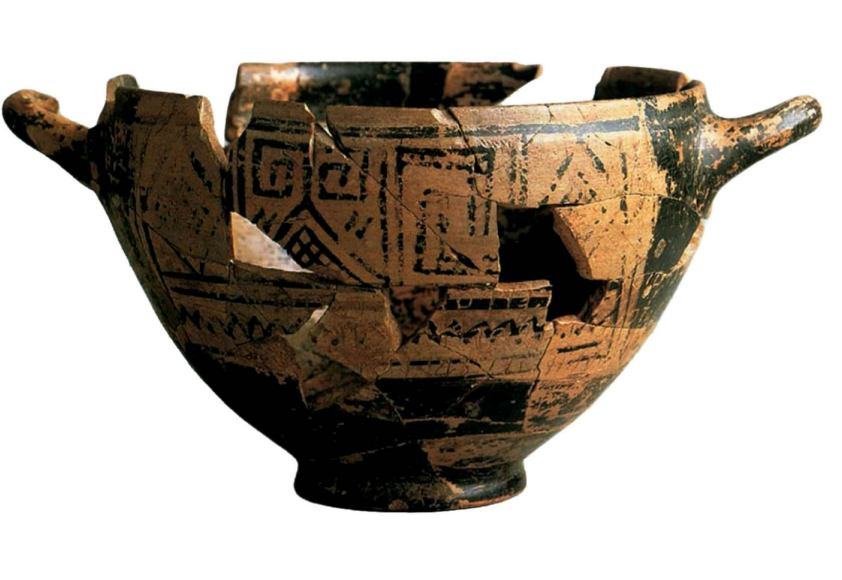
Period: The Iron Age
Place: Bay of Naples
Describe: The vessel is made of terracotta and features a rounded body, small base, two horizontal handles, and dark painted geometric decorations, including meanders, triangles, and parallel lines.
Value: The vessel’s value is shown in its detailed craftsmanship, distinctive geometric patterns, and possible use in religious or funerary contexts.
Cultural Suggestions: Since pottery was an important part of everyday life and trade in ancient Greece, the vessel reflects the development of ceramic production and artistic expression, while its geometric designs demonstrate the cultural traditions and craftsmanship of early Greek society.

Period: The Iron Age
Place: Dipylon cemetery in Athens
Describe: The vessel is made of terracotta and features a large rounded body, tall pedestal base, two handles, and elaborate black geometric decorations, including meanders, zigzags, horses, chariots, and a central funerary scene.
Value: The krater’s value is shown in its monumental size, intricate craftsmanship, and ceremonial placement at a grave.
Cultural Suggestions: Since burial monuments were important displays of wealth and social status in ancient Greece, the krater reflects the power and prestige of the aristocratic elite, while its detailed funerary imagery demonstrates the importance of honoring the dead and the development of narrative art during the Geometric Period.

Period: Archaic Period
Place: Eleusis
Describe: The vessel is made of terracotta and features black silhouetted figures, reddish-orange clay, and decorative geometric and floral patterns surrounding the central scene.
Value: The vase’s value is shown in its detailed craftsmanship, elaborate mythological imagery, and sophisticated use of the black-figure painting technique.
Cultural Suggestions: Since Greek mythology played an important role in ancient Greek culture, the vase reflects the popularity of Homeric stories and the importance of storytelling, while its artistic style demonstrates the development of narrative pottery and cultural traditions during the Archaic Period.

Period: Archaic Period
Place: Sparta
Describe: The plaque is made of wood and features a long, narrow ship with a curved hull, rows of circular shields, standing figures, and detailed rigging, surrounded by circular decorative patterns.
Value: The plaque’s value is shown in its detailed carving, representation of naval technology, and possible ceremonial or commemorative purpose.
Cultural Suggestions: Since maritime trade and naval warfare were important aspects of ancient Greek society, the plaque reflects the growing significance of seafaring, military organization, and overseas connections, while its detailed imagery provides insight into early Greek shipbuilding and naval traditions.

Period: Archaic Period
Place: Sparta
Describe: The figurine is made of bronze and features a standing male figure wearing an elaborate crested helmet, decorated breastplate, short tunic, and greaves, with bent arms that may have originally held weapons.
Value: The statuette’s value is shown in its detailed metalworking, intricate military equipment, and possible use as a religious offering at a sanctuary.
Cultural Suggestions: Since warfare and military strength were important aspects of ancient Greek society, the figurine reflects the prestige of warriors and the importance of martial identity, while its stylized anatomy and elaborate armor demonstrate the artistic traditions and developing bronze-casting techniques of the Archaic Period.

Period: Archaic Period
Place: Attica
Describe: The statue is carved from marble and depicts a standing young woman wearing a long, elaborately draped garment, with braided hair, an Archaic smile, and traces of red and other painted decoration.
Value: The statue’s value is shown in its detailed craftsmanship, carefully carved clothing and hair, and possible religious significance.
Cultural Suggestions: Since kore statues were commonly dedicated to goddesses such as Athena, the sculpture reflects the importance of religious devotion and female representation in ancient Greek society, while its stylized proportions, frontal posture, and preserved pigmentation demonstrate the artistic traditions and use of color in Archaic Greek sculpture.
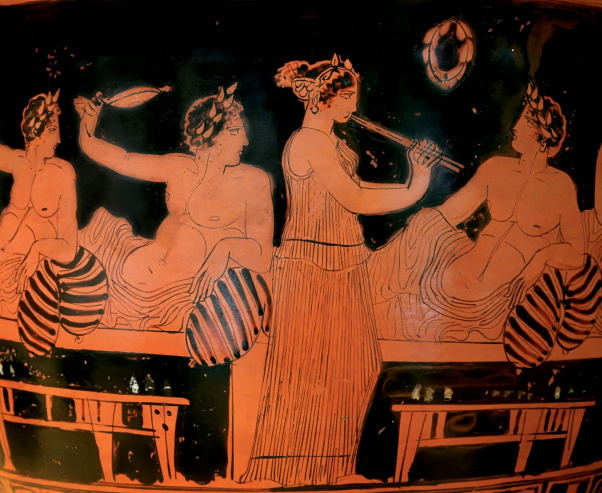
Period: Classical Period
Place: Athens
Describe: The vessel is made of terracotta and features reddish-orange figures against a black background, with detailed clothing, wreaths, musical instruments, and reclining figures arranged around the central musician.
Value: The vase’s value is shown in its detailed craftsmanship, sophisticated painting technique, and depiction of Greek social customs.
Cultural Suggestions: Since symposia were important gatherings for wealthy Greek men involving drinking, music, poetry, and conversation, the vase reflects the importance of entertainment and aristocratic social life, while its detailed imagery demonstrates the artistic achievements and cultural traditions of Classical Greek society.