Problems in Equine Anesthesia 2: Post Anesthetic (Recovery) Complications
 Call Kai
 Learn
 Practice Test
 Spaced Repetition
 Match
 Flashcards
 Knowt Play
1/21

There's no tags or description
Looks like no tags are added yet.
22 Terms
What are the common recovery complications in equines following anesthesia?
• Myopathy (EPAM)
• Neuropathy
Central
Peripheral
• Trauma
Orthopaedic
Soft tissue
• Airway obstruction
• Colic
• Catheter problems
What are the main features of Equine post-Anesthetic myopathy or EPAM?
How does it present clinically?
• May affect ability to stand after anaesthetic
• May be delayed in onset by a few hours or can happen very quickly
• Biochemical changes - result of a hypoperfused muscle
• Can affect one or more muscle groups
• Muscle swollen, painful, hard, hot?
• Myoglobinuria in severe cases
Horse appears swollen or engorged, cannnot use or straighten leg, sometimes cast has to be used to help support → until return of function
Why does myopathy develop?
All of which causes damage to muscle cells
Positioning important to reduce compression, arterial supply more protected than venous due to lack of support in veins
Blood keeps pumping into muscle but cannot leave - explaining why muscle looks engorged → muscle can even necroses
Nerves can become stretched as well

What are the main procedures to prevent and treat EPAM?
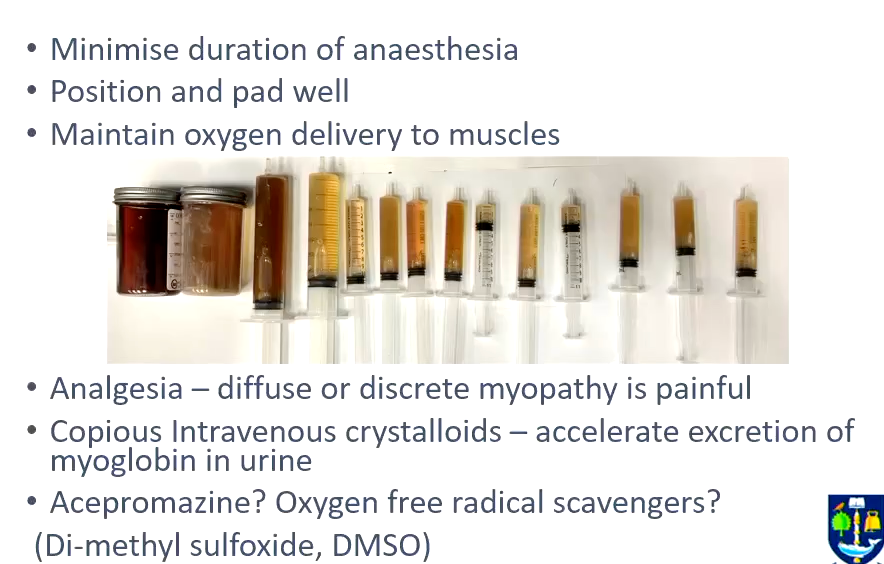
Samples - urine - black from the myoglobinuria, takes several days to clear and recover
Marker of muscle damage but also can impair renal function
Fluids very important to flush it out
What are some peripheral neuropathies?
What are the main treatment options?
Face - left sided damage, pulled towards side that is functioning

Why is positioning of the horse so important?
• Pull forward (lower foreleg) - prevent splaying
• Parallel support
• Padding, padding (and more) padding
What are some common equine genetic muscular diseases?

What is spinal cord myelomalacia - central neuropathy?
• Rare but devastating - spinal cord turns to “mush”
• Young, male horses more common
• More common dorsal recumbency
• No apparent problems during anaesthesia
• Aetiology unclear
What occular trauma can occur during recovery?
• Physical
Bruising periocular area
straw or other f.b.
• Desiccation of cornea
Ulceration
• Remember damage due to skin cleaning and preparation solutions
**Sometimes helmets are used but may actually worsen recovery due to fear
What symptoms may indicate airway obstruction?
Airway obstruction
• Sudden and rapidly terminal complication
• Stridor (inspiratory) - high pitched noise
Stertor (expiratory) - heavy snoring sound
• Nostril flaring
• Paradoxical ventilation?
• Absence of airflow at nostril
What are the main causes of airway obstruction?
• Nose in corner of box
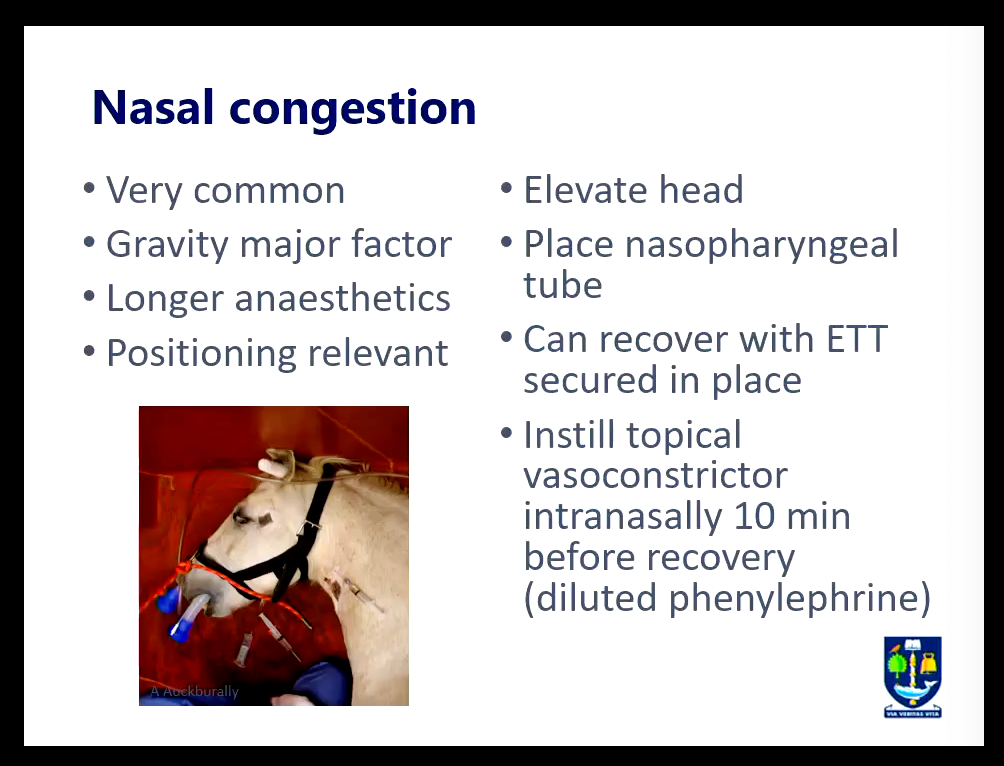
• Nasal congestion
• Laryngeal paralysis
• Airway swelling
What are the main features of nasal congestion?
What are the main features of laryngeal complications?
• Trauma/swelling
• Laryngeal paralysis
Pre-existing
Stretching nerve - having the head over extended
• Unilateral or Bilateral
How do we avoid airway obstruction?
• Prevention much better than cure
• Gentle intubation
• Head position
• Avoid overextension neck
• Gentle extubation
• Checking airflow immediately on extubation
• Careful positioning of horse in recovery box
• Diligent monitoring of horse during recovery
How should you deal with an airway obstruction?
• This is a very dangerous situation for all involved
• May need to wait for horse to go down in box
• Re-anaesthetise?
• Re-intubate?
• Tracheostomy?
• Steroids (if inflamed)
• Furosemide (if pulmonary oedema)
What are common IV cannula complications?
• Infections
• Thrombophlebitis
Can lead to jugular obstruction
• Kink/obstruct
• Cap come off in recovery
Haemorrhage (if 'up')
Air embolus (if 'down')
What are the main recovery studies findings?

What are the main recovery techniques following anesthesia?
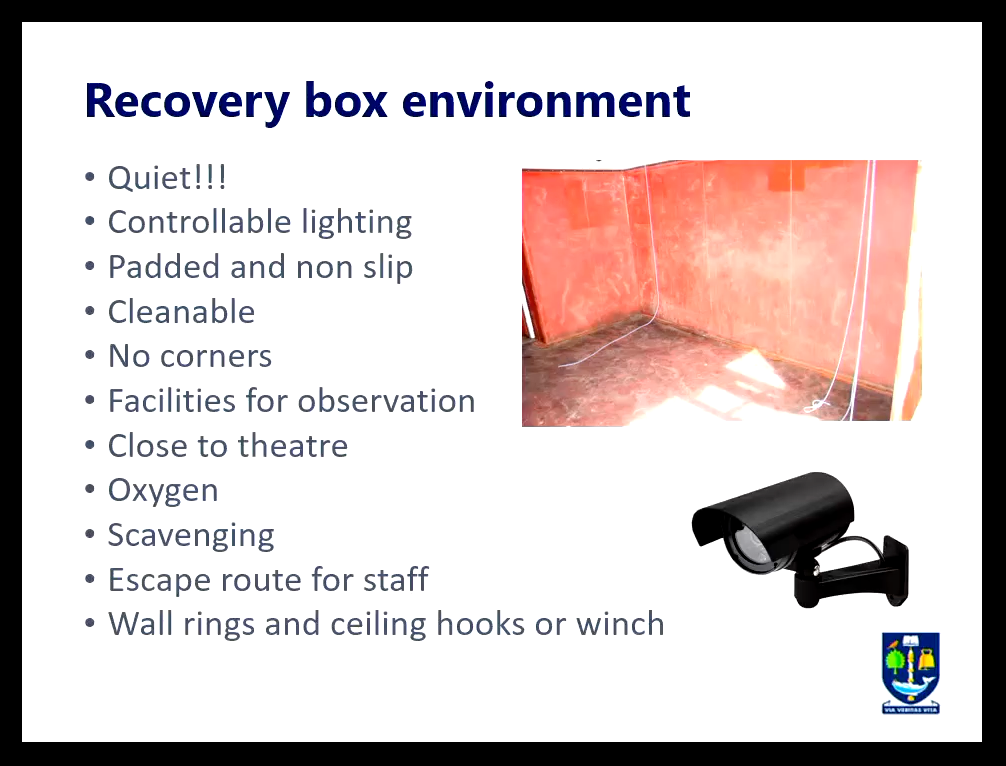
+Features of the recovery box
Recovery using head and tail ropes
What is assisted recovery?
Improves chances of successful recovery

What is an ideal head & tail rope recovery?

What are common recovery emergencies?

Post recovery procedures for equine should include?
Post recovery
• Elective cases
• Allow free access to water
• Withold feed for 3-4 hours then reintroduce slowly
• Check later for signs of lameness, myopathy and pain
• Monitor urine and faecal output overnight
• Colic check for 24 hours after anaesthetic in all animals